

The United States power industry is currently navigating a period of unprecedented transformation, characterized by a massive surge in electricity demand and a simultaneous transition toward cleaner energy sources. As utilities plan to spend hundreds of billions of dollars on new generation and transmission infrastructure, a landmark analysis suggests that a more cost-effective path exists by leveraging resources located closer to the end consumer. According to a comprehensive report released by The Brattle Group and commissioned by The Pew Charitable Trusts, the strategic expansion and integration of distributed energy resources (DERs) could save the U.S. power system approximately $614 billion by the middle of the century.
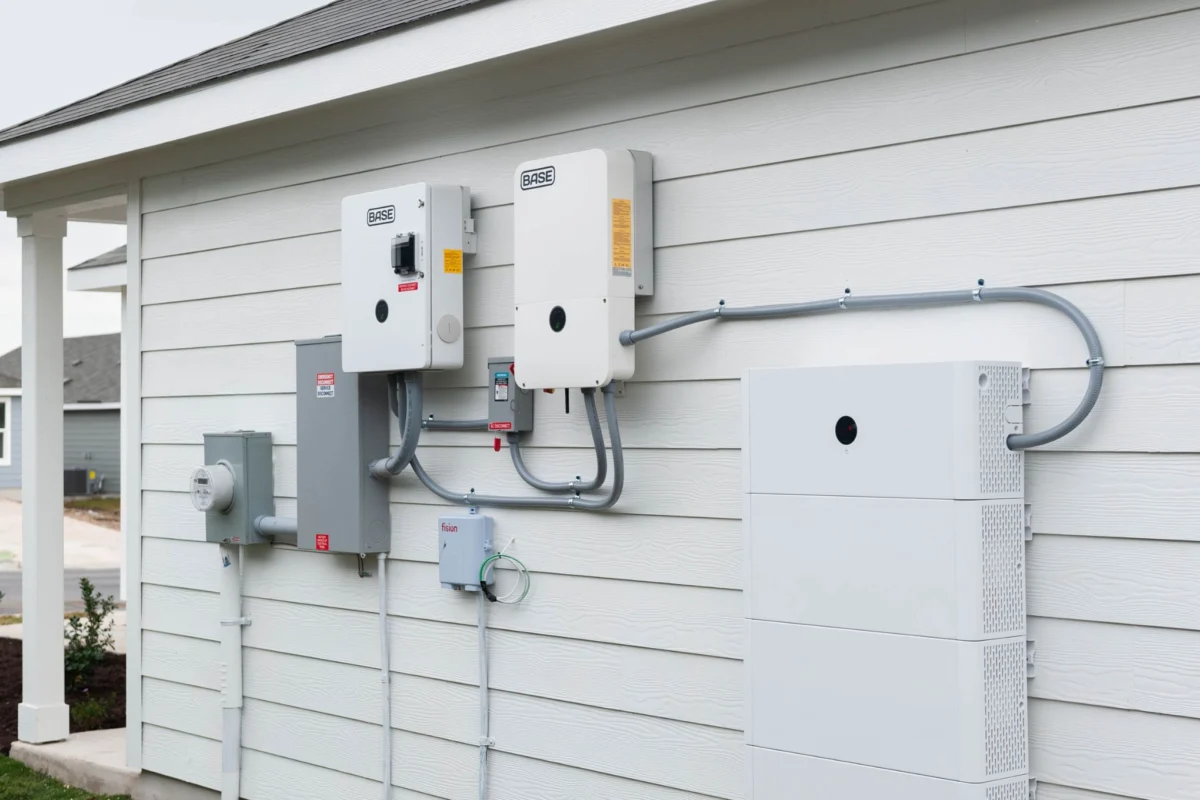
DERs, which encompass a broad category of technologies including rooftop solar panels, residential and commercial battery storage, electric vehicle chargers, and flexible demand programs, represent a fundamental shift in how the grid operates. Rather than relying solely on massive, centralized power plants located far from population centers, a DER-heavy grid utilizes a decentralized network of smaller assets. The report suggests that by removing current regulatory and market barriers, the U.S. could more than quadruple its distributed energy capacity, adding over 400 gigawatts (GW) of capacity by 2050. This expansion would not only lower costs but also provide a critical hedge against the uncertainties of future electricity demand.
The Shifting Paradigm of Power Grid Planning
For nearly a century, the American power sector followed a predictable model: utilities forecasted demand growth and built large-scale thermal power plants—typically coal or natural gas—along with the high-voltage transmission lines needed to carry that power to cities. However, this model is being challenged by three converging factors: the rapid electrification of transport and heating, the explosive growth of energy-intensive data centers driven by artificial intelligence, and a national push toward decarbonization.
Utilities now face a "planning dilemma." If they build too much infrastructure based on aggressive load growth projections that fail to materialize, ratepayers are left stranded with the bill for underutilized assets. Conversely, if they underbuild, they risk grid instability, blackouts, and the inability to support economic development. The Brattle Group’s analysis posits that DERs offer a "third way." By aggregating smaller, modular resources, utilities can meet demand incrementally, reducing the need for "lumpy" capital investments in massive projects that take a decade or more to complete.
The modeled benefits of this shift are staggering. Beyond the $614 billion in total system savings, the report highlights that a robust DER framework could displace roughly 70 GW of projected natural gas capacity. Furthermore, it would drastically reduce the requirement for utility-scale battery storage and help utilities avoid costly distribution and transmission upgrades. By 2050, the integration of these resources could fundamentally alter the composition of the American generation fleet, making it more resilient, flexible, and consumer-centric.
A Chronology of Demand and the Rise of Decentralization
To understand the significance of these findings, one must look at the historical context of U.S. electricity demand. From the end of World War II through the early 2000s, electricity demand grew steadily in tandem with GDP. However, starting around 2005, demand largely stagnated due to improvements in energy efficiency and the outsourcing of heavy industry.
This period of stagnation ended abruptly in the early 2020s. The convergence of the Inflation Reduction Act (IRA), which incentivized domestic manufacturing and renewable energy, and the sudden rise of generative AI led to a sharp upward revision in load forecasts. In 2023 and 2024, many regional transmission organizations (RTOs) doubled or even tripled their five-year growth projections.
The timeline for deploying traditional infrastructure—often 7 to 15 years for a major transmission line—is now out of sync with the timeline of demand growth. Data centers can be built in two years, creating a "readiness gap." DERs, by contrast, can be deployed rapidly. A homeowner can install a battery system in weeks; a business can implement a demand-response program in months. This speed of deployment is a central component of the economic value identified in the Brattle report, as it allows the grid to scale in real-time with actual consumption needs.
Financial Risk Mitigation and the Data Center Uncertainty
Perhaps the most consequential aspect of the Brattle Group’s findings involves the financial risks associated with forecasting. Current projections for electricity demand are heavily influenced by the tech sector’s appetite for data centers. However, the tech industry is notoriously volatile. If the AI boom cools or if hardware becomes significantly more efficient, the anticipated load may never appear.
The report modeled a specific "low-growth" scenario where demand fails to meet the current hype. In this situation, a grid that relies heavily on distributed resources is far more financially resilient. Brattle found that greater reliance on DERs could reduce the cost of excess infrastructure investment by $33 billion between 2030 and 2040—a 40% reduction in financial exposure compared to a traditional "build-big" strategy.

This flexibility is particularly valuable for utility regulators who are increasingly wary of approving massive rate hikes to fund speculative infrastructure. By utilizing "Virtual Power Plants" (VPPs)—collections of DERs that can be dispatched as a single unit—utilities can create a "buffer" that allows them to delay large-scale investments until the demand is guaranteed.
The Three Pillars of Regulatory Reform
Despite the clear economic advantages, the report emphasizes that these savings are not guaranteed. They depend entirely on the implementation of specific policy and market reforms. Currently, the U.S. power grid is a patchwork of regional regulations that often treat customer-owned resources as "noise" on the system rather than valuable assets.
The Brattle Group identifies three specific reforms that alone could account for $266 billion (or 43%) of the projected savings:
- Wholesale Market Access: Allowing DERs to participate fully in wholesale electricity markets, where they can be paid for providing energy, capacity, and ancillary services on par with traditional power plants.
- Retail Rate Design: Implementing time-varying rates that encourage consumers to use electricity when it is abundant (such as midday when solar production is high) and reduce use during peak hours.
- Integrated Planning: Requiring utilities to include DERs as a formal "non-wire alternative" in their long-term resource planning, rather than treating them as an afterthought.
The challenge lies in changing the utility business model. Traditionally, investor-owned utilities earn a profit based on the amount of capital they spend on infrastructure (the "rate base"). Using a customer’s battery to stabilize the grid does not inherently provide the same profit motive for a utility as building a new substation. Therefore, regulatory structures must evolve to reward utilities for efficiency and system-wide cost savings rather than just capital deployment.
Broader Implications for Decarbonization and Resilience
The economic impacts of DER expansion are even more pronounced when viewed through the lens of climate goals. In a scenario where the U.S. aims for a carbon-free generation fleet by 2050, the role of distributed energy becomes indispensable. Brattle estimates that expanded DER deployment could offset approximately 175 GW of utility-scale renewable capacity.
This shift would reduce annual generation costs in 2050 by $45 billion, representing a 20% reduction in the total cost of decarbonization. Because DERs are located at the point of consumption, they bypass the need for many of the massive, controversial transmission projects that are currently stalled by permitting disputes and "not-in-my-backyard" (NIMBY) opposition.
Beyond economics, there is the factor of physical resilience. As climate change increases the frequency of extreme weather events—from wildfires in the West to hurricanes in the East—a centralized grid is increasingly vulnerable. A single downed transmission line can black out an entire region. A grid supported by local solar and storage, however, can "island" itself, maintaining power for critical services even when the main grid fails. While the Brattle report focused primarily on system costs, it noted that the value of this resilience provides an additional, unquantified benefit to society.
Industry Reactions and the Path Forward
The findings have sparked significant discussion among grid operators, environmental advocates, and technology providers. Proponents of DERs argue that the report provides the empirical evidence needed to push for more aggressive "VPP" programs. Companies like Tesla, Sunrun, and Base Power, which specialize in residential energy ecosystems, view this as a validation of their business models.
However, some utility trade groups express caution. They point out that while DERs offer immense potential, they also introduce technical complexities. Managing millions of two-way power flows requires sophisticated software and hardware upgrades to the distribution network. There are also concerns regarding "cost-shifting," where customers who cannot afford solar or batteries might end up paying a larger share of fixed grid costs if the system is not designed equitably.
In response to these challenges, the Department of Energy (DOE) has recently launched initiatives to support the deployment of 80–160 GW of VPPs by 2030. The Brattle/Pew report serves as a roadmap for this transition, suggesting that the "grid of the future" will not be something that is merely delivered to consumers, but something that consumers actively participate in building.
The conclusion of the analysis is clear: the longstanding assumption that rising demand requires only "more of the same" centralized infrastructure is no longer tenable in a modern economy. Large-scale plants and transmission will remain essential components of the energy mix, but they must be complemented by the resources already sitting in our garages, on our roofs, and in our basements. For a nation grappling with the dual pressures of energy affordability and reliability, the $614 billion opportunity represented by distributed energy is too significant to ignore. The next decade will determine whether regulators and utilities can pivot quickly enough to capture these savings for the benefit of the American ratepayer.
