

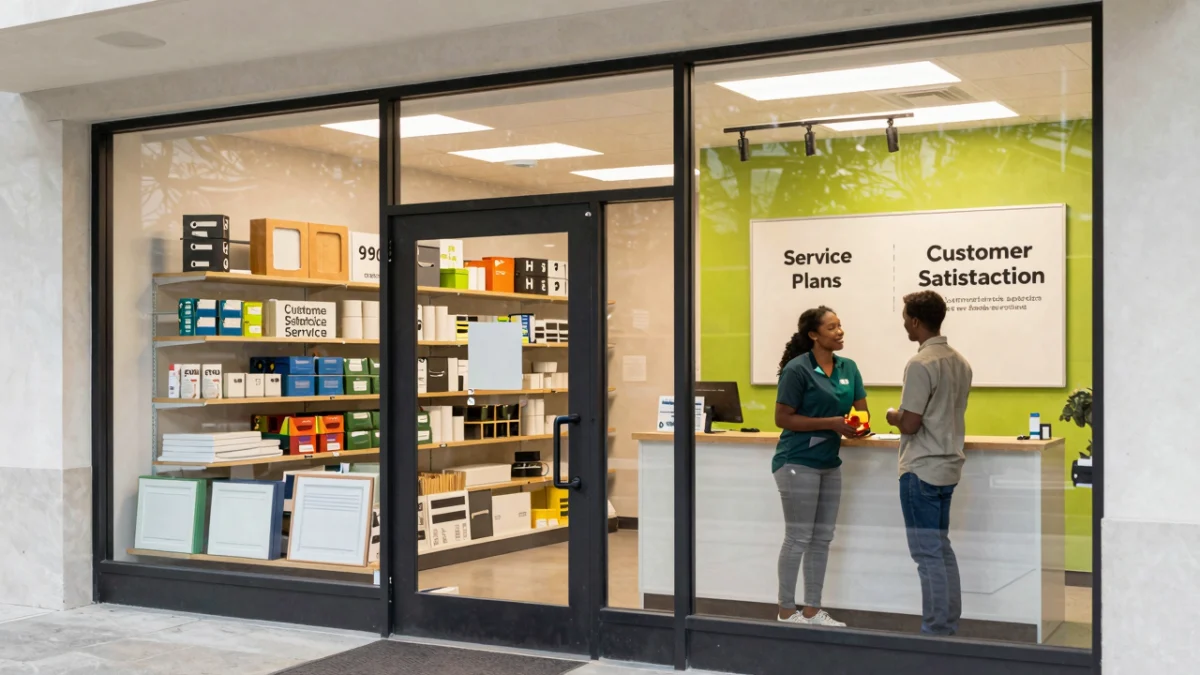
The landscape of American entrepreneurship is undergoing a significant transformation as the barrier to entry for business ownership continues to decline through the proliferation of low-cost franchise models. Traditionally, the concept of franchising evoked images of multi-million dollar investments in fast-food infrastructure or large-scale retail outlets. However, a burgeoning sector of "micro-franchises" and service-based models has emerged, offering prospective business owners the opportunity to leverage established brand equity for initial investments often falling below the $10,000 threshold. This shift is democratizing the path to self-employment, providing a structured alternative to the high-risk nature of independent startups.

The Economic Context of Low-Cost Franchising
The surge in interest regarding affordable franchises is not an isolated phenomenon but rather a response to broader economic shifts. According to the International Franchise Association (IFA), the franchise sector was projected to grow by 1.9% in 2024, contributing significantly to the national GDP. Within this growth, service-based franchises—particularly those that can be operated from a home office—have seen the most rapid expansion. This is driven by two primary factors: the increasing demand for outsourced home maintenance and the desire for "career insulation" among professionals seeking to hedge against corporate volatility.
Unlike capital-intensive industries, low-cost franchises typically operate in the service sector. This removes the need for expensive real estate, heavy machinery, or large inventories. For example, brands like Molly Maid or Window Genie focus on labor-based services where the primary assets are the brand’s reputation, its proprietary systems, and the quality of the service delivery. This lean operational model allows entrepreneurs to achieve a faster "break-even" point, a critical metric for those with limited liquid capital.

A Chronology of the Service Franchise Evolution
To understand the current state of low-cost franchising, one must look at the evolution of the industry over the past four decades. In the 1980s and 1990s, franchising was dominated by "brick-and-mortar" requirements. The 2000s saw the rise of specialized service brands as homeowners began spending more on professional upkeep. Following the 2008 financial crisis, the market saw a pivot toward "recession-resilient" models—businesses that provide essential services that consumers cannot easily defer, such as home repairs or cleaning.
By the 2020s, the digital revolution allowed these franchises to further reduce costs. Cloud-based scheduling, GPS tracking for service vehicles, and automated marketing tools replaced the need for physical administrative offices. Today, a franchisee can manage a multi-vehicle cleaning operation from a laptop, significantly lowering the overhead that once prohibited small-scale investors from entering the market.

Strategic Deep Dive: High-Value, Low-Investment Models
Several brands have become benchmarks for success within the low-cost bracket, each targeting specific niches within the home and professional services economy.
Residential Cleaning: The Molly Maid Model
Molly Maid has long been a staple of the Franchise 500 list, representing the residential cleaning sector. The brand’s success is predicated on the "recurring revenue" model. By establishing a client base that requires weekly or bi-weekly services, franchisees create a predictable cash flow. The initial investment is kept low by focusing on mobile teams rather than storefronts. Industry analysts point out that as dual-income households increase, the demand for professional cleaning services becomes less of a luxury and more of a functional necessity, providing the brand with a stable market base.

Multi-Service Maintenance: Window Genie
Window Genie exemplifies the "diversified service" strategy. By offering window cleaning, pressure washing, and gutter protection, the franchise ensures that it can serve a single customer multiple times throughout the year for different needs. This increases the "lifetime value" of each customer acquired. For an entrepreneur, this model is attractive because it utilizes the same basic equipment and vehicle for multiple revenue streams, maximizing the return on the initial equipment investment.
Specialized Safety: Dryer Vent Wizard
A newer but highly effective niche is represented by Dryer Vent Wizard. This franchise addresses a specific safety concern: the 15,000+ dryer-related fires reported annually in the United States. By focusing on a high-stakes, specialized niche, the brand commands higher margins than general cleaning services. The low entry cost—often cited as being under $5,000 for certain territories or startup packages—makes it one of the most accessible technical franchises in the market.

Financial Mechanics and the "Chick-fil-A" Paradox
When discussing low-cost entry points, the case of Chick-fil-A is often cited as a point of confusion. While the initial franchise fee for a Chick-fil-A is a remarkably low $10,000, it does not technically qualify as a "low-cost" franchise in the traditional sense. The total startup costs, often exceeding $1 million, are covered by the corporate entity, which then retains ownership of the land and equipment. The franchisee, or "operator," acts more as a high-level partner than a traditional owner.
In contrast, true low-cost franchises like SiteSwan (web design) or Five Star Painting (residential painting) allow the franchisee to retain full ownership of the business assets from day one. SiteSwan, for instance, offers a path to business ownership for as little as $149 to $199 per month, focusing on the digital services market. This highlights the diversity of the "low-cost" label, ranging from technical service labor to digital agency models.

Training, Support, and the Franchise Advantage
The primary value proposition of a low-cost franchise is not merely the brand name, but the "business-in-a-box" support system. For a first-time entrepreneur, the complexities of marketing, legal compliance, and operational workflows can be overwhelming. Franchise systems provide:
- Proprietary Software: Tools for billing, routing, and customer relationship management (CRM).
- Marketing Collateral: Professionally designed assets that would cost thousands to develop independently.
- Supply Chain Access: Discounted rates on equipment and insurance through bulk corporate purchasing power.
- Peer Networks: Access to a community of other franchisees who can provide real-world troubleshooting and advice.
Industry experts suggest that these support structures are why franchised businesses statistically have a higher survival rate than independent small businesses over a five-year period.

Broader Implications for the Labor Market
The proliferation of affordable franchises is also altering the labor market. As the "gig economy" matures, many individuals are looking for more than just freelance work; they are looking for equity. Low-cost franchises provide a bridge between being a "solopreneur" and a traditional business owner. This trend is particularly visible among women and minority entrepreneurs, who have historically faced greater barriers to securing large-scale small business loans. By lowering the capital requirement, franchising is fostering a more diverse ownership class.
Furthermore, these businesses are significant local job creators. A single Molly Maid or Window Genie franchise may employ between five and fifteen local residents, contributing to the economic health of the community without the environmental or infrastructure footprint of a large industrial plant.

Risks and Considerations for Prospective Owners
Despite the low entry costs, franchising is not a guaranteed path to wealth. Prospective owners must conduct rigorous due diligence. The "Franchise Disclosure Document" (FDD) is a vital resource, outlining the financial health of the franchisor, any litigation history, and the expected turnover rate of franchises.
Key questions for any potential investor include:

- Territory Rights: Is the territory "protected," or can the franchisor sell another unit in the same zip code?
- Royalty Structures: While the startup cost is low, are the ongoing monthly royalties sustainable during slow months?
- Exit Strategy: What are the conditions for selling the franchise back to the corporate entity or a third party?
Future Outlook: Technology and Sustainability
Looking forward, the low-cost franchise sector is expected to integrate more "green" and "smart" technologies. Cleaning franchises are pivoting toward eco-friendly chemicals to meet consumer demand, while home maintenance franchises are incorporating drone technology for roof and gutter inspections. These innovations are expected to keep the service sector relevant as consumer preferences evolve.
In conclusion, the rise of low-cost franchises represents a significant shift in the American economic fabric. By providing a structured, supported, and affordable pathway to ownership, these models are enabling a new generation of entrepreneurs to build scalable businesses. Whether in cleaning, maintenance, or digital services, the "micro-franchise" is proving that a massive investment is no longer a prerequisite for achieving the American dream of business ownership. Through careful selection and diligent operation, the low-cost franchise remains one of the most viable vehicles for wealth creation in the modern economy.
