

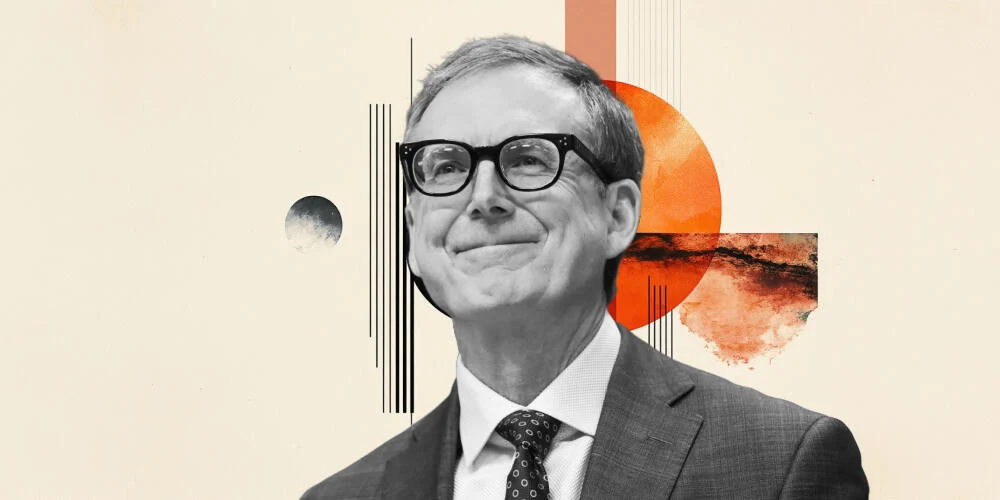
On Tuesday, Bank of Canada (BoC) Governor Tiff Macklem delivered a sobering assessment of the nation’s economic trajectory before the House of Commons Standing Committee on Finance, indicating that "further rate hikes may be needed" to combat stubbornly high inflation. This hawkish pivot stems primarily from the enduring conflict in the Middle East, which is projected to keep global energy prices "higher for longer," consequently burdening Canadian consumers at the gas pump and escalating operational costs for businesses across various sectors. Macklem’s appearance before the parliamentary committee underscored the central bank’s commitment to transparency and accountability, providing an updated outlook that suggests a more protracted battle against inflation than previously anticipated.
The Governor’s remarks painted a revised picture for Canada’s economic future, diverging notably from earlier, more optimistic projections. The Consumer Price Index (CPI), a key gauge of inflation, is now expected to accelerate to 3.5% by the end of the current year. More critically, the central bank anticipates that inflation will remain above the 3% threshold through much of 2027, only gradually returning to the BoC’s 2% target by mid-2028. This extended timeline reflects a significant challenge to the BoC’s primary mandate of maintaining price stability, forcing a re-evaluation of its monetary policy stance in an environment characterized by elevated global uncertainty.
The Evolving Inflation Landscape and Geopolitical Pressures
Canada’s journey with inflation has been tumultuous since the post-pandemic economic reopening. Following a period where CPI inflation soared to multi-decade highs, peaking above 8% in mid-2022, the Bank of Canada embarked on an aggressive monetary tightening cycle. Beginning in March 2022, the central bank raised its policy interest rate ten times, from a historically low 0.25% to 5.00% by July 2023, in an effort to cool an overheated economy and bring inflation back to its target range of 1-3%. These actions, while necessary, have had significant implications for mortgage holders, businesses, and overall economic activity.
Despite a noticeable deceleration in headline inflation earlier in 2023, recent global developments have complicated the disinflationary process. The escalating conflict in the Middle East has introduced a substantial new variable into the economic equation. Macklem specifically highlighted how the persistence of this geopolitical instability is directly impacting global oil prices. When supply routes are threatened, or there is heightened uncertainty about future production, crude oil benchmarks like West Texas Intermediate (WTI) and Brent Crude tend to rise. These increases are not merely academic; they translate rapidly into higher costs at Canadian gas stations and feed into the supply chains of virtually every industry.
Beyond the price of crude oil, Macklem also pointed to elevated refinery margins as a contributing factor to increased consumer and business costs. Refinery margins represent the difference between the price of crude oil and the wholesale price of refined petroleum products like gasoline and diesel. When these margins expand, it indicates that refiners are capturing a larger profit per barrel, further inflating prices for end-users. This dual impact – higher crude oil prices driven by geopolitical risk and higher refining costs – creates a compounding effect that significantly impacts household budgets and business profitability. The Governor cautioned that a "greater pass-through to inflation" from these energy costs is expected over the coming year, suggesting that the full impact has yet to be felt by the broader economy.
A Detailed Look at Inflation and Growth Projections
Macklem’s revised projections mark a discernible shift in the BoC’s outlook. Previously, the central bank had signaled a more rapid return to the 2% target. The new forecast of CPI inflation hitting 3.5% by year-end and remaining at or above 3% through much of 2027 implies that underlying inflationary pressures are proving more resilient than anticipated, largely due to external shocks. This prolonged period of elevated inflation poses significant challenges, potentially entrenching inflation expectations among consumers and businesses, which could make the BoC’s job even harder.
On the growth front, the Canadian economy has shown pockets of resilience amidst global headwinds. Gross Domestic Product (GDP) growth registered a robust 3.3% in the second quarter of the year, exceeding many analysts’ expectations. This strength was partly attributed to strong consumer spending and a rebound in exports. The third quarter is estimated to have seen growth around 2%, indicating a moderating but still positive momentum. However, the outlook for future quarters includes new challenges. Macklem projected GDP growth to slow significantly in the fourth quarter, partly due to anticipated new US tariffs. While specific details on these tariffs were not provided, trade protectionist measures from Canada’s largest trading partner invariably impact export-dependent sectors and overall economic activity, potentially dampening business investment and consumer confidence.
Looking further ahead, the BoC projects GDP growth at a modest 1% in 2026, followed by an uptick to approximately 2% in both 2027 and 2028. This long-term outlook suggests a gradual recovery in economic momentum once the immediate inflationary pressures subside and global trade dynamics stabilize. The Governor noted that despite US trade actions, the Canadian economy has demonstrated resilience, with the overall growth outlook improving modestly. This indicates an underlying structural strength, perhaps driven by diversification efforts or strong domestic demand in certain sectors, helping to cushion some of the external shocks.
The Role of Monetary Policy Amidst Uncertainty
The statement that "further rate hikes may be needed" serves as a crucial signal to financial markets and the public. It reinforces the BoC’s commitment to its inflation target and suggests that the recent pause in rate increases should not be interpreted as the end of the tightening cycle. However, Macklem quickly qualified this, emphasizing that "future decisions will be taken meeting by meeting amid elevated uncertainty." This nuanced approach highlights the data-dependent nature of modern central banking. The BoC will closely monitor incoming economic data, including inflation readings, employment figures, retail sales, and global energy market developments, before making any definitive moves.
The central bank’s mandate is primarily to maintain price stability, with the policy interest rate being its most direct and potent tool. Raising rates makes borrowing more expensive, discouraging spending and investment, thereby cooling demand and inflationary pressures. Conversely, lowering rates stimulates economic activity. The "elevated uncertainty" stems from a complex interplay of domestic factors (consumer debt levels, housing market sensitivity) and international events (geopolitical conflicts, global supply chain disruptions). The BoC must carefully weigh the risk of under-tightening, allowing inflation to become entrenched, against the risk of over-tightening, potentially pushing the economy into a severe recession.
Macklem’s comments also touched upon fiscal policy, stating that he "does not think fiscal policy is making it harder to get inflation down" in current circumstances. This is a notable intervention in an ongoing debate among economists and policymakers regarding the role of government spending in contributing to inflationary pressures. Some argue that robust government spending, particularly during periods of high demand, can exacerbate inflation by adding more money to the economy. Macklem’s perspective suggests that, from the BoC’s vantage point, current fiscal stances are not actively undermining the central bank’s efforts to curb inflation, allowing monetary policy to remain the primary tool in this fight.
Chronology of Key Economic Events and BoC Actions
To understand the current juncture, a brief timeline contextualizes the BoC’s evolving stance:
- Early 2020-2021: Pandemic-induced lockdowns lead to unprecedented monetary and fiscal stimulus, including record-low interest rates (0.25%) and quantitative easing by the BoC, aimed at preventing economic collapse.
- Late 2021-Mid 2022: As economies reopen, strong demand, supply chain bottlenecks, and the initial impacts of the war in Ukraine drive inflation sharply upwards, exceeding the BoC’s target.
- March 2022: The Bank of Canada begins its aggressive rate-hiking cycle, raising the policy rate from 0.25% to 0.50%, marking the first increase in over four years.
- Throughout 2022: A series of rapid rate hikes follows, bringing the policy rate to 4.25% by December 2022. Inflation peaks in June 2022 at 8.1%.
- January 2023: The BoC raises the rate to 4.50% but signals a conditional pause, indicating a wait-and-see approach.
- April-May 2023: The BoC maintains the policy rate at 4.50%, citing slowing inflation and economic moderation.
- June-July 2023: Renewed concerns about persistent inflation lead the BoC to resume rate hikes, raising the policy rate to 4.75% in June and then to 5.00% in July, its highest level in over two decades.
- September 2023: The BoC again holds its policy rate steady at 5.00%, noting signs of slowing economic growth but acknowledging underlying inflation remains a concern.
- October 2023 onwards: Escalation of the Middle East conflict begins to exert upward pressure on global energy markets.
- This Tuesday (Macklem’s Appearance): Governor Macklem delivers his updated assessment, signaling the potential for further rate hikes and a prolonged fight against inflation due to geopolitical factors.
Broader Impact and Implications for Canadians
The implications of Macklem’s statements are far-reaching for various stakeholders within the Canadian economy.
For Consumers: The prospect of "higher for longer" energy prices means continued financial strain at the gas pump and potentially higher costs for goods and services as businesses pass on increased input costs. Furthermore, if the BoC does indeed implement further rate hikes, variable-rate mortgage holders will face increased monthly payments, further tightening household budgets. Those with fixed-rate mortgages nearing renewal will also contend with significantly higher borrowing costs compared to their previous terms. This environment is likely to lead to a continued moderation in consumer spending as households prioritize essential expenditures and debt servicing.
For Businesses: Higher energy costs directly impact operational expenses for transportation, manufacturing, and agriculture. Small and medium-sized enterprises (SMEs), often operating with thinner margins, may find it particularly challenging to absorb these increases without raising prices, potentially fueling the very inflation the BoC is trying to curb. For businesses reliant on borrowing for investment or expansion, any further rate hikes will increase financing costs, potentially dampening capital expenditure and hiring plans. However, some sectors, particularly those in energy production, might see increased revenues from higher commodity prices.
For Financial Markets and the Canadian Dollar: The explicit warning of potential future rate hikes injects a hawkish bias into the Bank of Canada’s forward guidance. This can have an immediate impact on bond yields, as investors demand higher returns for holding government debt in anticipation of tighter monetary policy. For the Canadian Dollar (CAD), a more hawkish BoC typically provides support, as higher interest rates make the currency more attractive to foreign investors seeking better returns. Indeed, on the day of Macklem’s remarks, the Canadian Dollar showed strength against several major currencies, notably against the Japanese Yen, reflecting this dynamic. The currency’s performance will remain closely tied to future BoC decisions and the evolving inflation narrative.
Global Context and Future Outlook
Canada’s inflationary battle is not isolated. Central banks globally, including the US Federal Reserve, the European Central Bank, and the Bank of England, are grappling with similar challenges of persistent inflation, often exacerbated by geopolitical tensions and supply-side shocks. The BoC’s acknowledgment of external factors, particularly the Middle East conflict, underscores the interconnectedness of the global economy and the limitations of domestic monetary policy in fully addressing internationally driven price pressures.
The path forward for the Bank of Canada remains fraught with uncertainty. Balancing the need to bring inflation down to target with the desire to avoid a deep economic downturn requires careful navigation. Macklem’s latest statements suggest a central bank prepared to do what is necessary, even if it means further tightening, acknowledging that the fight against inflation is far from over and may require prolonged vigilance. The coming months will be critical in observing how global energy markets evolve, how domestic demand responds to current interest rates, and ultimately, whether the Canadian economy can achieve a "soft landing" amidst these formidable challenges. The BoC’s "meeting-by-meeting" approach signifies flexibility, but the underlying message is clear: the era of cheap money is firmly in the past, and the cost of living may continue to rise before it truly stabilizes.
