

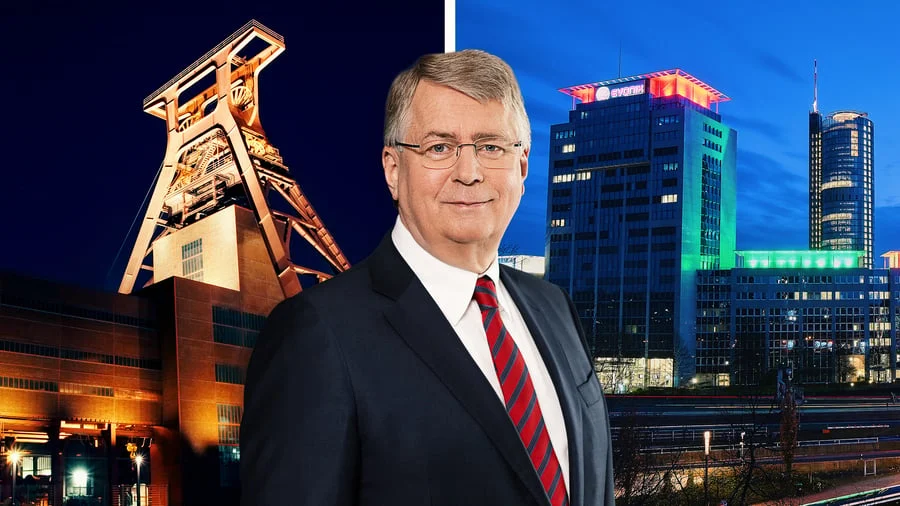
Düsseldorf. The RAG Foundation, Germany’s wealthiest foundation, is under renewed criticism regarding its investment strategies. Sources have revealed to Handelsblatt that the foundation established its own corporate lending company, initially backing it with a commitment of up to 500 million euros. Remarkably, just a few years later, the majority stake in this venture was reportedly transferred to two of its managers. This development has intensified public scrutiny of the foundation’s financial dealings, placing it under an unprecedented spotlight. Insiders are characterizing these actions as both high-risk and lacking transparency.
The RAG Foundation holds a significant 44% stake in the chemical giant Evonik Industries AG. This substantial ownership makes the foundation a pivotal player in the ongoing, multi-billion euro takeover battle for the Essen-based chemical company, which has been courted by BASF SE since late September.
The investment management practices of the RAG Foundation have been a subject of concern for some time. Earlier in the year, two state audit offices publicly admonished the foundation. Now, these fresh allegations from insider sources are raising further questions about specific investment decisions. Handelsblatt has obtained information concerning several transactions within the foundation’s investment portfolio, drawing on data from financial circles that also cite internal foundation sources.

These reports critically examine several of the foundation’s past investment decisions. Specifically, concerns are being raised about the structure of a credit platform capitalized at up to 500 million euros, an early investment in the financial investor Maxburg, and a participation in a fund managed by EMH Partners.
In response to a comprehensive questionnaire from Handelsblatt, the RAG Foundation has refuted the most significant allegations and, for the first time, provided details regarding these three investments and their performance.
Background of the RAG Foundation and its Mission
The RAG Foundation manages assets totaling approximately 16 billion euros. Its mandate is to finance the perpetual liabilities associated with Germany’s former coal mining industry, particularly in the Ruhr region and Saarland. These liabilities include essential tasks such as pumping mine water to prevent environmental damage. In addition to managing these long-term obligations, the foundation also supports social projects and startups, aiming to foster innovation and community development.

Earlier in the year, the foundation had already rejected accusations from the audit offices of North Rhine-Westphalia and Saarland that its investment strategy jeopardized the financing of these perpetual liabilities. The audit offices’ concerns were partly triggered by a decline of 4.8 billion euros in the foundation’s assets between the end of 2021 and September 2025. The foundation attributed this downturn primarily to value depreciation in its Evonik holdings and certain misjudged investments.
The current wave of criticism arrives as the RAG Foundation is actively restructuring its investment strategy. The potential sale of its Evonik stake lends particular weight to the ongoing debate. The most recent offer from BASF, valued at 24 euros per share, would render the RAG Foundation’s stake worth nearly five billion euros. A complete divestment from Evonik would necessitate reinvesting a significantly larger portion of the foundation’s assets outside of its chemical holdings.
Investment Focus: Private Debt and the RSI Capital GmbH Controversy
One of the most questioned investment areas involves private debt. In 2020, the RAG Foundation established RSI Capital GmbH as a wholly-owned subsidiary to enter this asset class. Private debt refers to loans provided to companies not through traditional banking channels or public bond markets, but rather by specialized investment funds.

During a period of historically low interest rates, the foundation aimed to build a target allocation of up to five percent in this asset class. The fund managed by RSI was initially committed up to 500 million euros. The foundation emphasizes that this substantial sum was not deployed all at once. Instead, capital was called upon incrementally as specific investment opportunities were vetted and approved.
A significant structural change occurred in 2024. The RAG Foundation sold a majority stake of 50.4% in RSI Capital GmbH to two funds. These funds are reportedly backed by the two long-standing managing directors of RSI Capital GmbH, as indicated by company registration documents.
Crucially, one of these individuals was a senior executive within the RAG Foundation’s capital management division and maintained roles within the foundation’s investment environment even after the transaction. Both individuals remain listed as managing directors of RSI, according to commercial register filings.
This restructuring is at the heart of the current criticism. Insiders question whether this reorganization was a maneuver to obscure a potentially weak performance of the credit portfolio. One insider described the situation as creating the impression that RSI Capital GmbH effectively functions as a "bad bank."

The RAG Foundation vehemently denies these assertions. The foundation stated that concerns about potential defaults within the credit portfolio played no role in the decision. Furthermore, it asserted that there was no suspicion of flawed investment decisions within the management. The foundation claims the RSI fund has demonstrated positive returns since its inception. A strategic refocusing initiated in 2023 has reportedly further enhanced the fund’s ongoing performance.
The foundation also clarified that the spin-off was not a hasty decision. The concept for the company was "oriented towards gradual independence and market opening from the outset," the RAG Foundation explained. This move also signals a broader shift in the foundation’s investment philosophy. Rather than directly controlling investments through wholly-owned subsidiaries, the foundation intends to collaborate more extensively with external asset managers and managed fund structures.
Another allegation from insider circles suggests that the RAG Foundation financed the establishment of RSI from 2020 to 2024, with the subsequent economic gains benefiting employees. The foundation refutes this claim, citing confidentiality reasons for not disclosing the sale price of the majority stake. The transaction was validated and assessed with the assistance of external service providers. Furthermore, it underwent scrutiny during the annual audit and received an unqualified audit opinion. The foundation also dismissed potential conflicts of interest, stating that employees involved in negotiations on behalf of RAG were not involved with RSI. The subsequent shareholders acted solely as buyers in their own capacity. The foundation maintains that there was no undue economic advantage for the buyers; they were "market-incentivized" and assumed their own entrepreneurial risk. The transaction generated a capital gain for RAG.
Investment Focus: Early Engagement with Maxburg Capital Partners

A second area of scrutiny involves the foundation’s investment in the private equity firm Maxburg Capital Partners. The RAG Foundation has been an investor in Maxburg’s funds since the launch of its first fund in 2014.
Concerns are primarily focused on the risks the foundation undertook when investing with a nascent fund manager and the extent of its control over investment decisions. The RAG Foundation disputes the claim that it provided approximately 300 million euros directly to the founders for a "first-time fund." The initial commitment was reportedly 150 million euros, with an additional 150 million euros structured as an option contingent upon the fund’s successful development.
The foundation also asserts that the management team was not inexperienced at the outset, possessing a proven track record of success. The RAG Foundation highlights its oversight mechanisms, including representation with three members on the investment advisory board and a veto right over all investment decisions.
Crucially, the foundation points to the investment’s performance. Across Maxburg’s Funds I through III, the value of the invested capital has reportedly more than tripled. The RAG Foundation views its Maxburg engagement as evidence of successful selection of external managers.

Investment Focus: A 15 Million Euro Commitment to EMH Partners
A third, considerably smaller, investment involves a commitment of 15 million euros to the EMH Digital Growth Fund. EMH Partners is currently facing significant attention due to its role as a shareholder in the medical technology company Brainlab. A contentious dispute has erupted between the financial investor and the company’s founder following a failed initial public offering.
Brainlab represents a significant investment within the EMH fund. The RAG Foundation states that the conflict has thus far had no impact on its involvement. The investment is reportedly performing well and generating stable returns, with no value adjustments made. The Brainlab conflict has not led to any consequences for the foundation’s risk management or its ongoing collaboration with EMH.
Expanding Investment Horizons: A Shift Towards Institutional Investor Status

The RAG Foundation may further expand its investments in private equity funds in the future. CEO Bernd Tönjes plans to present his new investment concept to the foundation’s board of trustees in late November. As Tönjes indicated in a Handelsblatt interview in autumn 2025, the foundation aims to increasingly transition into an institutional investor.
This strategic shift involves reducing direct corporate holdings, which the foundation had built alongside traditional capital market investments. The performance of these direct investments in medium-sized companies has been mixed, with some proving successful while others required write-downs or revaluations.
One particularly challenging investment was in the real estate empire of investor René Benko, which the foundation has since written off. This investment, among others, contributed to the critical assessment issued by the two audit offices in the spring.
The potential sale of the Evonik stake could significantly accelerate this restructuring process. While Tönjes chairs Evonik’s supervisory board, he has recused himself from discussions regarding BASF’s takeover offer due to a conflict of interest. Should the foundation fully divest its Evonik holdings, it would not only lose a key source of dividends but also need to redirect nearly five billion euros into new investments aligned with its foundation objectives. BASF’s most recent offer of 24 euros per share values the foundation’s stake at approximately five billion euros.

The foundation’s strategy moving forward emphasizes a greater reliance on external funds and specialized asset managers. The potential sale of its substantial stake in Evonik Industries AG, a move that could yield nearly five billion euros, would necessitate a significant reallocation of assets. This strategic pivot underscores the foundation’s commitment to adapting its investment approach in response to market dynamics and its ongoing mission to manage the long-term liabilities of Germany’s former mining industry while also supporting societal development. The scrutiny over its past investment decisions highlights the complex challenges and responsibilities inherent in managing such a large and influential endowment.
