

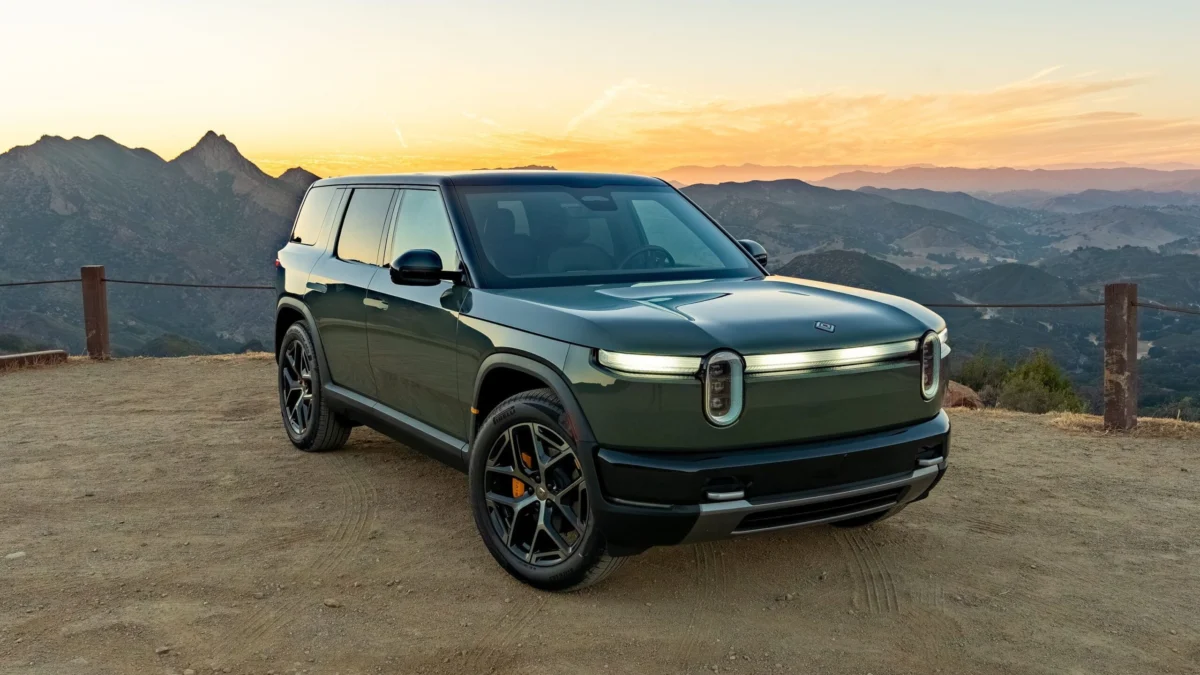
New York – Electric vehicle manufacturer Rivian has announced a third-quarter financial report that exceeded analyst expectations, showcasing a reduced net loss and significant early success for its newly launched R2 SUV model. The company reported an adjusted loss of 48 cents per share, a notable improvement compared to the 61 cents per share predicted by industry analysts and a substantial decrease from the 65 cents per share loss recorded in the same period last year. This financial performance signals a potential turning point for the California-based automaker, which has been navigating a highly competitive and evolving automotive landscape.
While Rivian did not disclose the exact number of R2 vehicles delivered in the past quarter, the company stated that the mid-size SUV has rapidly ascended to become the brand’s top-selling model within its first full quarter on the market. This surge in demand for the R2 has directly contributed to a 38% increase in Rivian’s revenue, bringing in nearly $2.2 billion and surpassing Wall Street’s projections. This revenue growth is a critical indicator of the company’s ability to translate product development into tangible financial gains.
Rivian, known for its premium electric pickup trucks and SUVs in the R1 series, as well as its electric delivery vans for Amazon, has now exceeded Wall Street’s revenue forecasts for the first three quarters of 2024. This consistent performance in revenue generation is a testament to the company’s expanding production capabilities and market penetration. In July, Rivian had already revised its full-year delivery forecast upward to as many as 70,000 vehicles, a significant leap from the approximately 42,000 electric vehicles delivered to customers in the preceding year. This upward revision in delivery targets underscores a growing confidence within the company and among its stakeholders regarding its production capacity and market demand.
The positive financial results and strong sales of the R2 model suggest that Rivian is not only capturing market interest with its new offerings but also demonstrating an improved ability to manage its operational costs. Investors are keenly observing the company’s strategy to maintain cost efficiencies while simultaneously scaling up the production of the R2. The delicate balance between investment in growth and cost control is a crucial factor for sustained profitability in the capital-intensive EV industry.
R2 SUV: A Game Changer for Rivian’s Market Position
The introduction of the R2 SUV has proven to be a pivotal moment for Rivian. Positioned as a more accessible and mass-market offering compared to its R1 counterparts, the R2 appears to be resonating with a broader consumer base. Its rapid ascent to the top-selling model status within its initial quarter highlights a successful product-market fit. This achievement is particularly significant given the increasing competition in the mid-size electric SUV segment, a category that has seen substantial new entrants and product refreshes from established and emerging automakers alike.
The R2’s success can be attributed to several factors, including its competitive pricing strategy, a design that appeals to a wider demographic, and Rivian’s established reputation for innovative technology and robust build quality. The company’s ability to bring a highly anticipated model to market and see it immediately gain traction suggests effective product planning and execution. This early success is vital for building brand momentum and securing a stronger foothold in the increasingly crowded EV market.
Financial Performance and Investor Outlook
Rivian’s third-quarter earnings report offered a welcome reprieve for investors who have witnessed the company’s stock performance fluctuate amidst industry challenges. The stock saw a post-market gain of over six percent on Thursday following the earnings announcement. However, year-to-date, the stock has experienced a 42% decline, significantly underperforming Tesla’s ten percent dip over the same period. This disparity in performance highlights the ongoing investor scrutiny and the high expectations placed upon Rivian to demonstrate consistent growth and profitability.
The improved financial metrics, particularly the reduced loss per share, suggest that Rivian is making strides in its path toward profitability. The company’s focus on optimizing its production processes and supply chain management is likely contributing to these cost reductions. For investors, the key question remains whether Rivian can sustain this positive trajectory, capitalize on the R2’s momentum, and navigate the inherent risks associated with scaling EV manufacturing.
Navigating a Challenging Industry Landscape
The automotive industry, and particularly the electric vehicle sector, has been characterized by significant volatility in recent years. Rivian’s journey has been marked by periods of intense competition, supply chain disruptions, and shifts in consumer demand, exacerbated by evolving government incentives.
Historically, the EV market has been subject to the ebb and flow of government support. In the U.S., the reduction of federal incentives for electric vehicles under the Trump administration, for instance, contributed to a broader slowdown in sales across the industry. This policy shift created an environment where automakers had to rely more heavily on the inherent appeal and cost-effectiveness of their products to drive sales, rather than on government subsidies.
Furthermore, Rivian has faced its own set of operational hurdles, including workforce adjustments, production challenges, and the inherent complexities of scaling a manufacturing operation from the ground up. The company has undergone periods of layoffs and restructuring as it sought to align its operations with market realities and its long-term strategic goals. These challenges are not unique to Rivian, as many newer entrants in the EV space have grappled with similar issues.
Looking Ahead: Production Targets and Strategic Imperatives
Rivian’s elevated delivery forecast of up to 70,000 vehicles for the full year 2024 is an ambitious target that, if met, would represent a substantial increase in its market presence. This projection signals the company’s confidence in its production capacity and its ability to meet the growing demand for its vehicles. Achieving this target will require seamless execution across its manufacturing facilities, efficient supply chain management, and continued strong sales performance for both its R1 and R2 models.
The company’s strategic imperative moving forward will likely focus on several key areas:
- Production Scalability: Ensuring that manufacturing processes can efficiently scale to meet higher demand without compromising quality or incurring excessive costs. This includes optimizing assembly lines, sourcing raw materials reliably, and managing labor effectively.
- Cost Management: Continuing to find ways to reduce the cost of production and operational expenses. This could involve further integration of technology, streamlining logistics, and negotiating favorable supplier contracts.
- Product Development and Innovation: While the R2 is a current success, sustained growth will require a pipeline of future products and technological advancements to remain competitive. This includes ongoing investment in battery technology, autonomous driving features, and software updates.
- Market Expansion: Exploring new markets and customer segments to diversify revenue streams and reduce reliance on any single region or product line.
- Financial Sustainability: Demonstrating a clear path to profitability and positive cash flow to attract continued investment and reassure existing shareholders.
Broader Industry Implications
Rivian’s performance offers valuable insights into the dynamics of the global electric vehicle market. The success of the R2 underscores a growing consumer appetite for electric SUVs that offer a blend of performance, utility, and affordability. It also highlights the importance of product differentiation and strategic market positioning in a segment that is rapidly becoming commoditized.
The company’s ability to navigate a complex financial and operational environment while simultaneously achieving significant sales milestones provides a case study for other EV manufacturers. It suggests that while the path to profitability in the EV sector remains challenging, strategic product launches, disciplined cost management, and a clear vision for scaling production can lead to positive outcomes.
The competition within the EV market is intense, with established automakers like General Motors and Ford, as well as newer players and Chinese manufacturers like BYD, vying for market share. Rivian’s current momentum, particularly with the R2, positions it as a significant contender, but sustained success will depend on its ability to consistently deliver on its promises and adapt to the ever-changing landscape of automotive technology and consumer preferences. The company’s ability to maintain its production targets and manage its financial resources effectively will be closely watched by industry observers and investors alike as it continues its journey in the transformative era of electric mobility.
