

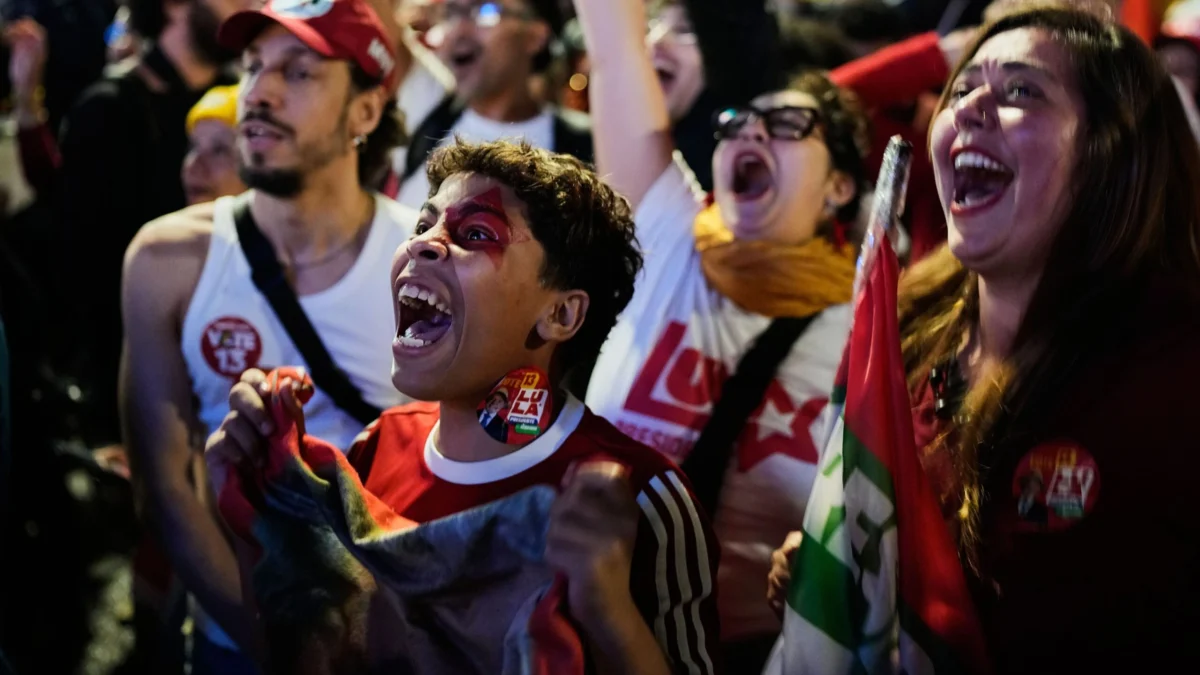
Brazil has once again turned to Luiz Inácio Lula da Silva, the charismatic former union leader, to steer the nation. Preliminary results from a nail-biting runoff election indicate that Lula, representing the Workers’ Party (PT), has narrowly defeated the incumbent right-wing President Jair Bolsonaro. The Supreme Electoral Court announced that with nearly all votes counted, Lula secured 51.75% of the vote, compared to Bolsonaro’s 48.25%, a margin that appears insurmountable and guarantees him a third term in office. This victory marks a significant political comeback for the 80-year-old, capping a deeply divisive election campaign that polarized the South American giant.
A Rollercoaster of Emotions: The Tense Vote Count
The election night in Brazil was a dramatic affair, characterized by an exceptionally close contest that kept voters and observers on the edge of their seats. For much of the vote tabulation, the lead frequently shifted between the two prominent candidates, creating an atmosphere of intense uncertainty. Initially, Jair Bolsonaro appeared to be gaining momentum, narrowing a deficit that had emerged in the early stages of the count. However, as more ballots were tallied, Luiz Inácio Lula da Silva began to pull ahead, ultimately establishing a lead that his challenger could not overcome.
Reports from the ground painted a vivid picture of the nation’s divided sentiments. In the southern district of Rio de Janeiro, a sprawling metropolis of millions, both Lula’s supporters and Bolsonaro’s loyalists erupted in jubilant celebrations and the sounds of music and fireworks with each shift in the electoral tide. A correspondent for the German Press Agency described scenes of fervent cheering and fervent anticipation, mirroring the deep emotions invested in this pivotal election. This stark contrast in public reaction underscored the profound ideological chasm that has characterized Brazilian politics in recent years.
The Stakes: Two Divergent Visions for Brazil
The election pitted two starkly different political philosophies against each other. On one side stood Luiz Inácio Lula da Silva, often referred to simply as Lula, a figure synonymous with Brazil’s economic boom and significant poverty reduction during his previous two terms (2003-2010). Representing the left-leaning Workers’ Party (PT), Lula campaigned on a platform emphasizing social programs, renewed state investment in infrastructure and social welfare, and a commitment to environmental protection, particularly concerning the Amazon rainforest. His supporters view him as a champion of the working class and a symbol of social progress.
His opponent, Jair Bolsonaro, a former army captain and a prominent figure of the right, offered a contrasting vision. Bolsonaro’s platform centered on conservative values, a strong stance against crime, and a more market-oriented economic approach. He had cultivated a base of support among religious conservatives, the agricultural sector, and those disillusioned with traditional politics, often employing a populist and nationalist rhetoric. His presidency was marked by deregulation, a focus on law and order, and a more confrontational foreign policy.
The electorate of approximately 159 million Brazilians, the largest in Latin America, was tasked with choosing between these two competing futures for their nation. The campaign was notably acrimonious, marked by personal attacks and accusations, reflecting the deep polarization within Brazilian society. The outcome was eagerly awaited, with the first preliminary results expected in the early hours of Monday morning in Germany.
Historical Context: Lula’s Comeback and Bolsonaro’s Presidency
Lula’s path back to the presidency is a remarkable political narrative. Having served two consecutive terms, he was constitutionally barred from seeking a third consecutive term in 2010. His political career was later overshadowed by corruption allegations, leading to his imprisonment in 2018. However, his conviction was later annulled by the Supreme Federal Court, allowing him to re-enter the political arena. His ability to secure a victory after such a period of legal and political turmoil speaks volumes about his enduring appeal and his capacity to mobilize a significant portion of the electorate.
Jair Bolsonaro’s presidency, which began in 2019, was characterized by significant policy shifts and considerable controversy. He championed policies aimed at reducing the size and influence of the state, dismantling environmental regulations to encourage agricultural and mining expansion, and adopting a more assertive nationalistic stance on the global stage. His administration faced criticism for its handling of the COVID-19 pandemic, its environmental policies, and its rhetoric, which many viewed as divisive and undermining democratic institutions. Despite these challenges, he maintained a committed base of supporters who lauded his anti-corruption efforts and his promise to restore order and traditional values.
The Electoral Mechanics and Early Indicators
The Brazilian electoral system is designed to ensure a clear winner. In the first round of voting on October 2nd, neither candidate secured the necessary majority (50% plus one vote) to win outright. Lula da Silva received 48.4% of the valid votes, while Jair Bolsonaro garnered 43.2%. This outcome necessitated a runoff election between the top two contenders, setting the stage for the intense contest that unfolded.
The voting process itself is largely electronic, with electronic voting machines used across the country. This system is generally considered efficient, but it has also been a point of contention, with Bolsonaro and his allies questioning its integrity in the past, though no widespread fraud has ever been proven. The Supreme Electoral Court (TSE) is responsible for overseeing the elections and ensuring their fairness and transparency.
Global Reactions and Diplomatic Implications
The election results are expected to have significant repercussions both domestically and internationally. Lula’s previous terms were marked by a more engaged and multilateral approach to foreign policy, emphasizing South-South cooperation and playing a more active role in international forums. His return to power is likely to signal a shift away from Bolsonaro’s more isolationist and often confrontational stance.
Countries that have historically maintained close ties with Brazil, particularly within Latin America and among developing nations, are likely to welcome Lula’s victory. His emphasis on regional integration and social development could lead to renewed cooperation and a more unified approach to common challenges. Conversely, some global powers that aligned with Bolsonaro’s more conservative and business-friendly policies might need to recalibrate their engagement with Brazil.
The international community will be closely watching Lula’s approach to key issues such as environmental protection, particularly the Amazon, where his previous administration had a strong record of conservation efforts. A renewed commitment to combating deforestation and promoting sustainable development would be welcomed by many international environmental organizations and governments.
Analysis of the Outcome and Future Challenges
Lula’s victory, though narrow, represents a significant endorsement of his social and economic agenda by a substantial portion of the Brazilian electorate. It also signals a rejection of Bolsonaro’s presidency by those who were concerned about his governance style and policies. However, the razor-thin margin of victory underscores the deep divisions that persist within Brazil.
One of the most immediate challenges facing President-elect Lula will be the task of unifying a deeply polarized nation. The rhetoric employed during the campaign has left scars, and bridging the ideological divide will require considerable effort and skillful political maneuvering. He will need to govern with a broad coalition, appealing to a wider spectrum of the electorate beyond his core base.
Economically, Brazil faces a complex landscape. Inflation remains a concern, and the country is grappling with the aftermath of global economic disruptions. Lula’s pledge to revive social programs and stimulate economic growth will be tested against the realities of fiscal constraints and global economic uncertainties. His administration will need to strike a delicate balance between social spending and fiscal responsibility.
Furthermore, the environmental agenda will be a critical focus. Lula has promised to halt deforestation in the Amazon and reassert Brazil’s leadership in environmental protection. The success of these initiatives will not only be crucial for Brazil’s ecological future but will also have significant implications for global climate change efforts. International partnerships and robust enforcement mechanisms will be essential.
The role of democratic institutions will also be under scrutiny. While Bolsonaro’s challenges to the electoral system did not ultimately succeed in overturning the results, the underlying sentiment among some of his supporters warrants attention. Lula’s administration will need to work to strengthen public trust in democratic processes and institutions.
In conclusion, Brazil’s decision to elect Luiz Inácio Lula da Silva marks a pivotal moment in its recent history. It is a victory born from a hard-fought campaign that has laid bare the nation’s divisions. The coming years will be critical in determining whether Lula can fulfill his promises of social progress, economic recovery, and environmental stewardship, while simultaneously working to heal the deep political rifts that have characterized this election cycle. The world will be watching closely as Brazil navigates this new chapter under his leadership.
