

The future of transportation is rapidly taking shape, driven by unprecedented advancements in artificial intelligence and automation, as both regulators and industry giants race to define its parameters. In a significant move towards standardizing autonomous vehicle (AV) identification, the U.S. National Highway Traffic Safety Administration (NHTSA) has unveiled a proposal for new lighting requirements, prominently featuring the option for cyan-colored lights to signal when a vehicle is operating in fully autonomous mode without human oversight. This regulatory push coincides with major strategic overhauls by automotive powerhouses like General Motors (GM), which is embedding AI deep into its vehicle architecture and development processes, and a flurry of acquisitions and partnerships reshaping the competitive landscape for self-driving technology.
Regulatory Landscape Takes Shape: NHTSA’s Cyan Signal Proposal
The National Highway Traffic Safety Administration (NHTSA) is actively addressing the complex challenge of integrating autonomous vehicles into the existing transportation ecosystem, focusing on public safety and clear communication. The agency’s latest initiative, a proposed update to federal motor vehicle safety standards (FMVSS), seeks to establish a uniform method for identifying autonomous vehicles when they are operating in self-driving mode. Central to this proposal is the introduction of new lighting requirements, offering manufacturers the option to equip AVs with distinct cyan (blue-green) lights.
This proposed lighting system would activate when a vehicle is operating autonomously without a human occupant actively monitoring the road, a critical distinction for Level 4 and Level 5 autonomous systems. While NHTSA is not mandating the use of cyan lights, the proposal outlines specific equipment specifications. These include guidelines for where the lights should be mounted on the vehicle, the precise color they should emit, and the conditions under which they are activated. The lights would be required to remain steadily illuminated, rather than flashing, and be visible from the front, rear, and both sides of the vehicle, ensuring maximum public awareness. Furthermore, the proposal includes provisions to remove existing requirements for manually operated controls for features like turn signals, high beams, and hazard lights in vehicles designed for full autonomy, acknowledging that such vehicles may not have traditional human interfaces.
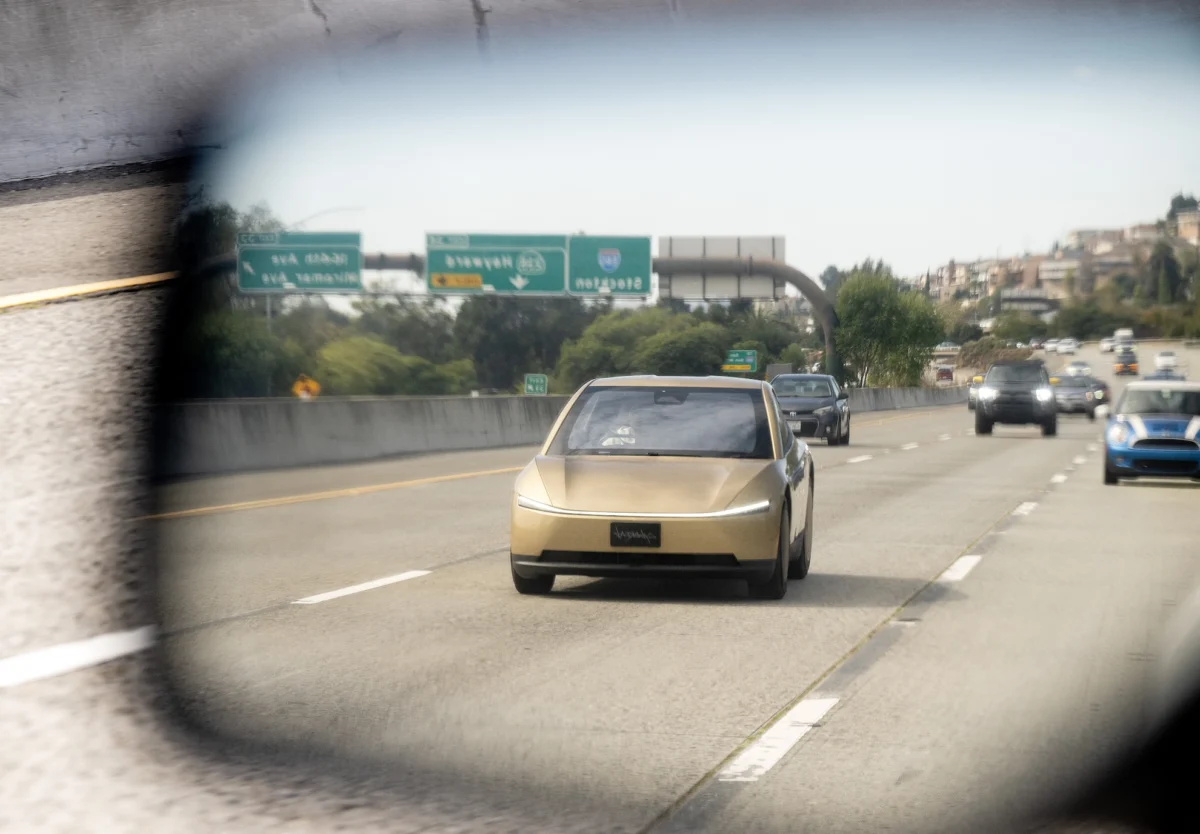
NHTSA Administrator Jonathan Morrison emphasized that this proposal is a crucial component of a broader effort to modernize regulations. The goal is two-fold: to facilitate the safe adoption of autonomous vehicles and to ensure that safety standards keep pace with technological innovation. The current FMVSS framework, largely developed for human-driven vehicles, presents significant challenges when applied to cutting-edge designs like the Tesla Cybercab or Zoox robotaxi, which notably lack conventional, federally required equipment such as pedals, steering wheels, side mirrors, and rearview mirrors. The agency is actively working on a comprehensive federal automated vehicle framework to address these regulatory gaps.
The public comment period for this proposal will be critical, allowing industry stakeholders, safety advocates, and the public to provide feedback on its practicality, effectiveness, and potential implications. Historically, the introduction of new vehicle identification standards can take several years from proposal to final rule, involving extensive testing, economic analysis, and public discourse. The selection of cyan as the proposed color is significant; it is a hue not currently used for standard vehicle signaling (e.g., red for stop/brake, amber for turn/hazard), thus minimizing confusion with conventional vehicle operations and emergency services. This clarity is paramount for fostering public trust, enabling emergency responders to quickly identify the operational status of a vehicle, and potentially paving the way for international harmonization of AV signaling standards. The successful implementation of such a system could markedly improve situational awareness for all road users, reducing ambiguity and contributing to safer interactions between human-driven and autonomous vehicles.
Automotive Giants Accelerate AI Integration: GM’s Transformative Vision
While regulators grapple with the evolving landscape of autonomous vehicle deployment, major automakers are aggressively retooling their strategies to dominate the future of mobility. General Motors (GM) recently unveiled its ambitious roadmap at its annual GM Forward event, showcasing a profound commitment to embedding artificial intelligence and advanced computing across its entire product lifecycle. This strategic pivot builds upon previous years’ AI initiatives but now comes with more granular details and concrete timelines, signaling a comprehensive transformation within the automotive giant.
At the core of GM’s strategy is a massive overhaul of the electrical and computational architecture within its upcoming vehicles. This next-generation platform is designed to deliver significantly faster software updates, enable more sophisticated automated driving features, and power a revolutionary custom, conversational AI assistant. This AI assistant is poised to redefine GM’s OnStar service, a cornerstone of its connected vehicle offerings for over three decades, transforming it into a proactive and personalized in-car experience. The advanced architecture will also support sophisticated sensor fusion, real-time decision-making, and robust cybersecurity protocols essential for highly automated driving.
The first tangible manifestation of this technological leap is slated for 2028 with the debut of the Cadillac Escalade IQ. This luxury electric SUV will serve as the flagship for GM’s new software-defined vehicle era. Concurrently, GM plans to roll out an advanced autonomous highway driving feature by 2028, designed to allow drivers to operate their vehicles with their hands and eyes off the road, crucially without the immediate need to be ready to take over. This capability, indicative of a Level 3 or higher autonomous system, represents a significant step beyond existing driver-assistance technologies and positions GM at the forefront of automated driving development.
Beyond product integration, GM is leveraging enterprise-wide AI to dramatically accelerate its development processes. By adopting AI tools and methodologies across design, engineering, and manufacturing, the company aims to slash its traditional four-to-five-year vehicle development timeline in half. This ambitious target underscores the potential of AI to enhance efficiency, optimize resource allocation, and foster rapid innovation, enabling GM to bring new technologies and vehicles to market with unprecedented speed. This streamlined approach is not merely about cost savings but about maintaining a competitive edge in a global market where agility is increasingly paramount.
Observers of the automotive industry will recall previous efforts by GM and other legacy automakers to compete with Tesla, often characterized by incremental technological upgrades. However, GM’s current strategy signals a much broader and more fundamental transformation, suggesting preparation for a multi-front battle that extends beyond direct competition with Tesla. It aims to position GM favorably against a new wave of technologically advanced entrants, including emerging Chinese EV manufacturers that are rapidly gaining market share through their own aggressive software and AI integration strategies. By investing heavily in its internal AI capabilities and electrical architecture, GM is not just building cars; it is building a comprehensive intelligent mobility platform designed to lead in the era of software-defined vehicles. This holistic approach, combining advanced in-vehicle AI with enterprise-level operational efficiencies, reflects a clear understanding that the future of automotive success hinges on technological prowess and speed of innovation.

Strategic Acquisitions and Global Partnerships Reshape the AV Ecosystem
The race to achieve widespread autonomous mobility is characterized by intense innovation, significant capital investment, and a dynamic landscape of strategic alliances and acquisitions. Recent developments underscore the critical importance of advanced simulation, global market penetration, and the diversification of autonomous technologies beyond traditional road vehicles.
Rivian’s Strategic Acquisition of Third Dimension for Enhanced Simulation
In a move to accelerate its self-driving ambitions, electric vehicle manufacturer Rivian recently acquired Third Dimension, a U.K. startup specializing in leveraging AI to transform images and videos into highly realistic 3D virtual worlds. This acquisition highlights the enduring and evolving importance of simulation in autonomous vehicle development. While "simulation is so 2017" might be a common refrain among AV industry veterans, the technology behind it has progressed exponentially, moving beyond basic virtual environments to create sophisticated digital twins that mirror the physical world with remarkable fidelity.
Rivian’s head of autonomy, James Philbin, articulated the company’s need for technology that could effectively "close the sim-to-real gap"—the persistent challenge of ensuring that data generated in simulated environments accurately translates to real-world performance. Advanced simulation allows AV developers to test millions of scenarios, including rare and hazardous ones, without the prohibitive costs and safety risks of real-world road testing. Third Dimension’s expertise in generating lifelike 3D worlds from real driving data is crucial for creating robust training environments for AI algorithms, enabling more rapid iteration and validation of self-driving software. This strategic acquisition is expected to significantly bolster Rivian’s capacity for virtual testing and validation, accelerating its timeline for deploying more capable autonomous features in its R1T electric pickup truck, R1S SUV, and future models like the anticipated R2 and R4. The terms of the deal were not disclosed, but insights into Third Dimension’s prior $7 million seed round and its team of approximately 15 engineers suggest a targeted acquisition focused on specialized talent and intellectual property rather than a large-scale corporate merger.
inDrive, Pony.ai, and Nvidia Forge Robotaxi Alliance in Central Asia
Expanding the global footprint of autonomous ride-hailing, the ride-hailing company inDrive, known for its unique fare negotiation model between passengers and drivers, has announced a memorandum of understanding (MoU) with Chinese autonomous driving firm Pony.ai and technology giant Nvidia. This partnership aims to commence testing robotaxis in Kazakhstan by 2027, marking a significant foray into Central Asia for advanced autonomous mobility services.
This collaboration leverages Pony.ai’s proven robotaxi technology, Nvidia’s powerful AI computing platforms essential for autonomous driving, and inDrive’s established ride-hailing network. The phased approach, starting with testing in 2027, indicates a careful strategy to navigate local regulatory frameworks and adapt the technology to regional driving conditions. For Pony.ai, this represents another step in its international expansion strategy, following deployments and tests in China and parts of the United States. For inDrive, integrating robotaxis could offer new avenues for efficiency and service scalability, potentially disrupting traditional transportation models in emerging markets. The partnership underscores the trend of specialized technology providers and mobility platforms converging to accelerate the commercialization of autonomous services globally.
Reliable Robotics Secures Major Funding for Autonomous Aviation
Beyond road vehicles, the realm of autonomous flight is also witnessing significant investment and technological breakthroughs. Reliable Robotics, a startup focused on commercializing autonomous flying technology for existing aircraft, recently announced a substantial Series D extension round, securing an additional $115 million. This funding infusion, comprising $90 million in equity led by Nimble Partners and $25 million in debt from Silicon Valley Bank, brings the total Series D round to $275 million and propels the company’s valuation beyond the $1 billion mark, solidifying its unicorn status.
Reliable Robotics’ technology is designed to be installed on existing aircraft, enabling them to operate autonomously. This approach bypasses the need for entirely new aircraft designs, potentially accelerating adoption by leveraging a vast installed base of certified airframes. The company’s focus is initially on cargo operations, which often present fewer regulatory and public acceptance hurdles than passenger transport. The certification of autonomous systems for aviation is notoriously rigorous, involving extensive testing and regulatory approval from bodies like the Federal Aviation Administration (FAA). Reliable Robotics’ success in securing significant funding reflects investor confidence in its technological advancements and its ability to navigate these complex regulatory pathways. The long-term implications of this technology could revolutionize air freight, enable remote aerial missions, and potentially lay the groundwork for future autonomous passenger air travel, addressing pilot shortages and enhancing operational efficiency across the aviation sector.
Broader Industry Movements and Technological Advancements
The transformation of the mobility sector is multifaceted, extending beyond new vehicle designs and regulatory frameworks to encompass societal reactions, the integration of advanced digital ecosystems, and shifts in manufacturing strategies.
The Undercurrent of Opposition: Anti-Robotaxi Campaigns
As autonomous vehicle technology advances, so too does public scrutiny and organized opposition. Recent reports, including one by the Washington Post, have highlighted the mysterious origins of groups campaigning against robotaxis in cities like Washington D.C. This phenomenon is not new; earlier investigations revealed that organizations like the Coalition for Accountability and Road Safety, which engaged in canvassing and social media campaigns against robotaxis, were registered to employees of lobbying firms with ties to labor unions and traditional transportation operators, such as the New York Black Car Operators’ Injury Compensation Fund.
These campaigns often tap into public concerns regarding safety, job displacement for human drivers, and the ethical implications of AI decision-making. The tactics range from grassroots activism to sophisticated lobbying efforts, aimed at influencing public opinion and regulatory decisions. The emergence of such opposition underscores the complex socio-political challenges inherent in deploying transformative technologies, requiring AV companies and regulators to proactively address public concerns and build trust through transparent communication and robust safety records.
Google’s Personalized AI for the Automotive Experience
The battle for in-car digital supremacy is intensifying, with tech giants like Google pushing the boundaries of integrated artificial intelligence. Google is upgrading its Gemini AI assistant in vehicles with a "personal intelligence feature," designed to offer a highly customized user experience. This enhanced Gemini will draw upon a wealth of personal information from connected Google services, including Gmail, Google Calendar, YouTube, Maps, and Google Search history, to understand a user’s preferences, activities, and past experiences.

The integration of such a deeply personalized AI assistant aims to transform the in-car experience, offering proactive suggestions for navigation, entertainment, communication, and scheduling. For instance, Gemini could suggest an optimal route based on calendar appointments, recommend music based on listening habits, or facilitate communication with contacts relevant to current activities. While promising unprecedented convenience, this level of data integration also raises important questions about data privacy, security, and user control over their personal information, issues that Google and automakers will need to meticulously address to ensure widespread consumer adoption and trust.
GM’s Manufacturing Adaptations
Even as GM invests heavily in future technologies, it continues to optimize its manufacturing footprint. The automaker announced the closure of a plant south of Detroit that assembled battery packs for the Cadillac Celestiq EV and both electric drive units and battery packs for the plug-in hybrid Chevrolet Corvette E-Ray. Crucially, GM clarified that this closure is not a reflection of a shift in its electric vehicle strategy or a slowdown in EV adoption. Instead, it was attributed to the expiration of the lease on the facility.
This incident highlights the dynamic nature of modern automotive manufacturing, where flexibility in production capacity and supply chain management is key. Automakers are constantly re-evaluating their operational structures to adapt to evolving market demands, technological advancements, and logistical efficiencies. Such closures, when driven by non-strategic factors like lease terms, underscore the need for careful interpretation of manufacturing news within the broader context of a company’s long-term vision.
Waymo’s Continued Expansion
Waymo, a pioneer in autonomous driving technology, continues its methodical expansion, deepening its presence in existing operational cities and venturing into new international markets. The company announced plans to launch a robotaxi service in Spain, beginning with Madrid, with services expected to open to riders in 2027. This move signifies Waymo’s first major international expansion outside of North America, marking a crucial step in its global commercialization strategy.
Closer to home, Waymo has also commenced shuttling customers to and from the Harry Reid International Airport in Las Vegas. Airport routes are strategically important for robotaxi services, as they represent high-demand corridors with predictable traffic patterns and a clear value proposition for travelers seeking convenient and reliable transportation. Waymo’s phased expansion, characterized by careful testing, regulatory engagement, and gradual public rollout, reflects a mature approach to deploying complex autonomous technology. The entry into major international cities like Madrid, alongside expanded services in key U.S. markets, positions Waymo to capture significant market share in the rapidly growing autonomous mobility sector.
Musk’s Dual Empire: Tesla, SpaceX, and the AI-Robotics Frontier
Elon Musk’s ambitious vision for the future, spanning electric vehicles, space exploration, and artificial intelligence, took center stage with recent reports regarding potential mergers and diverse financial performances across his empires.
Speculation around a merger between Tesla and SpaceX has reached a new intensity, following comments by Musk that the boards of both companies have formed special committees to review such a consolidation. The rationale behind a potential merger is multifaceted, including leveraging synergies in AI, robotics, and advanced manufacturing, and potentially streamlining capital allocation across Musk’s ventures. However, such a merger would face significant regulatory scrutiny, including antitrust concerns, and would require complex financial engineering and shareholder approval.
Financially, the two companies present a contrasting picture. SpaceX’s AI business is experiencing a remarkable boom, generating $7.5 billion in revenue and now accounting for a substantial 52% of the company’s total income. This robust performance highlights the significant commercial success of SpaceX’s ventures, particularly its Starlink satellite internet service, which heavily relies on AI for network management and optimization.
In contrast, Tesla reported a flat revenue across its segments, while its operational expenses continued to grow. This resulted in a significant 43% year-over-year decline in profits, raising concerns among some investors about the company’s short-term financial health amidst intense competition in the EV market. Despite these financial pressures, Musk remains steadfastly focused on Tesla’s long-term AI and robotics future.
During the earnings call, Musk provided updates on several key initiatives. Tesla has commenced production of its Optimus humanoid robot in California, signaling its aggressive entry into the burgeoning field of general-purpose robotics. The "unsupervised version" of its Full Self-Driving (FSD) software, a highly anticipated feature, was delayed to the second quarter of next year, indicating ongoing challenges in perfecting advanced autonomous capabilities. Yet, the company reported rosy FSD subscription growth, suggesting continued customer interest in its software offerings. Perhaps the most ambitious announcement was Tesla’s plan to start selling its Cybercab to customers by the end of the year, signaling a significant push into autonomous ride-hailing services. As senior reporter Sean O’Kane aptly summarized, "Tesla is prepping for a Cybercab onslaught," indicating a strategy to rapidly deploy its autonomous taxi fleet and potentially disrupt urban transportation on a massive scale. This strategy underscores Musk’s belief that AI and robotics, particularly through FSD and Cybercab, will be the primary drivers of Tesla’s future growth and profitability, even as the core automotive business faces headwinds.
The convergence of regulatory efforts to ensure safety and clarity, coupled with aggressive technological advancements and strategic corporate maneuvers, paints a vivid picture of a mobility sector in flux. From NHTSA’s proposed cyan lights signaling autonomous operation to GM’s deep integration of AI across its enterprise, and from Rivian’s strategic simulation acquisition to Waymo’s global expansion, the pace of change is accelerating. Elon Musk’s ambitious dual empire, with SpaceX’s AI boom and Tesla’s "Cybercab onslaught," further illustrates the pervasive influence of artificial intelligence and robotics in shaping not just how we move, but how industries evolve. The challenges of public acceptance, regulatory harmonization, and intense competition remain, but the trajectory towards an increasingly autonomous and intelligent future of transportation is undeniable and rapidly unfolding.
