

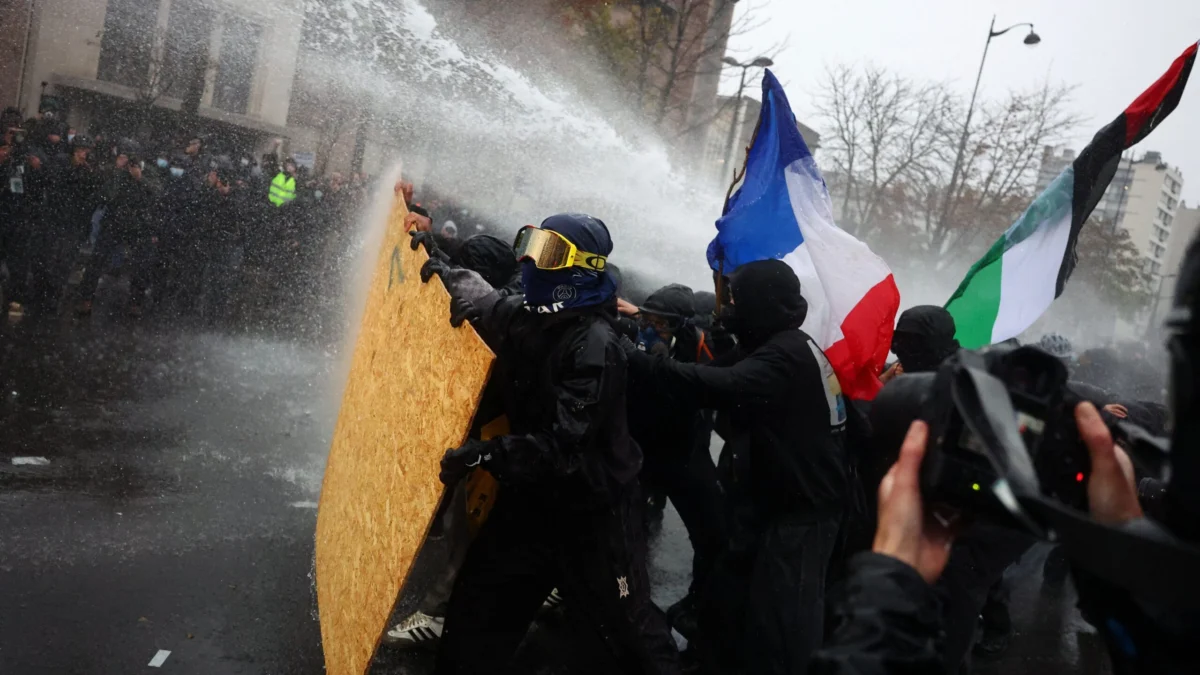
PARIS – A day of nationwide protests across France was marred by significant violence and numerous arrests in several cities, according to official reports. The French Ministry of the Interior stated that nearly 1,000 individuals were apprehended across the country by yesterday evening, with the final tally expected to rise as ongoing assessments continue. While acknowledging instances of property damage and looting, Interior Minister Laurent Nuñez asserted that authorities had successfully prevented many widespread acts of vandalism, suggesting the level of disruption was less severe than that experienced in the preceding week.
The heightened security measures were put in place following a period of intense unrest that erupted on October 17th, casting a long shadow over the current demonstrations. A formidable deployment of 70,000 police officers and gendarmes was mobilized over the weekend to manage the protests, with water cannons and armored vehicles strategically positioned in anticipation of potential clashes.
In anticipation of further disturbances, shop owners in Paris and other urban centers took proactive measures, boarding up their storefronts with plywood to safeguard against damage. Several cities imposed restrictions on public gatherings in specific zones and implemented curfews. The Ministry of the Interior reported that approximately 410,000 people participated in the nationwide protests yesterday, with around 110,000 of them converging in the capital, Paris.
The Paris police prefecture reported that over 3,000 checks were conducted within the city, leading to 65 arrests. The protests saw a confluence of various groups, with young people, who have been demonstrating for weeks demanding better school resources, joined by others expressing grievances over the rising cost of living.
Background and Escalation of Tensions
The current wave of protests is intrinsically linked to broader societal discontent and specific policy debates within France. While the exact trigger for yesterday’s specific demonstrations is multifaceted, it is clear that the underlying tensions are fueled by a complex interplay of economic hardship, social inequalities, and perceived governmental shortcomings. The recent past has seen significant public mobilization around issues such as pension reforms, which triggered widespread strikes and demonstrations in early 2023, and earlier, the "Yellow Vest" movement that began in 2018, highlighting deep-seated anger over economic disparity and the cost of living.
The events of October 17th, which served as a precursor to the heightened security measures, likely refer to significant incidents of rioting and clashes between protesters and law enforcement. Such events often stem from a combination of factors, including the presence of extremist elements seeking to exploit peaceful demonstrations for their own agendas, as well as genuine frustration among protesters encountering what they perceive as heavy-handed policing. The substantial deployment of security forces reflects a government strategy aimed at preventing a recurrence of widespread destruction and maintaining public order, albeit at the cost of potentially stifling legitimate dissent.
Chronology of the Protest Day
The day’s events unfolded with a clear strategy from law enforcement to contain potential outbreaks of violence. Security forces were placed on high alert well in advance, anticipating that the weekend would be a focal point for organized dissent.
Morning and Early Afternoon: Protests began in various cities across France, with initial reports indicating peaceful assemblies. However, as the day progressed, tensions began to rise in certain urban areas. In Paris, demonstrators gathered in designated areas, with the number of participants steadily increasing.
Mid-Afternoon: Incidents of vandalism and confrontations with police started to be reported. These were often concentrated in areas with a higher density of commercial establishments, as evidenced by the preemptive boarding of shop windows. The Ministry of the Interior began monitoring the situation closely, with security forces tasked with responding to disturbances and preventing looting.
Late Afternoon and Evening: The intensity of some clashes peaked. Reports of property damage, including fires and the smashing of storefronts, emerged from cities beyond Paris. The Interior Ministry’s figures of nearly 1000 arrests reflect the intensified law enforcement response during this period, indicating a concerted effort to detain individuals involved in illegal activities. The minister’s statement about preventing "numerous looting" suggests that security forces were actively engaged in disrupting such actions.
Late Evening: As the day drew to a close, the scale of the unrest appeared to diminish in many areas. However, the ongoing assessment and final tally of arrests underscore that the impact of the day’s events continued to be processed by authorities.
Supporting Data and Participation Numbers
The figures released by the French Ministry of the Interior provide crucial data points for understanding the scale of the protests:
- Total Arrests: Nearly 1,000 nationwide, with the number expected to rise. This indicates a significant law enforcement response to perceived disorder.
- Total Participants: Approximately 410,000 nationwide. This figure suggests broad public engagement with the protest movement.
- Paris Participants: Approximately 110,000. This highlights Paris as a central hub for the demonstrations, as is often the case in France.
- Security Personnel Deployed: 70,000 police officers and gendarmes. This substantial deployment underscores the government’s concern about maintaining order and the perceived threat level.
The number of participants, while large, needs to be contextualized against the total population of France (approximately 67 million). However, it represents a significant segment of the population expressing their concerns through collective action. The breakdown of participants in Paris further emphasizes the capital’s role as a focal point for national dissent.
Official Responses and Government Stance
The response from the French government, as articulated by Interior Minister Laurent Nuñez, has been characterized by a dual approach: acknowledging the right to protest while unequivocally condemning violence and criminality.
Minister Nuñez’s statement, "Numerous acts of looting have been prevented," suggests a proactive stance aimed at mitigating damage and demonstrating governmental control. His assertion that the property damage was "not comparable to those of the past week" indicates a comparative assessment of the situation, implying that the enhanced security measures were at least partially effective in curbing the most extreme forms of destruction seen in previous protest days.
The government’s reliance on a significant security presence, including specialized units and equipment like water cannons, signals a policy of zero tolerance for violence during demonstrations. This approach is often a delicate balancing act, as excessive force can further inflame tensions and lead to accusations of repression. However, the government appears to prioritize preventing a breakdown of public order and protecting property.
Broader Impact and Implications
The recurring episodes of protest and violence in France have several significant implications:
- Erosion of Public Trust: Frequent unrest and confrontations can erode public trust in both the government’s ability to manage dissent and in the institutions of law enforcement. This can lead to a cycle of increased polarization and distrust.
- Economic Disruption: Property damage, business closures due to security concerns, and the diversion of resources to policing all have tangible economic consequences. Retailers, in particular, suffer from the destruction of property and lost sales.
- International Perception: Images of violent protests can shape international perceptions of France, potentially impacting tourism and foreign investment.
- Political Ramifications: The government’s handling of protests is a significant political issue. Success in maintaining order without excessive force can bolster its image, while mishandling can lead to public outcry and political challenges. The diversity of protest groups, from students to those concerned about living costs, indicates a broad spectrum of societal grievances that any government must address.
- Freedom of Assembly vs. Public Order: The ongoing tension between the right to peaceful assembly and the imperative to maintain public order remains a central challenge for French authorities. The current strategy appears to favor a robust enforcement of public order, which may lead to accusations of restricting legitimate protest.
The underlying issues driving these protests – economic inequality, the cost of living, and social justice – are complex and require long-term policy solutions. The immediate focus on security and arrests, while necessary to address immediate violence, does not resolve the deeper societal fractures that fuel such demonstrations. The ability of the French government to navigate these challenges will be crucial for its stability and for fostering a more cohesive society. The ongoing nature of these protests suggests that the dialogue between the public and the government remains strained, and that the quest for effective solutions continues.
