

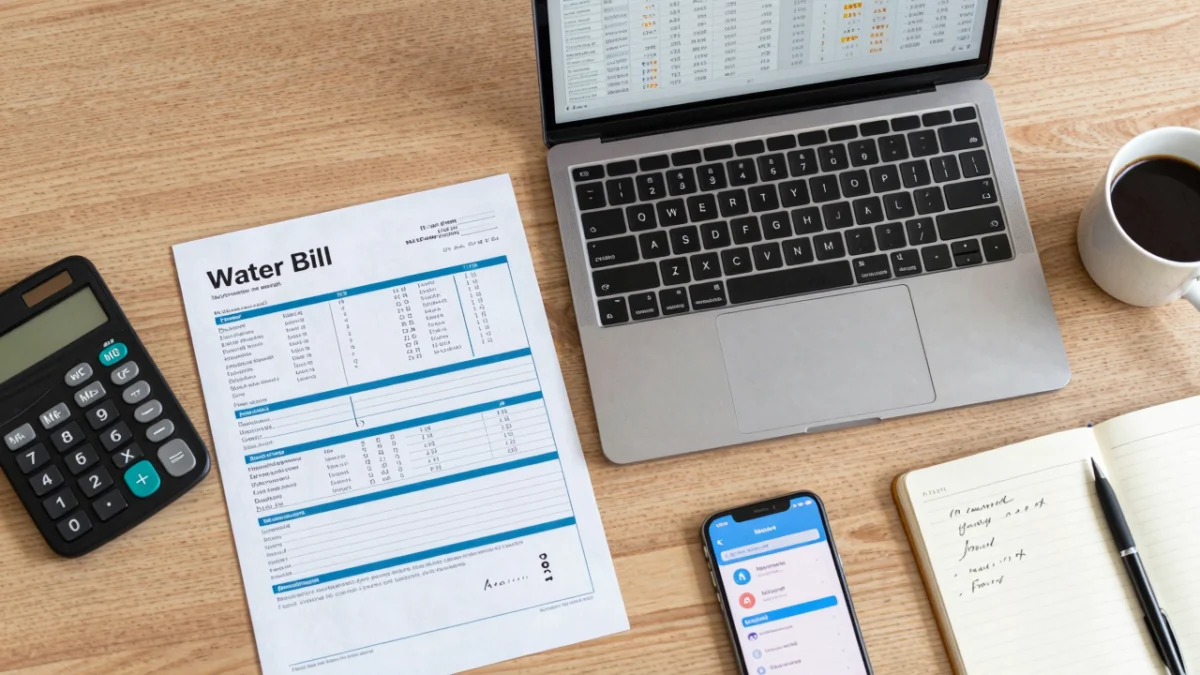
In the contemporary landscape of business accounting, the meticulous classification of utilities expenses has transcended basic bookkeeping to become a cornerstone of strategic financial management. For small business owners and large corporations alike, the process of identifying, recording, and categorizing costs related to electricity, water, gas, and digital connectivity is no longer a peripheral task. Instead, it is a vital function that influences tax liability, operational efficiency, and long-term budgetary forecasting. As energy costs fluctuate and the shift toward hybrid work models continues to redefine the "workplace," the ability to distinguish between operating and administrative utilities has become essential for maintaining a transparent and compliant financial ledger.

The Fundamental Framework of Utilities in Business Accounting
At its core, a utilities expense represents the cost of services consumed during a specific period to support the primary and secondary functions of a business. While the definition seems straightforward, the application in a professional accounting system requires a nuanced understanding of how these costs interact with the income statement and the balance sheet. Typically, utilities are considered "operating expenses" (OPEX) because they are necessary for the day-to-day survival of the enterprise.
However, the classification process begins with the "matching principle" of accounting, which dictates that expenses should be recorded in the same period as the revenue they help generate. For businesses using accrual-basis accounting, this means recording the utility expense when the service is consumed, rather than when the check is written. This distinction is critical for businesses seeking a real-time view of their profitability.

The Chronology of Utility Expense Management
To achieve a high standard of financial accuracy, organizations must follow a disciplined chronology in managing their utility-related data. This lifecycle ensures that no cost is overlooked and that every dollar spent is leveraged for maximum tax benefit.
- Service Consumption and Metering: The cycle begins with the physical consumption of resources. Modern businesses are increasingly adopting "smart meters" to gain granular data on peak usage times, which provides the raw data necessary for subsequent analysis.
- Invoice Receipt and Verification: Upon receiving a bill from a provider—be it for electricity, sewage, or high-speed fiber internet—the accounting department must verify the charges against historical usage patterns and contract terms.
- Primary Categorization: Expenses are initially recorded in the General Ledger. At this stage, the accountant decides whether the utility supports production (Manufacturing Overhead), general operations (Administrative Expense), or sales (Selling Expense).
- Allocation for Shared Spaces: In scenarios involving multi-use facilities or home offices, a proportional allocation is performed. This often involves calculating the square footage of the business-specific area relative to the total facility.
- Tax Substantiation: Finally, receipts and digital records are archived. Under Internal Revenue Service (IRS) guidelines, businesses must maintain these records for at least three to seven years to defend deductions during an audit.
Data Insights: The Rising Cost of Operational Utilities
Recent economic data highlights why utility classification has become a priority for Chief Financial Officers (CFOs). According to reports from the U.S. Energy Information Administration (EIA), commercial electricity prices have seen significant volatility over the past 36 months, driven by global supply chain shifts and the transition toward renewable energy sources.

For a mid-sized manufacturing firm, utilities can account for anywhere from 3% to 10% of total operating costs. When these expenses are misclassified—for instance, if production-line electricity is lumped in with general office heating—the "Cost of Goods Sold" (COGS) becomes skewed. This inaccuracy leads to a misunderstanding of the gross profit margin, potentially resulting in poor pricing decisions that can erode a company’s market position.
Distinguishing Between Operating and Administrative Expenses
The most common point of confusion for business owners is the divide between operating and administrative classifications. While both are deductible, their placement on financial reports serves different analytical purposes.

Operating Utilities: These are costs directly tied to the "engine" of the business. In a restaurant, the gas used for the stoves and the electricity for the walk-in freezers are operating expenses. In a factory, the water used for cooling machinery is an operating cost. Investors look at these figures to determine how efficiently a company produces its core product.
Administrative Utilities: These costs support the "back office" or general management functions. The electricity used to light the HR department’s office or the internet service for the accounting team falls under this category. These are often viewed as "fixed" or "semi-variable" costs that do not fluctuate directly with production volume.

By separating these two, management can perform a "variance analysis." If production remains steady but operating utilities spike, it may indicate equipment failure or energy waste. Conversely, a spike in administrative utilities might suggest an unnecessary expansion of office footprint or inefficiencies in climate control.
Tax Implications and Regulatory Compliance
From a regulatory perspective, the IRS and other global tax authorities view utilities as "ordinary and necessary" business expenses. This makes them fully deductible, but the burden of proof lies with the taxpayer.

For sole proprietors and freelancers, the "Home Office Deduction" remains one of the most scrutinized areas of tax law. To successfully deduct utilities for a home office, the space must be used "regularly and exclusively" for business. The most common method for allocation is the square footage method. For example, if a home office occupies 200 square feet of a 2,000-square-foot home, the taxpayer can generally deduct 10% of their home’s electricity, water, and gas bills.
Furthermore, the shift toward "green accounting" is introducing new variables. Many jurisdictions now offer tax credits for businesses that invest in energy-efficient utilities. Correctly classifying these investments as capital expenditures versus recurring expenses is vital for capturing these incentives.

Official Responses and Professional Perspectives
Leading accounting bodies, such as the American Institute of Certified Public Accountants (AICPA), emphasize that the "digitization of the utility trail" is the best defense against financial inaccuracy. In a recent advisory, industry experts noted that manual data entry for utility bills is the leading cause of "ledger noise"—small, repetitive errors that aggregate into significant financial discrepancies over time.
"Financial transparency starts at the utility meter," says Sarah Jenkins, a senior tax consultant. "When a client treats their water or electric bill as a ‘miscellaneous’ cost, they lose the ability to see the true cost of their operations. In an era of thin margins, knowing exactly what it costs to keep the lights on in the warehouse versus the showroom is a competitive advantage."

The Role of Technology in Streamlining Management
The emergence of Expense Management Software (EMS) and Enterprise Resource Planning (ERP) systems has revolutionized how utilities are tracked. Modern platforms can now integrate directly with utility provider portals via API (Application Programming Interface). This allows for:
- Automated Data Capture: Invoices are pulled automatically, eliminating the risk of lost paper bills.
- Real-Time Analytics: Dashboards can show energy consumption spikes as they happen, rather than thirty days later when the bill arrives.
- Automated Allocation: Software can be programmed to automatically split a single utility bill into different departments (e.g., 70% to Production, 30% to Administration) based on pre-set rules.
This technological shift not only saves time but also enhances the "audit trail." In the event of a tax inquiry, a digital system provides a clear, time-stamped history of every utility payment and its corresponding classification.

Broader Impact: Sustainability and ESG Reporting
Beyond the balance sheet, the classification of utilities is increasingly tied to Environmental, Social, and Governance (ESG) reporting. Large corporations are now required to disclose their carbon footprint and resource consumption to shareholders. Accurate utility tracking is the primary source of data for these disclosures.
By meticulously categorizing water and energy usage, companies can set "Sustainability Benchmarks." For instance, a company might set a goal to reduce its "Administrative Electricity Intensity" by 15% over two years. Without the precise classification of these expenses, measuring progress toward such a goal would be impossible. This demonstrates that utility accounting is moving from a back-office necessity to a front-facing component of corporate responsibility.

Conclusion: Strategic Benefits of Accurate Classification
In summary, the classification of utilities expenses is a multi-faceted discipline that demands attention to detail and a forward-thinking approach. By moving beyond simple bill-paying and toward a system of detailed categorization and digital tracking, businesses can secure several key advantages:
- Maximum Tax Efficiency: Ensuring every eligible cent is deducted through proper substantiation.
- Enhanced Budgeting: Creating more accurate forecasts by understanding the variable nature of operating utilities versus the fixed nature of administrative costs.
- Operational Transparency: Identifying waste and inefficiencies in specific departments or production lines.
- Audit Readiness: Maintaining a robust, digital paper trail that satisfies the most stringent regulatory requirements.
As the global economy continues to grapple with energy transitions and new ways of working, the businesses that master the nuances of their utility expenses will be best positioned to maintain healthy margins and sustainable growth. The "utility expense" line item may be a standard fixture on the income statement, but for the savvy financial manager, it is a powerful tool for organizational insight.
