

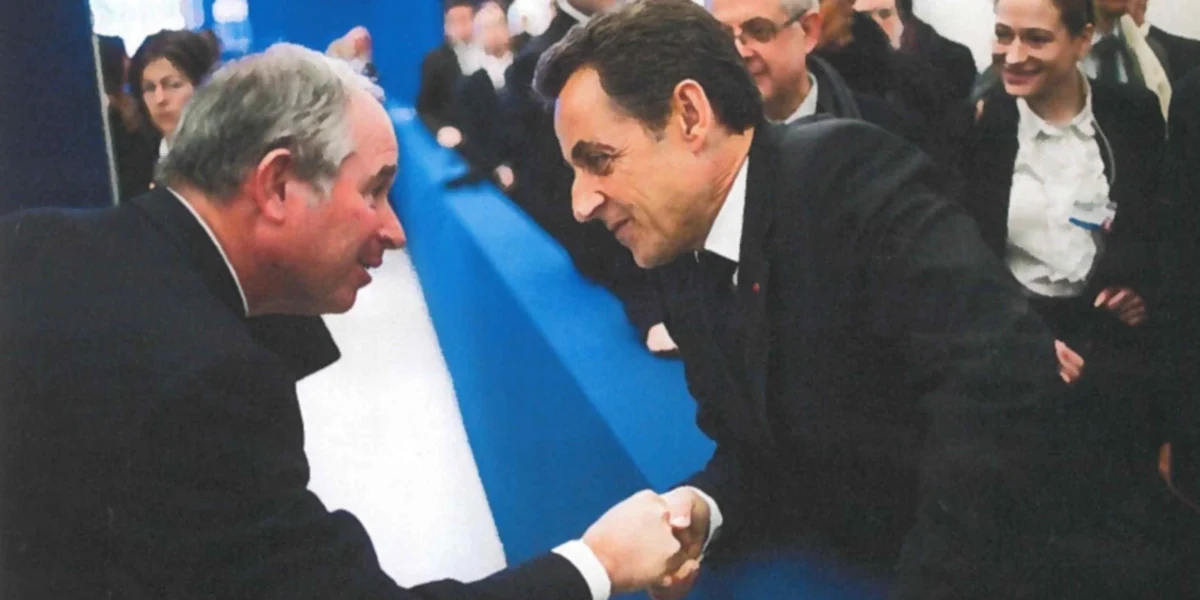
Of all the events I have lived through in finance, none has intrigued me more than the global financial crisis that began in 2007. This seismic event, far from being a mere cyclical downturn, fundamentally reshaped the landscape of global finance, ushering in an era where the traditional tenets of pure market investing were irrevocably challenged. What transpired was not simply a collapse of asset values, but a profound systemic failure that exposed deep-seated vulnerabilities within the financial architecture, prompting a reassessment of regulatory frameworks, risk management practices, and the very nature of financial innovation.

The crisis, which reached its zenith in the autumn of 2008, was the culmination of years of build-up, fueled by a confluence of factors including lax lending standards, a surge in complex financial instruments, and an interconnected global financial system that amplified contagion. At its heart lay the U.S. subprime mortgage market, where a proliferation of high-risk loans were bundled into sophisticated securities and sold to investors worldwide. When homeowners began to default in increasing numbers, these seemingly innocuous securities rapidly lost their value, triggering a domino effect across financial institutions.
The Genesis of the Crisis: A Perfect Storm
The roots of the 2007-2008 global financial crisis can be traced back to the early 2000s. Following the dot-com bubble burst and the September 11th terrorist attacks, central banks, particularly the U.S. Federal Reserve, implemented a period of accommodative monetary policy. This resulted in historically low interest rates, which in turn stimulated a housing boom. The demand for housing, coupled with the availability of cheap credit, led to a rapid increase in property values.

This environment created fertile ground for the expansion of the subprime mortgage market. Lenders, eager to capitalize on the booming market, began to relax their underwriting standards, offering mortgages to borrowers with poor credit histories, often with features designed to make initial payments appear affordable but with the potential for significant increases later on. These "subprime" loans became a significant component of the mortgage market.
The Rise of Securitization and Complex Financial Instruments
Crucially, these subprime mortgages were not held by the originators. Instead, they were packaged together into complex financial products, such as Mortgage-Backed Securities (MBS) and Collateralized Debt Obligations (CDOs). These securities were then sliced into different tranches, each with varying levels of risk and return, and sold to investors globally. The underlying assumption was that diversification across a large pool of mortgages would mitigate the risk of any single default.

Rating agencies played a significant role in this ecosystem, assigning high credit ratings to many of these complex securities, even those containing substantial subprime exposure. This gave investors a false sense of security, encouraging widespread adoption of these instruments across pension funds, mutual funds, and other institutional portfolios. The perceived safety and attractive yields of these products fueled a global demand, creating a vast and interconnected market that extended far beyond the U.S. housing sector.
The Unraveling: From Defaults to Systemic Collapse
The turning point arrived as interest rates began to rise and the U.S. housing market showed signs of cooling. As adjustable-rate mortgages reset to higher payments, a growing number of subprime borrowers found themselves unable to keep up with their payments, leading to a sharp increase in defaults. This initial wave of defaults began to erode the value of the underlying mortgages, and consequently, the MBS and CDOs that contained them.

The opacity and complexity of these securities meant that it became increasingly difficult for investors to assess their true value and the extent of their exposure. As defaults mounted, the market for these instruments froze. Financial institutions holding significant quantities of these toxic assets faced mounting losses.
The interconnectedness of the global financial system meant that the distress in the U.S. subprime market quickly spread. Banks and other financial institutions, unsure of the solvency of their counterparties, became reluctant to lend to each other, leading to a severe liquidity crisis. This credit crunch choked off the flow of capital, impacting businesses and consumers worldwide.

Key Chronological Milestones:
- 2001-2004: Sustained period of low interest rates following the dot-com bust and 9/11 attacks.
- 2004-2006: Significant growth in subprime lending and securitization. Housing prices surge.
- 2007: Defaults on subprime mortgages begin to rise. Major financial institutions report significant losses on subprime-related assets. Bear Stearns hedge funds collapse.
- March 2008: Bear Stearns is acquired by JPMorgan Chase in a government-brokered deal, signaling the severity of the crisis.
- September 2008:
- September 7: Fannie Mae and Freddie Mac, two U.S. government-sponsored enterprises that held or guaranteed trillions of dollars in mortgages, are placed into conservatorship by the U.S. government.
- September 15: Lehman Brothers files for bankruptcy, the largest bankruptcy in U.S. history, sending shockwaves through global markets. Merrill Lynch is acquired by Bank of America.
- September 16: The U.S. government bails out the insurance giant AIG, which had insured many of the complex derivatives at the heart of the crisis.
- September 2008: The U.S. Congress passes the Troubled Asset Relief Program (TARP), authorizing $700 billion to stabilize the financial system.
- Late 2008 – Early 2009: Global stock markets experience dramatic declines. Major economies enter recession.
The Impact on Global Markets and Institutions
The failure of Lehman Brothers on September 15, 2008, was a pivotal moment, marking the point where the crisis tipped from a severe financial disturbance into a full-blown global systemic meltdown. The immediate aftermath saw unprecedented volatility in financial markets. Stock markets plummeted, credit markets seized up, and the global economy teetered on the brink of collapse.

Institutions that had been considered too big to fail, such as the insurance giant AIG, required massive government bailouts to prevent their collapse from triggering further contagion. Several major financial institutions were forced into mergers or acquisitions under duress, dramatically reshaping the banking landscape. The crisis led to a sharp contraction in global trade and investment, and most major economies experienced severe recessions.
Supporting Data and Economic Indicators:

- Housing Market Collapse: U.S. home prices, as measured by the S&P/Case-Shiller Home Price Index, fell by over 30% from their peak in 2006 to their trough in 2012.
- Stock Market Declines: The S&P 500 index fell by over 50% from its peak in October 2007 to its low in March 2009.
- Unemployment Surge: The U.S. unemployment rate more than doubled, rising from around 4.5% in early 2007 to a peak of 10% in October 2009.
- Global GDP Contraction: The International Monetary Fund (IMF) estimated that global GDP contracted by 0.1% in 2009, the first annual contraction since World War II.
- Financial Institution Losses: Major banks reported hundreds of billions of dollars in losses from write-downs of mortgage-related assets.
Official Responses and Regulatory Overhaul
Governments and central banks worldwide responded with a combination of liquidity injections, interest rate cuts, and fiscal stimulus packages. The U.S. Federal Reserve and other central banks aggressively lowered interest rates to near zero and implemented unconventional monetary policies, such as quantitative easing, to inject liquidity into the financial system.
In the U.S., the Troubled Asset Relief Program (TARP) was enacted, providing capital to banks and other financial institutions to prevent their collapse. This was accompanied by significant regulatory reforms aimed at preventing a recurrence of such a crisis. The Dodd-Frank Wall Street Reform and Consumer Protection Act, passed in 2010, introduced sweeping changes to financial regulation, including increased capital requirements for banks, the establishment of the Consumer Financial Protection Bureau, and new rules for derivatives trading.

Globally, the Basel Committee on Banking Supervision implemented stricter capital and liquidity requirements for banks under Basel III. The crisis also highlighted the need for enhanced international cooperation in financial regulation and crisis management.
The End of Pure Market Investing: A Paradigm Shift
The global financial crisis of 2007-2008 served as a stark illustration that the assumption of perfectly rational markets, self-correcting imbalances, and the inherent wisdom of unfettered financial innovation was, at best, an oversimplification and, at worst, a dangerous fallacy. The event exposed the systemic risks embedded in highly interconnected and complex financial systems, where the failure of one institution or market segment could cascade rapidly through the global economy.

This led to a fundamental re-evaluation of "pure market investing." The crisis demonstrated that markets, left entirely to their own devices, could amplify irrational exuberance, create asset bubbles, and generate systemic fragility. The subsequent regulatory interventions, while aimed at stabilizing the system, also signaled a new era where government oversight and intervention would play a more prominent role in managing financial stability.
The concept of "too big to fail" became a central concern, leading to discussions and implementations of resolution regimes designed to wind down failing systemic institutions without triggering a broader collapse. The interconnectedness of global finance meant that national regulatory efforts were often insufficient, prompting calls for greater international coordination.

The crisis also illuminated the ethical dimensions of finance. The widespread perception that financial institutions had engaged in reckless behavior, reaped enormous profits during the boom years, and then relied on taxpayer bailouts during the bust fueled public anger and calls for greater accountability. This has had a lasting impact on public trust in financial institutions and the perceived fairness of the economic system.
In conclusion, the global financial crisis of 2007-2008 was a watershed moment. It was not merely a cyclical downturn but a profound systemic failure that led to the most significant economic contraction since the Great Depression. The crisis exposed the vulnerabilities inherent in complex financial instruments, lax regulation, and the interconnectedness of the global financial system. Its legacy is a transformed regulatory landscape, a more cautious approach to financial innovation, and a permanent shift away from the notion of "pure market investing" towards a more nuanced understanding of the interplay between markets, regulation, and systemic stability. The lessons learned from this period continue to inform financial policy and market behavior, shaping the way we understand and manage risk in the 21st century.
