


Michael Vassiliadis, the influential head of the IG BCE mining and chemical workers’ union, has firmly dismissed any possibility of assuming a leadership position within the RAG Foundation. This strong stance comes amidst his ongoing involvement in the complex negotiations surrounding the potential acquisition of the specialty chemicals giant Evonik by BASF. Vassiliadis, navigating a delicate balance due to his supervisory board role at BASF, has reiterated his specific conditions for a potential merger while emphasizing his refusal to be drawn into the governance of the RAG Foundation.

The Evonik-BASF Standoff: A High-Stakes Negotiation
The current drama centers on BASF’s expressed interest in acquiring Evonik, a move that could reshape the European chemical landscape. BASF, a global leader in the chemical industry, formally declared its interest in the Essen-based Evonik in late September. However, Evonik’s management has deemed the initial terms put forth by BASF as insufficient, leading to a protracted negotiation period where both parties are meticulously dissecting the conditions required for further discussions. This standoff highlights the significant strategic and financial considerations at play, with both companies vying for advantageous terms.
Evonik, a company born from the restructuring of Germany’s industrial past, holds a unique position in the market. Its portfolio of specialty chemicals, ranging from high-performance polymers to additives and coatings, is crucial for a vast array of downstream industries. The potential acquisition by BASF, another chemical behemoth with a broad spectrum of operations, raises questions about market concentration, innovation synergies, and the future strategic direction of both entities.
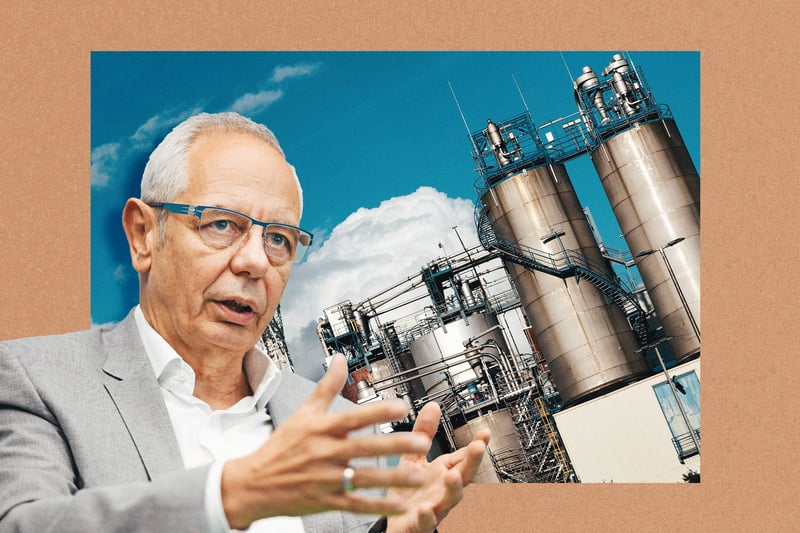
Vassiliadis’s Dual Role and Strategic Position
Michael Vassiliadis occupies a unique and strategically significant position in this unfolding scenario. As the leader of the IG BCE, he represents the interests of a substantial workforce within the German chemical and mining sectors, including many employees at Evonik. His long-standing relationships and deep understanding of the industry’s key players provide him with considerable insight into the dynamics of these high-stakes negotiations.
Simultaneously, Vassiliadis serves on the supervisory board of BASF. This dual role, while granting him a seat at the table for strategic discussions at one of the involved companies, also necessitates a declaration of conflict of interest regarding direct involvement in the Evonik acquisition talks. This means he cannot directly influence or participate in the negotiations themselves, forcing him to articulate his views and conditions through public statements and interviews, as he has done with Handelsblatt.
His explicit exclusion of any RAG Foundation leadership role is a clear signal that his focus remains on safeguarding the interests of workers within the chemical industry and on the specific terms of any potential Evonik-BASF consolidation, rather than seeking new governance responsibilities within the foundation.
The RAG Foundation: A Legacy of German Industrial Transition
The RAG Foundation, formerly known as the Ruhrkohle AG, plays a critical role in managing the legacy of Germany’s coal mining industry and supporting regional structural changes. Established to oversee the financial liabilities and social responsibilities arising from decades of coal extraction, the foundation has evolved to become a significant institutional investor. Its holdings, including substantial stakes in companies like Evonik, are managed with a long-term perspective, often aiming to support the economic transition of the Ruhr region.

Vassiliadis’s rejection of a leadership role within the RAG Foundation suggests a deliberate choice to concentrate his influence and expertise on the immediate industrial negotiations rather than taking on the complex administrative and fiduciary duties associated with managing the foundation’s assets and legacy. This decision underscores his commitment to his current mandate as union leader and his strategic focus on the direct impact of the Evonik-BASF deal on employment and industrial strategy.
Key Conditions for a Potential Merger
Despite his inability to directly participate in the negotiations, Vassiliadis has outlined clear conditions for any potential merger between Evonik and BASF. While the specific details are often couched in strategic language, they typically revolve around:

- Job Security: A primary concern for any union leader, Vassiliadis is expected to demand strong guarantees regarding the preservation of employment levels and working conditions for Evonik’s workforce. Given the scale of potential synergies and restructuring, this is likely to be a non-negotiable point.
- Investment in Innovation and Future Technologies: For a merger to be strategically sound and beneficial in the long term, Vassiliadis would likely advocate for continued investment in research and development, particularly in areas of sustainable chemistry and new materials. This aligns with the broader trend towards green transformation within the chemical industry.
- Regional Economic Stability: The RAG Foundation’s origins and the importance of Evonik to the economic fabric of the Ruhr region mean that any deal must consider the broader socio-economic impact. Vassiliadis would likely emphasize maintaining regional economic stability and supporting local communities.
- Fair Valuation and Terms: As a representative of stakeholders, Vassiliadis would expect the terms of any acquisition to reflect a fair valuation of Evonik and to be structured in a way that benefits all parties, including employees and the RAG Foundation as a significant shareholder.
Background and Timeline of the Evonik-BASF Interest
The discussions between BASF and Evonik are not entirely new, though the current level of formal interest marks a significant escalation.
- Early Interest: Rumors and speculation about BASF’s potential interest in Evonik have circulated within the industry for years. BASF, continuously seeking to optimize its portfolio and enhance its market position, has historically been a player in M&A activities.
- Late September 2023: BASF formally announces its interest in exploring an acquisition of Evonik. This public declaration signals a serious intent to pursue the deal.
- Evonik’s Response: Evonik’s management publicly states that the initial terms offered by BASF are not sufficient. This initiates the negotiation phase, where both sides begin to outline their expectations and concerns.
- Vassiliadis’s Public Statements: Throughout this period, Michael Vassiliadis has used his platform to comment on the situation, emphasizing his conditions and ruling out personal involvement in the RAG Foundation’s leadership.
The strategic rationale for BASF is likely rooted in consolidating its position in specialty chemicals, a high-margin sector, and potentially divesting or integrating parts of Evonik’s portfolio to achieve greater operational efficiency and market dominance. For Evonik, the challenge is to secure the best possible terms for its shareholders and stakeholders, ensuring its long-term viability and the interests of its employees.

Broader Implications for the Chemical Industry
The potential merger between BASF and Evonik, if it materializes, would have far-reaching implications for the global chemical industry.
- Market Consolidation: This deal would represent a significant consolidation within the European chemical sector, potentially leading to fewer major players and increased competition in specific segments.
- Innovation and R&D: The combined entity could leverage enhanced R&D capabilities, potentially accelerating the development of new materials, sustainable solutions, and advanced manufacturing processes. However, it could also lead to duplication of efforts and a reduction in the diversity of research directions if not managed carefully.
- Employment Landscape: The impact on employment is a critical factor. While synergies can lead to efficiencies, they often come at the cost of job redundancies. Unions like IG BCE will play a crucial role in negotiating these transitions to minimize negative impacts on workers.
- Geopolitical and Economic Factors: The deal will also be influenced by broader geopolitical and economic trends, including supply chain resilience, energy costs, and regulatory environments. Germany’s role as a chemical powerhouse is also at stake, with such a merger potentially reshaping its industrial landscape.
Michael Vassiliadis’s firm stance on the RAG leadership role, coupled with his clear articulation of conditions for the Evonik-BASF deal, positions him as a key, albeit indirect, influencer in this high-stakes corporate drama. His commitment to worker interests and strategic industrial development will undoubtedly shape the ongoing negotiations and their eventual outcome. The industry will be watching closely to see how these complex dynamics unfold.
