

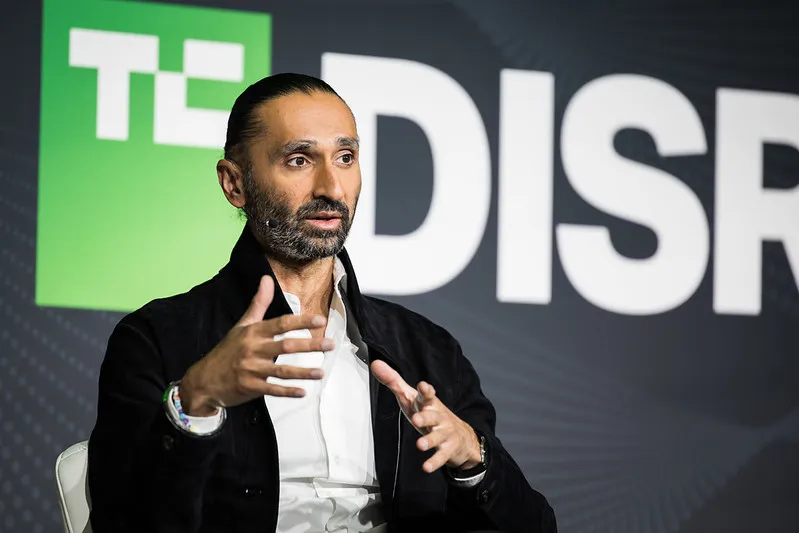
Private equity titan Blackstone is strategically positioning itself at the very epicenter of the artificial intelligence boom, a pivotal shift articulated by firm veteran Jas Khaira last week on stage at TechCrunch Disrupt. With an astounding $1.3 trillion in assets under management, Blackstone is not merely observing the AI revolution; it is actively shaping its infrastructure and financial underpinnings, deploying a multi-faceted approach that spans massive loans to burgeoning data centers and direct investments in cutting-edge AI models and applications. This aggressive foray into the capital-intensive world of AI underscores a fundamental difference from prior tech cycles, where the scale of investment required is unprecedented, positioning Blackstone as an indispensable financier in this transformative era.
The Unprecedented Capital Demands of the AI Era
The current wave of AI development, particularly in large language models and advanced machine learning, presents a unique financial challenge unlike any seen in previous technological revolutions. Unlike the mobile or Software-as-a-Service (SaaS) booms, which allowed companies to achieve significant scale with relatively moderate capital outlays for infrastructure, the transition to AI demands staggering amounts of upfront investment. The core reason lies in the sheer computational power required. Training and deploying sophisticated AI models necessitate vast quantities of specialized hardware, predominantly high-performance Graphics Processing Units (GPUs) like Nvidia’s H100s and the upcoming B200s, which can cost tens of thousands of dollars per unit.
Beyond the cost of GPUs, the construction and operation of hyper-scale data centers present enormous capital expenditures. These facilities require vast tracts of land, reliable and immense power supplies (often necessitating new grid infrastructure), advanced cooling systems to manage the heat generated by thousands of GPUs, and robust physical and digital security. The energy consumption of these data centers is also a growing concern, adding to operational costs and environmental considerations. Industry projections estimate the global AI market to exceed $2 trillion by 2030, with a substantial portion of this growth driven by investments in foundational infrastructure. This colossal need for capital is precisely where an entity of Blackstone’s magnitude and financial dexterity becomes not just relevant, but absolutely critical. Traditional venture capital firms, while adept at funding early-stage innovation, often lack the balance sheet capacity and risk appetite to finance infrastructure projects running into the billions.
Blackstone’s Strategic Command Center: BXN1 and Diversified Engagement
Earlier this year, recognizing the strategic importance of proximity to innovation, Blackstone launched Blackstone N1 (BXN1), a dedicated central hub for its AI initiatives, based in San Francisco. This move signals a deliberate commitment to being at the heart of AI development, with Jas Khaira, a seasoned firm veteran, relocating from New York to lead the group. BXN1’s mandate is broad, encompassing both direct investments in AI companies and the pioneering of novel financing structures for the essential compute infrastructure.
Khaira emphasized that Blackstone distinguishes itself from traditional venture capitalists primarily through its focus on compute financing and its ability to offer a diverse range of flexible capital structures, spanning both debt and equity. This versatility allows Blackstone to engage with companies at various stages and across different capital needs, from early-stage equity rounds for innovative startups to massive debt facilities for infrastructure providers. The firm’s aggressive investment strategy has quickly positioned it as a significant player in the compute landscape. Khaira proudly stated, "We’re the largest owner of compute outside of the hyperscalers today, whether it’s investments in neo clouds, investments in data centers, and being able to use that compute strategically to support companies." Neo clouds, or specialized cloud providers, are emerging as crucial intermediaries, renting out AI GPU infrastructure to companies that cannot afford or do not wish to build their own.
BXN1 has already played a pivotal role in several high-profile compute-related deals. One notable example is Crux AI, a neocloud launched in partnership with Google, aimed at commercializing Google’s custom Tensor Processing Units (TPUs). Blackstone committed a staggering $5 billion as an investor to Crux AI, highlighting the scale of its infrastructure bets. This move also underscores the competitive landscape in AI compute, where Google’s TPUs offer an alternative to Nvidia’s dominant GPUs. Another significant investment includes backing four-year-old Etched, a promising chip startup whose rapid development in specialized AI hardware has garnered considerable investor attention, signaling Blackstone’s interest in the foundational technology layer of AI.
Pioneering the Compute-Collateralized Debt Model: The CoreWeave Blueprint
Blackstone’s innovative approach to financing the AI boom truly came to the fore with its pioneering of a novel financing structure for neoclouds. This model allowed the firm to lend massive sums to venture-backed cloud providers by meticulously analyzing both committed customer contracts and using the valuable GPUs themselves as collateral. This creative blending of traditional asset-backed lending with future revenue streams marked a significant departure from conventional financing, addressing the unique challenges of a rapidly expanding, capital-intensive industry.
The firm’s first such groundbreaking deal materialized in 2023 with CoreWeave, a neocloud provider that saw an explosion in demand following the public launch of ChatGPT. Despite having what Khaira described as only "30 million of revenue and minimal profitability" at that time, CoreWeave approached Blackstone for an audacious $2.3 billion loan. The rationale behind this seemingly high-risk transaction lay in CoreWeave’s strategic assets and guaranteed revenue streams. The company was borrowing against the considerable value of its large collection of Nvidia GPUs, with Nvidia itself also holding an investment in CoreWeave, providing an additional layer of confidence. Crucially, Blackstone grew more comfortable with the loan due to CoreWeave having robust, long-term contracts with blue-chip customers such as Microsoft, effectively guaranteeing future revenue growth. These contracts provided the predictable cash flow necessary to service such a substantial debt.
This innovative transaction quickly became the definitive financing model, not just for Blackstone but for other credit institutions, which subsequently provided billions in follow-on debt to CoreWeave and rival neoclouds. The emphasis on the creditworthiness of the underlying customer became a cornerstone of this model. Khaira elaborated, "One of the primary things that we’re looking to is the nature of the customer. And if the customer is an investment-grade customer – let’s say it’s Microsoft or let’s say it’s Meta – the risk gets priced relative to that customer." This approach effectively transfers a significant portion of the credit risk from the nascent neocloud provider to the established, financially robust tech giants contracting their services. Building on its success with CoreWeave, Blackstone extended this financing model to other major deals, including co-leading, alongside Coatue, a substantial $10 billion credit facility for Firmus, an Australian GPU provider, earlier this year. Firmus, known for its focus on energy-efficient AI infrastructure, represented another strategic investment in the burgeoning global compute market.
Emerging Headwinds and Market Scrutiny
Despite the initial success and innovative nature of these financing structures, recent weeks have seen red flags emerge concerning the substantial debt burdens accumulated by these companies and other neocloud operators. The sheer scale of borrowing has begun to raise concerns among market analysts and investors. CoreWeave’s debt, for instance, has since ballooned to an estimated $50 billion, a figure that has prompted considerable scrutiny.
Brad Gerstner, founder of Altimeter Capital, voiced a significant concern in a recent CNBC interview, stating, "The collateral that CoreWeave is putting up which is really only GPUs is not good enough anymore. They used that in the past to get cheap debt." Gerstner’s critique highlights the inherent risks associated with using rapidly depreciating and technologically evolving assets like GPUs as primary collateral. The value of GPUs can diminish quickly with the introduction of newer, more powerful generations, and their resale market can be volatile. This raises questions about the long-term viability of relying solely on hardware assets and customer contracts for such massive debt loads.
Khaira acknowledged that the current market jitters on the credit side stem from a confluence of factors. Macroeconomic conditions are playing a significant role. Interest rates have ticked up in recent months, with the Federal Reserve and other central banks signaling potential further increases to combat hotter-than-expected inflation. Higher interest rates directly translate to increased borrowing costs for companies, making it more expensive to service existing debt and secure new financing. Adding to this pressure, the market has seen a veritable flood of AI infrastructure debt offerings, potentially saturating investor appetite and increasing perceived risk.
"We’re also seeing higher credit spreads," Khaira explained, detailing how lenders are now charging higher premiums on top of already elevated base interest rates to finance the AI buildout. This widening of credit spreads indicates a growing perception of risk among lenders. Khaira pointed out that "the cost of capital to price in debt for a Meta or a Microsoft has widened out," illustrating that even tech giants with massive balance sheets and solid earnings are now facing higher borrowing costs, signaling a broader tightening of credit conditions across the technology sector.
These concerns about the rising cost of debt have not been confined to the credit markets; they have spilled over into the stock market. Shares of CoreWeave experienced a significant drop, plummeting over 20% in recent days, reflecting investor anxiety. Similarly, Firmus, the Australian GPU provider that secured a $10 billion credit facility, was forced to scrap its planned IPO on the Australian Securities Exchange, which had targeted a valuation of roughly $30 billion. Khaira confirmed the cancellation, stating, "Ultimately, the market wasn’t there at that valuation, and so I think as a result, that deal didn’t get done." This episode underscores a critical re-evaluation of valuations in the neocloud sector. Khaira added, "The market is thinking what is the right price for neoclouds, what is the right price for these businesses in this moment when interest rates are moving up."
Resilience Amidst Skepticism: The Enduring Demand for Compute
Despite the pressures on some infrastructure providers and the growing market scrutiny, a fundamental truth persists: AI companies simply cannot get enough compute to power their increasingly complex models. The insatiable appetite for computational resources continues unabated, driving a relentless buildout of data centers globally. This underlying demand acts as a powerful counterforce to financial headwinds, suggesting that while the financing landscape may become more challenging, the need for infrastructure remains acute.
Khaira, while acknowledging the market’s concerns, downplayed worries from "doom-mongers" who suggest that the massive accumulation of AI infrastructure debt could lead to a widespread credit crisis, or worse, crash the economy altogether. He drew a clear distinction, asserting, "This doesn’t feel like something where you’ve got 2008 banks that are shaky credits." His confidence stems from the fundamental nature of the debt and its underlying collateral. Khaira pointed out that the vast majority of data centers are ultimately built to serve hyperscalers – the likes of Google, Microsoft, and Amazon – which are among the most financially robust and creditworthy companies in the world. Therefore, the debt financing these massive infrastructure projects is, in a significant way, ultimately backed by these stable corporate giants. While this perspective mitigates the risk of a systemic financial meltdown akin to 2008, it does not entirely eliminate risks for individual neoclouds should demand patterns shift or hyperscalers decide to expand their in-house capabilities more aggressively.
Beyond Infrastructure: Fostering AI Adoption with Ode with Anthropic
Blackstone’s strategy extends beyond merely financing the physical infrastructure of AI. The firm also recognizes the critical need to help companies effectively adopt and integrate AI into their operations to unlock its full potential. To address this, Blackstone, in partnership with leading AI safety and research company Anthropic and Hellman & Friedman, launched a $1.5 billion joint venture earlier this year called "Ode with Anthropic."
Ode’s mission is to supply forward-deployed engineers who work directly with companies to facilitate AI adoption and integrate cutting-edge AI capabilities into their existing workflows and operations. This initiative initially targets Blackstone’s extensive portfolio of 280 companies, ensuring that its own investments are at the forefront of AI utilization. This strategic move highlights Blackstone’s holistic approach: not only funding the creation of AI infrastructure and models but also ensuring that its portfolio companies can effectively leverage these technologies for tangible business benefits. Anthropic’s expertise in developing safe and steerable AI models, such as Claude, makes it an ideal partner for guiding enterprises through the complexities of AI integration.
When questioned about the tangible gains Blackstone-owned companies are seeing from AI adoption, Khaira offered a realistic assessment, conceding that "there is definitely ROI, but it is uneven." He described technology adoption as something that could move in a "sawtooth-type pattern," characterized by periods of rapid advancement followed by plateaus or even temporary dips as challenges are addressed and new learning curves emerge. To skeptics, this uneven pattern might look like an oversupply of compute capacity before widespread, effective adoption catches up, reinforcing the need for initiatives like Ode with Anthropic to bridge the gap between technological capability and practical business implementation.
A High-Stakes Transformation with Evolving Dynamics
Blackstone’s deep and diversified engagement in the AI ecosystem underscores the profound and multifaceted nature of this technological transformation. By simultaneously funding the massive infrastructure buildout and actively facilitating AI adoption within its vast portfolio, Blackstone is not just investing in the future; it is actively constructing it. The firm’s willingness to pioneer novel financial instruments, such as compute-collateralized debt, demonstrates its agility and ambition in navigating an unprecedented capital market.
However, the recent market jitters, rising interest rates, and the increased scrutiny on the debt burdens of neoclouds signal a maturation in the AI financing landscape. The era of "cheap debt" backed primarily by rapidly evolving hardware may be giving way to more stringent lending criteria and a more realistic valuation of AI infrastructure assets. While the fundamental demand for compute remains robust, the financial models supporting its expansion are clearly undergoing a re-evaluation. The "sawtooth pattern" of ROI further emphasizes that the path to realizing AI’s full economic potential is complex and iterative. Blackstone’s journey through the AI revolution serves as a compelling case study of both the immense opportunities and the evolving risks inherent in financing the next generation of global technology. The stakes are undoubtedly high, but so too are the potential rewards in shaping an economy increasingly defined by artificial intelligence.
