

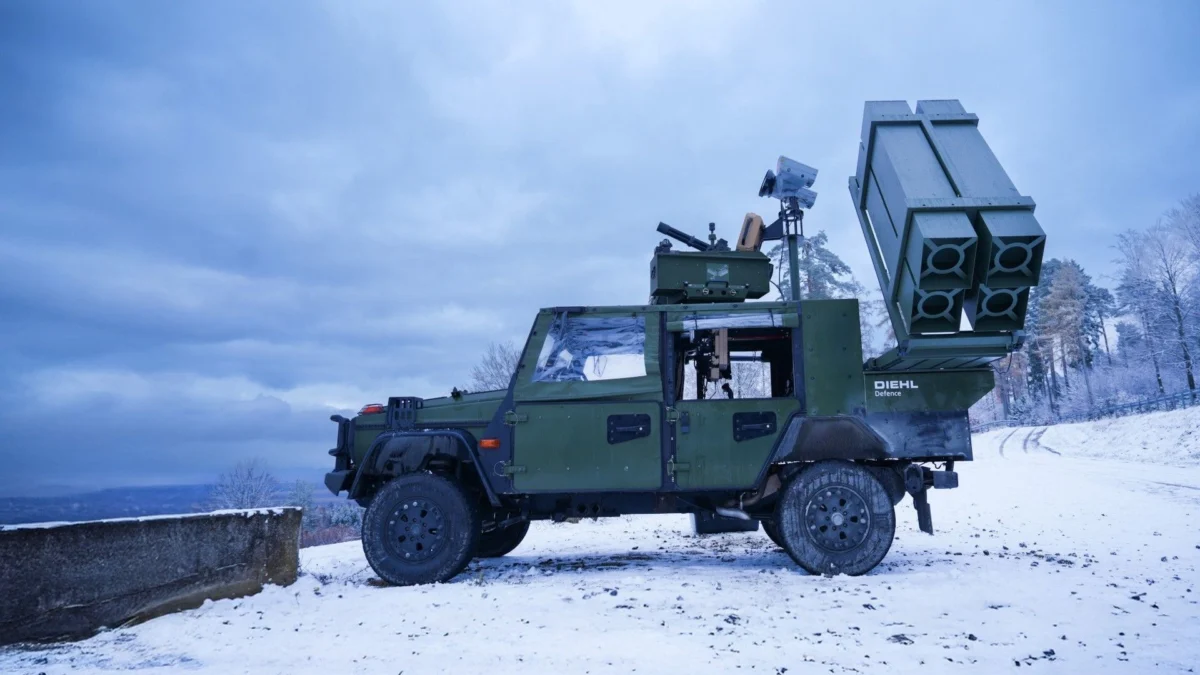
Germany is poised to bolster its air defense capabilities with the imminent delivery of 48 "drone hunting" systems from Diehl Defence to the Bundeswehr. This significant procurement involves the GARMR (Guided Air-to-Ground Missile) system, designed to detect and neutralize drones through radar targeting and engagement with either its own interceptor drones or a rapid-fire cannon. The move also signifies the integration of a German startup into the nation’s defense industrial landscape. However, the Bundeswehr’s long-term strategic asset, the Skyranger anti-aircraft system, continues to face substantial delays, prompting this interim solution.

Rebuilding Air Defense: A Strategic Imperative
The German Army has been actively engaged in rebuilding its air defense capabilities, a branch that was disbanded in 2012. This revitalization effort saw the establishment of a dedicated formation staff at the Lüneburg base approximately a year ago. As a preliminary step, the German Air Force returned the Ozelot light anti-aircraft system to the Army in mid-October. The Ozelot system is intended to provide close-range protection for units against drones and other aerial threats.
The Skyranger: A Long-Term Vision Facing Hurdles
The Skyranger, an air defense gun tank, represents a cornerstone of the Bundeswehr’s future air defense strategy. Initially, the military ordered one prototype and 18 series production units. Reports from industry circles last year, as detailed by Handelsblatt, indicated plans for the procurement of up to 600 Skyranger systems, with an estimated value of around nine billion euros. This ambitious plan aimed to equip the Bundeswehr with a formidable defense against aerial threats.

However, the timeline for the Skyranger’s operational deployment has encountered significant setbacks. The original plan to field a battalion equipped with Skyrangers this year is now expected to be delayed by two to three years. These delays are attributed to several factors, including evolving integration requirements for guided missiles and chassis modifications. Specifically, the Bundeswehr sought a different variant of the Boxer armored personnel carrier for the Skyranger’s platform than what Rheinmetall, the primary contractor, had initially proposed. Industry sources suggest that a contract amendment for the new "B0" chassis variant might be finalized in November 2026, with series production of Skyrangers on this platform potentially commencing in the second quarter of 2027. The subsequent "official testing" phase is projected to extend through the third quarter of 2028.
Diehl’s GARMR System: An Immediate Solution
The urgency to enhance drone defense capabilities stems from the critical need to protect deployed forces, particularly in light of Germany’s commitment to stationing Panzerbrigade 45 permanently in Lithuania. This brigade is slated to be fully operational by the end of 2027, and a significant gap in drone protection would leave it vulnerable. The Diehl GARMR system is being procured as an interim solution to address this immediate requirement.

The GARMR system, which Diehl is preparing to deliver 48 units of to the Bundeswehr, consists of two main configurations: 24 units equipped with a cannon and 24 units armed with interceptor drones. This system utilizes radar for drone detection and can engage targets with either its own specialized interceptor drones or a 35mm Oerlikon Skyranger cannon. While the system’s architecture bears similarities to the Skyranger, it offers distinct advantages in terms of mobility and rapid deployment.
Technological Capabilities and Limitations
The GARMR system, as configured for the Bundeswehr, presents a trade-off between immediate availability and certain performance characteristics compared to the future Skyranger. The cannon on the GARMR has an effective range of approximately 1,000 meters, whereas the Skyranger’s more potent cannon can engage targets up to 3,000 meters away. The GARMR’s primary interceptor drones, designated as Cicada, have a range of five kilometers. However, the system is designed to be adaptable, allowing for the integration of other interceptor drones with greater ranges if required.

A key differentiator lies in the protection afforded to the crew. While Skyranger crews are intended to be protected within Boxer armored personnel carriers, soldiers operating the GARMR system are housed in lightly armored vehicles. This design choice prioritizes speed and maneuverability over heavy armor, enabling the system to be rapidly relocated to areas where drone threats are most prevalent.
Integration of German Start-ups: Tytan Technologies
In parallel to the Diehl procurement, the Bundeswehr is also integrating solutions from emerging German technology firms. The Koblenz-based procurement office has recently finalized a contract with Munich-based startup Tytan Technologies for a drone defense system designed to protect mobile forces. This system comprises a drone defense module mounted on a Mercedes G-Class chassis, offering a compact and agile solution for immediate threat response.

Tytan Technologies had previously signed a declaration of intent with the Bundeswehr in June, outlining future cooperation, with the presence of Federal Minister for Economic Affairs and Climate Action, Robert Habeck, at the signing ceremony. The company is already tasked by the Bundeswehr with developing a drone defense system for the protection of military facilities. The initial order from the Bundeswehr is for six units of the Tytan system, procured in conjunction with Mercedes-Benz.
Strategic Synergy and Future Outlook
Military sources indicate that these various drone defense systems are not intended to be mutually exclusive but rather to complement each other. The prevailing sentiment within the Bundeswehr is that one can never have enough air defense systems, especially in the current geopolitical climate characterized by the increasing prevalence of drone warfare. This multi-pronged approach allows for tailored responses to different threat scenarios and operational environments.

Diehl Defence has not officially commented on the specific Bundeswehr order for the GARMR system. However, the company had presented the GARMR earlier this year as an advancement of a precursor model already deployed in Ukraine. It is understood within industry circles that the specific model being procured by the Bundeswehr has already been ordered by Jordan. Diehl anticipates further orders from the Bundeswehr and other European nations, underscoring the growing demand for effective drone countermeasures.
The Evolving Landscape of Drone Warfare
The increasing sophistication and proliferation of drones in modern conflict have necessitated a rapid adaptation of military strategies and technological procurement. From reconnaissance and surveillance to direct attack capabilities, drones have fundamentally altered the battlefield. Germany’s strategic decisions reflect a broader trend among NATO allies to prioritize anti-drone capabilities.

The delays in the Skyranger program, while frustrating, highlight the complexities of modern military procurement, where technological integration, evolving requirements, and industrial processes can lead to extended timelines. The simultaneous procurement of the GARMR system and the engagement with startups like Tytan Technologies demonstrate a pragmatic approach by the Bundeswehr, ensuring that critical defense gaps are addressed while pursuing long-term strategic objectives.
The Bundeswehr’s commitment to rebuilding its air defense forces and its proactive engagement with both established defense contractors and innovative startups underscore its determination to maintain a robust and adaptable defense posture in an increasingly unpredictable global security environment. The successful integration of these new systems will be crucial in safeguarding German forces and its allies against the evolving threat of unmanned aerial vehicles.
