

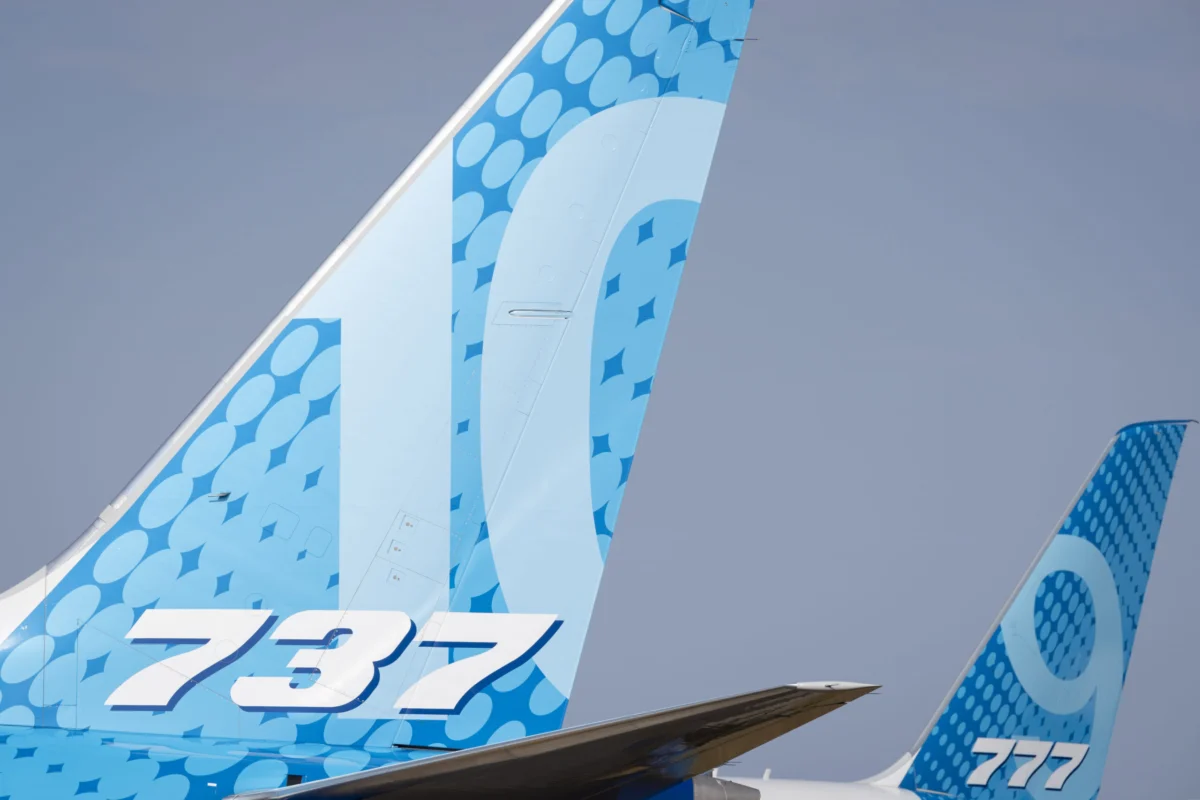
The Federal Aviation Administration (FAA) on Tuesday formally granted certification for the Boeing 737 MAX 10, concluding an arduous and protracted approval process that spanned several years. This significant regulatory clearance marks the final variant in Boeing’s best-selling 737 MAX family to achieve government authorization, representing a major triumph for the aerospace manufacturer as it navigates a period of intense scrutiny and operational challenges. The certification comes at a critical juncture for Boeing, whose commercial aircraft division has been under pressure to deliver on its commitments amidst production hurdles and heightened safety oversight.
A Long Road to Certification
The journey for the 737 MAX 10, designed as the largest iteration within the MAX series capable of accommodating up to 230 passengers, has been fraught with delays. Originally projected to enter service in 2020, its certification timeline was dramatically extended due to a confluence of factors. Foremost among these was the global grounding of the entire 737 MAX fleet following two catastrophic crashes involving the MAX 8 variant – Lion Air Flight 610 in October 2018 and Ethiopian Airlines Flight 302 in March 2019 – which collectively claimed 346 lives. These tragedies exposed critical flaws in the aircraft’s Maneuvering Characteristics Augmentation System (MCAS) flight control software, triggering an unprecedented period of regulatory re-evaluation and public mistrust that reverberated across the global aviation industry.
The fallout from these accidents subjected all subsequent MAX variants, including the MAX 10, to an exceptionally rigorous and extended certification process. Regulators, still reeling from the implications of the earlier approvals, demanded extensive engineering modifications and exhaustive safety reviews. For the MAX 10 specifically, this included significant redesigns, notably to an anti-icing system for the aircraft’s engines, which required additional validation and testing. Just weeks prior to the final approval, federal officials also conducted a thorough review of a navigation system glitch identified on the aircraft. While ultimately deemed not a "safety-of-flight issue," this incident underscored the meticulous level of scrutiny applied to every component and system of the MAX 10 before it could be cleared for passenger service. The FAA’s decision reflects the successful resolution of these technical challenges and the satisfactory demonstration of the aircraft’s adherence to stringent safety standards.
Regulatory Scrutiny and Global Competition
The certification process for the MAX 10 has also brought into sharp focus broader discussions about the efficiency and competitiveness of the U.S. regulatory framework. Transportation Secretary Sean Duffy, speaking to CNBC, acknowledged the paramount importance of safety but also voiced concerns regarding the pace of U.S. aircraft certification. "It takes Boeing, to certify an aircraft in Europe, about half the time, less than half the time that it does in the U.S.," Duffy stated, drawing a direct comparison to the European Union Aviation Safety Agency (EASA). He further emphasized the growing competitive landscape, remarking, "You have China now playing to take over in aviation. We have to certify aircraft more quickly if we’re going to compete as Americans."
Duffy’s comments highlight a dual challenge: maintaining an uncompromising commitment to safety while simultaneously ensuring that the certification process does not unduly impede American aerospace manufacturers in the global market. The rise of COMAC in China, with its C919 narrow-body jet, signals an emerging competitor in a segment traditionally dominated by Boeing and Airbus. The efficiency of regulatory approval can significantly impact a manufacturer’s ability to bring new products to market, secure orders, and fulfill delivery schedules, all of which are crucial for maintaining market share and technological leadership. The FAA, under intense pressure to restore public confidence and demonstrate regulatory independence, has adopted a more hands-on and detailed approach to certification since the MAX crashes, a stance that has inevitably extended timelines but, according to the agency, ensures greater safety.
The 737 MAX Family: A Critical Program for Boeing
The 737 MAX program is the cornerstone of Boeing’s commercial aircraft portfolio and is absolutely vital for its financial health and long-term competitiveness. The MAX 10, as the largest variant, is designed to offer airlines greater capacity and improved operating economics, directly competing with Airbus’s highly successful A321neo. With a seating capacity ranging from 188 to 230 passengers depending on configuration, it targets the densest routes and high-demand markets, offering a compelling proposition for carriers looking to maximize revenue per flight.

The 737 MAX family represents the updated, more fuel-efficient version of Boeing’s venerable 737 Next Generation series. The original MAX 8 and MAX 9 variants were certified relatively quickly, benefiting from their commonality with earlier 737 models. However, the subsequent re-certification of the MAX 8/9 after the grounding involved significant software updates, enhanced pilot training, and a fundamental overhaul of regulatory oversight, which ultimately paved the way for the smaller MAX 7’s approval in early August. The MAX 10, being the largest and latest, faced the most prolonged and intense scrutiny, benefiting from the lessons learned and the enhanced processes established during the re-certification of its siblings. The successful certification of all MAX variants allows Boeing to present a complete and competitive narrow-body offering, crucial for retaining its market position against Airbus, which has gained significant ground during Boeing’s recent struggles.
Engineering Hurdles and Safety Assurances
Beyond the broader regulatory context, the MAX 10’s specific technical challenges played a significant role in its extended certification timeline. The anti-icing system issue, for instance, required substantial engineering changes to ensure safe operation under all conditions. This involved redesigns and extensive testing to prevent overheating of engine inlets, a concern that could potentially compromise engine integrity. Such modifications are not trivial and involve complex simulations, ground tests, and flight tests to validate their effectiveness and safety.
Furthermore, the recent navigation system glitch, though ultimately not deemed a "safety-of-flight issue," underscored the ongoing vigilance of regulators. Details of this glitch were not fully disclosed, but typically such issues can range from minor software anomalies affecting display accuracy to more complex sensor integration problems. The FAA’s decision to greenlight the aircraft only after a thorough review and validation process for this and other potential issues is intended to reassure both airlines and the flying public that every potential risk has been meticulously assessed and mitigated. This comprehensive approach, while time-consuming, is a direct consequence of the post-crash era and reflects a renewed emphasis on thoroughness over speed.
Airline Customers and Strategic Planning
The certification of the 737 MAX 10 is met with a mix of relief and strategic adjustments from its airline customers. Major U.S. carriers, including United Airlines, Delta Air Lines, American Airlines, and Alaska Airlines, have significant orders for the MAX 10, which collectively accounts for approximately 30% of Boeing’s total MAX backlog. These airlines have been eagerly awaiting the aircraft to modernize their fleets, enhance capacity on popular routes, and improve fuel efficiency.
However, the extensive delays have forced some airlines to re-evaluate their long-term fleet strategies and cabin configurations. United Airlines CEO Scott Kirby revealed in August that the airline had been waiting so long for the MAX 10 that the original plans for lie-flat seats on the aircraft no longer made sense, resulting in the seats sitting in a warehouse. This highlights the practical and financial implications of prolonged delays on airline operations and investment. In contrast, Alaska Airlines last month indicated plans to install lie-flat seats on some of its 737 MAX 10s, signaling a push for more premium offerings and a flexible approach to cabin design.
While the FAA’s approval clears the path for delivery, airlines cannot immediately commence passenger flights. It typically takes several months for carriers to integrate new aircraft into their schedules. This process involves pilot training on the specific variant, establishing maintenance procedures, configuring the cabins to their specifications, and obtaining their own operational approvals from aviation authorities. Thus, while the certification is a crucial hurdle cleared, the actual deployment of the MAX 10 into commercial service will be a phased process throughout 2025 and beyond.
Financial and Production Implications for Boeing
For Boeing, the MAX 10 certification represents a critical step towards financial recovery and stability. The company’s business model relies heavily on payments made upon aircraft delivery, and prolonged delays have a direct and significant impact on its cash flow and revenue recognition. With the MAX 10 now certified, Boeing can move forward with deliveries, unlocking substantial revenue from its extensive backlog.

Stephanie Pope, CEO of Boeing’s commercial airplane unit, expressed optimism regarding the milestone, stating in a news release, "Completing the certification program clears the path for us to deliver a Boeing airplane that will set a new standard in commercial aviation." This sentiment underscores the strategic importance of the MAX 10 in Boeing’s portfolio, not just for its sales volume but also for its technological advancements and perceived market competitiveness.
The company has been actively working to ramp up production across its commercial aircraft lines, including the 737 MAX and 787 Dreamliner programs, both of which have faced their own production challenges and quality control issues in recent years. To meet anticipated demand and reduce its substantial backlog, Boeing opened a fourth production line for its 737 MAX airplanes in Everett, Washington, in July. This expansion is vital for increasing output and shortening delivery times, thereby improving Boeing’s financial performance and helping it regain market share lost during the grounding and subsequent production slowdowns. The certification of the MAX 10 will likely provide further impetus for this production acceleration, albeit under the continuous watch of regulators following recent incidents, such as the January 2024 door plug detachment on an Alaska Airlines 737 MAX 9.
Broader Industry Impact and Future Outlook
The certification of the 737 MAX 10 is not merely a win for Boeing; it carries broader implications for the global aviation industry. It signals a return to a more predictable certification environment, albeit one that remains more rigorous than pre-2019. This predictability is essential for airlines’ fleet planning, aircraft lessors’ investment strategies, and the entire aerospace supply chain, which has suffered from the volatility of recent years.
The renewed competition with Airbus in the lucrative narrow-body market will likely spur innovation and efficiency gains from both manufacturers, ultimately benefiting airlines and passengers. However, the shadow of past incidents and ongoing regulatory scrutiny means that Boeing, and indeed the entire industry, must maintain an unwavering focus on safety and quality. The FAA’s role as a global leader in aviation safety will continue to evolve, balancing the need for efficient certification with its primary mandate to ensure the highest standards of airworthiness.
As the 737 MAX 10 prepares to take to the skies, it symbolizes both Boeing’s resilience and the aviation industry’s collective commitment to learning from past mistakes. Its successful integration into airline fleets will be a testament to the extensive efforts undertaken by engineers, regulators, and operators to rebuild trust and set new benchmarks for safety and performance in commercial aviation.
