

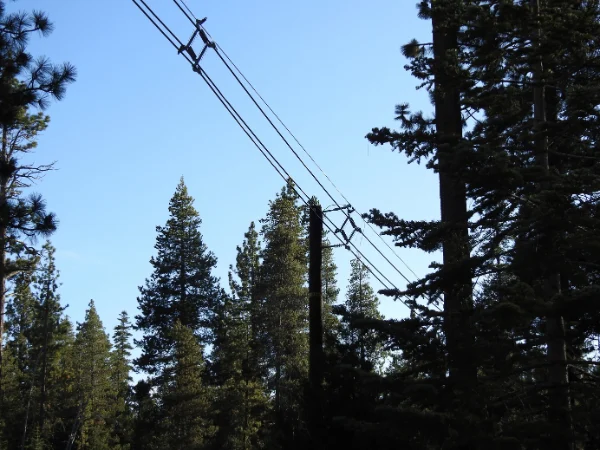
The modern electrical grid is currently navigating a period of unprecedented transformation, characterized by the dual pressures of surging demand and an increasingly volatile climate. As utilities across North America grapple with aging infrastructure, the need for cost-effective, resilient distribution solutions has never been more critical. For the Littleton Electric Light & Water Departments (LELWD), the path to a more reliable future has been defined by a strategic shift away from traditional bare-wire overhead systems toward the Hendrix Aerial Cable System (ACS) by Marmon Utility. This transition, explored in depth during a recent episode of the Factor This podcast featuring Ted Gardner of Marmon Utility and David Ketchen of LELWD, provides a blueprint for how municipal utilities can achieve "underground-level" reliability without the prohibitive costs associated with subterranean trenching.
The Evolution of Distribution Infrastructure and the Reliability Mandate
The American electrical distribution system was largely built on a foundation of bare overhead conductors. While cost-effective for initial deployment, these systems are inherently vulnerable to environmental factors. According to industry data from the Department of Energy, vegetation contact and severe weather account for nearly 70% of all power outages in the United States. As the frequency of extreme weather events—including ice storms, microbursts, and heavy snowfalls—increases, the traditional model of overhead distribution is proving insufficient to meet the 99.9% reliability expectations of modern consumers.
For LELWD, which serves the historic and heavily forested communities of Littleton and Boxborough in central Massachusetts, the challenge is compounded by local geography. The region’s dense tree canopy and narrow, scenic roadways make traditional vegetation management—such as aggressive tree clearing—socially and environmentally untenable. This necessitated a solution that could coexist with the natural environment while maintaining electrical integrity during storm events.
Technical Analysis of the Hendrix Aerial Cable System
The Hendrix ACS represents a significant departure from standard cross-arm construction. At its core, the system utilizes a high-strength, heavy-duty messenger wire that serves as both the mechanical support and the system neutral. Three covered conductors are supported by high-density polyethylene spacers, which maintain a compact, triangular configuration.
This design offers several technical advantages:
- Mechanical Strength: The messenger wire is designed to withstand the impact of falling limbs and even entire trees. Unlike bare wire, which often snaps under the weight of ice or debris, the Hendrix system uses the messenger wire to absorb the mechanical load, keeping the conductors energized even if the pole line is compromised.
- Compact Footprint: Because the conductors are insulated (or "covered"), they can be placed in much closer proximity to one another than bare wires. This reduces the required right-of-way and allows for multiple circuits to be installed on a single pole, a critical factor in urban and space-constrained environments.
- Reduced Fault Susceptibility: The insulation prevents "flashovers" or short circuits caused by momentary contact with tree branches or wildlife. In a bare-wire system, a single branch touching two phases can trigger a circuit breaker; in a spacer cable system, such contact typically results in no interruption of service.
Chronology of a Resilient Build-Out: The LELWD Experience
The adoption of Hendrix ACS at LELWD was not an overnight decision but a strategic response to a specific catastrophic event. In 2008, a massive ice storm devastated the New England power grid. Littleton and the surrounding areas faced prolonged outages as ice-laden trees collapsed onto bare-wire distribution lines. This event served as a catalyst for a multi-year "hardening" strategy.

Following the 2008 storm, LELWD leadership prioritized the reinforcement of the "spine" of their system—the main three-phase feeders that exit the substation and serve the largest blocks of customers. By replacing these critical sections with Hendrix spacer cable, the utility created a resilient backbone that could withstand the region’s harsh winters.
Following the hardening of the main feeders, the utility began a systematic replacement of "laterals"—the smaller lines that branch off into residential neighborhoods. While this remains a work in progress, the results have been reflected in the utility’s reliability metrics. LELWD now consistently outperforms national averages for the System Average Interruption Duration Index (SAIDI) and the System Average Interruption Frequency Index (SAIFI), maintaining its status as one of the most reliable municipal utilities in Massachusetts.
Economic Implications: Capex vs. Opex in Grid Modernization
One of the primary hurdles for any utility considering infrastructure upgrades is the "total installed cost." During the Factor This discussion, Ted Gardner emphasized that while the initial capital expenditure (Capex) for a spacer cable system is higher than that of bare wire, the long-term operational and maintenance (Opex) savings are substantial.
The cost of undergrounding power lines can be five to ten times more expensive than overhead construction, often exceeding $1 million to $3 million per mile depending on the terrain. Spacer cable provides a middle ground: it offers the reliability benefits of undergrounding at a fraction of the price. Furthermore, the reduction in emergency repair costs—which often involve overtime pay for crews and expensive equipment during storms—allows the system to "pay for itself" over its operational lifespan.
David Ketchen noted that for a municipal utility, being "mindful of costs" is paramount. By focusing on the "most bang for the buck," LELWD has been able to improve service without imposing significant rate hikes on its customers. The reduced need for aggressive tree trimming also yields annual savings, as the system requires less clearance from vegetation than bare-wire alternatives.
The Human and Environmental Factor
A critical aspect of the LELWD case study is the relationship between the utility and the community. In historic New England towns, trees are a valued part of the landscape. "Our communities don’t want us to just flatten all the trees," Ketchen stated. The compact nature of the Hendrix system allows the utility to maintain a smaller "trimming window," preserving the aesthetic character of the neighborhoods while ensuring that the lights stay on.
This collaborative approach extends to the relationship between the utility and the manufacturer. Hendrix has assisted LELWD not only in the engineering and planning phases but also in field training. Proper installation is vital for the long-term performance of spacer cable systems, and the partnership ensures that lineworkers are proficient in handling the specialized hardware associated with the technology.

Broader Industry Impact and the Future of the Grid
As Hendrix celebrates 75 years in the industry, its role in the broader energy transition is becoming increasingly clear. The push toward electrification—driven by the adoption of electric vehicles (EVs) and heat pumps—means that the distribution grid must handle higher loads with zero tolerance for downtime.
The Factor This podcast episode highlighted a fundamental truth in utility management: smart grid technology is only as effective as the physical infrastructure it controls. While sensors, reclosers, and automated switches (the "Smart Grid") can help isolate faults and restore power faster, they cannot prevent a tree from knocking down a bare wire. By building on a foundation of hardened physical assets like the Hendrix ACS, utilities ensure that their "Smart" investments are not built on a "house of cards."
The implications for other public power providers are clear. As climate volatility increases, the "wait and see" approach to grid hardening is no longer viable. Strategic deployment—starting with the worst-performing circuits and critical infrastructure—allows utilities to build resilience incrementally.
Conclusion: A Blueprint for Resilience
The partnership between Littleton Electric Light & Water Departments and Marmon Utility serves as a practical demonstration of modern grid resilience. By moving beyond the limitations of bare-wire distribution and embracing the mechanical and electrical advantages of the Hendrix Aerial Cable System, LELWD has secured its infrastructure against the elements while respecting the environmental and economic needs of its service area.
As the industry moves forward, the lessons from Littleton suggest that the future of the overhead grid lies in compact, covered, and supported systems. For utilities facing mounting pressure to perform, the message is one of strategic evolution: prioritize the physical integrity of the wire, leverage engineering expertise, and build a system that can withstand the storms of today and the demands of tomorrow. Through this lens, the grid is not just a series of poles and wires, but a resilient platform for the ongoing energy transition.
