

While political support from Washington for Taiwan appears increasingly uncertain, practical cooperation between the two sides is intensifying across economic, technological, and military domains. This burgeoning partnership is elevating Taiwan’s significance for the United States, not only as a crucial producer of semiconductors but also as a vital defense and technology ally.
The growing economic interdependence between the U.S. and Taiwan is a significant development. Elizabeth Economy, a former U.S. government advisor and leading scholar on China-U.S. relations at Stanford University, observes a "rapid increase" in bilateral trade. In an interview with Handelsblatt, she confirmed this trend, projecting that Taiwan might soon surpass China in trade volume with the United States. This economic synergy is a cornerstone of the deepening relationship, driven by Taiwan’s advanced manufacturing capabilities and its strategic position in global supply chains.
This robust economic engagement extends far beyond the well-established dominance of Taiwanese firms in semiconductor contract manufacturing. The collaboration now encompasses a significant expansion in defense industry partnerships. Stephan Ebner, an attorney representing German defense companies in their international business dealings, noted his impression that the United States is treating Taiwan "almost like a 51st state, despite its proximity to China." Ebner, who advises the law firm Brain Trust International in Taiwan, highlights the pragmatic approach being taken by both nations.
Taiwan’s strategy in this geopolitical chess match is precisely geared towards maximizing its value to the United States, particularly under administrations that may prioritize tangible benefits. The government in Taipei aims to make the island so indispensable to U.S. interests that it would be defended in the event of a Chinese assault. This objective is acutely relevant given China’s long-standing territorial claims over the democratically governed island and its persistent threats of forceful annexation.
Beijing’s Campaign to Undermine U.S. Support for Taiwan
The fundamental challenge for Taiwan lies in the ambiguity of U.S. commitment. While the United States has pledged assistance to Taiwan against Chinese aggression, it has deliberately avoided explicitly stating whether it would intervene with its own forces in the event of an attack. Former President Donald Trump, in particular, has expressed more ambivalent positions on this issue than many of his predecessors, fueling concerns in Taipei and Beijing alike.
This uncertainty provides Beijing with an opening to intensify its efforts to weaken U.S. support for Taiwan, thereby increasing pressure on Taipei to capitulate. During his state visit at the end of September, Chinese leader Xi Jinping urged his host to publicly oppose Taiwan’s independence and to handle the "Taiwan question" with extreme caution. This diplomatic maneuver, while largely symbolic, carries significant political weight. Washington officially refrains from endorsing a declaration of independence, yet has historically maintained a strategic ambiguity regarding the island’s ultimate status. Any shift in this linguistic framing could empower Beijing’s pressure tactics.
Such concessions to China could have profound implications, potentially eroding Taiwanese confidence in the U.S. as an unofficial guarantor of their security, a confidence already tested by the uncertainties surrounding past U.S. policy pronouncements.

However, in the aftermath of high-level meetings, House Speaker Mike Johnson, third in the U.S. line of succession after the President and Vice President, publicly reaffirmed a strong stance of support for Taiwan in an interview with Fox Business. He stated, "We recognize that Taiwan is a very important partner, friend, and ally of ours, and we need Taiwan as a stable and independent partner," underscoring the multifaceted nature of the relationship, encompassing both economic and, crucially, military dimensions.
Expanding Military Cooperation: From Fighter Jets to Supply Chains
The tangible manifestations of this deepening partnership are becoming increasingly evident. In early October, the first two of 66 ordered F-16 fighter jets arrived in Taiwan, marking a significant upgrade to the island’s air defense capabilities. Concurrently, reports suggest the Pentagon is considering deploying personnel directly within Taiwan’s Ministry of Defense to further strengthen collaboration. Simultaneously, agreements are being established to formally integrate Taiwan into American supply chains, particularly in critical defense sectors.
The focus of this integration is increasingly on unmanned systems, including ships, vehicles, and aircraft. The "U.S.-Taiwan Economic Prosperity Partnership Dialogue," initiated in January 2026, explicitly included supply chains for unmanned aerial vehicles. Furthermore, the U.S. National Defense Authorization Act (NDAA) for fiscal year 2026 contains a provision mandating the Pentagon to involve Taiwan in its drone development programs.
Taiwan’s Rise as a Defense Industry Partner
The integration into U.S. defense supply chains represents a significant shift in Taiwan’s role within the bilateral relationship. Historically, Taiwan has been primarily a purchaser of American military hardware. Now, an increasing number of Taiwanese companies are qualifying for supplier lists that meet stringent requirements for both military and commercial drones. This positions them as potential suppliers to U.S. defense contractors, transforming Taiwan into an integral part of the U.S. defense industry ecosystem.

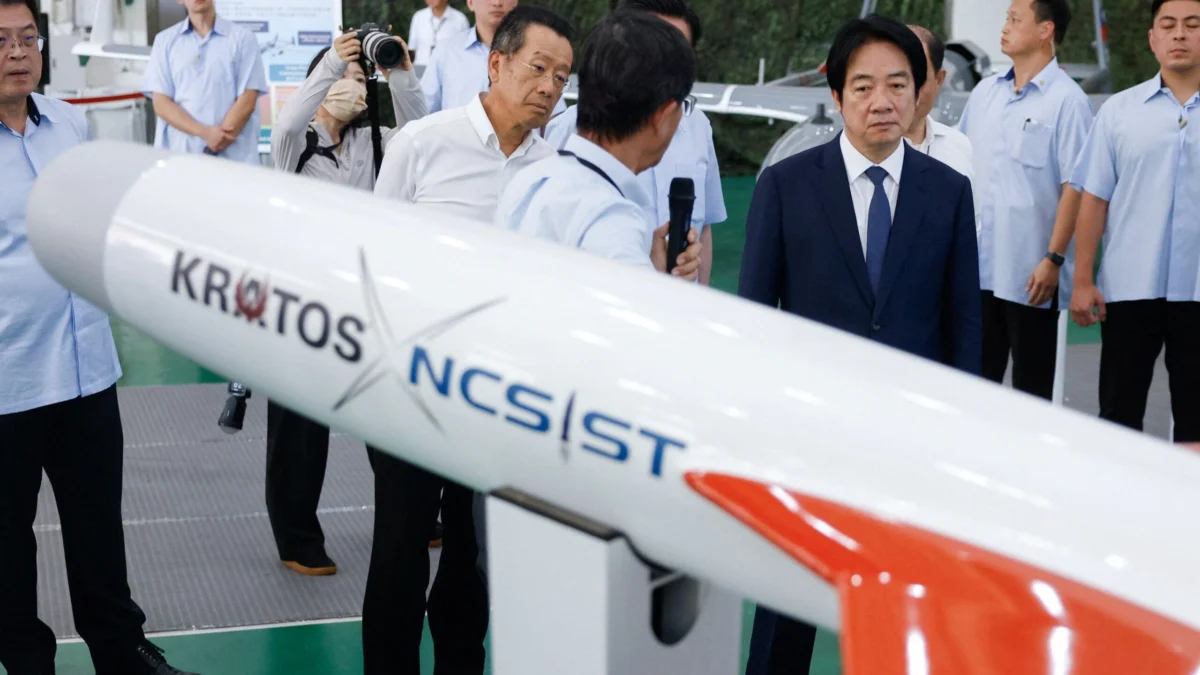
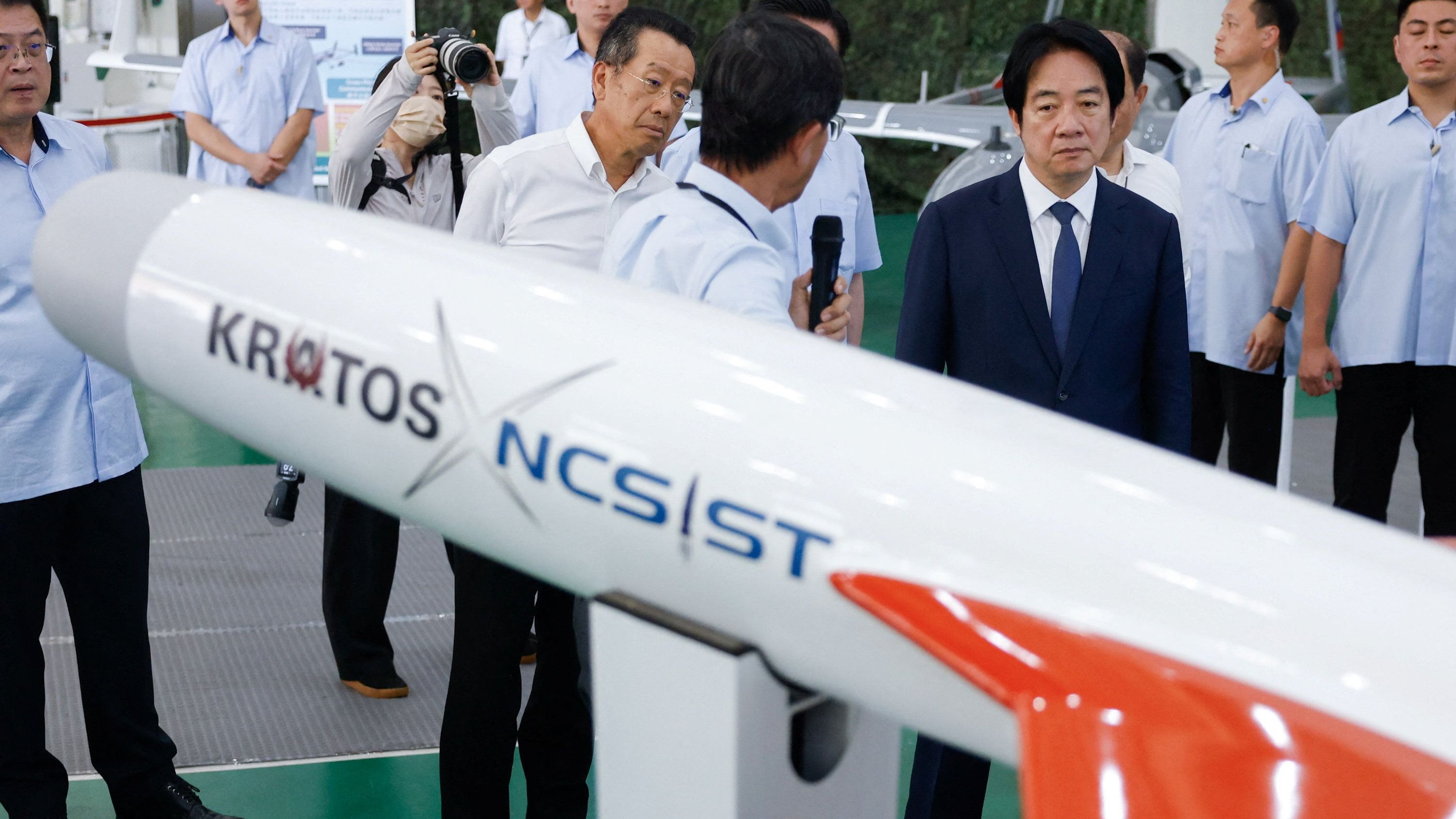
This evolution is exemplified by initiatives like the "Mighty Hornet IV" drone, a collaborative project between Taiwan’s National Chung-Shan Institute of Science and Technology and the U.S. company Kratos Defense & Security Solutions. This project highlights the growing synergy in advanced defense technology development.
The Drone Industry Boom: A Strategic Advantage
Taiwan’s burgeoning drone industry is experiencing a significant surge. In the first half of 2026 alone, over 200,000 drones were exported, surpassing the total for the previous year. This growth is fueled by an influx of new Taiwanese companies and startups entering the market, attracted by the expanding global demand and the strategic advantages offered by Taiwan’s established industrial base.
"Taiwan Speed": A Model for Innovation and Production
The rapid pace of innovation and production in Taiwan is a key factor attracting foreign investment and collaboration. Phil Ho, co-founder of the startup Str8 Industries, embodies this trend. A French national of Chinese-Taiwanese descent, Ho has developed a high-tech, sea-capable drone called Ghostwake in Taiwan. This vessel boasts a payload capacity of 350 kilograms and can reach speeds of up to 55 knots (102 kilometers per hour), according to Ho.
The company is registered in the United States, with co-founder Bilal Awad having served as chief engineer on U.S. Navy guided-missile destroyers. However, the development and manufacturing operations are strategically located in Taiwan. Ho explains this choice: "We don’t have the luxury of building a shipbuilding or manufacturing base from scratch elsewhere over five or ten years." Taiwan, he emphasizes, already possesses the necessary infrastructure and industrial capacity.

This robust ecosystem, built around the chip and computer industries, has fostered a dense network of technology firms, facilitating the establishment of China-free supply chains. This network includes world-class electronics contract manufacturers, engineers specializing in robotics, software, and electrical engineering, and companies capable of high-volume production. "Everything is already here; you just need to start and build," Ho asserts, highlighting the efficiency and readiness of Taiwan’s industrial landscape.
Ho’s team achieved the transition from initial design to water testing in less than 120 days. "This is possible when you build here in Taiwan," he states, referring to the remarkable "Taiwan Speed." This accelerated development cycle is a significant draw for international partners. Taiwan’s thriving drone industry is thus poised to contribute to its own defense while simultaneously enhancing the island’s indispensable role for the United States, effectively making it a critical node in the global defense supply chain and a vital strategic asset.
Background Context: The Geopolitical Tightrope
Taiwan, officially the Republic of China (ROC), has been a self-governing entity since 1949, when the Chinese Civil War concluded with the Communist Party of China establishing the People’s Republic of China (PRC) on the mainland. The ROC government retreated to Taiwan, maintaining its claim to sovereignty over China. The PRC views Taiwan as a renegade province and has consistently asserted its intention to unify the island with the mainland, by force if necessary.
The United States, while acknowledging the PRC’s "one China" principle (which states there is only one sovereign state under the name "China"), has maintained unofficial relations with Taiwan and has been its primary supplier of defensive weaponry under the Taiwan Relations Act of 1979. This act commits the U.S. to providing Taiwan with the means to defend itself. However, the U.S. has also pursued a policy of "strategic ambiguity" regarding direct military intervention in the event of a PRC attack, a policy that has evolved and been subject to interpretation, particularly under different presidential administrations.

The global semiconductor industry is heavily reliant on Taiwan, with Taiwan Semiconductor Manufacturing Company (TSMC) being the world’s largest contract chip manufacturer. This dominance gives Taiwan immense economic leverage and makes it a critical strategic asset for nations like the United States, which depend on these advanced chips for everything from consumer electronics to sophisticated military technology.
Timeline of Key Developments:
- 1949: The Republic of China government retreats to Taiwan after losing the Chinese Civil War.
- 1979: The United States formally recognizes the People’s Republic of China and severs official diplomatic ties with Taiwan, while enacting the Taiwan Relations Act.
- Ongoing: China consistently reiterates its claim over Taiwan and its willingness to use force for unification.
- Early 2026: The U.S.-Taiwan Economic Prosperity Partnership Dialogue explicitly includes supply chains for unmanned aerial vehicles.
- Fiscal Year 2026: The U.S. NDAA includes a provision directing the Pentagon to involve Taiwan in drone programs.
- Early October (Year of Article Publication): The first two of 66 F-16 fighter jets ordered by Taiwan arrive on the island.
- Recent Months: Reports emerge of the Pentagon considering direct deployment of personnel within Taiwan’s Ministry of Defense.
Broader Impact and Implications:
The intensifying U.S.-Taiwanese collaboration signals a growing strategic alignment driven by shared concerns over China’s regional ambitions. For Taiwan, this partnership is crucial for its security and economic prosperity, offering a vital counterweight to the persistent threat from Beijing. For the United States, Taiwan’s advanced technological capabilities, particularly in semiconductors and emerging defense technologies, are increasingly vital for maintaining its own technological edge and ensuring the resilience of its supply chains.
This deepening of ties also reflects a broader trend of democratic nations seeking to diversify their supply chains and reduce dependence on any single country, especially in critical sectors. Taiwan’s unique position as a technological powerhouse with a robust industrial base makes it an attractive partner in this global effort. The success of this strategy could have significant implications for the global balance of power, potentially reshaping economic and military alliances in the Indo-Pacific region and beyond. The "Taiwan Speed" of innovation and production may well become a benchmark for future defense and technological development collaborations.
