

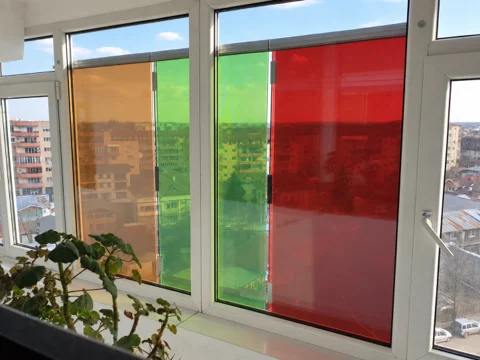
A pioneering pilot project in Bucharest, Romania, has demonstrated a significant breakthrough in urban renewable energy integration by utilizing semi-transparent photovoltaic (PV) glass to power domestic water heating systems directly. Developed and monitored by PhotoVoltaic Windows SRL over a four-year period, the system addresses the unique challenges of generating solar power in high-density residential environments where rooftop space is unavailable and balcony surface area is limited. By bypassing traditional inverters and utilizing the thermal mass of a standard water heater as a "battery," the project has achieved solar coverage of up to 46.7% for a four-person household’s hot water needs.
The Evolution of Building-Integrated Photovoltaics (BIPV)
Building-Integrated Photovoltaics (BIPV) have long been considered the "holy grail" of urban sustainability, yet adoption has been slowed by aesthetic concerns and technical inefficiencies. Traditional solar panels are opaque and bulky, making them unsuitable for windows or glazed facades. The Bucharest pilot utilizes a sophisticated alternative: semi-transparent PV glass that can be customized for transparency, color, and shape.

The technology works by embedding thin-film solar cells or specialized coatings within glass laminates. While higher transparency naturally leads to lower energy yields, the balance achieved in this project—typically between 10% and 30% transparency—allows for functional windows that still generate substantial power. At 30-40% transparency, these glass elements produce approximately 8.2 to 10.2 Watts per square foot (88–110 W/m²). This capability turns the entire vertical skin of a building into a potential energy generator without compromising the architectural integrity or the residents’ view of the outside world.
Chronology of the Bucharest Pilot Project
The journey toward this innovation began with a practical domestic failure. When an electric water heater in a Bucharest apartment developed a tank leak, the heating element remained functional. This prompted an experiment to determine if the resistive element could be powered directly by a PV source. Upon direct connection to a single PV glass element, the element heated instantly, proving that the low-voltage DC output of the glass was compatible with the high-voltage AC-rated resistance of the heater.
Following this "eureka moment," a full-scale pilot system was designed and installed on a south-facing glazed balcony on the eighth floor of a residential building in the Romanian capital. The installation was completed in December 2022, with systematic data collection and monitoring beginning in October 2023. Over the subsequent three years, the system was subjected to various weather conditions, including some of the wettest months in Romania’s recorded history, providing a robust dataset for analysis.

Technical Configuration and Direct-DC Integration
The pilot system consists of eleven semi-transparent PV glass elements, each measuring approximately 47.2 x 23.6 inches (1200 x 600 mm). To optimize both light and power, the array uses nine elements with 30% transparency and two with 10% transparency, totaling a combined nominal installed power of 845 Watts peak (Wp).
Unlike conventional residential solar setups, this system operates entirely without an inverter. During daylight hours, electricity flows directly from the PV glass to a 21-gallon (80-liter) electric water heater equipped with a 3 kW resistive element. This direct-DC approach offers several advantages:
- Efficiency: It eliminates the 5-15% energy loss typically associated with DC-to-AC inversion.
- Simplicity: The lack of complex electronics reduces the initial capital expenditure and minimizes points of failure.
- Threshold-Free Generation: Unlike most appliances that require a stable voltage to operate, a resistive heating element can absorb energy at any wattage. Whether the glass is producing 50 W or 500 W, the energy is converted into heat and stored in the water.
At sunset, a specialized controller automatically switches the heater back to the standard AC grid if the water has not reached the desired temperature. This ensures the household, which consists of four people taking daily showers, never experiences a shortage of hot water.

Multi-Year Performance Data and Environmental Impact
The performance of the system was monitored over three consecutive eleven-month periods (accounting for annual one-month vacancies). The results demonstrate the viability of the system even in less-than-ideal climates.
- 2023–2024: The system provided 446 kWh of solar energy, covering 46.7% of the total 954.4 kWh hot water demand.
- 2024–2025: The system provided 462 kWh, covering 43.7% of the 1,056 kWh demand.
- 2025–2026: Solar coverage dropped to 38.0% (360 kWh), a result attributed to record-breaking precipitation. According to Romania’s National Meteorological Administration (ANM), October 2025 and February 2026 were the second-wettest since 1901, significantly reducing solar irradiance.
Despite the fluctuations in weather, the system consistently offset nearly half of the energy required for domestic hot water. This is particularly significant when compared to "plug-in" balcony PV systems. Data from Germany’s Federal Environment Agency (UBA) suggests that without battery storage, only about 45% of the energy produced by a standard balcony system is consumed directly by the household; the rest is often fed into the grid without compensation. By using the water tank as a thermal battery, the Bucharest system achieves nearly 100% self-consumption of the generated solar energy.
Addressing the "Triple Benefit" of PV Glazing
The Bucharest pilot revealed that the benefits of PV glass extend far beyond simple electricity generation. The project identified a "triple benefit" that significantly enhances the economic argument for the technology.

1. Solar Shading and Cooling Load Reduction
By replacing clear glass with semi-transparent PV glazing, the apartment’s south-facing facade—totaling 139 square feet—saw a 40% reduction in solar heat gain. This passive cooling effect is vital in urban environments prone to the "heat island" effect. Thermal analysis suggests that the PV glazing reduced the electricity required for air conditioning by an estimated 433 to 481 kWh per summer season. This secondary energy saving further shortens the system’s payback period.
2. Elimination of "Waiting Water" Waste
Before the installation of the local PV-powered heater, the apartment relied on a centralized district heating system. Residents reported waiting five to eight minutes for hot water to travel through the building’s pipes to the eighth floor. Measurements indicated that approximately 17,000 gallons (64 m³) of water were wasted annually during these waiting periods. Because the local PV water heater is located only a few meters from the point of use, this waste was eliminated.
3. Economic Relief for Municipal Subsidies
In Bucharest, the municipality heavily subsidizes district heating, covering approximately two-thirds of the cost. By transitioning to a decentralized, solar-assisted system, the burden on public funds is reduced. The reduction in wasted "waiting water" alone accounts for an estimated 1,675 kWh of thermal energy that the city no longer needs to generate and transport, highlighting the potential for this technology to assist in broader municipal energy reforms.

Infrastructure and Policy Implications
The methodology used to assess the project’s savings was reviewed by the Romanian Association of Energy Auditors for Buildings (AAECR), and the automatic switching concept between DC and AC has been included in a patent application with the Romanian State Office for Inventions and Trademarks. These steps signal a transition from a hobbyist experiment to a commercially viable infrastructure solution.
For the millions of Europeans living in apartment blocks, traditional solar remains out of reach. However, the Bucharest pilot suggests that the integration of PV glass into windows and balcony enclosures, paired with existing domestic appliances, offers a path toward energy independence. This approach is particularly effective for households using individual gas boilers; the electric PV heater can be installed upstream to pre-heat the water, significantly reducing gas consumption and the associated carbon emissions.
Conclusion and Future Outlook
The Bucharest pilot serves as a proof of concept for a simplified, robust, and multi-functional approach to urban renewable energy. By focusing on the synergy between PV glass and thermal storage, the system avoids the costs and complexities of chemical batteries and inverters while providing significant returns in energy savings, water conservation, and passive cooling.

As cities worldwide strive to meet "Net Zero" targets, the ability to turn vertical glass surfaces into power plants will become increasingly critical. The PhotoVoltaic Windows project demonstrates that with the right electrical configuration and a focus on direct-use applications, the transition to solar energy in the urban landscape can be seamless, aesthetic, and highly efficient. The success of this four-year trial provides a blueprint for future residential developments to integrate solar generation directly into the building’s envelope, transforming passive structures into active energy contributors.
