

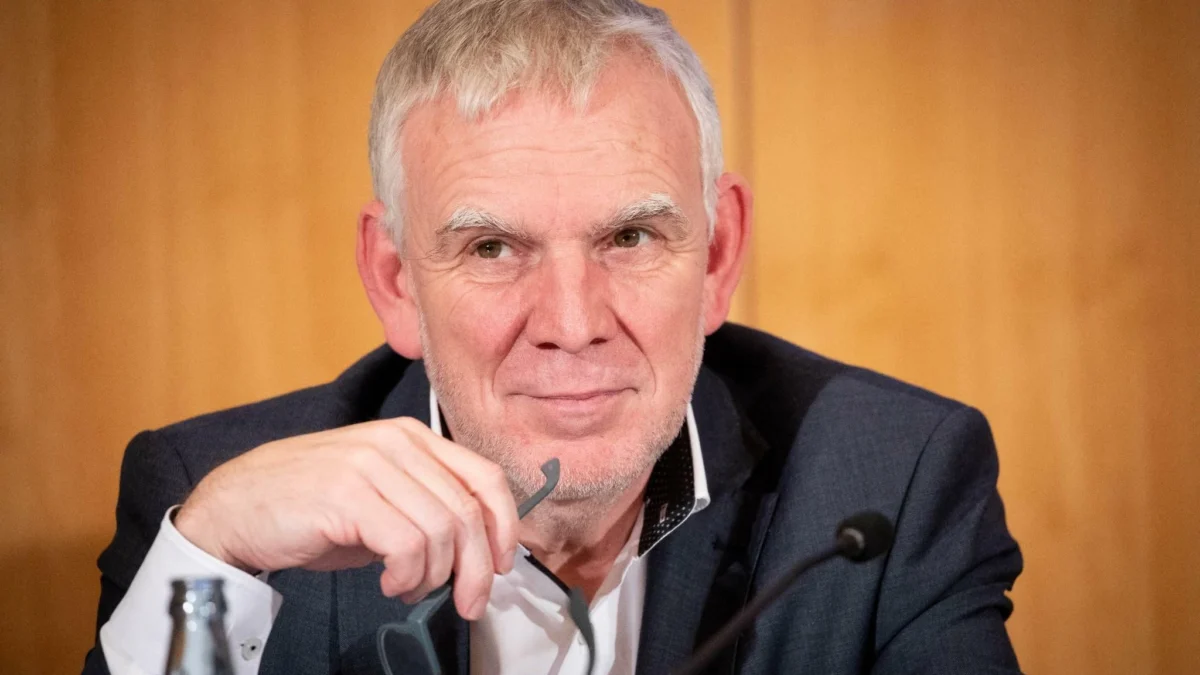
Berlin – Jochen Flasbarth, a prominent figure in German environmental and climate policy for nearly a decade, is set to leave his post as State Secretary at the Federal Ministry for the Environment, Nature Conservation, Nuclear Safety and Consumer Protection (BMUV). Minister Carsten Schneider (SPD) announced Flasbarth’s departure in a memo to ministry staff, revealing that Flasbarth will be transitioning to the European Climate Foundation next year. The Handelsblatt has obtained a copy of this internal communication.
Flasbarth’s tenure at the BMUV has been extensive, spanning close to nine years as a tenured State Secretary. This period was punctuated by a four-year stint as State Secretary at the Federal Ministry for Economic Cooperation and Development (BMZ). His departure marks the end of an era for a leader deeply embedded in the intricacies of environmental governance, both domestically and internationally.
Minister Schneider lauded Flasbarth in his memo, describing him as a "cornerstone of German environmental and climate policy." He further emphasized Flasbarth’s "unique" influence on German, European, and international environmental and climate policy over the past decades. This high praise underscores Flasbarth’s significant contributions and the respect he commands within the ministry and the broader policy landscape.
The 64-year-old Flasbarth brings a wealth of experience to his new role. Prior to his government service, he held leadership positions such as President of the Naturschutzbund Deutschland (NABU), a leading German environmental organization. He also served as a department head within the Federal Environment Ministry and as President of the Federal Environment Agency (UBA), the central environmental authority in Germany. These diverse roles have provided him with a comprehensive understanding of environmental challenges and policy solutions from various perspectives.
Flasbarth’s departure is effective in the short term. His successor as State Secretary, Heike Henn, will assume her duties at the beginning of November. Henn most recently served as the Head of the Department for International Climate Policy at the BMUV, indicating a continuity of expertise within the ministry. Minister Schneider expressed confidence in Henn, stating, "She knows the house, its issues, and its working methods and will bring her own experience and perspective to this important task." This suggests a smooth transition and a continued focus on the ministry’s core objectives.
A Deep Dive into Jochen Flasbarth’s Career and Impact
Jochen Flasbarth’s career is a testament to a lifelong commitment to environmental protection and sustainable development. His journey through various high-level positions within government and non-governmental organizations has equipped him with a unique perspective on the multifaceted nature of environmental challenges.
Early Career and Foundation Building:
Before entering federal politics, Flasbarth established himself as a prominent voice in the environmental movement. As President of NABU, he was instrumental in shaping public discourse and advocating for stronger conservation policies. This period provided him with invaluable insights into grassroots environmental activism and the importance of public engagement in driving policy change. His leadership at NABU from 1997 to 2000 saw the organization grow in influence and reach, tackling critical issues such as biodiversity loss and habitat destruction.
Following his time at NABU, Flasbarth moved into governmental roles. His initial position as a department head at the BMUV laid the groundwork for his future leadership. This role allowed him to engage directly with the policy-making apparatus and understand the complexities of translating environmental goals into actionable legislation. Subsequently, his appointment as President of the Federal Environment Agency (UBA) from 2000 to 2005 placed him at the helm of Germany’s primary scientific advisory body on environmental issues. In this capacity, he oversaw crucial research and analysis, providing the scientific basis for many of the nation’s environmental policies.
Federal State Secretary: A Period of Significant Policy Influence
Flasbarth’s appointment as State Secretary at the BMUV in 2013 marked a significant period of influence. During his tenure, Germany continued to navigate the complexities of the energy transition (Energiewende), a massive undertaking to shift the country away from fossil fuels and nuclear power towards renewable energy sources. This involved intricate policy development, regulatory frameworks, and public consensus-building.
His role as State Secretary at the BMZ from 2005 to 2009 offered a different, yet complementary, perspective. Here, he focused on integrating environmental considerations into Germany’s development cooperation efforts, emphasizing the interconnectedness of global environmental issues and sustainable development. This experience provided him with a broader understanding of how environmental challenges manifest in developing countries and the role of international partnerships in addressing them.
Upon returning to the BMUV, Flasbarth was tasked with steering Germany’s environmental agenda through a rapidly evolving global landscape. Key policy areas during his second tenure likely included:
- Climate Change Mitigation and Adaptation: This encompassed Germany’s commitments under the Paris Agreement, including efforts to reduce greenhouse gas emissions, promote renewable energy, and develop strategies to adapt to the impacts of climate change. Data from the German Environment Agency (UBA) shows a fluctuating but generally declining trend in greenhouse gas emissions over the past decade, a period during which Flasbarth held significant responsibility. For instance, in 2022, Germany’s greenhouse gas emissions were estimated to be around 762 million tonnes of CO2 equivalents, a reduction of about 40% compared to 1990 levels, though progress has been uneven.
- Biodiversity Conservation: Protecting Germany’s natural heritage and combating biodiversity loss remained a core focus. This involved implementing measures to safeguard habitats, promote sustainable land use, and address the drivers of species decline.
- Circular Economy and Resource Efficiency: Shifting towards a more sustainable model of production and consumption, with an emphasis on reducing waste and maximizing resource utilization, was another critical policy area.
- Water and Air Quality: Continued efforts to improve water and air quality through stringent regulations and targeted initiatives were also part of his mandate.
The European Climate Foundation: A New Arena for Impact
The European Climate Foundation (ECF) is a prominent philanthropic organization that supports a wide range of climate initiatives across Europe. Its mission is to help Europe achieve a net-zero future by supporting policy development, advocacy, and research aimed at accelerating the transition to clean energy and sustainable practices.
Flasbarth’s move to the ECF signifies a shift from direct government policy-making to a role in shaping and supporting broader European climate action. This transition is likely to leverage his extensive experience and network to influence climate policy and implementation across the continent. The ECF plays a crucial role in funding and coordinating efforts to achieve ambitious climate targets, and Flasbarth’s involvement suggests a continued dedication to driving impactful climate solutions.
Broader Implications and Context
Jochen Flasbarth’s departure and his move to the European Climate Foundation are significant events within the context of Germany’s ongoing commitment to environmental and climate leadership.
Continuity and Transition within the BMUV:
The appointment of Heike Henn as the new State Secretary signals a deliberate effort by Minister Schneider to ensure continuity and leverage existing expertise within the ministry. Henn’s background in international climate policy suggests that Germany’s engagement on the global climate stage will remain a priority. Her understanding of the ministry’s internal workings is crucial for maintaining momentum on existing initiatives and adapting to new challenges.
Germany’s Role in European Climate Policy:
Germany has historically been a driving force in advocating for ambitious climate policies within the European Union. Flasbarth’s move to the ECF, a key player in supporting European climate action, suggests a continued, albeit indirect, influence on this agenda. The ECF often works closely with policymakers, civil society, and industry to foster consensus and accelerate the adoption of climate-friendly solutions. His presence there could further strengthen the link between German expertise and pan-European climate efforts.
The Evolving Landscape of Environmental Governance:
The move from a government ministry to a non-governmental foundation reflects a broader trend in environmental advocacy and policy influence. As complex global challenges like climate change require multifaceted solutions, the collaboration between governments, international organizations, and philanthropic foundations becomes increasingly vital. Flasbarth’s career trajectory mirrors this evolution, showcasing how experienced professionals can adapt their roles to continue contributing to critical societal goals.
Data Supporting Environmental Policy:
Germany’s environmental policy is informed by a robust data collection and analysis framework, overseen by agencies like the UBA. For example, the UBA regularly publishes data on air quality, water pollution, waste management, and greenhouse gas emissions. This data is crucial for setting policy targets, evaluating the effectiveness of measures, and identifying areas requiring further action. The success of initiatives like the Energiewende is continuously monitored through such data. For instance, while renewable energy sources are steadily increasing their share in Germany’s electricity mix, reaching over 50% in recent years, challenges remain in fully decarbonizing sectors like transport and industry.
Flasbarth’s departure from the BMUV, while marking the end of a significant chapter in his career, also signifies a new beginning. His continued involvement in the European Climate Foundation ensures that his decades of experience and deep understanding of environmental policy will continue to contribute to the urgent task of addressing climate change. The transition within the BMUV, with the appointment of Heike Henn, suggests a commitment to maintaining Germany’s leadership in environmental protection and climate action.
