

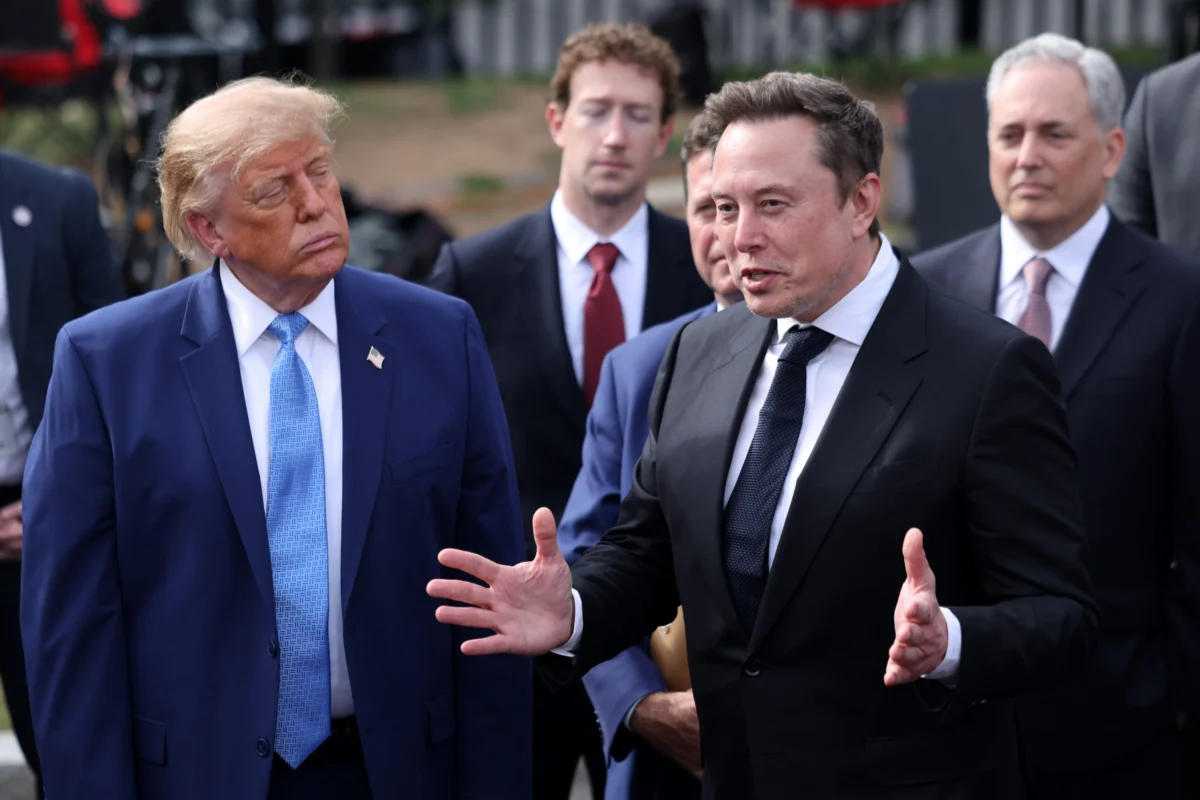
President Donald Trump recently hosted an unprecedented gathering of the nation’s foremost artificial intelligence luminaries, a summit that culminated not only in a collaborative pledge but also in a significant semantic shift: the official reclassification of "artificial intelligence" within U.S. government parlance to "super intelligence." This directive, now formalized by executive order, mandates that official U.S. representatives adopt the new terminology, marking a strategic pivot in how the administration frames the burgeoning technology. The high-profile meeting, attended by titans such as Mark Zuckerberg, Jeff Bezos, Elon Musk, and Anthropic CEO Dario Amodei, underscored a renewed focus on AI safety and U.S. leadership, yet its underlying motivations and potential efficacy have become subjects of considerable debate among industry observers and policy analysts.
A Pivotal Shift in Terminology and Strategy
The renaming of "artificial intelligence" to "super intelligence" is more than a mere linguistic exercise; it represents a deliberate attempt to reshape public perception and policy discourse around one of the most transformative technologies of our era. The administration’s rationale, as interpreted by various commentators including Kirsten Korosec of TechCrunch’s Equity podcast, appears to be a rebranding effort designed to assuage widespread public anxieties. For years, the term "artificial intelligence" has been associated with dystopian narratives, fears of job displacement, and even existential threats, fueled by popular culture and academic warnings. By introducing "super intelligence," the administration seemingly aims to present a more benign, or at least less threatening, vision of advanced computational capabilities. This reframing seeks to decouple the technology from its more ominous connotations, perhaps suggesting a future where advanced intelligence is viewed as a beneficial, controllable force rather than an autonomous danger.
This linguistic directive follows a period of inconsistent messaging from the Trump administration regarding AI. Just weeks prior to the summit, President Trump had publicly expressed skepticism about the need for AI regulation, advocating for unfettered innovation to ensure U.S. dominance in the global AI race. His previous statements often characterized calls for caution or regulation as impediments to progress, even going so far as to suggest such concerns were politically motivated. The sudden shift to hosting a summit focused on "safety" and adopting a new, ostensibly more positive, term for the technology indicates a strategic adjustment, possibly influenced by evolving public sentiment, growing industry consensus on safety, or geopolitical considerations.
The "Joint Commitment on Frontier Responsibilities": Substance or Symbolism?
Central to the summit was the signing of the "Joint Commitment on Frontier Responsibilities" by the attending AI executives. This pact, while heralded by the administration as a landmark agreement for AI safety, immediately drew scrutiny for its legally non-binding nature. Sean O’Kane, also from the TechCrunch Equity podcast, highlighted its "deeply non-binding" status, pointing out that it is entirely voluntary. President Trump himself characterized the commitment as "morally binding," a novel legal descriptor that further fueled skepticism regarding its enforceability and tangible impact. Adding to the perception of haste and perhaps a lack of meticulous preparation, the agreement was notably found to have misspelled "United States."
The content of the "Joint Commitment" likely outlines broad principles for responsible AI development, such as prioritizing safety, transparency, and accountability. However, without specific regulatory frameworks, enforcement mechanisms, or quantifiable benchmarks, its effectiveness hinges entirely on the voluntary compliance of the signatories. This approach contrasts sharply with more robust regulatory initiatives seen in other parts of the world, such as the European Union’s AI Act, which imposes strict legal obligations on developers and deployers of high-risk AI systems. Critics argue that a "morally binding" agreement, while fostering dialogue and signaling good intentions, may not be sufficient to address the complex ethical, societal, and security challenges posed by rapidly advancing AI technologies. It raises questions about whether the administration is genuinely seeking to establish stringent guardrails or primarily aiming for a public relations victory.
A Gathering of Tech Titans: Who Was There and Why?
The attendance list for the summit read like a who’s who of the technology world, featuring prominent figures such as Mark Zuckerberg of Meta, Jeff Bezos of Amazon, Elon Musk of xAI/Tesla, and Dario Amodei of Anthropic. Their presence lent significant weight and credibility to the event, projecting an image of industry-wide consensus and collaboration with the government. For the tech leaders, participating in such a high-profile event offers several strategic advantages: it allows them to directly engage with policymakers, potentially influence future regulatory directions, demonstrate a commitment to responsible innovation, and maintain a favorable public image. In an era of increasing scrutiny on big tech, aligning with government initiatives, even symbolic ones, can be a crucial diplomatic maneuver.
The Anthropic Saga: A Tale of Two Departments
The participation of Anthropic CEO Dario Amodei was particularly noteworthy given the company’s recent tumultuous relationship with parts of the Trump administration. Anthropic, a leading AI research company known for its focus on AI safety and alignment, had previously faced strong criticism from the Defense Department, which reportedly viewed the company as "woke" and a potential national security risk due to its internal policies and conditions on technology use. This tension was widely reported, with figures like Emil Michael, a venture capitalist and former Uber executive, frequently vocalizing critiques of Anthropic on social media.
However, the dynamics appeared to shift dramatically just prior to the summit. Reports indicated that Amodei was invited to a late-night private dinner with President Trump, an unexpected development that seemed to pave the way for Anthropic’s inclusion in the broader AI leaders’ luncheon. This suggests a complex, possibly fragmented, approach within the administration, where different departments hold varying views on specific AI companies and their technologies. While the Defense Department may harbor reservations, other parts of the White House, such as the Treasury Secretary, were reportedly more favorably disposed towards Anthropic and its contributions. This internal dichotomy highlights the challenge of formulating a unified AI strategy when opinions on technology, ethics, and national security diverge even within the same government.
The Evolving Landscape of AI Regulation: A Global Context
The Trump administration’s AI summit occurs within a rapidly evolving global landscape concerning AI governance and regulation. Around the world, governments are grappling with how to harness AI’s potential while mitigating its substantial risks. The European Union, for instance, has taken a proactive stance with its landmark AI Act, which categorizes AI systems by risk level and imposes stringent requirements, including transparency obligations, data governance rules, and human oversight for high-risk applications. Similarly, the United Kingdom hosted the inaugural AI Safety Summit at Bletchley Park, bringing together international leaders, researchers, and companies to discuss frontier AI risks. China, too, has been aggressively pursuing its AI strategy, investing heavily in research and development while also implementing regulations on generative AI to ensure content aligns with national values.
These global efforts reflect a growing consensus on the need for some form of governance over AI. Public concerns are a significant driving force behind this push. Reports from various think tanks and research institutions consistently highlight anxieties about job displacement due to automation, the potential for AI-driven misinformation and deepfakes to destabilize democracies, ethical dilemmas concerning bias in algorithms, and the broader existential risks associated with advanced general AI. Data from organizations like the Pew Research Center indicate that a substantial portion of the public worries about AI’s impact on employment and societal fairness. It is against this backdrop of widespread apprehension that the Trump administration’s "rebranding effort" and focus on "safety" can be understood as a response to both domestic and international pressures.
From "AI" to "Super Intelligence": A Deeper Dive into the Lexical Shift
The move to officially adopt "super intelligence" over "artificial intelligence" for U.S. government use warrants closer examination. While "artificial intelligence" broadly refers to machines mimicking human cognitive functions, "super intelligence," a term popularized by philosopher Nick Bostrom, typically denotes an intellect that vastly surpasses the cognitive performance of humans in virtually all domains. From a technical and philosophical perspective, achieving true "super intelligence" is considered a future, hypothetical milestone, far beyond current capabilities. Therefore, using the term now for all AI, from simple algorithms to advanced models, carries significant implications.
The immediate effect of this lexical shift is primarily rhetorical. By embracing "super intelligence," the administration might aim to convey a sense of awe and advanced capability, while simultaneously attempting to neutralize the negative connotations associated with "AI." It could be argued that "super" implies a controlled, superior form of intelligence, perhaps suggesting that humanity is managing and directing this power rather than being threatened by it. This framing might also serve to emphasize U.S. leadership and ambition in the field, positioning the nation at the forefront of developing what is perceived as the ultimate form of intelligence. However, critics might argue that such a redefinition risks diluting the precise technical meanings of these terms, potentially confusing the public and obscuring the very real, current challenges posed by existing AI systems. It could also be seen as a way to sidestep difficult conversations about the ethical implications of present-day AI by shifting the focus to a more distant, abstract concept.
The Emergence of the "Super Intelligence Force"
Following the summit, President Trump further solidified the new terminology with the announcement of a "new Super Intelligence Force." While details about the precise mandate, structure, and funding of this force remain to be fully articulated, its creation signals a governmental commitment to addressing the challenges and opportunities of advanced intelligence through a dedicated entity. Such a force could potentially be tasked with a range of responsibilities, including coordinating national AI strategy, developing safety protocols, fostering public-private partnerships, and perhaps even engaging in defensive or offensive AI applications for national security. The term "force" itself suggests a proactive, robust, and potentially militarized or strategic approach to super intelligence, aligning with a vision of maintaining U.S. dominance and preparedness. This development further underscores the administration’s intention to embed the "super intelligence" concept deeply into its strategic planning and public messaging.
Broader Implications: Navigating the Future of Advanced Intelligence
The implications of President Trump’s AI summit and the subsequent policy shifts are far-reaching. On a policy level, the "morally binding" commitment and the executive order on terminology raise questions about the future of AI regulation in the U.S. Will this symbolic gesture be followed by more concrete legislative actions, or will it serve as a substitute for stringent oversight? The effectiveness of voluntary agreements in rapidly evolving technological fields remains a contentious issue.
From an innovation standpoint, how the government frames AI can influence research directions, investment, and talent attraction. If "super intelligence" is consistently promoted as a positive, controllable force, it might encourage further investment and development, but potentially at the risk of downplaying critical safety and ethical considerations. Geopolitically, the U.S. stance on AI, including its chosen terminology, sends a clear message to international competitors like China and the EU. It could either foster greater international collaboration on safety standards or intensify the global AI arms race, depending on how it’s perceived.
Finally, the impact on public discourse cannot be overstated. By attempting to rebrand AI, the administration is actively shaping how the public understands and reacts to this technology. If successful, it could alleviate some anxieties and garner support for AI development. However, if seen as a superficial attempt to mask real dangers or avoid meaningful regulation, it could erode public trust and exacerbate skepticism towards both the technology and its governance. The long-term significance of this summit may lie less in the immediate commitments made and more in the lasting shift in language and perception it seeks to achieve, setting a new stage for the ongoing dialogue about humanity’s relationship with advanced intelligence.
Conclusion: More Than Just Semantics?
The recent AI summit convened by President Trump, characterized by a gathering of industry leaders, a non-binding safety pledge, and the official rebranding of "artificial intelligence" to "super intelligence," represents a complex interplay of politics, technology, and public relations. While skepticism abounds regarding the immediate practical impact of the "Joint Commitment on Frontier Responsibilities," the event’s broader significance lies in its deliberate effort to reshape the narrative around AI. The shift in terminology, coupled with the establishment of a "Super Intelligence Force," indicates a strategic intent to reframe advanced intelligence as a powerful yet manageable asset, potentially to allay public fears and assert U.S. leadership. As the world grapples with the accelerating pace of AI development, these moves by the U.S. administration will undoubtedly influence future policy debates, technological trajectories, and the global conversation surrounding the responsible deployment of increasingly sophisticated intelligent systems. Whether this rebranding proves to be a superficial cosmetic change or a foundational shift in strategic thinking will become clearer as the implications unfold.
