

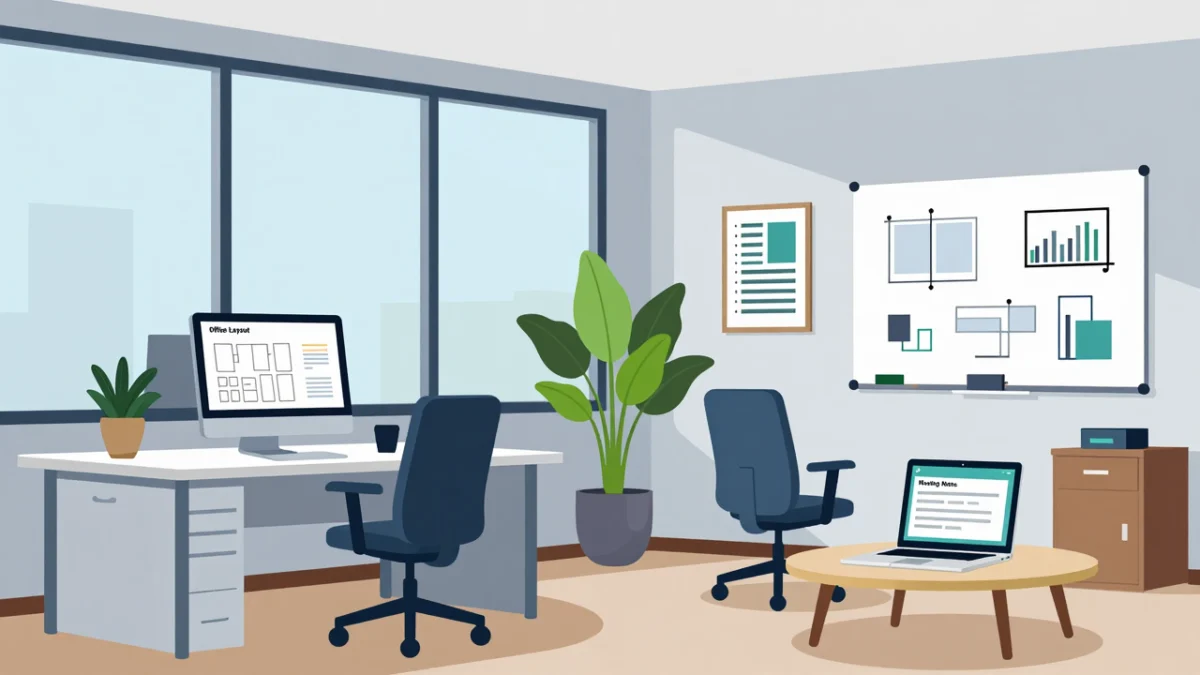
The global landscape of corporate real estate is undergoing a fundamental transformation as organizations transition from traditional fixed-seating arrangements to dynamic, hybrid work environments. Central to this shift is the rapid adoption of office space planning software, a category of enterprise tools designed to optimize physical footprints, reduce overhead costs, and enhance the daily experience of employees. As companies look toward 2026, the integration of these platforms has moved from a tactical convenience to a strategic necessity. By leveraging data-driven insights into occupancy patterns and resource utilization, businesses are now able to align their physical infrastructure with the actual needs of a fluctuating workforce.

The Historical Context and the Catalyst for Change
Before the global events of 2020, office space planning was largely a static exercise. Facility managers utilized basic CAD (Computer-Aided Design) drawings or simple spreadsheets to assign permanent desks to specific employees. The "one-to-one" ratio of desks to employees was the industry standard, and space optimization was often secondary to organizational hierarchy.
The onset of the COVID-19 pandemic served as a massive catalyst for change. As offices shuttered and then eventually reopened under strict social distancing guidelines, the need for real-time space management became urgent. This era saw the rise of "desk hoteling" and "hot-desking," necessitating software that could manage reservations and ensure safe occupancy levels. Post-pandemic, the emergence of the hybrid work model—where employees split time between the home and the office—rendered traditional planning obsolete. Organizations found themselves paying for massive amounts of unused square footage on Tuesdays through Thursdays, while offices sat nearly empty on Mondays and Fridays. This inefficiency has driven the current demand for sophisticated planning tools that can provide granular data on how, when, and where work actually happens.

Defining Modern Office Space Planning Software
Modern office space planning software is an integrated ecosystem that combines floor plan visualization, resource booking, and data analytics. At its core, the software allows administrators to create interactive digital twins of their office environments. These digital maps serve as the interface for both managers and employees, providing a real-time view of available desks, meeting rooms, and collaborative zones.
The primary objective of these platforms is to maximize the utility of the physical workspace. This is achieved through several key functionalities:

- Occupancy Tracking: Using a combination of software logs and, increasingly, hardware sensors (IoT), these tools monitor which areas of the office are being used and at what times.
- Desk and Room Booking: A user-facing interface that allows employees to reserve workspaces in advance or on-demand, often integrated with their existing calendar systems.
- Scenario Planning: Tools that allow facility managers to "test" different office layouts virtually before moving furniture, helping to determine the most efficient configuration for specific team needs.
- Analytics and Reporting: High-level dashboards that summarize space utilization rates, helping executives make informed decisions about renewing leases or downsizing real estate holdings.
Comparative Analysis of Leading Market Solutions
As the market for space management matures, several key players have emerged, each catering to different organizational sizes and needs. The selection of a platform often depends on the specific balance of cost, feature depth, and ease of integration.
Archie: The Value-Driven Contender
Archie has positioned itself as a highly accessible option for small to mid-sized enterprises (SMEs) and coworking spaces. With a pricing model starting at approximately $2.80 per desk and $8 per room (subject to a $159 monthly minimum), it offers a low barrier to entry. Its focus is on simplicity and a "mobile-first" experience, which appeals to younger, tech-savvy workforces who require quick, on-the-go booking capabilities.

OfficeSpace: The Enterprise Standard
For larger corporations with complex multi-location needs, OfficeSpace remains a dominant force. With packages starting around $60 per user per year, it offers a more robust suite of tools designed for deep organizational integration. Its strength lies in its "What-If" scenario planning and its ability to handle large-scale "moves, adds, and changes" (MAC) within a global portfolio.
Nexudus: The Coworking Specialist
Originally designed for the coworking industry, Nexudus has expanded into the corporate sector. It is particularly effective for organizations that operate their offices like a service. Starting at $150 per month for up to 80 users, it includes features for billing, member management, and community engagement, making it ideal for flexible workspaces.

Robin and Envoy: The Experience Leaders
Robin and Envoy have carved out niches by focusing on the "employee experience." These platforms prioritize intuitive user interfaces and seamless integrations with communication tools like Slack and Microsoft Teams. By reducing the friction involved in finding a desk or a colleague, these tools aim to make the physical office a more attractive destination for hybrid workers.
Data-Driven Decision Making and ROI
The implementation of space planning software is increasingly viewed through the lens of Return on Investment (ROI). Corporate real estate is typically the second-largest expense for a business after payroll. Data from industry analysts suggests that the average global office occupancy rate hovers between 40% and 60% in the current hybrid climate.

By using occupancy analytics, organizations can identify "dead zones"—areas of the office that are consistently underutilized. This data allows companies to consolidate floors, sublease unused space, or repurpose traditional desk areas into collaborative "neighborhoods" that better serve the modern worker. For example, a firm that realizes its 50-person conference rooms are only ever used by groups of four can use that data to justify a renovation into multiple small huddle rooms, thereby increasing the total capacity and utility of the same square footage.
Integration with the Broader Tech Stack
A critical factor in the success of any office planning tool is its ability to communicate with other enterprise systems. Journalistic observation of the sector indicates that standalone tools are rapidly losing ground to integrated ecosystems.

- Communication Platforms: Integration with Slack or Microsoft Teams allows employees to book desks without leaving their primary workflow.
- Calendar Systems: Syncing with Google Workspace or Microsoft 365 ensures that room bookings are reflected in real-time, preventing the common "ghost meeting" phenomenon where rooms are reserved but remain empty.
- HRIS Systems: Connecting to Human Resources Information Systems (HRIS) ensures that the floor plan is always updated with the current employee roster and departmental structures.
Challenges to Implementation: Cultural and Technical Barriers
Despite the clear benefits, the transition to software-managed spaces is not without friction. One of the most significant hurdles is "user adoption resistance." Employees who were accustomed to having a dedicated desk with personal items often view hot-desking as a loss of status or comfort. Overcoming this requires a clear internal communication strategy and a focus on the benefits, such as improved cleanliness, better technology in common areas, and the ability to sit near different team members.
Technical complexity also poses a challenge. Integrating new software with legacy HR systems or building management hardware can lead to data silos or inaccuracies. If an employee books a desk but the system fails to show it as occupied on the digital map, the resulting confusion can quickly erode trust in the platform. Furthermore, as these tools collect more data on employee movements, privacy concerns (often referred to as "Big Brother" syndrome) must be addressed through transparent data policies and anonymized reporting.

Future Trends: AI, IoT, and the "Smart Office"
Looking toward the end of the decade, the evolution of office space planning software will be defined by three major trends:
- Artificial Intelligence (AI) and Predictive Analytics: Future systems will not just report on what happened; they will predict what will happen. AI will analyze historical attendance data, local traffic patterns, and even weather forecasts to suggest the optimal office layout for the coming week or to recommend the best time for an employee to come into the office to collaborate with specific peers.
- Internet of Things (IoT) Integration: The use of under-desk infrared sensors and overhead environmental sensors will provide 100% accurate, real-time occupancy data without requiring manual check-ins. These sensors can also link to HVAC and lighting systems to save energy in unoccupied zones, aligning space planning with corporate sustainability (ESG) goals.
- Wellness and Personalization: Emerging software is beginning to track environmental factors like CO2 levels, natural light, and noise decibels. Future planning tools may allow employees to book a desk based on their personal "work mode"—for example, requesting a "quiet, high-light zone" for deep focus work.
Conclusion and Strategic Outlook
The adoption of office space planning software represents a shift from managing "square feet" to managing "human experiences." As the cost of real estate continues to rise and the competition for talent remains fierce, the ability to provide a flexible, efficient, and data-informed workplace is a significant competitive advantage. Organizations that successfully implement these tools will not only realize substantial cost savings but will also create environments that foster the collaboration and culture necessary for long-term success. The transition requires a careful balance of selecting the right technology, ensuring deep system integration, and managing the cultural shift toward a more fluid way of working. In 2026 and beyond, the office will no longer be a static destination, but a dynamic resource optimized by intelligence.
