

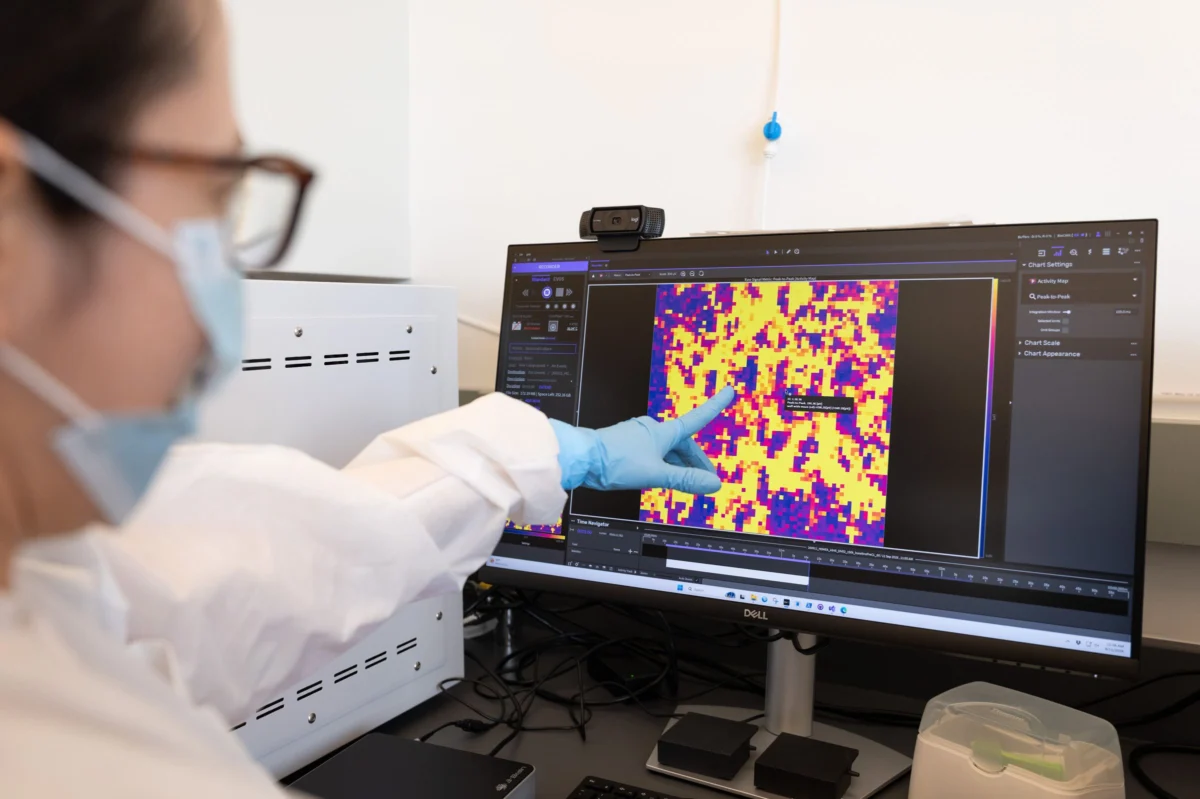
A groundbreaking biological computing startup, The Biological Computing Company (TBC), which harnesses neural patterns from rat brain cells to construct artificial intelligence, has announced a significant partnership with Amazon Web Services (AWS). This collaboration marks a pivotal moment for the nascent field of bio-inspired AI, promising to enhance the efficiency and capabilities of video generation models. Starting Tuesday, select AWS customers will gain access to TBC’s "rat brain" AI model through a limited preview, with a broader rollout to all AWS enterprise clients anticipated soon.
Pioneering Bio-Inspired AI for Enhanced Video Generation
The core of TBC’s innovative approach lies in its ability to translate biological processes into computational power. Co-founder Alexander Ksendzovsky explained the fundamental principle: "We figured out a way to code information, like images for example, to the biological material. We then observe how the biology processes that information, and then we build a tool that mimics that process." This methodology allows TBC to develop AI models that learn and process information in a manner inspired by the intricate neural networks of living organisms, rather than solely relying on traditional algorithmic structures.
This partnership signifies Amazon’s growing interest in bio-inspired computing. Deap Ubhi, global director of technology for startups at AWS, noted that this is not Amazon’s first foray into this domain. He pointed to Cortical Labs, an Australian company that integrates lab-grown neurons with silicon chips for data processing, as another example of a bio-computing firm building on the AWS platform. Cortical Labs offers "wetware as a service" (WAAS) and even a "biological computer" designed for laboratory use, capable of sustaining neuron viability for extended periods.

Ubhi further elaborated on why TBC’s approach resonated with Amazon: "We figured out a way to code information, like images for example, to the biological material. We then observe how the biology processes that information, and then we build a tool that mimics that process." He described TBC’s methodology as "pragmatic," emphasizing their focus on improving existing generative AI technologies rather than attempting to reinvent foundational architectures like transformers, which underpin large language models. "They’re working within existing standards of the generative AI space and saying, ‘How can we make the current visual models more efficient?’" Ubhi stated.
A Deep Dive into TBC’s Methodology and Funding Journey
Founded in Baltimore, Maryland, four years ago by neuroscientists and neurosurgeons Alexander Ksendzovsky (CEO) and Jon Pomeraniec (President and COO), TBC has rapidly advanced its research and development. Earlier this year, the company secured $25 million in a funding round led by Primary Venture Partners, marking its first significant investment. This initial capital injection was quickly followed by an additional $25 million, bringing TBC’s total funding to over $50 million. This second round of funding, previously undisclosed, underscores the significant investor confidence in the company’s potential.
The company has since established offices and a research and development laboratory in San Francisco. TBC currently employs approximately 35 individuals, some of whom are directly involved in experimental work with rat brain cells and human stem cells. These living cells are cultivated on multi-electrode silicon arrays provided by the Swiss biotech company 3Brain. Researchers at TBC meticulously stimulate these neurons with electrical patterns and record their responses. This intricate data is then analyzed to identify computational patterns that can be translated into software, ultimately enhancing existing AI models, with a particular focus on video generation.
Strategic Focus on Video Generation: A Scientific and Practical Decision
The decision to concentrate on video generation as an initial application was driven by both scientific and practical considerations. Ksendzovsky explained that the physical configuration of the multi-electrode silicon arrays TBC utilizes played a crucial role. The precise placement of each electrode influences its interaction with the neurons. This led the company to identify images as a natural starting point, as visual information could be more readily mapped onto the grid-like structure of the arrays compared to text or language.

This scientific insight then paved the way for a clear business use case. By studying how neurons process visual information, TBC theorized that these learnings could be applied to significantly improve AI models designed for video creation. Jon Pomeraniec highlighted the influence of Jeff Dean, a prominent AI researcher and TBC investor, who suggested focusing on video generation models first. Dean’s reasoning was that established industry benchmarks for video models would allow TBC to readily demonstrate scientific advancement by testing its technology on well-defined problems. "Jeff said if we could do that, there’s the promise of doing more complex, interesting things with our AI models down the line," Pomeraniec recounted.
Performance Claims and Future Scalability
Prior to the AWS partnership, TBC’s technology was accessible through a specialized cloud provider named Bluesky Compute. The company asserts that its AI model, when benchmarked against comparable open-source AI models, achieves up to five times faster video generation speeds and substantially reduces inference costs. Inference refers to the computational process of an AI model generating an output after being trained, distinct from the training phase itself. While TBC has not disclosed the specific open-source AI model used for comparison, they claim it is one of the leading "frontier" video generation models available.
The collaboration with Amazon Web Services is poised to dramatically expand TBC’s reach. Ubhi expressed enthusiasm for The Biological Computing Company’s potential but also raised pertinent questions about scalability. "I think with any model like this, the one thing you have to ask is, if you push it to the extremes, will you still see improvements? If you have customers who want to generate longer-form videos, ten minutes, an hour, what’s the potential loss in fidelity over the course of time?" he pondered. This concern addresses the critical need for AI models to maintain consistency and coherence over extended durations, a challenge that TBC will likely face as its technology is adopted by a wider range of enterprise customers. The next phase for TBC will involve rigorous testing to ascertain whether its bio-inspired approach can meet the demands of generating longer, more complex video content.
Broader Implications for the Future of AI
The partnership between TBC and AWS signals a significant step forward for biological computing, a field that has long been a subject of scientific fascination. The prospect of AI systems that mimic the efficiency and adaptability of biological brains has the potential to revolutionize various industries. By bridging the gap between living biological systems and digital computation, TBC and its collaborators are paving the way for a new generation of AI that could be more energy-efficient, robust, and capable of tackling complex problems in novel ways.

The challenges inherent in working with biological materials – maintaining cell viability, translating biological signals into digital data, and ensuring reproducibility – are substantial. However, the progress demonstrated by companies like TBC suggests that these hurdles are not insurmountable. The integration of biological computing into mainstream cloud platforms like AWS could accelerate innovation, making these advanced bio-inspired AI capabilities accessible to a broader ecosystem of developers and businesses. This could lead to breakthroughs in fields ranging from scientific research and drug discovery to creative content generation and robotics.
As the AI landscape continues to evolve at an unprecedented pace, the embrace of biological computing by major technology players like Amazon suggests a future where artificial intelligence is not solely confined to silicon and algorithms, but also draws inspiration and power from the intricate biological machinery of life itself. The success of TBC’s "rat brain" AI model on the AWS platform will be closely watched as a bellwether for the broader adoption and impact of bio-inspired artificial intelligence.
Update 9/22/26 5:00 pm ET: This story has been updated to clarify that not all of Biological Computing Company’s employees work directly with biological cells in its San Francisco lab.
Correction 9/28/26 3:45 pm ET: This story has been corrected to clarify that Cortical Labs is building its technology on AWS.
