

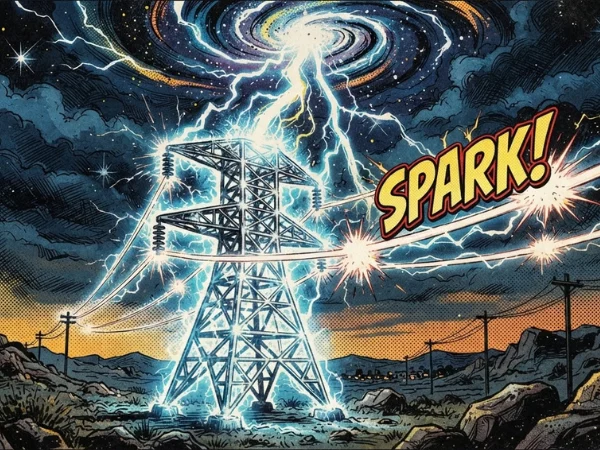
The United States Department of Energy has announced a landmark investment of $1.9 billion in federal grants to bolster the nation’s aging electrical infrastructure and accommodate the surging demand for electricity. This funding, distributed across 31 projects in 26 states, is projected to unlock 23 gigawatts of additional grid capacity—an amount sufficient to power approximately 16 million homes. The initiative marks a significant step in the federal government’s effort to modernize the grid by utilizing advanced technologies to maximize the efficiency of existing rights-of-way rather than relying solely on the time-consuming construction of new high-voltage transmission lines.
The grants are a central component of the Department of Energy’s Speed to Power through Accelerated Reconductoring and other Key Advanced Transmission Technology Upgrades (SPARK) initiative. Launched in March 2024, SPARK targets "urgently needed" upgrades to the power grid, emphasizing the deployment of Grid-Enhancing Technologies (GETs) and advanced reconductoring. By upgrading nearly 21,000 miles of transmission lines, the projects aim to resolve persistent congestion bottlenecks, improve overall grid reliability, and reduce consumer electricity costs for an estimated 100 million Americans. In addition to the $1.9 billion in federal backing, project recipients have committed $3.25 billion in cost-share funding, bringing the total investment to over $5 billion.

The Rise of Grid-Enhancing Technologies and Nonpartisan Policy
The push to optimize the existing grid has emerged as a rare point of bipartisan consensus in American energy policy. While debates often persist regarding the best methods for generating electricity, there is broad agreement on the necessity of a more efficient delivery system. This consensus is reflected in the SPARK initiative, which builds upon the success of the Grid Resilience and Innovation Partnerships (GRIP) Program. Enabled by the 2021 Bipartisan Infrastructure Law, GRIP has provided upwards of $10.5 billion in competitive funding to states, utilities, and tribal nations to strengthen the national energy web.
A critical element of this modernization effort is the adoption of GETs, which include technologies such as Dynamic Line Rating (DLR), advanced power flow control, and topology optimization. These technologies allow grid operators to monitor line conditions in real-time and redirect power to underutilized sections of the grid, thereby increasing capacity without the environmental or regulatory hurdles associated with "greenfield" construction.
State-level legislators are also beginning to mandate the consideration of these Advanced Transmission Technologies (ATTs). Earlier this year, Virginia Governor Glenn Youngkin signed H.B. 862, making the Commonwealth one of the first states to require utilities to evaluate GETs during the transmission planning process. Similar legislative movements have been observed in states ranging from California and Colorado to Indiana and Montana, signaling a national shift toward technology-first grid management.

Urban Energy Resilience: The NineDot Energy Hunts Point Project
While federal initiatives focus on the broad transmission network, localized projects are addressing the specific needs of urban environments. In The Bronx, New York, NineDot Energy recently inaugurated its largest battery energy storage system (BESS) to date in the Hunts Point neighborhood. The nearly 20-megawatt facility is designed to provide critical support during peak demand periods, such as summer heat waves, and is expected to power 20,000 homes.
The Hunts Point project carries significant environmental justice implications. Historically, the area has been burdened by high levels of pollution due to the presence of high-emissions "peaker" plants and heavy diesel truck traffic. In 2023, the Hunts Point and Mott Haven areas recorded asthma-related emergency room visits at rates two to three times the New York City average. By providing a clean alternative to gas-fired peaker plants, the NineDot facility is an integral part of the city’s transition toward a more resilient and equitable energy system.
NineDot Energy aims to have 400 MW of battery storage in operation or development by the end of 2026. The company’s current fleet represents the largest battery network operating within Con Edison’s New York City service territory, reflecting a broader trend of integrating storage solutions directly into dense load centers to mitigate the impact of localized outages and pollution.

Extending Asset Life: Wind Repowering in Pennsylvania
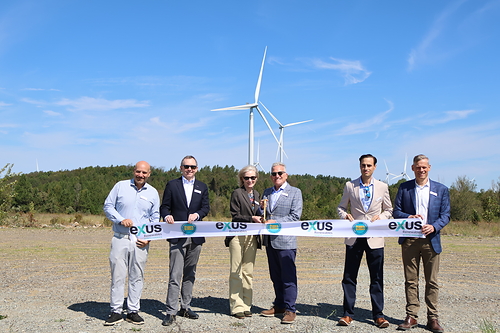
The quest for new capacity is also driving a surge in "repowering" projects, where existing renewable energy sites are upgraded with modern technology to extend their operational life and increase output. Exus Renewables North America recently announced the completion of its Highland North and Cambria wind repower projects in Cambria County, Pennsylvania.
The repowering process involved replacing the nacelles, blades, and generators on existing towers and foundations. This approach allowed the projects—which have been in operation for over a decade—to extend their lifespans by an additional 30 years. The Highland North project provides 75 MW of capacity, while the Cambria project adds 61.6 MW.
The strategy of repowering is particularly attractive to developers and corporate buyers because it bypasses the multi-year interconnection queues that currently plague new "greenfield" projects. The Cambria project’s output is already secured under a power purchase agreement (PPA) with a Fortune 500 technology company. Beyond the energy benefits, the $356 million investment in these sites is expected to contribute $77 million to the local economy over the next three decades through taxes, fees, and payments to landowners.
Strategic Capital Recycling: The Invenergy and HASI Partnership
As the scale of renewable energy deployment grows, financial structures are evolving to support long-term growth. Invenergy, the largest privately held renewable energy developer in North America, has expanded its partnership with HA Sustainable Infrastructure Capital (HASI) to support a massive 2.7 GW portfolio of solar, wind, and storage projects across the United States.
The portfolio encompasses 10 projects located in seven states: Arizona, New York, Texas, Arkansas, Indiana, Ohio, and New York. These projects serve six major U.S. power markets, including PJM and ERCOT. Under the terms of the agreement, Invenergy will retain majority ownership and operational control, while HASI provides the capital necessary to bring the remaining projects online by early 2027.
This "capital recycling" strategy is becoming a standard practice for large-scale developers. By bringing in institutional investors like HASI once projects are de-risked or operational, developers can free up capital to reinvest in their development pipelines. The Invenergy-HASI portfolio includes major installations such as the 450 MW Chalk Bluff Solar project in Arkansas and the 340 MW Alle-Catt Wind project in New York, all of which are backed by long-term PPAs with investment-grade offtakers.

Regional Market Dynamics and the PJM Expansion
The PJM Interconnection, the largest wholesale electricity market in the U.S., is currently experiencing significant pressure due to rising demand from data centers and the retirement of traditional coal plants. In response, developers are aggressively expanding their pipelines in states like Pennsylvania.
Renewable Properties, a distributed energy developer, recently acquired a 71.8 MWdc portfolio of solar projects in Pennsylvania from Prospect14. This acquisition brings the company’s total pipeline in the state to over 150 MWdc. The move into the PJM wholesale market allows Renewable Properties to participate in the capacity market, which has recently seen price spikes due to tightening supply-demand balances.
The acquisition highlights the growing importance of "behind-the-meter" and distributed wholesale projects in meeting regional energy needs. As data center growth continues to accelerate in the mid-Atlantic region, the ability to bring 20 MW to 30 MW projects online relatively quickly is becoming a vital component of grid stability.

The Path Forward for Michigan’s Clean Energy Transition
In the Midwest, NorthStar Clean Energy has reached a milestone with the completion of the 120 MW Hart Solar Project in Oceana County, Michigan. The facility is expected to generate 200 gigawatt-hours of electricity annually, supporting the Michigan Public Power Agency and Executive Energy Services through long-term contracts.
The project is estimated to offset 96,000 metric tons of carbon dioxide emissions annually, contributing to Michigan’s statutory goals for carbon neutrality. Like many of the projects funded by recent federal and private investments, Hart Solar serves as an economic engine for its host community, providing $600,000 in community improvement funds through the state’s Renewables Ready Communities Award Program.
Conclusion: A Multi-Pronged Approach to Grid Modernization
The combination of massive federal grants, innovative grid technologies, and strategic private partnerships underscores a comprehensive shift in how the United States approaches its energy future. By focusing on both the "macro" level of national transmission and the "micro" level of urban storage and distributed solar, stakeholders are working to build a grid that is not only cleaner but also more resilient to the stresses of the 21st century.

The $1.9 billion DOE investment acts as a catalyst, encouraging the private sector to pursue efficiency-first solutions. As the demand for electricity continues to rise—driven by the electrification of transport, the growth of artificial intelligence, and the manufacturing boom—the ability to "wring out" more capacity from the existing grid will remain a top priority for policymakers and industry leaders alike. Through the SPARK initiative and the continued expansion of renewable portfolios, the U.S. is laying the groundwork for a modernized power system capable of supporting a carbon-free economy.
