

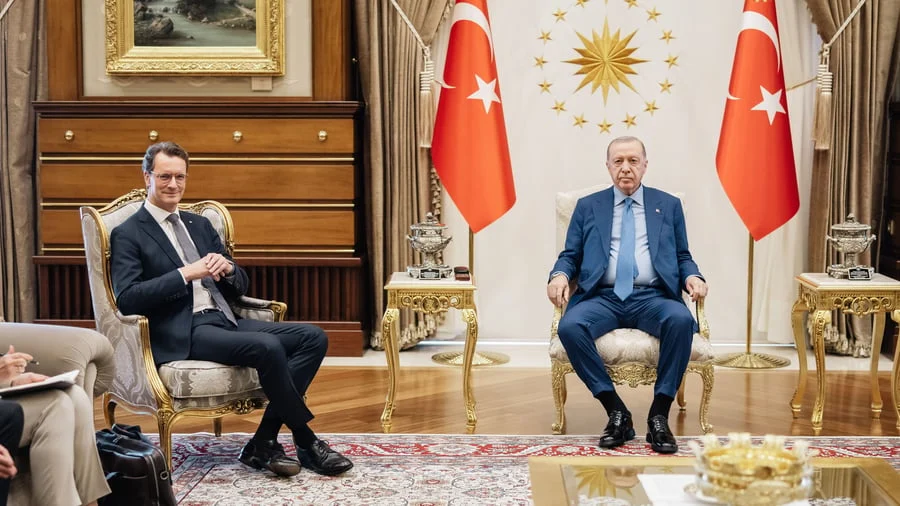
Nordrhein-Westfalen’s Minister-President Hendrik Wüst concluded a significant visit to Turkey on Monday, a trip primarily aimed at fostering closer economic ties. In a notable development, Wüst secured a meeting with Turkish President Recep Tayyip Erdoğan at his palace in Ankara, a gesture that underscores the importance Turkey places on its relationship with Germany’s most populous state. Regional heads of government are not typically received by heads of state of other nations, making this encounter an exception that signals a deliberate move by Erdoğan to highlight the significance of Wüst’s visit.
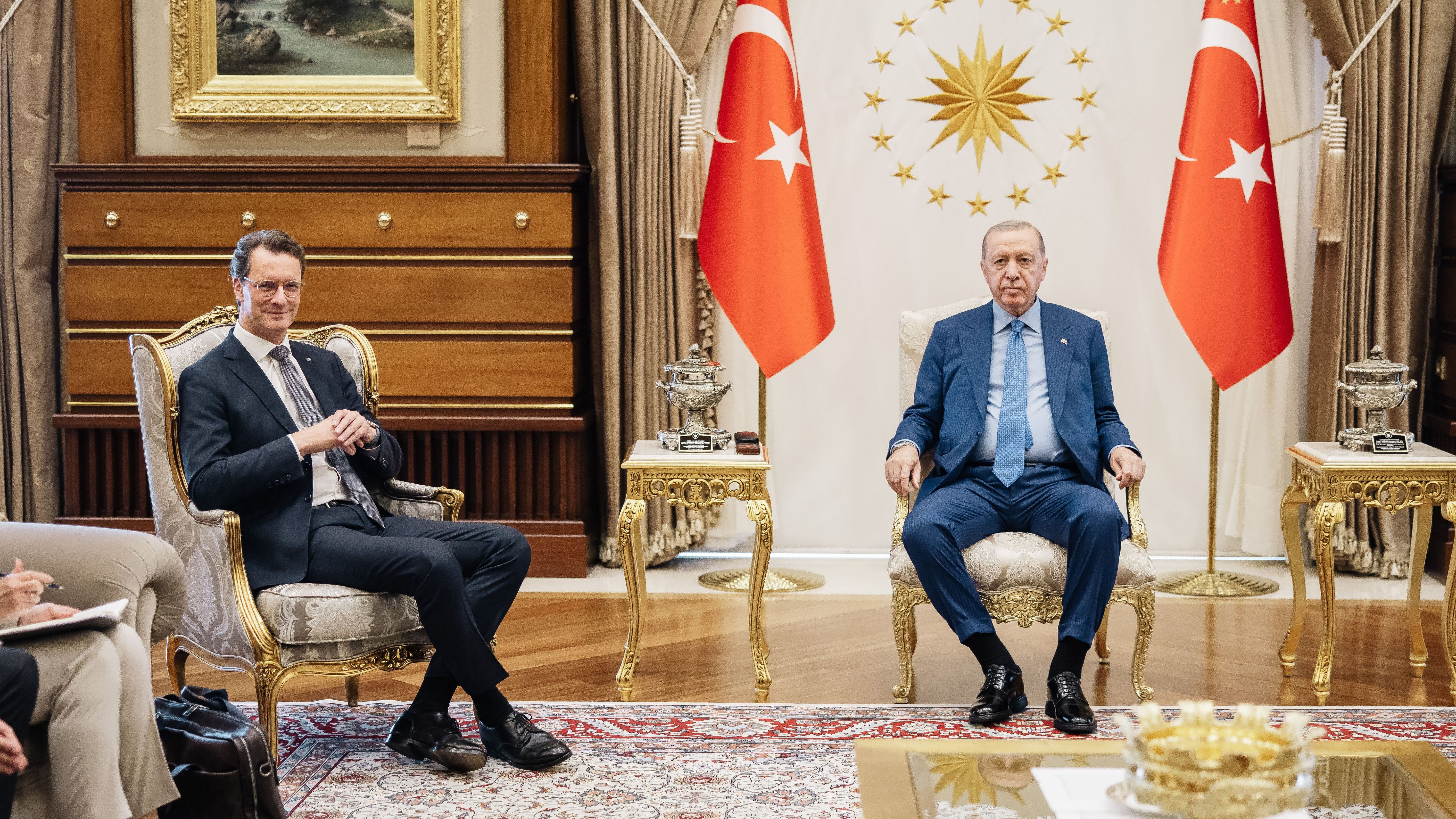
The meeting, which was announced by Wüst’s delegation on short notice, focused on economic cooperation between North Rhine-Westphalia and Turkey. Wüst, a prominent figure within Germany’s Christian Democratic Union (CDU), advocated for the modernization of the customs union between Turkey and the European Union, a long-standing objective of Ankara. However, his engagement with President Erdoğan also included a firm call for improvements in the rule of law and legal certainty within Turkey, areas that are of significant concern to European partners. The discussions reportedly also touched upon enhanced cooperation in the defense industry and the broader issue of human rights.
Background: A Strategic Partnership in Flux
The meeting between Wüst and Erdoğan occurs at a critical juncture in German-Turkish relations. While economic ties remain robust, political dialogues have often been strained in recent years, marked by disagreements on issues ranging from human rights to foreign policy. North Rhine-Westphalia, with its substantial Turkish diaspora and strong industrial base, holds particular importance for Turkey’s economic outreach to Germany. The state is a hub for German industry, including automotive manufacturing, chemicals, and machinery, sectors where Turkish businesses have expressed keen interest in collaboration and investment.
Turkey’s ambition to update its customs union with the EU is a key economic priority. The current agreement, in place since 1995, has facilitated significant trade but is considered outdated by Ankara, which seeks to expand its scope to include areas such as services, public procurement, and digital trade. A modernized union could unlock further economic potential, boosting trade volumes and investment flows. However, for the EU and its member states like Germany, progress on this front is intrinsically linked to Turkey’s adherence to democratic principles, the rule of law, and human rights standards.
Timeline of the Visit and Key Discussions
Hendrik Wüst’s visit to Turkey, spanning several days, was carefully orchestrated to maximize engagement with key political and economic stakeholders. The itinerary included meetings with Turkish ministers, business leaders, and representatives of civil society.

- Preceding Days: Wüst engaged in discussions with Turkish ministers responsible for trade, economy, and foreign affairs. These initial meetings likely laid the groundwork for the more high-profile encounter with President Erdoğan, allowing for a preliminary exchange of views on core bilateral issues. Business delegations accompanying Wüst would have been actively exploring investment opportunities and partnership possibilities.
- Monday’s Culmination: The unexpected meeting with President Erdoğan on Monday served as the highlight of the visit. The 50-minute discussion at the Presidential Palace in Ankara was characterized by a frank exchange of perspectives. Wüst conveyed his government’s support for economic cooperation while simultaneously articulating Germany’s concerns regarding legal certainty and human rights.
- Focus on Economic Cooperation: Central to the discussions was the economic partnership. Wüst emphasized the potential for increased trade and investment, particularly in sectors where North Rhine-Westphalia excels. Turkey’s desire to update its customs union with the EU was a prominent topic, with Wüst signaling a willingness to explore possibilities contingent on Turkey’s progress in key areas.
- Rule of Law and Human Rights: Wüst’s direct address on the rule of law and human rights reflects Germany’s consistent stance on these issues. Reports indicate that Wüst specifically highlighted the need for greater legal security for foreign investors, a crucial factor for attracting and retaining German businesses. The conversation also reportedly included discussions on human rights, indicating that Wüst did not shy away from addressing sensitive topics.
- Defense Industry Cooperation: The mention of defense industry cooperation suggests a shared interest in enhancing security partnerships. This could involve joint ventures, technology transfer, or collaborative production, areas that are increasingly relevant in the current geopolitical climate.
- Internal German Politics: In a surprising revelation, Wüst also shared that he discussed German domestic politics with President Erdoğan. This suggests a reciprocal engagement, where Erdoğan showed keen interest in the internal political landscape of Germany, including recent electoral outcomes. Wüst described the exchange as "very intensive," underscoring the depth of the conversation.
Data and Context: Economic Interdependence
The economic relationship between Germany and Turkey is substantial. In 2023, bilateral trade reached significant levels, with Germany being one of Turkey’s largest trading partners. Turkish exports to Germany include vehicles, textiles, and agricultural products, while Germany exports machinery, vehicles, and chemical products to Turkey. North Rhine-Westphalia, as an industrial powerhouse, plays a pivotal role in this trade flow. The state’s Gross Domestic Product (GDP) and its contribution to Germany’s export economy underscore its significance in bilateral economic discussions.

- Bilateral Trade Volume: While specific figures for 2024 are still emerging, in 2023, German exports to Turkey amounted to approximately €25.5 billion, and Turkish exports to Germany were around €17.5 billion.
- Investment: German companies have a significant presence in Turkey, with numerous investments across various sectors. Conversely, Turkish companies also invest in Germany, although to a lesser extent.
- North Rhine-Westphalia’s Role: The state’s economy is heavily export-oriented, with a strong focus on manufacturing and advanced industries. Its companies are actively seeking new markets and partnerships, making Turkey an attractive, albeit complex, partner. The presence of a large Turkish-born population in NRW also facilitates cultural and business connections.
Analysis of Implications: A Delicate Balancing Act
The meeting between Minister-President Wüst and President Erdoğan carries significant implications for both bilateral relations and the broader EU-Turkey dynamic.

- Diplomatic Significance: Erdoğan’s decision to meet with Wüst is a clear signal of Turkey’s desire to maintain and strengthen its engagement with Germany, particularly at the sub-national level, which can sometimes bypass federal-level political sensitivities. It also demonstrates Turkey’s willingness to engage with key European economic players directly.
- Economic Diplomacy: Wüst’s focus on economic cooperation aligns with Germany’s broader strategy of maintaining stable economic relations with Turkey, despite political differences. The push for customs union modernization suggests a pragmatic approach, acknowledging the economic benefits while simultaneously advocating for necessary reforms.
- Rule of Law as a Condition: The inclusion of rule of law and human rights in the discussions is a crucial element. It reinforces the EU’s position that economic cooperation and political dialogue are contingent on Turkey’s commitment to democratic values and legal standards. Any progress in updating the customs union will likely be subject to Turkey’s performance in these areas.
- Potential for Future Cooperation: The discussions, particularly on defense and economic collaboration, open avenues for future cooperation. However, the pace and extent of this cooperation will depend on the evolving political landscape in both countries and the broader geopolitical context.
- Internal German Dynamics: Wüst’s engagement with Erdoğan on German domestic politics highlights the complex and multifaceted nature of the Turkish diaspora in Germany and its connection to Turkish politics. It also suggests a willingness on Wüst’s part to engage on a broad spectrum of issues, demonstrating a nuanced approach to foreign policy.
Reactions and Official Statements (Inferred)
While specific direct quotes from all parties involved might not be immediately available, based on the context and typical diplomatic protocols, certain reactions can be inferred:

- From the Turkish Presidency: The immediate announcement of the meeting and the description of discussions focusing on "economic cooperation and regional issues" would be consistent with the Turkish government’s emphasis on its strategic partnership with Germany and its desire to project an image of strong international engagement. The inclusion of Wüst in such a high-level meeting would be framed as a testament to the importance Turkey places on its relationship with Germany.
- From the North Rhine-Westphalia State Chancellery: Wüst’s delegation would likely emphasize the constructive nature of the discussions, highlighting the progress made in fostering economic ties. They would also reiterate the importance of addressing rule of law and human rights concerns, framing it as a necessary condition for deepening the partnership. The unexpected nature of the meeting with Erdoğan would be portrayed as a significant diplomatic achievement, underscoring Wüst’s effectiveness in bilateral relations.
- From the German Federal Government: The federal government in Berlin would likely acknowledge the importance of the meeting, while subtly reinforcing its own role in setting the broader agenda for German-Turkish relations. They would likely express support for Wüst’s efforts in promoting economic ties but would also echo the importance of human rights and rule of law as foundational principles.
Broader Impact and Future Outlook
The meeting between Hendrik Wüst and Recep Tayyip Erdoğan serves as a microcosm of the complex and often delicate relationship between Germany and Turkey. It underscores the enduring economic interdependence between the two nations, while simultaneously highlighting the persistent challenges in political and human rights dialogues.

The visit demonstrates that even amidst political complexities, economic diplomacy can continue to serve as a crucial bridge. For North Rhine-Westphalia, this visit represents an opportunity to bolster its economic standing and forge new partnerships. For Turkey, it is a chance to strengthen its ties with a key European economic powerhouse and signal its commitment to pragmatic engagement.
The future of this relationship will likely continue to be a balancing act, with economic cooperation progressing as long as political and human rights concerns are addressed constructively. The unexpected nature of the Erdoğan meeting suggests that diplomatic channels, even at the regional level, can yield significant results when strategic interests align. The coming months will reveal whether the momentum generated by Wüst’s visit translates into tangible progress on economic cooperation and a more stable, predictable relationship between Germany and Turkey.
