

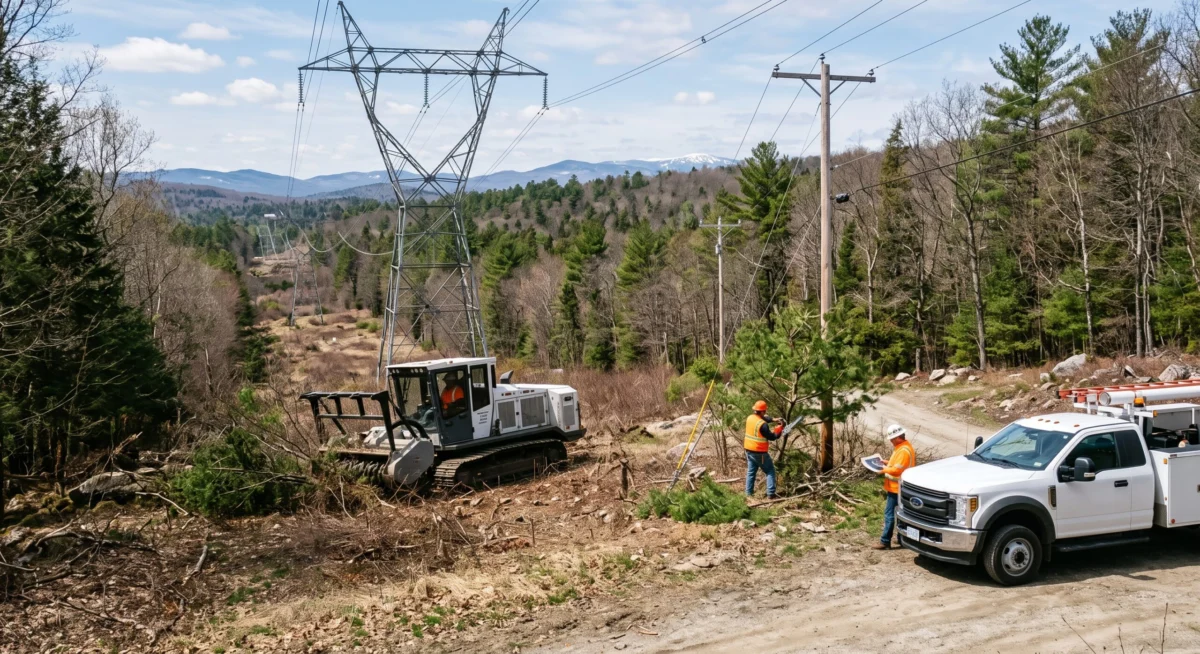
The traditional perception of wildfire as a regional crisis exclusive to the arid landscapes of the Western United States is rapidly dissolving under the pressure of shifting climatic patterns. As record-breaking temperatures and erratic precipitation cycles become the new normal, utility providers across the Northeast are being forced to confront a reality previously reserved for their counterparts in California and the Pacific Northwest. This shift has necessitated a fundamental re-evaluation of grid resilience, prompting the adoption of advanced wildfire mitigation technologies and localized risk modeling tailored to the unique ecological and demographic profile of the Atlantic coast.
The upcoming DTECH Northeast conference, a premier gathering for power distribution and grid edge technology, is set to center this discussion through its session, Approaches to Wildfire Risk in the Northeast: Situational Awareness and Emergency Management. The event will showcase how utilities like Avangrid are partnering with technology firms such as Firescape to bridge the gap between Western wildfire playbooks and Eastern environmental realities. This transition represents a significant evolution in utility operations, moving from a reactive stance to a data-driven, proactive framework designed to mitigate fire risk before it manifests on the forest floor.
The Changing Profile of Wildfire Risk in the Northeast
For decades, the Northeast was considered largely immune to the catastrophic crown fires that define the Western fire season. However, recent data suggests a concerning trend. In late 2024, significant wildfires across New York and New Jersey served as a wake-up call for regional grid operators. These fires were driven by "flash droughts"—phenomena where high temperatures and low humidity rapidly deplete soil moisture—turning the region’s dense hardwood forests into potential tinderboxes within days.
According to Holly Eagleston, CEO and Founder of Firescape, the primary distinction between the two regions lies in the timing and the nature of the fuel. In the West, fire risk is often a seasonal constant driven by long-term drying of shrubs and timber. In the Northeast, the risk is concentrated in specific, volatile windows. The "spring window" occurs after the snow melts but before the "leaf-out" period, when sunlight can directly reach and dry the forest floor. The "fall window" follows the leaf drop, creating a layer of dry leaf litter that is highly combustible under the right atmospheric conditions.
These fires may lack the raw intensity of a California brush fire, but they pose a different kind of threat. The Northeast is characterized by high population density and a "wildland-urban interface" (WUI) that is far more integrated than in the West. Fires in this region often start within meters of residential infrastructure and critical utility corridors, leaving little time for emergency response and making the grid’s role in ignition prevention more critical than ever.
Adapting Technology: From Western Models to Eastern Realities
A central theme of the DTECH Northeast discussions involves the technical adaptation of risk models. For years, the industry relied on "dry brush" models developed for Western ecosystems. When Avangrid began evaluating these Western playbooks, they discovered that a direct "copy-paste" approach was insufficient. While the overarching frameworks—such as risk-informed protection settings and elevated-risk day declarations—were sound, the underlying data required a complete overhaul.

Western fire-weather thresholds and fuel assumptions do not align with the behavior of hardwood leaf litter. Consequently, utilities are now leveraging localized climatology data to set regional thresholds. Firescape’s technology, which provides 100-meter line-segment simulations, allows utilities to see risk at a granular level. Instead of a broad regional warning, an operator can identify which specific circuit is at risk during a high-wind event, allowing for surgical interventions rather than sweeping power shutoffs.
During pilot programs, this technology has already demonstrated its value. In one instance, a Red Flag Warning was issued during a technology trial. Because the system provided circuit-by-circuit, hour-by-hour forecasts a full day in advance, operators were able to proactively stop high-risk maintenance work and disable automatic reclosers—devices that attempt to restore power after a fault but can spark a fire if a line is downed—on the exact segments where conditions were most severe.
The Reliability vs. Safety Dilemma
One of the most significant hurdles for Northeast utilities is cultural rather than technical. The Northeast has long prided itself on a culture of extreme reliability. In a region where winter storms are the primary threat, the standard operating procedure has always been to keep the lights on at all costs.
Shifting to a wildfire-aware mindset requires a willingness to trade a measure of reliability for public safety. Implementing "fast-trip" settings on reclosers can lead to more frequent outages, as the system becomes hypersensitive to any contact—such as a tree branch touching a wire. In a reliability-focused culture, these outages feel like a step backward. However, experts argue that the consequence of an ignition far outweighs the inconvenience of a temporary outage.
"The harder shift is accepting that wildfire is a real operating condition, and not just a Western problem," Eagleston noted. This evolution requires buy-in from multiple departments, including operations, protection engineering, vegetation management, and emergency management. For many utilities, the current challenge is identifying which department "owns" the wildfire program, as it intersects with nearly every aspect of grid management.
A Roadmap for Implementation: Operations Over Capital
A common misconception among utilities is that starting a wildfire mitigation program requires an immediate, massive capital investment in grid hardening—such as undergrounding lines or installing covered conductors. While these are effective long-term strategies, experts at DTECH Northeast suggest a more immediate, operationally-focused roadmap.
The recommended initial phase focuses on situational awareness and operational protocols. By defining what constitutes "high-risk conditions" based on local data and writing clear operating protocols for those days, utilities can achieve significant risk reduction within a single season using their existing assets. This approach relies on operating budgets rather than long-term capital requests, which can often be stalled by regulatory hurdles.

Furthermore, starting with a data-driven operational approach provides the evidence needed to justify future capital investments. By documenting risk and the effectiveness of operational changes over several seasons, utilities can present a defensible case to regulators for where hardening is most needed. "Capital investment should follow the data, not come first," is the emerging mantra for regional grid modernization.
Broader Implications and the Future of Grid Resilience
The expansion of wildfire risk into the Northeast is a harbinger of a broader national trend. As seen in the 2023-2024 period, wildfires in the Southeast and Eastern Canada have already disrupted air quality and energy stability across the continent. The lessons being learned by Northeast utilities today will likely serve as the blueprint for other regions that have historically viewed themselves as "low risk."
The role of artificial intelligence and machine learning in this space is also set to grow. Tools that can synthesize vast amounts of meteorological data, satellite imagery, and historical fire behavior are becoming essential for "situational awareness." In the Northeast, where weather can turn from "benign to dangerous in days," the ability of these tools to provide real-time, actionable intelligence is the difference between a controlled incident and a regional catastrophe.
As the industry prepares for DTECH Northeast, the focus remains clear: the geography of risk has changed, and the technology must change with it. By integrating localized modeling, fostering a culture of safety-over-reliability, and prioritizing data-driven operations, Northeast utilities are building a grid that is not just reliable, but resilient to the new climate reality.
Chronology of Wildfire Strategy Evolution in the Northeast
- Pre-2020: Wildfire risk is largely viewed as a Western U.S. issue. Northeast utilities focus primarily on storm hardening (ice, wind, and hurricanes).
- 2021-2023: Increased frequency of "flash droughts" and smoke drift from Canadian wildfires heightens public and regulatory awareness of regional vulnerability.
- Early 2024: Utilities begin pilot programs with Firescape and other situational awareness platforms to adapt Western models to Eastern hardwood fuel types.
- Late 2024: Significant wildfires in New York and New Jersey confirm the necessity of active wildfire mitigation protocols for Eastern grid operators.
- 2025-2026: Broad adoption of "fast-trip" settings and risk-informed operational protocols across major Northeast utility providers, culminating in specialized knowledge sharing at DTECH Northeast.
The session at DTECH Northeast represents a pivotal moment for the industry, marking the formal recognition that the "Western problem" has officially arrived in the East, requiring a sophisticated, localized response to ensure the continued safety and stability of the power grid.
