

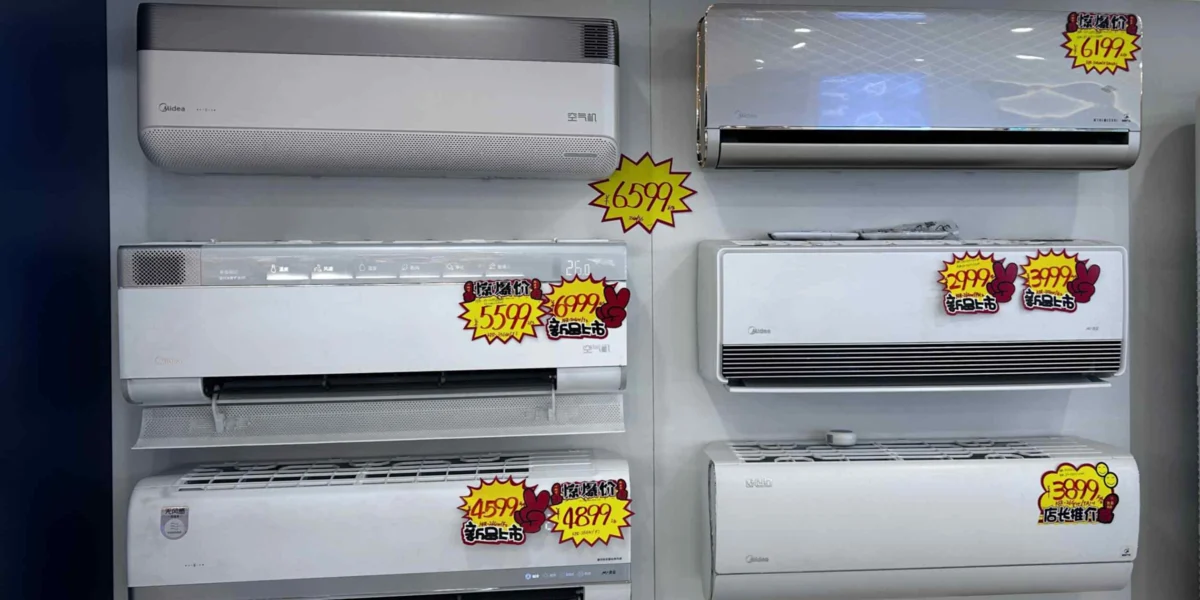
The Chinese appliance manufacturing sector, a bellwether for consumer spending and industrial output, is navigating a complex economic landscape in the first half of 2026. While domestic demand falters under the weight of a persistent property slump, two of the industry’s giants, Midea Group and a key Hisense unit, have reported robust earnings growth. This divergence in performance is largely attributed to a strategic pivot towards international markets and a concerted effort to enhance product value, signaling a significant shift in the industry’s growth trajectory.

The broader trend within China’s major appliance manufacturers presents a mixed picture. Out of seven key players, four have experienced a decline in profits during the initial six months of 2026. This downturn is intrinsically linked to the cooling domestic real estate market, which historically fuels demand for home appliances like refrigerators, washing machines, and air conditioners. As property sales and new constructions stagnate, so too does the appetite for these essential consumer goods within China’s borders.
Strategic Offshore Expansion Fuels Midea’s Growth
Midea Group, a titan in the home appliance industry, has demonstrated remarkable resilience and foresight in its financial reporting for the first half of 2026. The company’s earnings have surged, a testament to its aggressive international expansion strategy and its successful elevation of product offerings. For years, Midea has been systematically strengthening its global footprint, establishing manufacturing bases and sales networks in key overseas markets across Southeast Asia, Europe, and the Americas. This diversification has insulated the company from the worst effects of the domestic slowdown.

Data from Midea’s interim financial statements reveals a significant contribution from its international operations. Revenue generated from markets outside mainland China reportedly grew by over 15% in the first half of 2026, outpacing domestic sales growth by a considerable margin. This expansion has been fueled by a combination of strategic acquisitions, organic growth through localized product development, and a robust e-commerce strategy that effectively reaches a wider consumer base.
Furthermore, Midea has been actively investing in research and development to introduce higher-value, technologically advanced products. This includes smart home appliances that integrate with digital ecosystems, energy-efficient models that appeal to environmentally conscious consumers, and premium product lines that command higher profit margins. This focus on added value not only boosts profitability per unit but also enhances brand perception and customer loyalty in competitive global markets.

Hisense Unit’s International Acumen and Product Innovation
Similarly, a prominent unit within the Hisense Group has mirrored Midea’s success, reporting substantial earnings increases driven by similar strategic imperatives. While specific figures for individual Hisense subsidiaries are often complex due to the conglomerate’s structure, reports indicate that Hisense’s overseas consumer electronics and home appliance divisions have been particularly strong performers.
Hisense’s strategy has also heavily emphasized internationalization. The company has invested heavily in establishing brand presence and distribution channels in developed markets, often through sponsorship of major sporting events and targeted marketing campaigns. This has helped to build brand recognition and trust, crucial for competing against established global brands.

In addition to market expansion, Hisense has also focused on differentiating its product portfolio. The company has made significant strides in areas like smart television technology, offering advanced features and display innovations that have resonated with consumers. Their commitment to quality and performance in product categories such as refrigerators and washing machines, coupled with competitive pricing, has enabled them to capture market share globally.
The financial reports for the first half of 2026 for this Hisense unit highlight a double-digit increase in international sales, with emerging markets in Southeast Asia and Latin America showing particularly strong growth. This expansion is complemented by a growing emphasis on after-sales service and customer support, which are critical for building long-term relationships in foreign markets.

The Domestic Headwinds: Property Slump’s Ripple Effect
The backdrop against which Midea and Hisense’s international successes are set is a challenging domestic environment. China’s property sector, which has been a major engine of economic growth for decades, is currently undergoing a significant correction. This downturn is characterized by a slowdown in new home construction, falling property prices in many cities, and a general decline in consumer confidence related to real estate investments.
The direct impact on the appliance industry is palpable. A substantial portion of appliance sales in China are linked to new home purchases and renovations. As fewer new homes are built and existing homeowners become more cautious about discretionary spending, demand for major appliances naturally softens. Data from the China Household Electrical Appliances Association indicates a decline of approximately 8% in domestic appliance sales volume for the first half of 2026 compared to the same period in 2025.

This domestic pressure has forced appliance manufacturers to re-evaluate their business models and revenue streams. Companies that were heavily reliant on the Chinese market have been particularly vulnerable. The reported profit declines for four of the seven major appliance makers underscore this vulnerability, as they struggle to offset falling domestic sales with international gains.
Chronology of Shifting Strategies
The current strategic focus on international markets and added value is not a sudden development but rather an evolution of strategies employed by Chinese appliance makers over the past decade.

- Early 2010s: The primary focus for many Chinese appliance manufacturers was domestic market penetration and cost competitiveness. Exports were growing, but often involved original equipment manufacturing (OEM) for foreign brands.
- Mid-2010s: As domestic competition intensified and profit margins on basic appliances thinned, companies began to invest more in their own brands and R&D. The "Made in China" label started to evolve towards "Created in China."
- Late 2010s – Early 2020s: The push for internationalization gained significant momentum. Companies like Midea and Hisense started acquiring foreign brands and establishing overseas production facilities to circumvent trade barriers and better serve local markets. Smart home technology and energy efficiency began to be prioritized.
- 2024-2026: The ongoing property downturn in China has accelerated the shift. Companies that had already built strong international networks and diversified their product portfolios with higher-value offerings have been best positioned to weather the domestic storm and capitalize on global opportunities. The first half of 2026 marks a period where this strategy’s effectiveness is clearly demonstrated in financial results.
Broader Economic Implications and Future Outlook
The success of Midea and Hisense in international markets has broader implications for both the companies and the Chinese economy.
For the companies, this strategic shift offers a path to sustained growth and reduced reliance on volatile domestic economic cycles. It also positions them as global players, capable of competing on innovation and quality, not just price. The increased profitability from overseas ventures can be reinvested in further R&D, global marketing, and potentially more acquisitions, creating a virtuous cycle of growth.

From an economic perspective, the success of these companies in exporting higher-value manufactured goods contributes positively to China’s trade balance. It signals a move up the value chain in manufacturing, moving away from lower-margin production towards sophisticated, technologically advanced products. This is a key objective for China’s long-term economic development strategy.
However, the challenges are far from over. The global market is intensely competitive, with established players and emerging rivals. Geopolitical tensions and trade protectionism remain potential headwinds. Furthermore, the domestic property market’s slump could have a longer-lasting impact on consumer confidence and spending power, even if appliance makers diversify.

Looking ahead, the performance of Midea and Hisense in the latter half of 2026 and into 2027 will be closely watched. Their ability to maintain profitability in international markets while potentially seeing some stabilization or recovery in domestic demand will be crucial. The continued investment in innovation, particularly in areas like AI-driven smart home integration and sustainable product design, will likely be key differentiators.
The appliance sector’s experience in early 2026 serves as a compelling case study in corporate resilience and strategic adaptation. As the global economy continues to evolve, the lessons learned by these Chinese giants – prioritizing international reach and delivering tangible added value to consumers – will undoubtedly shape the future of the industry. The trend suggests that while domestic challenges persist, the global stage offers a promising, albeit competitive, arena for growth and sustained success.
