

Farmers globally confront an escalating challenge: the very machinery designed to cultivate, plant, and harvest fields is inadvertently eroding their profit margins through widespread soil compaction. This pervasive issue, often underestimated, can severely diminish agricultural productivity, with studies from institutions like the University of Minnesota Extension estimating yield reductions ranging from a staggering 20% to 60%. Traditional remedies, such as deep plowing, offer a temporary fix but come with a heavy price tag, demanding intensive labor, significant fuel consumption, and causing further detriment to long-term soil health. In response to this critical impasse, Muju Earth, an innovative agricultural technology startup, has introduced the Aeropod – a groundbreaking, autonomous solution designed to aerate soil without the need for heavy machinery or complex robotics. The company asserts that this novel approach not only promises to significantly enhance soil health but also to slash farmers’ conventional tilling costs by half or potentially more, marking a pivotal shift in sustainable farming practices.
The Silent Scourge: Understanding Soil Compaction and its Widespread Impact
Soil compaction is a global agricultural crisis, silently undermining productivity and ecological balance. It occurs when soil particles are pressed together, reducing pore space crucial for air, water, and root penetration. The primary culprits are often heavy farm machinery, which exert immense pressure on the land, and repeated passes over fields. Conventional tillage, while intended to break up compacted layers, often exacerbates the problem by creating a "hardpan" below the tilled depth, further restricting root growth and water infiltration.
The consequences of compaction are multi-faceted and severe. Ecologically, compacted soils suffer from reduced biological activity, as beneficial microbes and earthworms struggle to thrive in oxygen-depleted environments. This leads to diminished nutrient cycling and overall soil degradation, making soils less resilient to drought and erosion. Water infiltration rates plummet, leading to increased surface runoff, which not only wastes precious water but also carries away valuable topsoil and nutrients, contributing to water pollution. For farmers, the direct economic impact is profound. Beyond the aforementioned yield reductions, compacted soils demand more fuel for subsequent tillage operations, increase wear and tear on equipment, and necessitate higher fertilizer inputs to compensate for poor nutrient uptake. The struggle against compaction is a relentless battle that drains both financial resources and environmental vitality from agricultural systems worldwide. The urgency for viable, sustainable alternatives has never been greater, as global food security and environmental stewardship become increasingly intertwined.
Aeropod Unveiled: A Seed-Sized Revolution in Soil Management
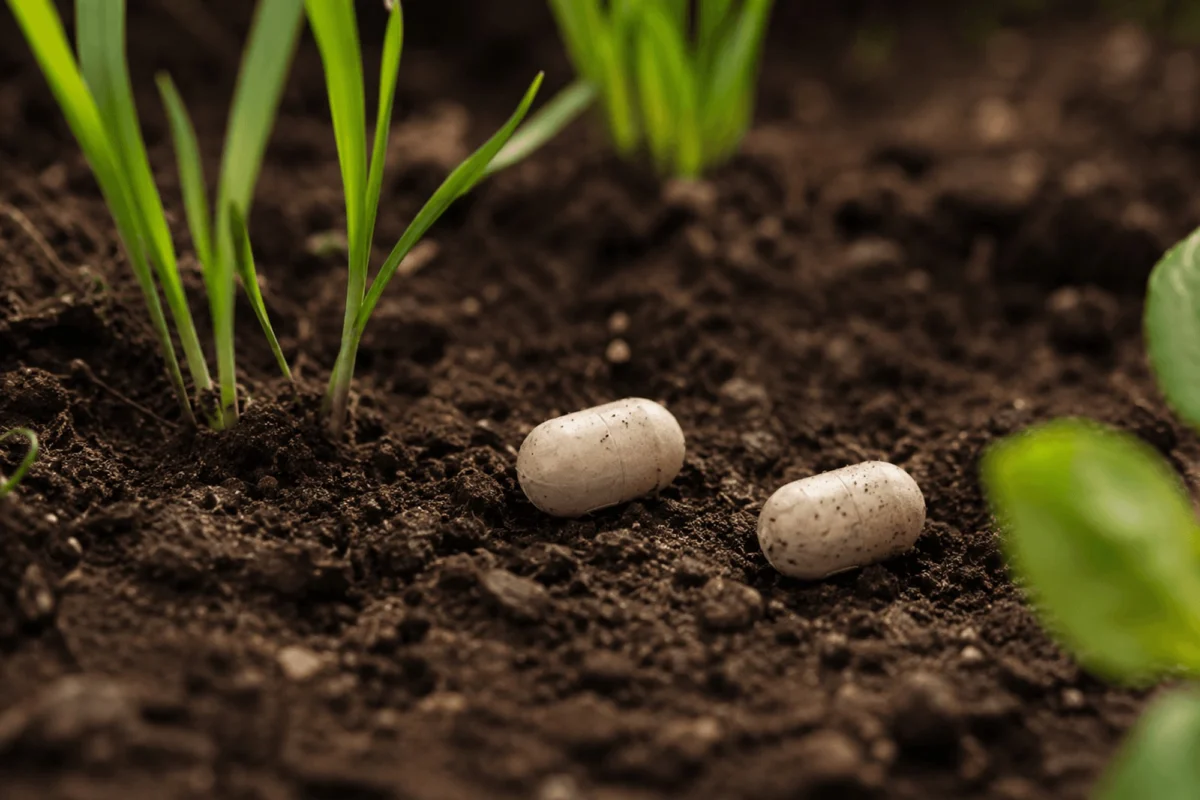
At the heart of Muju Earth’s innovative approach is the Aeropod, a deceptively simple yet technologically sophisticated device designed to fundamentally alter how farmers manage soil aeration. Ifeoluwa Afolayan, co-founder and CEO of Muju Earth, aptly describes the Aeropod as being "built like a seed, it sows like a seed, and it ships like a seed." This analogy underscores its elegant design and seamless integration into existing farming operations. Each Aeropod is about the size of a human fingernail, making it incredibly compact and easy to handle. Farmers can deploy these micro-devices directly into the soil alongside their crop seeds, utilizing the very same planting equipment already in use. This eliminates the need for any additional machinery or specialized tools, a significant advantage for operational efficiency and cost-effectiveness. Crucially, the deployment process bypasses the necessity for prior soil tilling, directly addressing one of the most laborious and environmentally detrimental practices in modern agriculture.
The genius of the Aeropod lies in its bio-responsive mechanism. Once introduced into the soil, the device remains dormant until it encounters a specific combination of environmental triggers: temperature, pressure, and moisture. These conditions, typically present after planting and during early crop development, activate the Aeropod. Upon activation, the device undergoes a controlled, internal expansion, causing it to burst open. This controlled rupture creates a network of small, localized channels and fissures within the compacted soil. These micro-channels are vital, as they dramatically improve the passage of air, water, and essential nutrients, which were previously restricted. Furthermore, they provide less resistant pathways for developing plant roots, allowing them to penetrate deeper and access a broader reservoir of moisture and nutrients. This targeted, localized aeration mimics natural soil processes, fostering a healthier rhizosphere – the critical zone around plant roots where biological interactions thrive. The Aeropod thus offers a precision-engineered solution that respects natural soil structures while actively mitigating the adverse effects of compaction, paving the way for more resilient and productive agricultural ecosystems.
Economic and Ecological Dividends: A Win-Win for Farmers and the Planet
The introduction of the Aeropod by Muju Earth presents a compelling value proposition that simultaneously addresses the economic pressures faced by farmers and the urgent need for ecological restoration in agriculture. From an economic standpoint, the cost savings are substantial and immediately impactful. Ifeoluwa Afolayan highlighted that conventionally tilling a single hectare can cost anywhere from £250 to £400, encompassing expenses for labor, diesel fuel, and the inevitable wear and tear on heavy machinery. In stark contrast, the Aeropod is projected to achieve comparable, if not superior, aeration results at an estimated cost of just £100 per hectare. This represents a potential reduction in tilling expenses of 60% to 75%, a figure that can significantly bolster a farm’s bottom line.
Beyond these direct savings, the Aeropod offers a cascade of indirect economic benefits. Reduced reliance on heavy machinery translates into lower fuel consumption, fewer maintenance costs, and a longer operational life for existing equipment. More importantly, by eliminating or significantly reducing the need for intensive tillage, farmers reclaim valuable time and labor resources that can be redirected to other critical aspects of farm management. This increased efficiency and reduced operational overhead directly contribute to higher profit margins and improved financial stability for agricultural enterprises.
On the ecological front, the Aeropod’s benefits are equally transformative. By promoting enhanced soil aeration, the device directly contributes to improved soil health, a cornerstone of sustainable agriculture. Better aeration facilitates greater water infiltration and retention, reducing runoff and mitigating erosion, especially during heavy rainfall events. This leads to more efficient use of water resources and less nutrient loss from the soil surface. The creation of micro-channels also encourages deeper and more extensive root growth, allowing plants to access water and nutrients from a larger soil volume, thereby increasing their resilience to environmental stresses like drought. Furthermore, a well-aerated soil environment is crucial for the flourishing of beneficial soil microbes and fungi, which play vital roles in nutrient cycling, organic matter decomposition, and disease suppression. By fostering a vibrant soil microbiome, the Aeropod supports a more robust and self-sustaining ecosystem beneath the surface. This regenerative approach not only reduces the need for synthetic fertilizers and pesticides over time but also contributes to carbon sequestration, as healthier soils can store more organic carbon, thereby helping to combat climate change. The Aeropod, therefore, emerges as a rare "win-win" solution, offering profound economic relief to farmers while simultaneously delivering critical ecological benefits essential for the long-term sustainability of agricultural systems.
From Lab to Field: Validating a Vision at Imperial College London and Beyond
The journey of the Aeropod from a nascent idea to a tangible solution began within the hallowed halls of Imperial College London, a renowned global leader in science, engineering, and medicine. It was during their tenure at this prestigious institution that Ifeoluwa Afolayan and co-founder Wangyang Hu conceived the foundational principles of the Aeropod. Their shared vision was to design a product that could not only significantly improve farmers’ financial viability but also fundamentally enhance soil health – a dual objective that underscores the ethos of modern sustainable agriculture. The driving question behind their extensive research and development was elegantly simple yet profoundly impactful: "How do you make this as simple as sowing a seed?" Afolayan emphasized that achieving such simplicity would make the technology "the most equitable practice across every farmer on the planet," highlighting their commitment to widespread accessibility and impact.
Following rigorous laboratory testing, which confirmed the Aeropod’s efficacy in controlled environments, Muju Earth has now transitioned to a crucial phase of real-world validation. This fall marks the commencement of paid field trials across the United Kingdom, a significant milestone in the product’s development timeline. Currently, nine pioneering farmers are actively participating in these trials, integrating the Aeropod into their existing planting operations and providing invaluable feedback on its performance under diverse agricultural conditions. The overwhelming interest from the farming community is evident, with over 30 additional farmers already on a waitlist, eager to incorporate this innovative technology into their practices. This strong inbound interest from farmers underscores their intuitive understanding of the Aeropod’s potential to address long-standing challenges.
Muju Earth’s initial strategic market focus for these trials is specifically on onion growers in the U.K. This targeted approach is highly deliberate, as onions are particularly sensitive to soil compaction. Even moderate compaction can severely impede bulb formation and overall yield for this crop, making onion fields an ideal proving ground for the Aeropod’s efficacy. By demonstrating clear benefits in such a sensitive crop, Muju Earth aims to build a robust case for broader adoption across a wider range of crops and agricultural systems. The success of these U.K. field trials will be instrumental in gathering comprehensive data, refining the product, and ultimately paving the way for commercial scaling and wider market penetration, further solidifying the Aeropod’s role as a transformative force in regenerative agriculture.
The Broader Agricultural Landscape and Strategic Alliances
The advent of the Aeropod is not an isolated innovation but rather a significant development within the rapidly evolving landscape of regenerative agriculture and agritech. Regenerative agriculture, a holistic farming approach focused on restoring and enhancing ecosystem health, is gaining widespread traction as farmers seek to move away from conventional, extractive practices. Key tenets of this movement include minimizing soil disturbance, maximizing crop diversity, integrating livestock, maintaining continuous living roots, and optimizing soil health. The Aeropod directly aligns with the principle of minimal soil disturbance, offering a non-invasive method for aeration that supports the overarching goals of regenerative practices.
Beyond its direct application, the Aeropod also opens avenues for powerful strategic alliances within the agricultural supply chain. Muju Earth has already noted significant interest from companies specializing in biologic amendments – products that enrich soil with living microbes and other natural compounds to boost fertility and plant health, often serving as alternatives or complements to chemical fertilizers. The efficacy of these biologic amendments is heavily dependent on the quality of the soil environment, particularly aeration. Microbes require oxygen to thrive and perform their functions effectively, and compacted soils can severely limit their activity. By creating optimal conditions for microbial life, the Aeropod can dramatically enhance the performance and value proposition of these biologic products. This synergistic potential creates a compelling case for collaboration, allowing Muju Earth and biologic amendment companies to offer farmers a more integrated and effective solution for soil health and crop productivity.
The ease of farmer adoption is another critical factor contributing to Muju Earth’s early success. Ifeoluwa Afolayan highlighted that much of the marketing to date has been inbound, driven by farmers who intuitively grasp the Aeropod’s value. This organic adoption is a testament to the product’s straightforward utility and its direct correlation with farmers’ core needs: reducing costs, improving yields, and fostering healthier land. In a sector often characterized by skepticism towards new technologies, this immediate understanding and willingness to engage underscore the Aeropod’s potential to become a widely accepted and transformative tool, signaling a promising future for its integration into mainstream agricultural practices globally.
TechCrunch Disrupt: A Global Stage for Innovation and Future Prospects
Muju Earth’s journey has been further propelled by its selection as one of 200 startups to participate in this year’s prestigious Startup Battlefield at TechCrunch Disrupt. TechCrunch Disrupt, held annually in San Francisco, is one of the technology world’s most anticipated events, renowned for showcasing groundbreaking innovations and connecting promising startups with leading investors, media, and industry experts. The Startup Battlefield, in particular, is a highly competitive pitch competition where a select group of startups presents their ventures to a panel of distinguished judges, culminating in 20 finalists taking the main stage. Being chosen for this platform is a significant validation of Muju Earth’s innovative potential and its relevance within the global tech and agriculture sectors.
The exposure gained at TechCrunch Disrupt, scheduled for October 13-15 at Moscone West in San Francisco, offers Muju Earth an unparalleled opportunity. It provides a global platform to articulate their vision, demonstrate the Aeropod’s capabilities, and engage with potential investors who are actively seeking disruptive technologies in the burgeoning agritech space. Historically, companies that have emerged from the Startup Battlefield have gone on to achieve significant success, securing substantial funding rounds and carving out dominant positions in their respective markets. For Muju Earth, this event is more than just a competition; it is a critical springboard for accelerating growth, fostering strategic partnerships, and building brand recognition on an international scale.
Looking ahead, the long-term implications of the Aeropod are vast, extending beyond immediate cost savings and soil health improvements. The technology has the potential to contribute significantly to global food security by making farming more efficient and sustainable, particularly in regions where soil degradation is a major concern. As the global population continues to grow, innovations like the Aeropod will be crucial in increasing agricultural output without expanding arable land or intensifying environmentally harmful practices. While challenges such as scaling manufacturing, navigating diverse regulatory environments, and educating a broad farmer base remain, Muju Earth’s approach embodies a future where agricultural technology is not only cutting-edge but also accessible, equitable, and inherently beneficial for both the planet and its people. The Aeropod’s elegant simplicity and profound impact position it as a truly "no-brainer" solution for the modern agricultural landscape, heralding a micro-revolution that could reshape the future of farming for generations to come.
