

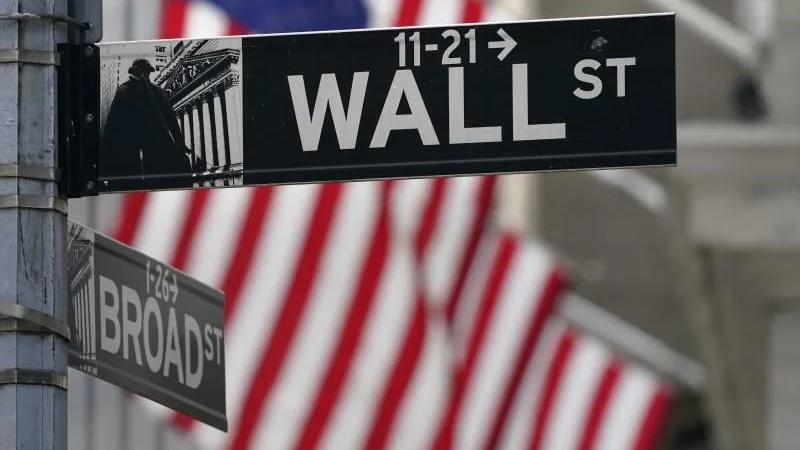
The final trading day of the week on Wall Street commenced with a gentle upward trend, with major U.S. indices showing slight gains that continued to build as the session progressed. This positive opening appears to be a direct response to evolving reports concerning the Iran conflict, suggesting that American and Iranian negotiators are actively engaged in New York, seeking a phased de-escalation of the ongoing tensions.
Diplomatic Overtures Signal Potential De-escalation
Reports circulating on Thursday indicated that a potential agreement could involve Tehran reopening the Strait of Hormuz, a critical waterway for global oil transport. In return, Washington might consider lifting economic sanctions imposed on Iran. This development offers a glimmer of hope for a more stable geopolitical landscape, which has been a significant concern for global markets.

Andreas Lipkow, Chief Market Analyst at CMC Markets, commented on the diplomatic overtures, stating, "The diplomatic signals in the Iran conflict are providing some relief. Any de-escalation in the oil market immediately reduces inflation concerns and, consequently, the pressure on bond yields." The expectation of persistently rising interest rates had previously driven bond market yields sharply upward, exerting considerable pressure on the valuations of many companies.
Oil Prices Recede as Diplomatic Hopes Rise
In line with the emerging diplomatic optimism, oil prices experienced a decline heading into the weekend. Following two consecutive days of significant increases in the cost of Europe’s benchmark crude oil, Brent, the price for a November delivery barrel (159 liters) began to fall on Friday. By the afternoon, it was trading at $106, marking a 2.4 percent decrease from the previous day. Similarly, U.S. light crude, WTI, saw a three percent reduction in price.
This easing of oil prices comes after a volatile Thursday, during which oil prices had surged by as much as five percent. This earlier spike was attributed to fears of supply disruptions following a missile attack by Iran-backed Houthi rebels on Saudi Arabia, reigniting concerns about the stability of crucial oil infrastructure.

Analysts, however, caution that the decline in oil prices might be limited in the short term, given the persistent uncertainty in the Middle East. Tim Waterer, Chief Analyst at KCM Trade, highlighted this sentiment: "The recent Houthi attacks serve as a stark reminder that critical oil resources remain under threat." This suggests that while diplomatic efforts are underway, the underlying geopolitical risks continue to cast a shadow over energy markets.
Bond Yields Remain Elevated Amid Inflationary Concerns
Despite the positive sentiment stemming from potential diplomatic breakthroughs, bond yields remain at elevated levels. The persistent rise in energy prices continues to fuel inflation expectations, which in turn intensifies speculation about further interest rate hikes. This has created a challenging environment for fixed-income investors.
In September, both the U.S. Federal Reserve (Fed) and the European Central Bank (ECB) implemented interest rate increases, citing elevated inflation as the primary justification. The CME FedWatch tool indicates a market probability of nearly 67.5 percent for an additional interest rate hike by the Fed in October.

Two senior Fed officials have indicated that the central bank will likely need to continue raising interest rates to combat high inflation. Anna Paulson, President of the Philadelphia Fed, emphasized on Thursday that the foremost priority is to bring inflation down to the target of two percent. She stated her support for monetary policy that achieves this goal, while carefully weighing the risks to the labor market.
Paulson, who holds a voting position on the Federal Open Market Committee (FOMC), described inflation as "stubbornly high." She suggested that if the situation develops as anticipated, further moderate tightening would be justified. Similarly, John Williams, President of the Federal Reserve Bank of New York, indicated a more restrictive monetary policy in London, stating that an additional interest rate hike by the end of the year would likely be appropriate.
U.S. Dollar Index Sees a Slight Dip
The U.S. Dollar Index, a measure of the dollar’s value against a basket of six major currencies, interrupted its upward trend towards the end of the week. The index saw a decrease of approximately 0.2 percent, settling at 101.125 points. Despite this slight pullback, the Dollar Index has registered a gain of about one percent over the week and has climbed nearly 2.5 percent in the past two and a half weeks. The Euro, with its significant trading volume from twelve EU countries, is a key component of this index.

Diplomatic Breakthroughs in Sino-U.S. Relations
In parallel developments, Chinese President Xi Jinping extended an invitation to U.S. President Donald Trump and his wife, Melania, for a future meeting in China. During a tea ceremony at the White House in Washington, Xi highlighted two opportunities for such a meeting this year: the APEC economic summit in China and the G20 summit in the United States.
President Trump expressed his gratitude for the invitation, remarking, "We will talk a lot with each other." It remained unclear whether Trump was referring to one specific summit or both. Earlier on Friday afternoon, Trump had posted on his online platform, Truth Social, about having had a "very productive meeting" with Xi Jinping, stating it was "good for the USA and good for China. Great things will happen."
During the state banquet for Xi the previous evening, Trump had underscored the importance of the bilateral relationship and his personal connection with the Chinese leader. However, concrete announcements were absent from that event. President Xi also emphasized shared interests, noting that Trump’s goal of "making America great again" and China’s pursuit of "great national rejuvenation" are both ambitious and can mutually reinforce each other. Xi was scheduled to return to Beijing later that evening.

Market Movers: Key Company Updates
Akamai Technologies: The internet service provider, Akamai Technologies, headquartered in Cambridge, Massachusetts, announced a multi-year agreement with the artificial intelligence company Anthropic. This news propelled Akamai’s stock up by 9.9 percent. Anthropic, which is preparing for an initial public offering, is significantly expanding its computing capacity to train its increasingly sophisticated AI models.
Nvidia: The stock of graphics processing unit (GPU) manufacturer Nvidia is currently trading at attractive valuations, according to data from Bloomberg. Its price-to-earnings (P/E) ratio, based on projected net earnings for the next twelve months, stands at just under 17. For comparative purposes, the S&P 500 index has a P/E ratio of 20. Nvidia’s stock saw a modest gain of 0.4 percent on Friday.
Microsoft: The software giant announced its intention to develop its AI assistant, Copilot, into a central hub for office workers. New features will include a code generation tool and a perpetually active AI agent named "Autopilot," designed to function as a digital colleague. Furthermore, Microsoft plans to integrate its core Office applications – Word, Excel, and PowerPoint – directly into Copilot. This strategic move aims to boost Copilot’s adoption and strengthen Microsoft’s competitive position against rivals such as ChatGPT and Claude. Microsoft’s stock experienced a notable increase of 3.2 percent.
Related Topics of Interest
- Xi Jinping: The leader of the People’s Republic of China, whose diplomatic engagements with the U.S. are closely watched by global markets.
- Fed: The Federal Reserve, the central banking system of the United States, whose monetary policy decisions significantly influence financial markets.
- Donald Trump: The former President of the United States, whose interactions with global leaders often have market implications.
- Copilot: Microsoft’s AI assistant, representing a significant development in the competitive landscape of artificial intelligence tools.
- Iran: The Middle Eastern nation whose geopolitical situation and economic policies have a considerable impact on global energy markets.
- S&P 500: A widely followed stock market index representing the performance of 500 of the largest publicly traded companies in the U.S.
