

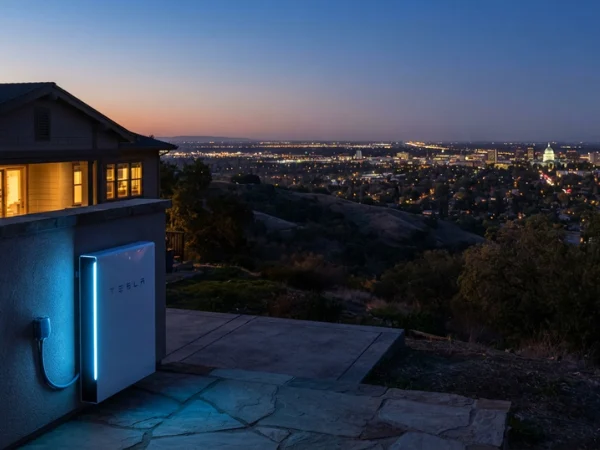
In a landmark achievement for the renewable energy sector, Sunrun and Tesla have reported the largest-ever dispatch event from a distributed virtual power plant (VPP) in California. On the evening of September 9, 2026, the two companies coordinated their respective fleets of residential battery storage systems to deliver more than 580 megawatts (MW) of power to the state’s electrical grid. This massive injection of energy occurred during a critical period of high demand triggered by a statewide heat wave, providing a crucial buffer that helped maintain grid stability and prevent potential service interruptions.
The 580 MW output represents a significant milestone in the evolution of distributed energy resources (DERs). To put the scale of this achievement into perspective, 580 MW is approximately equivalent to the peak electricity demand of all households in Sacramento County combined. By mobilizing thousands of individual home batteries, Sunrun and Tesla demonstrated that decentralized energy storage can function with the reliability and impact of a traditional large-scale "peaker" power plant.
Technical Composition and Fleet Participation
The record-breaking dispatch was made possible through the synchronization of over 140,000 individual battery units located in homes throughout California. Tesla’s Powerwall fleet provided the lion’s share of the capacity, contributing 517 MW from 110,000 participating units. Sunrun, which serves as a major installer and operator of these systems, managed more than half of the participating Powerwalls (55%). Additionally, Sunrun dispatched over 30,000 batteries from other manufacturers, contributing an additional 63 MW to the total.
The participants in this event spanned the service territories of California’s three major investor-owned utilities: Pacific Gas and Electric Company (PG&E), Southern California Edison (SCE), and San Diego Gas & Electric (SDG&E). This geographical diversity allowed the VPP to support the grid at various points of stress, rather than being concentrated in a single local area.
The batteries were programmed to discharge their stored solar energy back into the grid for a continuous three-hour window during the evening peak. This is the time of day when solar generation typically drops off as the sun sets, while residential energy demand remains high due to air conditioning and household activities. By filling this "net load" gap, the VPP reduced the state’s reliance on fossil-fuel-burning plants that are often called upon during such emergencies.
Regulatory Framework and Economic Triggers
The September 9 dispatch event was coordinated through two primary state-sponsored initiatives designed to leverage consumer-owned energy assets for public benefit: the California Energy Commission’s (CEC) Demand Side Grid Support (DSGS) program and the California Public Utilities Commission’s (CPUC) Emergency Load Reduction Program (ELRP).
The DSGS program is a relatively new mechanism designed to incentivize the use of distributed resources during extreme events. On September 9, the trigger for the DSGS dispatch was met when the California Independent System Operator (CAISO) reported day-ahead locational marginal prices exceeding $200 per megawatt-hour. These high prices serve as a market signal that supply is tightening and demand is reaching critical levels.
Simultaneously, PG&E activated the ELRP for batteries located within its specific territory. The ELRP is specifically designed to reduce the load on the grid during periods of high stress, offering financial incentives to customers who allow their batteries to be managed by third-party aggregators like Sunrun or Tesla during emergencies. The convergence of these two programs allowed for a unified, large-scale response that maximized the available capacity across the state.
Chronology of the Heat Wave Response
The September 9 event was not an isolated incident but part of a multi-day effort to manage a persistent heat wave that gripped the Western United States. On the following evening, September 10, Southern California Edison (SCE) issued its own request for a three-hour dispatch during peak hours. Sunrun and Tesla responded by delivering more than 140 MW of battery capacity specifically to the SCE territory.
Company representatives noted that if the SCE-specific event had coincided with the statewide DSGS and ELRP dispatches from the previous night, the total capacity delivered to the California grid would have exceeded 720 MW. This theoretical figure highlights the untapped potential of the current VPP infrastructure.
Data from CAISO indicates that a 720 MW injection would have been sufficient to prevent some of the rolling blackouts that impacted the state in August 2020. During those events, the grid was short by a similar margin, leading to forced outages for hundreds of thousands of residents. The ability of VPPs to bridge such a gap marks a turning point in California’s resource adequacy strategy.
Industry Leadership and Official Responses
Sunrun CEO Mary Powell emphasized the broader implications of the dispatch, noting that the scale of these distributed systems now rivals traditional infrastructure. “Sunrun’s distributed home batteries are operating at a scale larger than many peaker power plants combined,” Powell stated. She highlighted that while families primarily invest in these systems for individual energy independence and backup power during outages, the collective benefit to the grid helps lower costs for all ratepayers by reducing the need for expensive "poles and wires" upgrades.
Tesla’s energy division has also leaned heavily into the VPP model, viewing the Powerwall not just as a consumer product, but as a critical component of the "Master Plan" to transition the world to sustainable energy. By aggregating these assets, Tesla is able to participate in wholesale energy markets, providing a revenue stream for the company while offering credits or payments to participating homeowners.
Utility representatives have also expressed cautious optimism. Kendrick Li, a demand response expert at PG&E, previously noted that the sheer volume of power being brought online simultaneously can create a "shock to the system." Reflecting on past tests, Li suggested that moving forward, utilities and aggregators would likely implement "ramping curves" to ensure that hundreds of megawatts of power do not hit the grid in a single second, which can cause frequency fluctuations. The September 9 event served as a successful real-world test of these integration techniques.
Economic Impact and Future Projections
The financial benefits of VPPs extend beyond the participants. A study conducted by The Brattle Group, commissioned by Sunrun and Tesla, found that the widespread adoption and utilization of VPP programs could result in up to $206 million in net cost savings for California ratepayers by 2028. These savings stem from avoided investments in new natural gas peaker plants and the deferral of costly distribution and transmission system upgrades.
Looking ahead, the potential for VPPs is expected to grow exponentially. Earlier this month, Sunrun, Tesla, and Renew Home announced a partnership aimed at unlocking 16.8 gigawatts (GW) of flexible capacity across the United States. This initiative seeks to integrate not just home batteries, but also smart thermostats, electric vehicle (EV) chargers, and solar inverters into a cohesive, dispatchable resource.
In California, this partnership is already bearing fruit. The companies are currently enrolling nearly 21,000 existing devices into a new VPP program funded by Google in collaboration with PG&E. This resource is expected to be operational by the fall of 2026, further bolstering the grid as the state continues its transition toward a 100% clean energy future.
Implications for Grid Modernization
The success of the 580 MW dispatch signals a shift in how grid operators view residential consumers. No longer are households merely passive "loads" on the system; they are increasingly becoming "prosumers" who generate and store energy, providing essential services to the utility.
This shift is critical for California, which faces the dual challenge of aggressive decarbonization goals and an increasingly volatile climate. As traditional baseload plants are retired and replaced with variable wind and solar energy, the need for flexible, fast-acting storage becomes paramount. VPPs offer a unique solution because they are already located at the site of consumption, reducing the energy losses associated with long-distance transmission.
Furthermore, the September 9 event proves that the technology and regulatory frameworks are maturing. The coordination between state agencies (CEC, CPUC), the grid operator (CAISO), utilities (PG&E, SCE), and private aggregators (Sunrun, Tesla) demonstrates a sophisticated level of interoperability that was non-existent only a few years ago.
As California continues to experience more frequent and severe heat waves, the role of virtual power plants is expected to expand. With over 720 MW of potential capacity already identified by Sunrun and Tesla, and billions of dollars in federal and state incentives flowing toward domestic energy storage, the 580 MW record set this September may soon become the new baseline for a more resilient, distributed energy landscape.
