

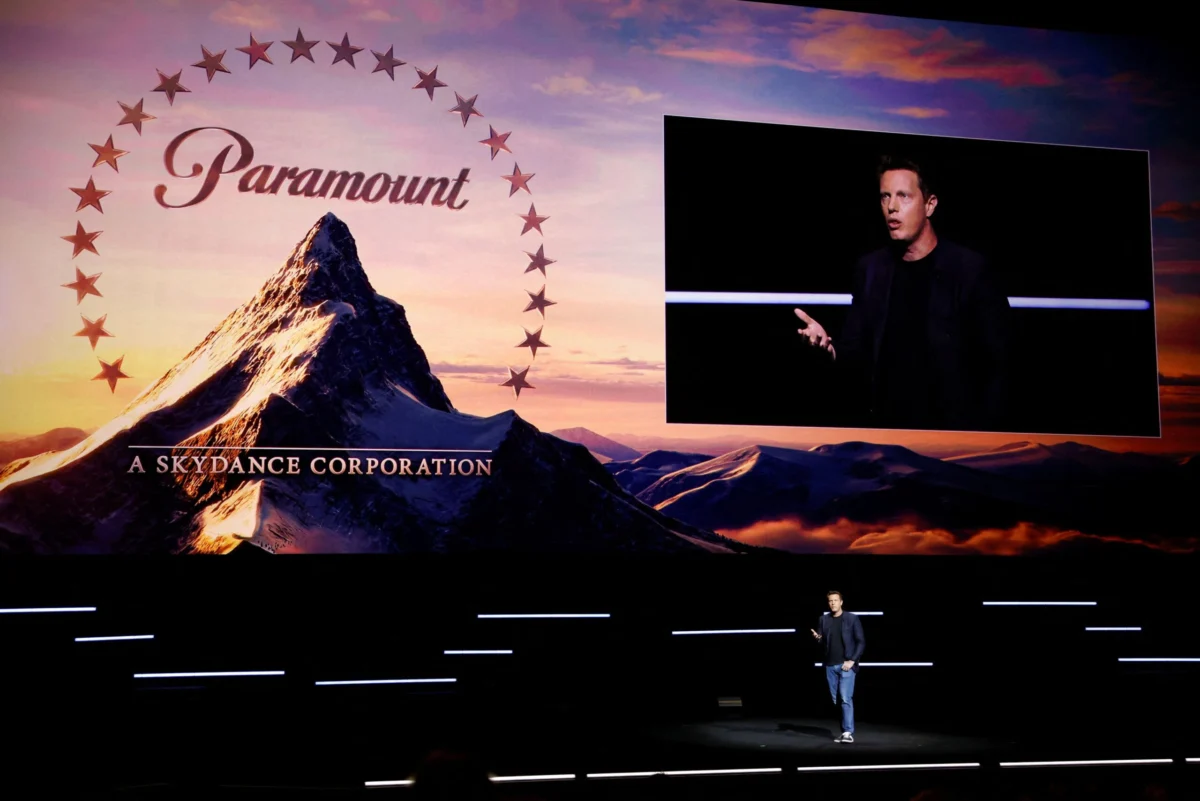
The ambitious $110 billion merger between Paramount Skydance and Warner Bros. Discovery is officially set to proceed, marking a pivotal moment in the rapidly consolidating media industry. This landmark development follows the recent resolution of significant antitrust challenges, including a lawsuit brought by a coalition of state attorneys general led by California’s Rob Bonta, and a separate legal action initiated by the Writers Guild of America (WGA) union. The settlements, announced this week, effectively remove the primary legal obstacles that had threatened to derail the mega-deal, which aims to unite two of Hollywood’s most storied studios and their vast content empires.
A Long-Awaited Resolution to Legal Hurdles
The path to this merger has been fraught with legal and industry scrutiny. The proposed acquisition, which will bring together Paramount Pictures and Warner Bros. Discovery’s film and television assets, including iconic studios, a portfolio of diverse TV networks, the broadcast giant CBS, and prominent streaming services Paramount+ and HBO Max, faced stiff opposition on multiple fronts. Concerns ranged from potential antitrust violations that could stifle competition to fears about job losses and a reduction in content diversity within the creative community.
California Attorney General Rob Bonta, whose office spearheaded the multi-state lawsuit, confirmed the settlement terms during a press conference. While acknowledging the agreement paved the way for the merger, Bonta emphatically stated that the settlement should not be interpreted as an endorsement of the deal itself. "It’s not a blessing of the broader merger," he remarked, reiterating concerns that "further consolidation in markets that are central to American economic life doesn’t serve the American economy, consumers, or competition well." This sentiment underscores the ongoing tension between the economic imperative for media companies to achieve scale and the public interest in maintaining a competitive marketplace for content and employment.
The lawsuit, initially slated for a trial in March of the upcoming year, would have plunged the merger into an extended period of uncertainty, potentially delaying its completion until mid-2027. Such a delay would have carried significant financial implications for Paramount, including substantial "ticking fees" payable to Warner Bros. Discovery shareholders, estimated at an additional $650 million per quarter. The swift resolution, therefore, offers both companies a clear trajectory forward, albeit under stringent new conditions.
Chronology of a Media Mega-Merger
The journey towards this colossal merger has unfolded over several critical stages:
- Early 2026: Reports begin to surface regarding serious discussions between Paramount Global (parent of Paramount Skydance) and Warner Bros. Discovery for a potential merger. The original article mentions a "superior" offer to Netflix, indicating competition for Paramount’s assets.
- February 26, 2026: CNBC reports on a Warner Bros. Discovery-Paramount Skydance deal being considered as superior to alternatives, solidifying the serious nature of the talks.
- April 16, 2026: David Ellison, CEO of Paramount Skydance, is pictured speaking at CinemaCon, a major industry event, where such a significant deal would undoubtedly be a topic of discussion, hinting at the advanced stage of negotiations.
- Mid-2026 (Various Dates): Both U.S. and international regulatory bodies begin their review processes. Eventually, the deal receives approval from these key regulators, indicating preliminary clearance on broader market competition concerns.
- July 20, 2026: Paramount tells investors it expects the deal to close by September 30, 2026, signaling confidence in a timely completion.
- Mid-July 2026: California, leading a coalition of 11 other states, files a lawsuit seeking to block the merger on antitrust grounds, specifically citing concerns in the film and pay-TV sectors. This immediately throws the deal’s timeline into jeopardy.
- July 22, 2026: The European Commission grants its approval for the merger, a significant step on the international front, even as domestic challenges mount.
- Late July/Early August 2026: Paramount agrees to delay the merger’s closing until June 2027, acknowledging the ongoing legal challenge. This agreement triggers the "ticking fee" clause, adding financial pressure.
- August 24, 2026: Paramount CEO David Ellison publicly addresses the challenges, highlighting the costly nature of the delay.
- This Week (Early 2027): The settlement with the state attorneys general and the Writers Guild of America is announced, clearing the final major legal hurdles and allowing the merger to move forward. The initial trial date was set for March of the upcoming year (2027), making the settlement a timely resolution.
Drivers of Consolidation in a Shifting Media Landscape
The proposed merger is not an isolated event but rather a symptom of profound shifts within the global media and entertainment industry. Over the past decade, the rise of streaming services, coupled with declining traditional linear television viewership and escalating content production costs, has created immense pressure on legacy media companies to achieve greater scale and efficiency. Companies like Netflix, Amazon, and Disney have invested billions in original content, setting new benchmarks for consumer expectations and market competition.
Paramount Global, under the leadership of Shari Redstone, has been actively exploring strategic options for its assets, including a sale, to navigate this challenging environment. Skydance Media, led by David Ellison, emerged as a key suitor, aiming to integrate Paramount’s vast content library and distribution network with its own production capabilities. Similarly, Warner Bros. Discovery, itself a product of a recent mega-merger between Discovery and WarnerMedia, has been focused on reducing its substantial debt load and optimizing its streaming strategy, particularly with HBO Max. The belief is that a combined entity would possess a more robust content portfolio, a broader global reach, and enhanced financial leverage to compete effectively against tech giants and diversified media conglomerates.
However, this drive for consolidation has not been without its critics. Past mergers, such as Disney’s acquisition of 21st Century Fox in 2019, have often resulted in significant reductions in film output and job losses. Before the Fox acquisition, that studio consistently released between 13 and 23 films annually, while Disney typically produced 9 to 13. Since their merger, the combined entity’s highest annual output has been just 16 films, according to Rentrak data. This precedent fueled concerns among industry stakeholders that a Paramount-WBD merger could further shrink opportunities for creatives and limit cinematic diversity.
Unprecedented Conditions: A New Precedent for Future Mergers?
The settlement reached with the state attorneys general imposes a series of far-reaching conditions on the combined Paramount Skydance-Warner Bros. Discovery entity, designed to mitigate antitrust concerns and protect various stakeholders. These conditions are notably specific and carry substantial penalties for non-compliance, potentially setting a new standard for how large media mergers are regulated in the U.S.
Key terms of the agreement include:
- Increased Domestic Production: Paramount has pledged to boost its domestic production spending in the U.S. by at least $300 million annually. This is a significant increase, especially considering that Attorney General Bonta noted Paramount’s current domestic film production stands at approximately 5%.
- Federal Film Credit Incentive: Should a federal film credit be approved, the company has committed to producing 20% of its films domestically within the first two years post-merger, escalating to 30% of all films in the subsequent three years.
- Preservation of Production Facilities: To safeguard infrastructure and jobs in Hollywood, the merged company must maintain both the Paramount and Warner Bros. production lots in Los Angeles.
- Theatrical Release Commitments: Addressing concerns from theater owners and film enthusiasts about declining theatrical releases post-merger, Paramount has committed to releasing 30 films theatrically in its first two years and 32 in the following three years.
- Support for Independent Cinema: A crucial provision mandates that four of these films must be independent productions. Furthermore, Paramount must establish a dedicated independent film fund specifically for purchasing indie films, aiming to foster diversity and opportunities for emerging filmmakers.
- Robust Penalties for Non-Compliance: To ensure adherence, the settlement includes a hefty $30 million penalty per film if Paramount fails to meet its release pledges, with 90% of these funds earmarked for workers. Additionally, failure to meet release goals could force the company to divest Miramax, a significant production company in its portfolio.
- Separate Cable Package Negotiations: To prevent anticompetitive bundling, Paramount and Warner Bros. are required to continue negotiating cable packages separately. Non-compliance with this clause could lead to the forced divestiture of a suite of cable channels.
- Workforce Training and Development: A commitment of $9.5 million annually is allocated for workforce training, career development in film and TV production, and support for film programs and community arts organizations, directly addressing concerns about job security and industry development.
- Editorial Independence for News Outlets: Responding to concerns about media concentration and potential influence on news reporting, Paramount must establish a new, independent board for CBS News and CNN to ensure editorial autonomy. A trustee will be selected jointly by the state attorneys and the company to monitor compliance with these terms, providing an additional layer of oversight.
The Writers Guild of America Settlement
Parallel to the states’ lawsuit, the Writers Guild of America (WGA) also pursued legal action, citing "specific harm to writers" that could result from the merger. The WGA, a powerful union representing thousands of screenwriters, television writers, and new media writers, expressed profound concerns about diminished bargaining power, potential job consolidation, and reduced opportunities for its members in an increasingly concentrated industry.
Following the settlement with the state attorneys general, the WGA also announced it had reached an agreement with Paramount. The union stated, "We continue to believe the merger will cause damage to writers and the industry at large." However, acknowledging the practical realities of a complex antitrust lawsuit without government backing, the WGA opted to settle. The terms of their agreement include:
- No Layoffs for CBS News Broadcast Writers: Paramount has agreed to a five-year prohibition on writer layoffs within CBS News’ broadcast team, offering a measure of job security to a specific segment of its workforce.
- Financial Contribution to Health Fund: A payment of $17.5 million will be made to the WGA’s health fund, providing direct financial benefit to its members.
- Attorney’s Fees Covered: Paramount will also cover the WGA’s attorney’s fees incurred during the litigation.
Attorney General Bonta confirmed that, as part of the broader settlement with the states, Paramount is also mandated to honor all previously established collective bargaining agreements and to negotiate in good faith with unions, offering a protective layer for all creative professionals.
Broader Industry Reactions and Implications
The resolution of these legal challenges and the detailed conditions attached to the merger have elicited a mixed bag of reactions across Hollywood and the broader media landscape.
For Consumers: The impact remains to be seen. While Bonta expressed skepticism about further consolidation serving consumers, the conditions aim to ensure a certain level of content output and diversity. The commitment to maintaining separate cable package negotiations could, in theory, prevent price hikes or forced bundling, but the overall trend of rising subscription costs for streaming services persists.
For Content Creators and Workers: The conditions mandating increased domestic production, maintaining studios, supporting independent films, and investing in workforce development are directly beneficial to the creative community, particularly in California, which has experienced job losses due to industry shifts and the allure of tax incentives elsewhere. The WGA settlement also offers specific protections. However, the underlying fear of job rationalization and reduced creative opportunities in a larger, more centralized entity remains a long-term concern for many.
For Theater Owners: The promise of 30-32 theatrical releases per year is a significant concession and a potential boon for cinema operators, who have struggled with dwindling film slates, especially after the pandemic. David Ellison had reportedly offered three-year contracts to cinema operators, allowing them to sue for monetary compensation if the promise was not fulfilled, indicating a serious commitment to this aspect. Given that no studio has put out more than 25 wide releases in a single year in the past 25 years, Paramount’s pledge is ambitious and will be closely watched.
For Paramount Skydance and Warner Bros. Discovery: The immediate benefit is clarity and the ability to move forward with integration. However, the imposed conditions introduce significant operational complexities and potential additional costs. The annual $300 million increase in domestic production spending and the $9.5 million for workforce development are substantial financial commitments. While these conditions might slightly dilute the immediate synergy benefits, they also provide a clear framework for operating in a more regulated environment, potentially avoiding future legal entanglements. The challenge will be to integrate two massive companies, manage existing debt, and drive profitability in a fiercely competitive market, all while adhering to these detailed mandates.
Looking Ahead: A New Era of Media Governance?
The Paramount Skydance-Warner Bros. Discovery merger, now proceeding under these unprecedented conditions, could signal a new era for antitrust enforcement in the media sector. The specificity of the mandates – from production quotas and independent film support to news editorial independence and direct financial penalties – reflects a growing willingness by regulators to impose structural and behavioral remedies rather than simply blocking deals or accepting vague promises.
The success or failure of this merger, both commercially and in its adherence to the settlement terms, will undoubtedly be a case study for future media consolidation efforts. It highlights the intricate balance between fostering innovation and scale in a dynamic industry and protecting the public interest in competition, diverse content, and a robust creative economy. The trustee monitoring compliance and the explicit threat of further court action provide a powerful mechanism to ensure accountability, making this not just a merger of corporate giants, but also a grand experiment in managed media consolidation.
