

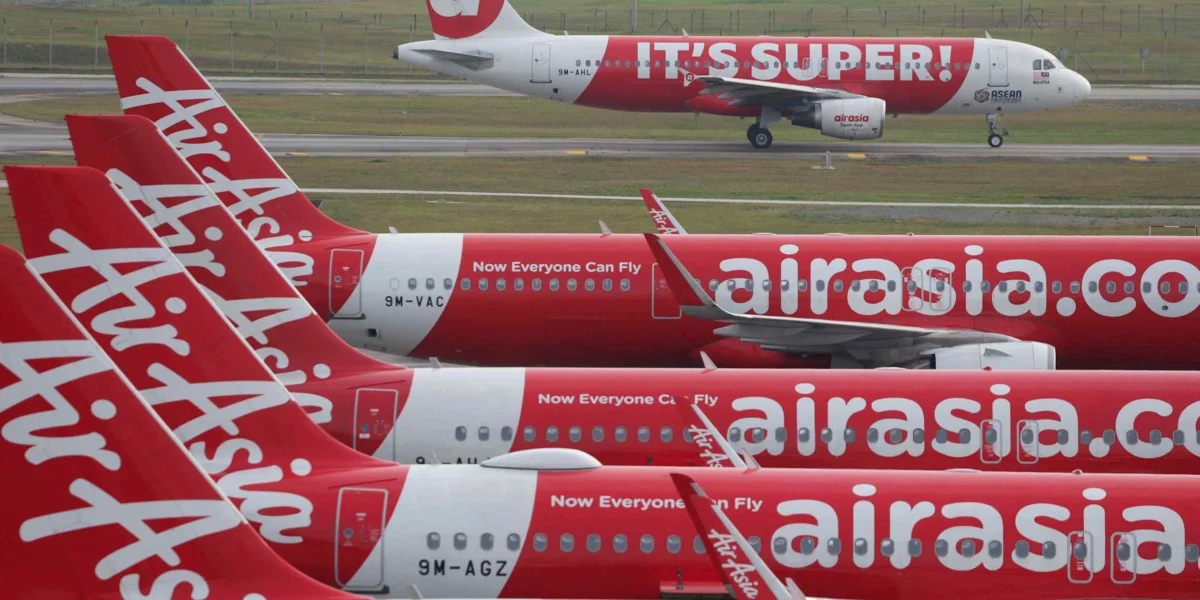
Shares in Malaysia’s budget carrier, AirAsia Group, experienced a dramatic 21% decline on Thursday, September 17, 2026, as investor confidence wavered due to heightened uncertainty surrounding the airline’s financial position and the execution of its strategic plans. The significant downturn was exacerbated by escalating fuel price pressures, a direct consequence of ongoing geopolitical tensions in the Middle East. This situation has prompted the company to seek approximately $1 billion in debt financing, a move that underscores the considerable financial challenges currently facing the low-cost carrier.
Mounting Financial Pressures and Market Reaction
The sharp drop in AirAsia’s stock price on Thursday reflects a growing unease among investors regarding the airline’s ability to navigate the current economic headwinds. The immediate trigger for this intensified scrutiny appears to be the airline’s reported pursuit of substantial debt financing. This fundraising effort, while not unusual for airlines seeking to manage capital expenditures and operational costs, has been met with particular concern given the prevailing market conditions and the company’s specific vulnerabilities.
Fuel costs represent a significant portion of an airline’s operating expenses, often accounting for 20-30% or more of total expenditure. Fluctuations in global oil prices, therefore, have an immediate and profound impact on profitability. The recent surge in oil prices, driven by geopolitical instability in the Middle East, has placed considerable strain on the financial resilience of airlines worldwide, and AirAsia is no exception. Analysts have noted that while many airlines hedge against fuel price volatility, the effectiveness and extent of such hedges can vary, and unexpected spikes can quickly erode margins.
The "heightened uncertainty" cited by market observers regarding AirAsia’s funding position suggests that investors are questioning the airline’s short-to-medium term liquidity and its capacity to meet its financial obligations. This could stem from a variety of factors, including the pace of post-pandemic recovery, ongoing operational challenges, or concerns about the competitive landscape. The execution risks associated with AirAsia’s strategic initiatives, which may include fleet expansion, route development, or diversification into new business segments, are also under a microscope. Any perceived delays or underperformance in these areas can amplify investor apprehension.
The Impact of Middle East Tensions on Aviation
The geopolitical situation in the Middle East has been a persistent source of volatility in global energy markets. Recent escalations in regional conflicts have led to concerns about the security of oil supply routes and potential disruptions to production. This has translated into a sustained upward trend in crude oil prices, with benchmarks like Brent crude oil trading significantly higher than a year ago.
For the aviation industry, this translates directly into increased operating costs. Airlines are forced to either absorb these higher fuel expenses, thereby reducing profit margins, or pass them on to consumers through higher ticket prices, which can dampen demand. In the competitive budget airline segment, where margins are already thin, this presents a particularly acute dilemma. AirAsia, as a prominent player in this segment, is highly susceptible to these cost pressures.
The implications of sustained high fuel prices extend beyond immediate profitability. They can influence long-term strategic decisions, such as fleet modernization programs (favoring more fuel-efficient aircraft), network planning (prioritizing shorter, less fuel-intensive routes), and capacity deployment. Moreover, a prolonged period of elevated fuel costs could force airlines to implement more aggressive cost-cutting measures, potentially impacting service levels or employment.
AirAsia’s Financial Health: A Historical Perspective
AirAsia Group, a leading low-cost carrier in Asia, has a history of ambitious growth and a strong brand presence. However, like many airlines globally, it faced significant challenges during the COVID-19 pandemic, which brought international travel to a near standstill. While the company has been actively engaged in recovery efforts, including restructuring and refinancing, the current economic climate presents a fresh set of obstacles.
The pursuit of $1 billion in debt financing indicates that the airline is looking to bolster its balance sheet and secure the necessary capital to navigate these challenges. This could be intended for a range of purposes, including:
- Working Capital: To cover day-to-day operational expenses, such as salaries, aircraft leases, and maintenance.
- Debt Repayments: To refinance existing debt obligations that may be coming due.
- Capital Expenditures: To fund the acquisition of new, more fuel-efficient aircraft, or to invest in technology and infrastructure.
- Strategic Initiatives: To support ongoing expansion plans or diversification efforts.
The specific terms and conditions of any new debt financing will be crucial in assessing its impact on AirAsia’s financial structure and future flexibility. Investors will be keen to understand the interest rates, repayment schedules, and any covenants attached to the debt.
Broader Implications for the Aviation Sector
The situation at AirAsia is not an isolated incident; it is indicative of broader trends affecting the global aviation industry. Several other airlines, particularly those in emerging markets or with significant exposure to volatile fuel prices, are likely facing similar pressures.
Key implications include:
- Consolidation: Financial distress among airlines can lead to increased consolidation within the industry, as stronger players acquire weaker ones, or through bankruptcies.
- Ticket Price Increases: To offset rising costs, airlines may be forced to increase ticket prices, which could lead to a slowdown in passenger demand, particularly in the price-sensitive leisure travel market.
- Reduced Route Networks: Airlines might curtail their route networks, focusing on more profitable routes and reducing frequencies on less lucrative ones. This could impact connectivity for certain regions.
- Delayed Fleet Modernization: Companies struggling with financing may postpone the acquisition of new, more fuel-efficient aircraft, potentially leading to higher operating costs in the long run and a slower transition to greener aviation technologies.
- Increased Scrutiny from Regulators and Investors: Heightened financial risks may lead to closer scrutiny from aviation regulators and a more cautious approach from investors.
Analysis of Execution Risks
The mention of "execution risks" in relation to AirAsia’s strategic plans warrants further examination. In the context of an airline, these risks can encompass a wide spectrum:
- Fleet Management: Successfully integrating new aircraft, managing maintenance schedules, and ensuring optimal utilization of the fleet are critical. Delays in aircraft deliveries or unexpected maintenance issues can disrupt operations and increase costs.
- Route Network Strategy: The ability to identify and develop profitable new routes, while simultaneously managing the performance of existing ones, is paramount. Intense competition, regulatory hurdles, and changing travel patterns can all pose execution challenges.
- Digital Transformation and Ancillary Revenue: Low-cost carriers often rely heavily on ancillary revenues (baggage fees, seat selection, in-flight sales, etc.) and digital platforms to enhance customer experience and profitability. Any missteps in implementing or optimizing these strategies can have a significant impact.
- Cost Management: Maintaining rigorous cost control across all aspects of the operation is fundamental to the low-cost model. Inefficiencies or unexpected cost escalations can quickly undermine profitability.
- Labor Relations: Maintaining positive and productive relationships with employees, particularly pilots and cabin crew, is essential for operational stability. Labor disputes or industrial action can lead to significant disruptions and financial losses.
The current economic environment, with its inflationary pressures and global supply chain disruptions, further amplifies these execution risks. For instance, the cost of spare parts for aircraft maintenance could be higher, and the availability of skilled labor might be constrained.
Official Statements and Future Outlook
As of the reporting date, there have been no direct official statements from AirAsia Group detailing the specifics of the $1 billion debt financing or addressing the market’s concerns beyond the general acknowledgement of "heightened uncertainty." However, in such situations, companies typically communicate through official press releases or regulatory filings. Investors and analysts will be closely monitoring any such announcements for clarity on the airline’s financial strategy and outlook.
The immediate future for AirAsia, and indeed for many budget carriers, hinges on several factors:
- Stabilization of Fuel Prices: A significant reduction or stabilization in global oil prices would provide immediate relief.
- Effectiveness of Financing: The success of AirAsia’s debt financing efforts and the terms secured will be critical in shoring up its financial position.
- Demand Recovery: The continued recovery of air travel demand, particularly for leisure and VFR (visiting friends and relatives) segments, will be crucial for revenue generation.
- Strategic Execution: The airline’s ability to effectively implement its strategic plans and manage operational costs will determine its long-term viability and profitability.
The 21% drop in share price on Thursday serves as a stark reminder of the precariousness of the current operating environment for airlines. The coming weeks and months will be critical for AirAsia as it navigates these complex financial and geopolitical challenges, seeking to reassure investors and stakeholders of its resilience and future prospects. The company’s ability to secure its financing and demonstrate a clear path to profitability amidst these headwinds will be closely watched by the entire transportation sector.
