

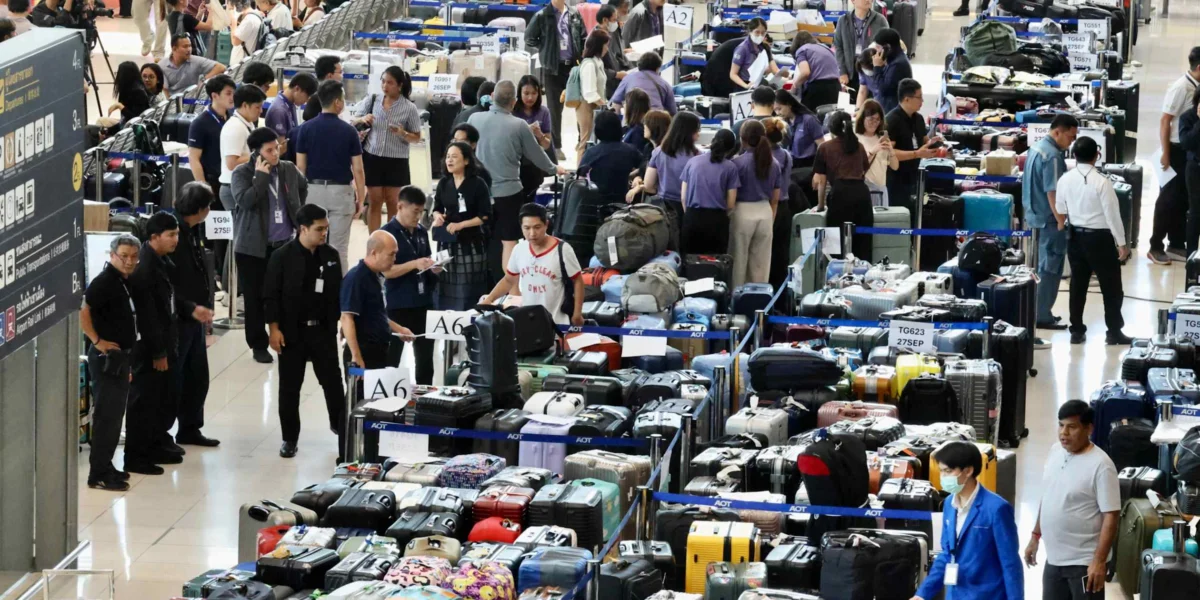
The escalating impact of recent heavy rains and widespread flooding in Thailand has plunged Bangkok’s Suvarnabhumi Airport into a state of logistical chaos, leaving an estimated 5,600 pieces of checked luggage stranded and leading Thai Airways to announce a significant reduction in its flight schedule. The national carrier revealed on Tuesday that it would temporarily slash its operations by approximately 30% as it grapples with the cascading effects of severe weather events that have hampered ground operations and exacerbated pre-existing staffing challenges.

The Unfolding Crisis: Stranded Luggage and Flight Disruptions
The image of a tarmac littered with unattended suitcases at one of Southeast Asia’s busiest air hubs paints a stark picture of the current predicament. The 5,600 pieces of lost or delayed luggage represent not just inconveniences for thousands of travelers but also a significant operational burden for the airline and airport authorities. This backlog is a direct consequence of the inability of ground staff to process baggage efficiently, a problem compounded by the inclement weather that has disrupted normal airport functions. The sheer volume of stranded items suggests a prolonged period of operational strain, forcing passengers to face uncertainty regarding the whereabouts of their belongings.
Thai Airways’ decision to reduce its flight capacity by 30% is a drastic measure underscoring the severity of the situation. This reduction, impacting an estimated 120 flights per day, is a strategic move to align operational capabilities with the current limitations. The airline aims to mitigate further disruptions and prevent an even larger backlog of both passengers and baggage. The impact of this reduction will be felt across numerous domestic and international routes, potentially affecting onward travel plans for a substantial number of travelers during a period that may see continued demand for air travel.

The Root Causes: Weather and a Pre-existing Labor Gap
The immediate trigger for the current crisis is the unusually heavy rainfall and subsequent flooding that has inundated significant portions of Thailand. The monsoon season, typically a period of increased rainfall, has been exacerbated by what meteorologists describe as a confluence of atmospheric factors, leading to unseasonably intense downpours. These weather events have not only caused widespread damage and displacement across the country but have also directly impacted airport infrastructure and operations. Waterlogging on runways, access roads, and operational areas can impede the movement of aircraft and ground vehicles, slowing down essential turnaround processes.
However, the current situation at Suvarnabhumi Airport is not solely attributable to the natural disaster. It is widely understood within the aviation industry that many airports, including those in Thailand, have been struggling with a shortage of baggage handlers and other essential ground staff for some time. The COVID-19 pandemic led to significant layoffs and workforce reductions across the travel sector. As air travel has rebounded more rapidly than anticipated, many airlines and airport service providers have found themselves understaffed, leading to increased pressure on existing personnel and a reduced capacity to handle peak operational demands. This pre-existing labor gap has acted as an amplifier for the disruptions caused by the recent weather, transforming what might have been a manageable challenge into a full-blown crisis.

A Timeline of Disruption
While the exact start date of the severe weather’s impact on airport operations is not precisely detailed, reports suggest that the situation has been steadily deteriorating over the past week.
- Early to Mid-September: Consistent and heavy rainfall begins to impact various regions of Thailand, leading to localized flooding. Initial reports of operational challenges at Suvarnabhumi Airport may have been minor and intermittent.
- Late September: The intensity and geographical spread of the rainfall and flooding increase significantly. This is likely the period when disruptions to ground operations at Suvarnabhumi Airport began to escalate, impacting baggage handling capabilities. Reports of delayed or mishandled luggage start to emerge.
- September 28-29, 2026: The situation reaches a critical point. The volume of stranded luggage becomes unmanageable. Images of the backlog begin to circulate, drawing public and media attention. Airport authorities and Thai Airways likely engage in emergency meetings to assess the scale of the problem and formulate mitigation strategies.
- September 30, 2026: Thai Airways publicly announces a 30% reduction in its flight schedule, acknowledging the severe operational challenges posed by the ongoing disruptions and the significant backlog of stranded luggage. The airline cites heavy rains and flooding as primary causes.
This chronology highlights a rapid escalation from manageable disruptions to a crisis requiring significant operational adjustments. The timeframe suggests that the combination of severe weather and staffing shortages created a perfect storm, overwhelming the airport’s capacity.

Supporting Data and Industry Context
The aviation industry globally has been on a recovery path post-pandemic, with passenger numbers surging. According to the International Air Transport Association (IATA), global air passenger traffic has been steadily climbing, with projections indicating a full recovery to pre-pandemic levels within the next few years. This surge in demand places immense pressure on airport infrastructure and the personnel who manage its intricate operations.
Specifically, the Asia-Pacific region has seen robust growth in air travel. Bangkok, as a major international hub, experiences a high volume of passenger and cargo traffic daily. Suvarnabhumi Airport (BKK) handles millions of passengers annually, with a significant proportion of international transit. A backlog of 5,600 pieces of luggage represents a substantial percentage of the daily baggage processed, underscoring the scale of the current operational breakdown.

The shortage of ground handling staff is a well-documented issue. A report by a leading aviation consultancy firm indicated a global deficit of approximately 15-20% in trained ground handling personnel in the post-pandemic era. This deficit is particularly acute in regions experiencing rapid air traffic recovery. The financial implications of such disruptions are also considerable, involving costs associated with rebooking passengers, compensating for lost or damaged baggage, and the operational inefficiencies of managing a backlog.
Official Responses and Mitigation Efforts
In response to the escalating crisis, Thai Airways has taken the decisive step of reducing its flight schedule. This measure, while disruptive to passengers, is a necessary recalibration to ensure that the airline can manage its operations more effectively within its current constraints. The airline’s statement emphasizes the temporary nature of these reductions, suggesting that efforts are underway to address the root causes and restore normal operations as soon as possible.

Airport authorities at Suvarnabhumi Airport are reportedly working around the clock to clear the backlog of stranded luggage. This likely involves deploying additional resources, including personnel and equipment, to accelerate baggage processing. However, the effectiveness of these measures will depend on the extent to which the weather conditions improve and the availability of sufficient trained staff.
There is an implied need for enhanced coordination between Thai Airways, other airlines operating at Suvarnabhumi, ground handling service providers, and local authorities to manage the crisis. Effective communication channels and collaborative problem-solving are crucial to navigating such complex operational challenges.

Broader Implications and Future Considerations
The events at Suvarnabhumi Airport serve as a cautionary tale for the global aviation industry. It highlights the vulnerability of complex logistical systems to both environmental factors and labor market dynamics.
For Travelers: The immediate implication is significant inconvenience, including potential flight cancellations, delays, and the distressing prospect of lost luggage. Passengers are advised to remain in close contact with their airlines for the latest updates and to follow official procedures for reporting lost baggage. Travel insurance policies may offer some recourse for expenses incurred due to delays or lost items.

For the Aviation Industry: This incident underscores the urgent need for airlines and airport operators to:
- Invest in Workforce Development: Proactive recruitment, training, and retention strategies are essential to address the ongoing shortage of ground staff. This may involve offering more competitive wages and benefits, as well as creating more attractive career paths.
- Enhance Operational Resilience: Airports and airlines need to develop more robust contingency plans for extreme weather events and other unforeseen disruptions. This could include investing in infrastructure that is more resilient to flooding and developing flexible operational models that can adapt quickly to changing conditions.
- Improve Technology Integration: The effective use of technology, such as advanced baggage tracking systems and artificial intelligence for resource allocation, can help mitigate the impact of disruptions and improve operational efficiency.
For Thailand’s Tourism Sector: As a major tourist destination, disruptions at its primary international gateway can have a significant impact on the country’s tourism economy. The efficient resolution of this crisis is paramount to maintaining traveler confidence and ensuring the continued flow of visitors.

The current situation at Suvarnabhumi Airport is a complex interplay of natural forces and systemic challenges. While the immediate focus is on resolving the backlog of stranded luggage and restoring normal flight operations, the long-term implications point to a critical need for greater resilience and strategic planning within the global aviation sector. The ability of airlines and airports to navigate such crises effectively will be a key determinant of their success in the coming years.
