

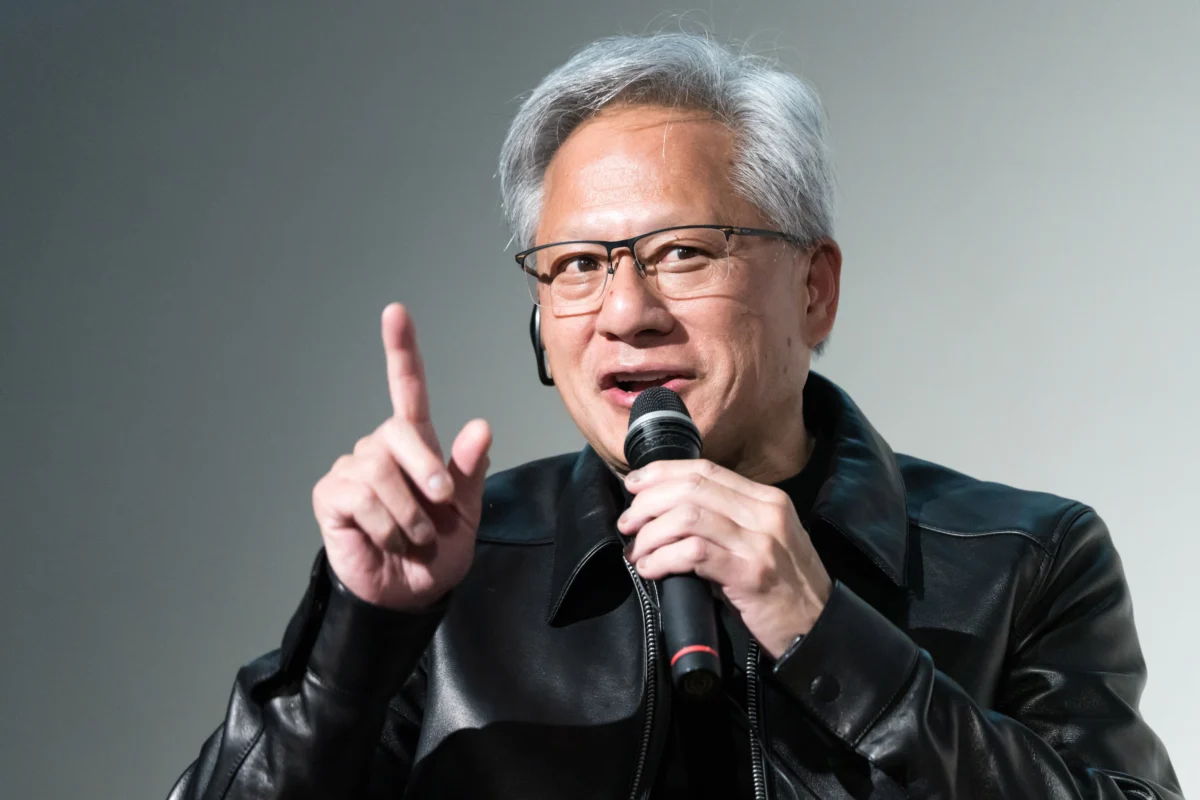
Los Angeles, CA – September 14, 2026 – The tech world was captivated Monday evening as NVIDIA CEO Jensen Huang, a figure synonymous with the relentless march of artificial intelligence, found himself at the center of a live, unscripted political intervention during the high-profile All-In conference in Los Angeles. The unexpected caller: President Donald J. Trump, whose impromptu phone conversation with Huang on stage instantaneously shifted the spotlight from technological innovation to the contentious debate surrounding AI safety and its geopolitical ramifications.
The incident unfolded with dramatic flair, underscoring the increasingly intertwined nature of technology, politics, and global economics. Huang, characteristically attired in his signature alligator leather jacket, was handed a foldable smartphone – a device that itself symbolized the cutting edge of consumer technology in 2026 – to take the unexpected call. The spectacle of a tech titan receiving a direct call from the Oval Office, amplified for thousands of attendees and countless more online, immediately set tongues wagging across the industry.
The Unscripted Presidential Intervention and the "AI Hoax" Claim
Once President Trump was on speakerphone, the conversation swiftly pivoted to the burgeoning anxieties surrounding artificial intelligence. Trump, known for his direct and often provocative rhetoric, wasted no time in dismissing what he termed "mounting fears about AI" as a "hoax." He asserted that the primary beneficiaries of this "AI panic" were rival nations, specifically China, and "political people" seeking to leverage fear for their own agendas. The President emphatically declared that AI’s transformative power, which he characterized as "bigger than the internet," was too significant to be impeded by calls for caution or slowdowns. During this exchange, Huang notably interjected, "Did you hear that? Thousands of people are clapping," seemingly acknowledging the audience’s positive reception to Trump’s pro-acceleration stance.
This public endorsement from the nation’s highest office for an unfettered approach to AI development stands in stark contrast to growing international calls for robust regulation, ethical guidelines, and safety protocols. The "AI hoax" declaration immediately drew sharp reactions from various sectors, reigniting a debate that has simmered for years within the scientific community, policy circles, and global think tanks. Critics argue that such dismissals risk undermining serious efforts to mitigate potential societal risks ranging from widespread job displacement and algorithmic bias to the more profound existential threats posited by advanced artificial general intelligence (AGI).
NVIDIA’s Pivotal Role in the AI Ecosystem
Jensen Huang’s position as CEO of NVIDIA places him at the very nexus of the AI revolution. By 2026, NVIDIA’s market capitalization had soared past the $4 trillion mark, solidifying its status as arguably the most critical company enabling the global AI infrastructure. The company’s Graphics Processing Units (GPUs) and specialized AI accelerators, such as the next-generation Blackwell B200 and Hopper H100, are the computational backbone for nearly every major AI research lab, cloud provider, and enterprise pushing the boundaries of machine learning. NVIDIA’s dominance in this critical sector means its business model is intrinsically linked to the accelerated development and deployment of AI technologies.
This economic reality provides crucial context for Huang’s on-stage demeanor. While his personal views on AI safety remain largely unarticulated in granular detail, his company’s immense financial interests align directly with the narrative of unbridled AI progress. Any perceived slowdown in AI development, whether due to regulatory hurdles, public fear, or resource constraints, could directly impact NVIDIA’s revenue streams and, consequently, its share price. On the day of the conference, NVIDIA’s stock, despite being up a staggering 33% over the past year due to insatiable demand for its chips, experienced a slight dip of a few percentage points following the controversial exchange, indicating market sensitivity to even subtle shifts in the AI landscape and political rhetoric.
The All-In Conference: A Nexus for Tech and Power
The All-In conference, a premier annual gathering for venture capitalists, tech founders, and industry leaders, has historically served as a barometer for the prevailing sentiment in Silicon Valley and beyond. Known for its candid discussions and high-profile speakers, the event often becomes a platform for shaping narratives around emerging technologies. This year’s installment was no exception, drawing an unprecedented number of attendees keen to glean insights into the future of AI, quantum computing, and advanced robotics.
The choice of such a public and influential venue for President Trump’s call was strategic. It allowed him to directly address a powerful segment of the American economy and reinforce his administration’s perceived commitment to technological innovation and economic growth, while simultaneously challenging narratives that he views as detrimental to these goals. The audience, composed largely of individuals with significant investments in the rapid expansion of AI, was receptive to a message that prioritized acceleration over caution, reflecting a significant segment of the industry’s own preferences.
Historical Context: The Evolving Debate on AI Safety

The debate over AI safety is not new but has intensified dramatically in the mid-2020s. Initial concerns, articulated by pioneers like Nick Bostrom and Stuart Russell in the 2010s, focused on long-term existential risks from superintelligent AI. By the 2020s, these concerns broadened to include more immediate, tangible issues:
- Job Displacement: Studies projected that by 2026, automation driven by AI could displace upwards of 15% of the global workforce, particularly in sectors like logistics, customer service, and even certain creative industries, necessitating massive retraining initiatives and social safety nets.
- Algorithmic Bias: Instances of AI systems exhibiting racial, gender, or socioeconomic biases became well-documented, leading to calls for stricter ethical guidelines in data collection and model training to prevent discrimination in areas like lending, hiring, and criminal justice.
- Misinformation and Disinformation: The advent of highly sophisticated deepfakes and AI-generated content posed significant threats to democratic processes and societal trust, especially in an election year.
- Autonomous Weapon Systems: The ethical implications of AI-controlled weaponry, capable of making life-or-death decisions without human intervention, remained a contentious international issue.
In response to these growing concerns, numerous organizations, including OpenAI’s safety research teams, the Future of Life Institute, and various UN bodies, had issued urgent warnings and proposed frameworks for responsible AI development. Governments worldwide, including the European Union with its comprehensive AI Act, and the United States with its series of Executive Orders and legislative proposals, were grappling with how to regulate this powerful technology without stifling innovation. President Trump’s "hoax" declaration, therefore, represents a significant counter-narrative to these global efforts, aligning with a more libertarian, market-driven approach to technological progress.
Political and Economic Implications
President Trump’s intervention also carries significant political weight. By aligning himself with the pro-acceleration faction of the tech industry, he positions himself as a champion of innovation and economic dynamism, a message that resonates with a segment of the electorate and key donor bases. His critique of "political people" capitalizing on "AI panic" can be interpreted as a pre-emptive strike against political opponents advocating for stricter AI regulation, framing their concerns as economically detrimental.
Economically, the call underscores the immense stakes involved. The global AI market was projected to exceed $1 trillion by 2030, with an annual growth rate consistently above 35% through the late 2020s. Companies like NVIDIA, Google, Microsoft, Amazon, and Meta are investing hundreds of billions annually into AI research and infrastructure. Any perception of regulatory overreach or public backlash could trigger significant market shifts and impact investment flows. Trump’s stance provides a clear signal of a potential deregulatory environment should he return to office, a prospect that excites some investors while alarming others.
Reactions from the Broader Tech and Policy Landscape
The immediate aftermath of the call saw a flurry of reactions.
- AI Ethicists and Academics: Many expressed dismay at the President’s characterization of AI safety concerns. Dr. Anya Sharma, a leading AI ethicist at Stanford University, stated in a social media post, "To label legitimate concerns about AI’s profound societal impact as a ‘hoax’ is not only irresponsible but dangerous. It dismisses the diligent work of scientists and policymakers striving for a future where AI benefits all, not just a select few."
- Tech Industry Leaders: Reactions were mixed. While many venture capitalists and startup founders echoed Trump’s sentiment, prioritizing rapid innovation and market growth, some prominent figures, particularly those involved in foundational AI model development, subtly reiterated the importance of safety. Satya Nadella, CEO of Microsoft, in a pre-recorded interview released shortly after the event, emphasized that "innovation and responsibility are not mutually exclusive; in fact, they must advance hand-in-hand for AI to truly unlock its full potential for humanity."
- Political Commentators: Pundits largely dissected the political motivations behind the call, with some suggesting it was a calculated move to rally support within the tech community, while others criticized it as a simplistic and potentially reckless approach to a complex global challenge.
- International Bodies: Representatives from the European Commission and the United Nations subtly reiterated their commitment to developing global frameworks for AI governance, implicitly pushing back against the idea of unfettered development.
The Foldable Phone: A Symbol of Future Tech Adoption
The detail of Jensen Huang using a foldable phone, despite the earlier correction that it was not an Apple iPhone Duo but a different model, remains a noteworthy element. By 2026, foldable smartphones had moved beyond niche status, becoming a significant segment of the premium smartphone market, representing over 15% of high-end device sales globally. Their adoption by a leading tech visionary like Huang underscored the mainstreaming of these innovative form factors, highlighting advancements in display technology, hinge design, and overall durability. The use of such a cutting-edge device further solidified Huang’s image as a forward-thinking leader, even as the content of his call stirred controversy.
Looking Ahead: The Path for AI
The live phone call at the All-In conference serves as a potent microcosm of the larger global debate surrounding artificial intelligence. It highlights the tension between the relentless pursuit of technological advancement and the imperative for responsible development. As AI continues its rapid trajectory, transforming industries, economies, and societies, the discourse between innovation advocates and safety proponents will only intensify.
For NVIDIA, the incident reinforces its critical, albeit sometimes delicate, position at the forefront of this revolution. Balancing shareholder value with the broader societal implications of its technology will remain a perpetual challenge for Jensen Huang and his leadership team. The coming years will undoubtedly see continued efforts to define the future of AI—whether through collaborative international governance, industry-led ethical frameworks, or a more fragmented, politically influenced landscape, as suggested by President Trump’s on-stage declaration. The world watches, keenly aware that the decisions made today regarding AI will shape the very fabric of tomorrow.
