

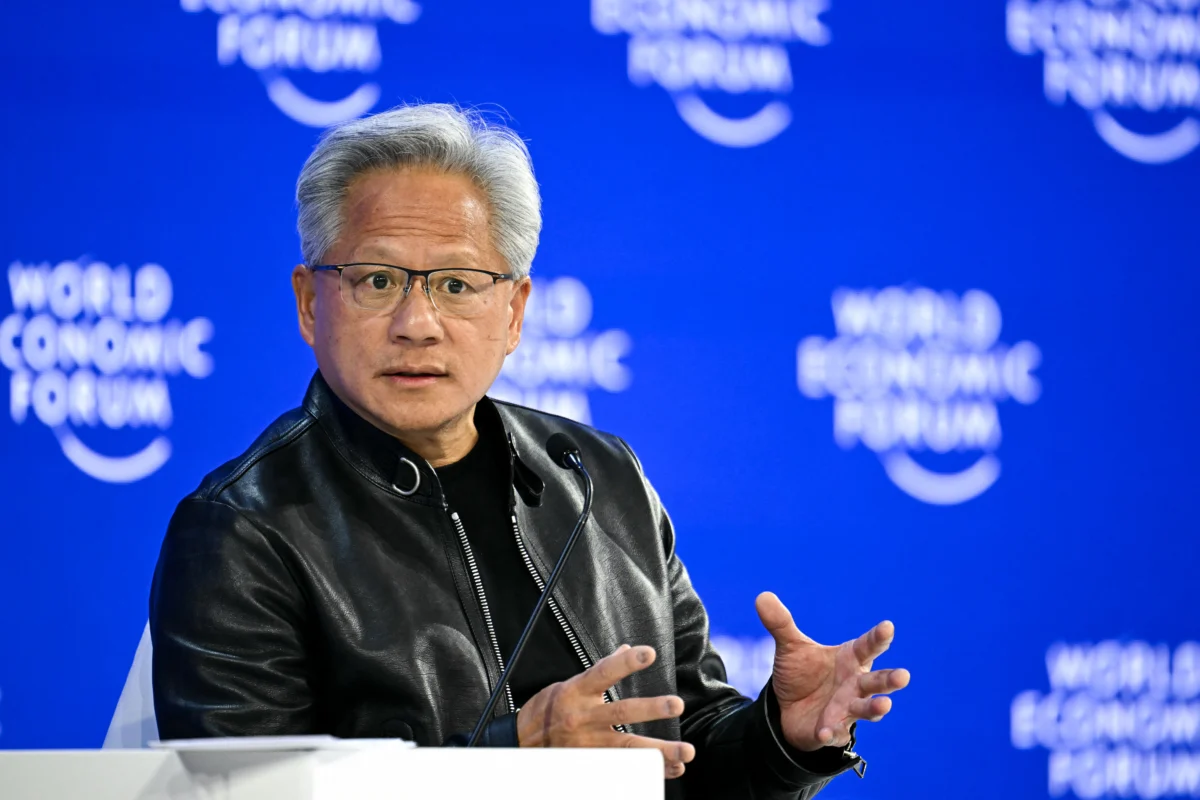
On Monday morning in Los Angeles, an unexpected moment unfolded at the All-In Summit, a prominent gathering for venture capitalists and tech industry leaders. Nvidia CEO Jensen Huang, a figure at the forefront of the artificial intelligence revolution, found himself in an unusual situation: receiving a phone call from former President Donald Trump while live onstage. The incident, which saw Huang putting the former president on speakerphone for the entire audience to hear, swiftly shifted the focus from the planned discussion to a spontaneous, high-profile exchange on the future of AI development and the contentious issue of data center construction.
The Unscripted Call at the All-In Summit
The All-In Summit, known for its candid discussions among influential tech investors Chamath Palihapitiya, Jason Calacanis, David Friedberg, and David Sacks—the hosts of the popular "All-In" podcast—provided an unlikely backdrop for such a direct interaction between a leading tech executive and a former head of state. As Huang addressed the "besties," his term for the podcast hosts, his phone rang. Recognizing the caller ID, Huang made the unconventional decision to answer, explaining to Trump, "I’m onstage with the besties." This move, a public relations professional’s nightmare, immediately captured the attention of the assembled tech elite and set the stage for a memorable exchange.
Attempting to project the call to the large audience, Huang initially struggled, prompting Trump to quip, "The great thing about life is Jensen can develop the most complex computer chip in the world… but he can’t figure out how to put you on speaker." Huang, likely well-versed in speakerphone functionality, was in fact requesting an additional microphone from stagehands to ensure the conversation was audible to everyone present. The lighthearted jest quickly gave way to a serious discussion on critical technology policy.
The AI Acceleration Imperative vs. Cautionary Voices
Prior to Trump’s call, Huang and the All-In hosts had been engaged in a robust debate surrounding the pace of AI development. The discussion centered on Anthropic CEO Dario Amodei’s recent call to "slow the pace at which we improve the capabilities of AI," a sentiment echoed publicly by other prominent tech figures such as SpaceX CEO Elon Musk and OpenAI CEO Sam Altman. These calls for a more cautious approach to AI development often stem from concerns about potential existential risks, ethical implications, and the need for robust safety protocols as AI capabilities rapidly advance. Proponents of slowing down argue for greater investment in AI alignment research, regulatory frameworks, and public discourse to ensure that advanced AI systems benefit humanity rather than pose unforeseen dangers.
Jensen Huang, however, has consistently expressed a more optimistic and accelerationist view, emphasizing the transformative potential of AI and the importance of maintaining a rapid pace of innovation. Nvidia, under Huang’s leadership, is a pivotal player in the AI ecosystem, providing the high-performance graphics processing units (GPUs) that power most of the world’s AI models and data centers. The company’s market capitalization has soared past the $3 trillion mark, driven by insatiable demand for its AI chips like the H100 and the newer Blackwell platform. For Nvidia, a slowdown in AI development would represent a significant headwind to its core business strategy and future growth trajectory.
When Trump’s voice filled the room, the former president quickly weighed in on this very debate. "They’re just playing right in the hands of a lot of people that don’t want to see it happen," Trump asserted, referring to those advocating for a slower pace of AI development. He then elaborated, "That could be political people. It could also be China. And we’re not going to let that happen. It’s a hoax." This strong statement aligned directly with Huang’s accelerationist stance. Huang’s immediate reply, "You’re right. We’re not going to let that happen, sir," was met with applause from the audience, signaling significant support for an aggressive approach to AI innovation within the tech community present.
Trump’s framing of AI slowdown concerns as a "hoax" and potentially a geopolitical ploy reflects a broader narrative among some political and tech figures who view any attempt to curb AI development as detrimental to national competitiveness, particularly against rivals like China. This perspective prioritizes rapid technological advancement as a matter of national security and economic leadership, often downplaying or dismissing the risks highlighted by AI safety advocates.
The Data Center Dilemma: Local Opposition Meets National Ambition
The conversation then pivoted to another critical issue facing the tech industry: the increasing public opposition to the construction of new data centers. Data centers are the physical infrastructure backbone of the AI era, housing the vast arrays of servers and networking equipment required to train and run complex AI models. Their proliferation, however, has sparked significant local resistance across the United States and globally, primarily due to concerns about their environmental footprint and impact on local communities.
Trump and his allies, including Y Combinator CEO Garry Tan, have publicly articulated a belief that this growing sentiment against data center construction is part of an "international psyop" aimed at stifling American economic growth and technological superiority. Tan, in particular, has written extensively on this theory, suggesting that foreign adversaries or competing nations might be covertly fueling anti-data center sentiment to undermine U.S. innovation.
However, the source of the public’s concern appears to be far more straightforward and grounded in local impacts, rather than an elaborate international conspiracy. Recent Gallup polling underscores the widespread nature of this opposition: approximately seven in ten Americans express opposition to the construction of data centers in their immediate area. The reasons cited by respondents are predominantly environmental and economic. More than 50% of those opposed specifically pointed to the significant effect of data centers on environmental resources, particularly energy and water consumption. Data centers are notoriously energy-intensive, often requiring massive amounts of electricity, much of which still comes from fossil fuels, contributing to carbon emissions. Furthermore, they use substantial quantities of water for cooling, a critical issue in regions experiencing drought or water scarcity.
Beyond environmental considerations, about 20% of respondents in the Gallup poll voiced concerns about cost-of-living increases and the overall impact on their quality of life. The establishment of large industrial data center campuses can drive up local land values, strain existing infrastructure, and sometimes lead to increased utility costs for residents. The perceived lack of direct local benefits, coupled with these negative externalities, often fuels community resistance.
Despite these local concerns, Trump maintained his stance, emphasizing the strategic importance of continued development. "We have to be a little bit careful… We have to do things and we have to do them prudently, but that doesn’t mean we’re going to stop an industry," Trump stated to Huang. He continued, expressing his solidarity with the tech leader, "So I’m with you all the way. I didn’t even know how you felt about it. I just hoped you felt the same way as me. We’re going to lead." This strong declaration of support from a former president, who is also a leading contender for the upcoming presidential election, highlights the growing political dimension of tech infrastructure development.
Nvidia’s Central Role in the AI Ecosystem
Nvidia’s position at the heart of the AI revolution makes Jensen Huang’s perspectives and alliances particularly significant. The company’s GPUs are foundational to the AI industry, enabling the training of large language models and other complex AI applications that are transforming industries from healthcare to finance. Nvidia’s financial performance reflects this dominance; in its most recent fiscal quarter, the company reported revenues that vastly exceeded expectations, driven almost entirely by its data center segment. This success solidifies its status as a critical enabler of AI innovation globally.
Huang’s public alignment with Trump’s accelerationist views on AI and his dismissiveness towards data center opposition underscores Nvidia’s strategic imperative. Any policy or public sentiment that slows down AI development or hinders data center expansion directly impacts the company’s growth trajectory and the broader AI ecosystem it supports. The impromptu phone call served as a powerful public endorsement of this pro-growth, pro-innovation stance from a prominent political figure.
Broader Implications and Industry Reactions
The live phone call at the All-In Summit was more than just a momentary spectacle; it carried significant implications for the tech industry, political discourse, and public perception of AI.
Political Theater and Policy Signals: The incident served as a potent piece of political theater, showcasing a direct and informal channel of communication between a leading tech executive and a former president. For Trump, it demonstrated his engagement with the tech sector and his clear stance on issues critical to its growth. For the tech community, it offered a glimpse into potential future policy directions, particularly if Trump were to return to office. His strong support for rapid AI development and data center expansion, coupled with his dismissal of cautionary narratives, signals a potential regulatory environment that prioritizes speed and economic advantage over stringent safety measures or environmental considerations. This could embolden companies like Nvidia while drawing sharp criticism from AI safety advocates and environmental groups.
Public Relations Ramifications: While perhaps a "night terror" for traditional PR professionals, Huang’s decision to put Trump on speaker also projected an image of directness and perhaps even a calculated disregard for conventional protocols, which can sometimes resonate within the tech world’s often anti-establishment ethos. It certainly generated immense buzz and ensured that the conversation reached a wider audience than a private call ever would. However, it also exposed Nvidia, through its CEO, to direct association with Trump’s controversial rhetoric, particularly his "hoax" claims, which could be polarizing for some stakeholders.
Reactions from Related Parties (Inferred):
- AI Safety Advocates: Organizations and individuals like Dario Amodei, Elon Musk, and Sam Altman, who advocate for a more cautious approach, would likely view Trump’s "hoax" remark with concern. They might perceive it as undermining serious efforts to address potential AI risks and fostering an environment where innovation outpaces responsible development.
- Environmental Groups: Groups concerned about the environmental impact of data centers would likely be dismayed by Trump’s dismissal of public concerns and his "international psyop" narrative. This stance could intensify the existing friction between tech infrastructure developers and environmental conservation efforts.
- Political Analysts: The event provides rich fodder for political analysis, underscoring the increasing entanglement of technology policy with national politics and geopolitical competition. It highlights how quickly tech debates, once confined to expert circles, are entering the mainstream political arena, often with highly charged rhetoric.
Looking Ahead: The Future of Tech and Governance
The impromptu conversation between Jensen Huang and Donald Trump at the All-In Summit vividly illustrates the high stakes and deep divisions surrounding the future of artificial intelligence and its foundational infrastructure. As AI continues its exponential growth, the tension between accelerating innovation for economic and geopolitical advantage, and ensuring responsible, safe, and environmentally conscious development, will only intensify. This incident serves as a powerful reminder that the trajectory of AI is not merely a technical challenge but a complex societal, economic, and political one, with profound implications for global leadership and domestic policy. The direct engagement between a tech titan and a former president on a public stage signals that these critical debates are now firmly embedded in the highest echelons of power and public discourse.
