

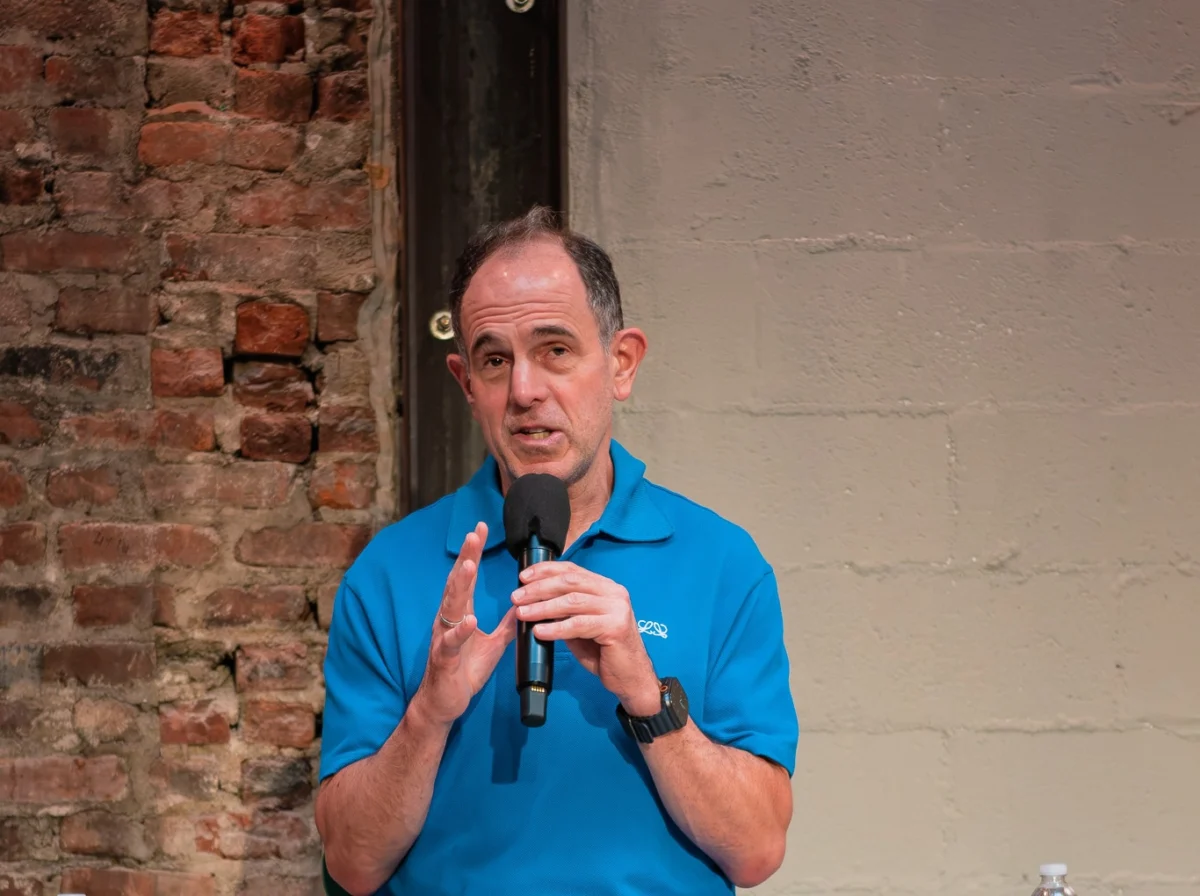
Veteran venture capitalist Keith Rabois, a prominent figure known for his incisive market analysis and deep ties to Silicon Valley, officially confirmed Khosla Ventures’ groundbreaking decision to open its first office outside the traditional confines of Sand Hill Road. The announcement, made during a Thursday night appearance at TechCrunch’s StrictlyVC event in New York’s West Village, marks a significant departure for a firm historically rooted in Menlo Park, California. This strategic expansion into New York City, with an outpost planned for 14th Street, is slated to open its doors this fall, though Rabois, ever the pragmatist, noted with a wry smile, "It’s actually allegedly being built out now. We’ll see. This fall opening date is very vague in my mind." This move is particularly noteworthy given Khosla Ventures’ lean operational model, which has historically foregone even a San Francisco office, underscoring the strategic importance of this new East Coast presence.
Khosla Ventures’ Eastward Expansion: A New Chapter
For nearly a decade and a half, Keith Rabois has been synonymous with Khosla Ventures, a firm co-founded by Sun Microsystems co-founder Vinod Khosla, renowned for its audacious investments in frontier technology and disruptive startups. Khosla Ventures has consistently operated from its Menlo Park base, a decision that has underscored its deep commitment to the Silicon Valley ecosystem. The firm’s historical aversion to even a San Francisco satellite office highlights the magnitude of this New York expansion. It signals not merely a geographical diversification but potentially a broader evolution in the firm’s investment thesis and operational strategy.
The impetus for this eastward shift is multi-faceted, with personal and strategic components intertwining. Rabois himself recently relocated to the East Coast, a personal decision to be closer to his husband, Jacob Helberg, who serves as the Under Secretary of State for Economic Growth, Energy, and the Environment, and their children, currently residing in Washington, D.C. While personal considerations often influence professional trajectories, Rabois’s move appears to have dovetailed seamlessly with Khosla Ventures’ evolving view of the national tech landscape. His presence will anchor the New York office, providing a direct link between the firm’s established Silicon Valley roots and its new East Coast venture.
The New York Office: More Than Just a Satellite
The planned 14th Street location in New York City is designed to be more than just a typical satellite office for Khosla Ventures. While it will house a core group of Khosla investors, including Rabois, its most innovative feature will be an "executive briefing center." This dedicated space is envisioned as a dynamic hub where batches of 10 to 12 portfolio companies will regularly convene to engage directly with Fortune 500 enterprises. Operating four days a week, this center aims to facilitate crucial connections, enabling startups to secure pilots and acquire new customers, thereby accelerating their growth trajectories. Rabois enthusiastically shared, "The portfolio companies love this. They get pilots and customers, and so it’s going to be a very vibrant office because of that."
This model represents a sophisticated approach to value creation beyond mere capital injection. By proactively bridging the gap between innovative startups and established corporate giants, Khosla Ventures is positioning itself as a strategic partner in market development. Such a hands-on, engagement-focused approach could provide a significant competitive advantage for its portfolio companies, particularly in an increasingly crowded venture capital landscape where value-added services are paramount. The location itself, on 14th Street, positions the office strategically within a vibrant commercial and tech corridor, offering accessibility to both emerging tech hubs and established financial institutions.
Navigating New York’s Nuanced Talent Landscape
Rabois’s relocation to the East Coast naturally prompted a critical inquiry: does New York possess the talent density to rival the Bay Area, a region he has spent his career cultivating and recruiting from? His nuanced response offered valuable insights into the distinct characteristics of the East Coast talent pool.
Junior Talent: An Abundance of Emerging Stars
For entry-level and individual contributor roles, Rabois was unequivocally positive. "Individual contributor level, right out of school, absolutely," he affirmed. He pointed to the success of Ramp, the fintech company he has repeatedly backed, as compelling evidence. Ramp’s ability to "tap into right-out-of-school graduates" and build an "extraordinary" critical density of talent, from intern classes onward, underscores the strength of New York’s educational institutions and its appeal to ambitious young professionals. The city boasts a robust ecosystem of top-tier universities, including NYU, Columbia, Cornell Tech, and others, which consistently produce a stream of highly skilled graduates eager to enter the tech and startup sectors. Furthermore, New York’s diverse industry landscape – encompassing finance, media, fashion, and technology – provides varied career paths that attract a broad spectrum of young talent.
Senior Technical Talent: A Persistent Challenge
The picture changes considerably when it comes to senior technical talent. "Senior engineers, architect-level — no, I think that’s a challenge," Rabois conceded. This observation reflects a historical reality where the deepest concentrations of cutting-edge software engineering and hardware development have traditionally resided in Silicon Valley. Decades of specialized research, corporate headquarters, and a dense network of experienced professionals have fostered an unparalleled environment for senior technical leadership in the Bay Area. However, Rabois added a crucial caveat for the "modern age": "Fortunately, maybe in the modern age, you need less of these people per company than you have historically." This suggests that advancements in tooling, cloud infrastructure, and modular software development might be reducing the absolute number of highly specialized senior engineers required for a startup to scale, potentially mitigating New York’s perceived deficit in this specific area.
Senior Executives: The Toughest Nut to Crack
The most significant talent pain point for companies in New York, according to Rabois, lies in recruiting talented senior executives. This challenge, he explained, is less about supply and more about geography and lifestyle. "If you have an in-office culture, most of the more senior people that live and reside in the New York area live outside the city, and the commute in and out of the city for an office environment can be very painful," he observed, drawing on his own experience growing up in a New York commuter suburb. While a 32-minute express train commute might be manageable, many executives reside "two concentric circles further away," making a daily in-office presence onerous.
The high cost of living in New York City also plays a critical role. Rabois noted, "unless they’re very independently wealthy, they really can’t afford to raise a family right in the middle of the city." This forces many executives with families to seek more affordable suburban residences, extending their commutes and impacting work-life balance, especially for companies committed to a five-day-a-week in-office culture. Ramp, for instance, has developed a conscious strategy to "opt out of that problem entirely" by largely avoiding the hiring of senior people and instead "build[ing] from the bottom up, ground up" for the last three years. While this approach can work for some companies, it presents a significant hurdle for those needing experienced leadership in roles like CFO or SVP of sales, where "gravitas and experience" are paramount.
New York’s Ascendancy: Supporting Data and Industry Shifts
Khosla Ventures’ move is not an isolated event but rather indicative of a broader, accelerating trend. It aligns with a growing body of evidence suggesting New York City’s emergence as a formidable tech hub, increasingly challenging Silicon Valley’s long-held dominance.
A pivotal report released by commercial real estate services firm CBRE just weeks prior to Rabois’s announcement provided compelling data. For the first time in 13 years of tracking, New York narrowly surpassed the San Francisco Bay Area in total tech talent headcount. This shift, according to CBRE, has been primarily driven by aggressive hiring for AI talent by financial firms in New York, coinciding with a period of staff reductions among Bay Area tech employers. The report highlighted New York’s diversified economic base, where tech talent is integrated across various sectors—finance, media, fashion, healthcare, and life sciences—making its ecosystem more resilient to downturns in specific tech verticals.
While the CBRE report generated significant discussion, it also met with a degree of skepticism among some New Yorkers at the StrictlyVC event, reflecting the deep-seated historical perception of Silicon Valley’s unassailable lead. One attendee candidly stated, "I heard about that study. I don’t buy it." This sentiment underscores the psychological barrier that needs to be overcome for New York to be universally recognized as a co-equal tech powerhouse, despite the data.
A Growing Club: Other VCs Eye the East Coast
Khosla’s expansion places it in a small but rapidly expanding club of prominent Bay Area venture capital firms establishing or significantly growing their presence in New York. Firms like Sequoia Capital and Andreessen Horowitz (a16z) have maintained New York-based partners for years, albeit typically with a more modest footprint compared to their sprawling Bay Area operations. These early moves often involved dedicated partners focusing on specific sectors like fintech, media, or enterprise software, leveraging New York’s deep industry expertise in these areas.
More recently, firms such as Lightspeed Venture Partners have also expanded their New York operations, recognizing the increasing deal flow and talent pool on the East Coast. While New York-native firms like Insight Partners and Tiger Global have long dominated the late-stage investment landscape in the city, the influx of traditional Silicon Valley giants signals a broader recognition of New York’s maturation across all stages of the startup lifecycle. This trend is driven by several factors:
- Market Diversification: Investors seek to diversify their portfolios geographically and capitalize on unique industry strengths outside of pure software and internet companies.
- Talent Access: As Rabois highlighted, New York offers an unparalleled pool of junior talent and, increasingly, specialized professionals in areas like AI, fintech, and biotech.
- Proximity to Key Industries: New York’s status as a global financial, media, and fashion capital provides unparalleled access to potential customers, partners, and strategic insights for startups in these sectors.
- De-risking Silicon Valley Over-reliance: Some firms may view an East Coast presence as a strategic hedge against potential challenges or perceived insularity within the traditional Silicon Valley ecosystem.
Broader Implications for the Venture Capital Landscape
Khosla Ventures’ decision, spearheaded by a luminary like Keith Rabois, carries significant implications for the broader venture capital landscape and the future geography of tech innovation.
- Validation of NYC as a Tech Hub: This move provides further validation of New York City’s growing stature as a premier tech ecosystem. It signals to founders, talent, and other investors that the city is a viable, even strategic, location for building and scaling impactful technology companies.
- Competitive Dynamics: The increased VC presence in New York will undoubtedly intensify competition for promising deals and top talent. This could lead to more robust funding rounds for NYC-based startups and potentially drive up valuations, while also forcing VCs to differentiate through value-added services, as Khosla’s "executive briefing center" exemplifies.
- Evolution of Investment Strategies: Firms may increasingly adopt hybrid investment models, balancing traditional Bay Area deal flow with opportunities in emerging hubs. This could also lead to a greater emphasis on sector-specific expertise aligned with regional strengths.
- Talent Migration and Development: The presence of more top-tier VCs could attract more senior technical and executive talent to New York, gradually addressing some of the challenges Rabois identified. It might also encourage more local educational and training programs to cater to the evolving demands of the tech industry.
- A More Distributed Future: Ultimately, this trend points towards a more distributed future for technology innovation and venture capital. While Silicon Valley will likely remain a critical nucleus, other hubs like New York are poised to grow in influence, creating a more diversified and resilient national tech economy.
Khosla Ventures’ new New York office is more than just a physical space; it is a tangible symbol of a strategic reorientation within the venture capital world. Led by Keith Rabois, this eastward expansion reflects a pragmatic response to evolving talent dynamics, market opportunities, and the undeniable rise of New York City as a global tech powerhouse. The coming years will reveal the full impact of this pivotal shift, but for now, the message is clear: the epicenter of innovation is expanding.
