

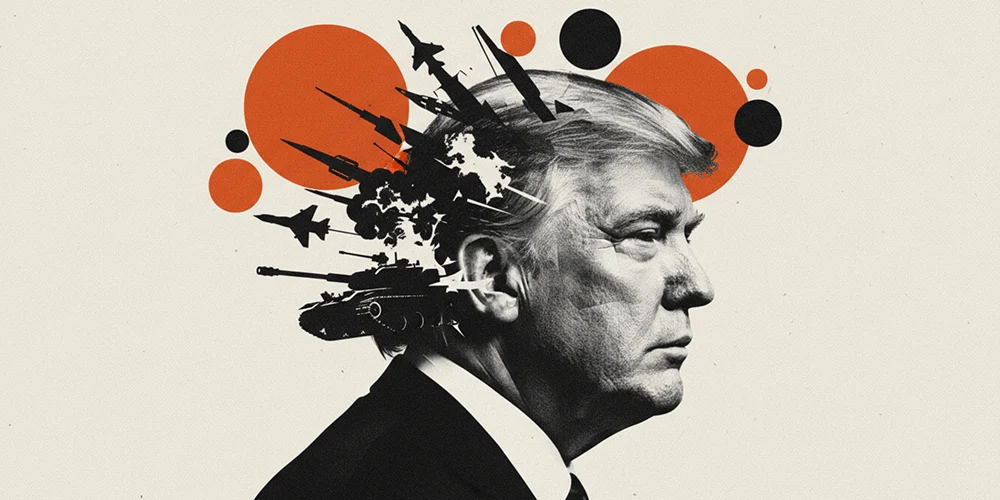
In a wide-ranging press conference held at the White House, then-U.S. President Donald Trump delivered sharp criticisms of Canada’s trade practices, asserted his perspective on relations with Russian President Vladimir Putin, and issued a stern warning to Iran regarding its geopolitical standing. The remarks underscored the administration’s assertive stance on trade renegotiations, particularly with North American partners, and its complex approach to major global powers and critical regions. Trump insisted that Canada had long been exploiting the United States on trade, expressing a desire for significant changes in their bilateral economic relationship, while also touching upon the crucial flow of oil through the Strait of Hormuz.
Intensifying Trade Rhetoric Against Canada
During the conference, President Trump reiterated his long-standing grievances against Canada, labeling it as a nation that has "been ripping the U.S. off on trade for a long time." His comments pointed to a deep dissatisfaction with the existing trade framework, likely referring to the North American Free Trade Agreement (NAFTA), which his administration was actively seeking to renegotiate or replace. Trump’s frustration was particularly evident in his assertion that "Canada wants to be treated like a state, but not a state," a somewhat cryptic remark that analysts interpreted as suggesting Canada desires the economic benefits and seamless integration akin to a U.S. state, without fully embracing what Trump viewed as reciprocal responsibilities or concessions in trade talks. This implies a perceived imbalance where Canada seeks preferential access while maintaining full sovereign control over its own trade policies and industries.
A significant point of contention raised by the President was the automotive sector. "We don’t want Canada to make cars for the U.S.," Trump declared, indicating a desire to localize automotive production within the United States. He threatened the imposition of "tariffs on (Canadian) cars at a substantial level," a move that would have profound implications for the highly integrated North American auto industry. Trump concluded his remarks on Canada by stating, "Canada is the worst to deal with on trade," a characterization that highlighted the significant diplomatic and economic friction between the two long-standing allies. These comments came amidst ongoing, often fraught, negotiations to revise NAFTA, a cornerstone of North American economic relations for nearly three decades.
The Evolving US-Canada Trade Landscape: A Chronology of Disputes
The trade disputes between the U.S. and Canada did not emerge in a vacuum but were the culmination of shifting economic priorities and a period of intense renegotiation. The original NAFTA, signed in 1994, eliminated most tariffs among the U.S., Canada, and Mexico, creating one of the world’s largest free-trade zones. However, from his 2016 presidential campaign, Donald Trump frequently criticized NAFTA as a "disaster" and "the worst trade deal ever made," promising to either renegotiate it or withdraw the U.S. from the agreement.
Formal negotiations to modernize NAFTA began in August 2017. Throughout the negotiation period, which spanned over a year, the U.S. maintained a firm stance, demanding significant changes, particularly in automotive rules of origin, dairy market access, and dispute resolution mechanisms. The President’s remarks at the press conference reflected the heightened tensions during these talks. In March 2018, the Trump administration imposed Section 232 tariffs of 25% on steel imports and 10% on aluminum imports, citing national security concerns. These tariffs were applied globally, including to Canada, a major supplier of both metals to the U.S. Canada swiftly retaliated with equivalent tariffs on U.S. goods, including steel, aluminum, and a range of consumer products, escalating the trade spat.
The automotive sector became a critical flashpoint. The U.S. proposed stricter rules of origin, demanding a higher percentage of vehicle content be made in North America to qualify for tariff-free treatment. The threat of auto tariffs loomed large, with the U.S. Department of Commerce launching an investigation under Section 232 into automobile imports, raising the prospect of tariffs up to 25% on imported cars and parts, which would severely impact Canadian auto manufacturers and supply chains. These threats, including the one reiterated by Trump in his press conference, were a key leverage point in the negotiations. Ultimately, after protracted negotiations, the United States-Mexico-Canada Agreement (USMCA) was reached in September 2018, though the President’s public statements continued to reflect underlying frustrations even after the deal’s initial framework was established, prior to its ratification and full implementation.
Economic Dimensions of the US-Canada Trade Relationship
The economic ties between the United States and Canada are among the strongest and most integrated in the world. Annually, bilateral trade in goods and services typically exceeds US$600-700 billion, making Canada the largest single export market for U.S. goods and services. Millions of jobs in both countries are directly and indirectly dependent on this robust trade relationship.
The automotive sector, in particular, epitomizes this integration. North American automotive production operates on a highly complex, cross-border supply chain, where parts and components often cross the U.S.-Canada border multiple times before a final vehicle is assembled. In 2017, for instance, two-way trade in automotive products between the U.S. and Canada amounted to over US$100 billion. Canadian automotive plants produce vehicles for the North American market, many of which are exported to the U.S., while U.S. plants similarly rely on Canadian-made parts. The imposition of "substantial" tariffs on Canadian-made cars, as threatened by President Trump, would have far-reaching consequences. Economists projected that such tariffs could lead to increased vehicle prices for American consumers, reduced sales, significant job losses in both the U.S. and Canada, and a major disruption to established supply chains. The Canadian automotive industry, which directly employs tens of thousands and supports many more indirectly, would face severe challenges, potentially leading to plant closures and reduced investment.
From Canada’s perspective, the trade relationship is largely balanced, with Canada often running a modest trade surplus with the U.S. in goods, offset by a U.S. surplus in services. Canadian officials have consistently argued that the trade relationship is mutually beneficial, supporting millions of jobs on both sides of the border, and that accusations of "ripping off" are unfounded.
Canadian Reactions and Diplomatic Responses
Following President Trump’s remarks, Canadian officials were expected to respond with a mix of diplomatic firmness and a reiteration of Canada’s commitment to fair trade. Historically, Prime Minister Justin Trudeau and then-Foreign Minister Chrystia Freeland have consistently defended Canada’s trade practices, emphasizing its role as a reliable and crucial trading partner for the U.S. They have highlighted the deep integration of the two economies and the shared benefits derived from free trade.
In previous instances of U.S. trade aggression, Canadian leaders have expressed disappointment but have also affirmed their readiness to defend Canadian industries and workers through proportionate retaliatory measures, as seen with the steel and aluminum tariffs. Industry associations, particularly in the automotive sector, would likely voice deep concern over the prospect of auto tariffs, emphasizing the detrimental impact on jobs, investment, and consumer costs in both countries. Canadian officials would likely continue to advocate for a rules-based trading system and underscore the importance of the USMCA for North American economic stability, while firmly rejecting any notion that Canada is "the worst to deal with on trade."
Navigating Relations with Russia and the Strait of Hormuz
Beyond trade, President Trump also addressed the complex geopolitical landscape involving Russia and Iran. Regarding Russian President Vladimir Putin, Trump stated that Putin "will not attack NATO territory," a reassuring assertion amidst ongoing concerns about Russian aggression in Eastern Europe and its interference in Western democracies. This statement underscored Trump’s unique approach to U.S.-Russia relations, often characterized by a willingness to engage directly with Putin despite widespread criticism from political opponents and intelligence communities. The President further noted that he "has had good talks with Putin," signaling an ongoing diplomatic channel and personal rapport that diverged from the more confrontational stance often adopted by previous U.S. administrations.
However, Trump’s remarks also hinted at potential complexities in the U.S.-Russia relationship, particularly concerning Iran. When pressed on "punishing Putin for Iran business," Trump cryptically responded, "Who says I’m not," suggesting that punitive measures or strategic pressure might be in play, even if not publicly disclosed. This indicated a nuanced position where direct engagement with Putin did not necessarily preclude actions aimed at countering Russian influence or activities deemed contrary to U.S. interests, especially in areas like Iran where U.S. and Russian policies diverge significantly.
In the context of the Middle East, Trump also commented on the Strait of Hormuz, stating that "Russia has behaved quite well with the Strait of Hormuz." This observation implied a degree of Russian cooperation or at least non-interference in the critical maritime chokepoint, despite Russia’s close ties with Iran. Trump then emphasized the sheer volume of global trade passing through the strait: "Millions of barrels of oil are coming through Hormuz daily." This statement, while factual, served to highlight the strategic importance of the waterway and implicitly challenged any threats by Iran to disrupt its flow.
Geopolitical Backdrop: US-Russia-Iran Dynamics
The President’s comments on Russia and Iran are set against a backdrop of intricate and often tense geopolitical relationships. U.S.-Russia relations under the Trump administration were marked by controversy, including allegations of Russian interference in the 2016 U.S. election and Trump’s often conciliatory tone towards Putin. Despite this, the U.S. maintained sanctions against Russia for its annexation of Crimea and its actions in Ukraine. Russia, for its part, has been a key player in the Middle East, notably through its military intervention in Syria, where it supports the Assad regime and maintains close ties with Iran.
The U.S. relationship with Iran, meanwhile, had deteriorated significantly following Trump’s decision in May 2018 to withdraw from the Joint Comprehensive Plan of Action (JCPOA), the international nuclear agreement with Iran. The U.S. subsequently reimposed and expanded a broad array of sanctions aimed at crippling Iran’s economy and forcing it to renegotiate a new, more comprehensive deal. This "maximum pressure" campaign led to heightened tensions in the Persian Gulf, with Iran frequently threatening to disrupt oil shipments through the Strait of Hormuz in response to U.S. sanctions targeting its oil exports.
The Strait of Hormuz: A Vital Artery for Global Oil Trade
The Strait of Hormuz is one of the world’s most strategically important chokepoints for oil transit. Situated between Oman and Iran, it connects the Persian Gulf with the Arabian Sea and the open ocean. Approximately one-fifth of the world’s total petroleum liquids consumption, roughly 21 million barrels per day, passed through the Strait in 2018, according to the U.S. Energy Information Administration (EIA). This includes nearly all the oil exports from Saudi Arabia, Iran, Iraq, Kuwait, Qatar, and the United Arab Emirates.
Any significant disruption to shipping through the Strait of Hormuz, whether due to conflict, sabotage, or intentional closure, would have catastrophic consequences for the global economy, sending oil prices soaring and potentially triggering a worldwide recession. The U.S. and its allies maintain a naval presence in the region to ensure freedom of navigation and deter any attempts to block the Strait, underscoring the critical importance of its uninterrupted flow for global energy security. Trump’s emphasis on the "millions of barrels of oil" passing through daily served as a stark reminder of this vulnerability and the U.S. commitment to keeping the waterway open.
Iran Under Pressure: "They’re in Big Trouble"
President Trump’s direct statement that Iran is "in big trouble" reflected the U.S. administration’s aggressive posture towards Tehran. The "maximum pressure" campaign involved not only the reinstatement of nuclear-related sanctions but also new sanctions targeting Iran’s financial sector, shipping, and crucially, its oil industry. The goal was to severely curtail Iran’s revenue streams, thereby limiting its ability to fund regional proxy groups and its ballistic missile program.
The sanctions had a significant impact on Iran’s economy, leading to a sharp decline in oil exports, currency devaluation, and rising inflation. International Monetary Fund (IMF) projections indicated a substantial contraction of Iran’s economy. While the U.S. aimed to bring Iran to the negotiating table, Tehran consistently rejected direct talks under the shadow of sanctions, often portraying the U.S. policies as economic warfare. The phrase "They’re in big trouble" encapsulated the administration’s belief that its strategy was effectively weakening the Iranian regime and compelling it to reconsider its regional and nuclear ambitions.
Broader Implications for Global Trade and Geopolitics
President Trump’s press conference highlighted the multi-faceted challenges facing the U.S. on both the trade and geopolitical fronts. The aggressive rhetoric against Canada, coupled with threats of substantial tariffs, created significant uncertainty for North American supply chains and raised concerns about the future of the continent’s integrated economy. While the USMCA was eventually ratified, such statements underscored the potential for trade disputes to resurface or for new tensions to emerge, impacting investor confidence and regional stability. The approach to Canada also sent a broader signal to other U.S. trading partners about the administration’s readiness to use tariffs as a tool to achieve its trade objectives, potentially leading to further global trade frictions.
On the geopolitical front, Trump’s remarks on Russia and Iran underscored the delicate balance of power in the Middle East and the complexities of great power relations. His nuanced stance on Putin, combining engagement with hints of punitive measures, reflected a foreign policy approach that defied traditional alignments. The firm warning to Iran, backed by the implicit threat of maintaining open sea lanes in the Strait of Hormuz, signaled a continued commitment to confront what the U.S. viewed as Iranian destabilizing activities, with significant implications for regional security and global energy markets.
These pronouncements collectively contribute to what is known in financial markets as "risk sentiment." When leaders make statements that introduce uncertainty, such as threats of trade tariffs or increased geopolitical tensions, it often leads to a "risk-off" environment. In such scenarios, investors become more cautious, moving capital away from riskier assets and into perceived safe havens. The Canadian Dollar (CAD), being a commodity-linked currency, is particularly sensitive to trade relations and global growth prospects. Negative rhetoric from the U.S. President, especially regarding tariffs on Canadian auto exports, could exert downward pressure on the CAD, as it signals potential economic headwinds for Canada. Conversely, the U.S. Dollar (USD), the Japanese Yen (JPY), and the Swiss Franc (CHF) often strengthen in "risk-off" periods as investors seek their stability. Similarly, any perceived threat to oil supplies from the Strait of Hormuz could cause oil prices to spike, affecting global energy markets and further influencing risk sentiment. The President’s statements, therefore, had immediate and far-reaching implications not only for diplomatic relations and trade policy but also for global financial markets, underscoring the interconnectedness of geopolitics and the world economy.
