

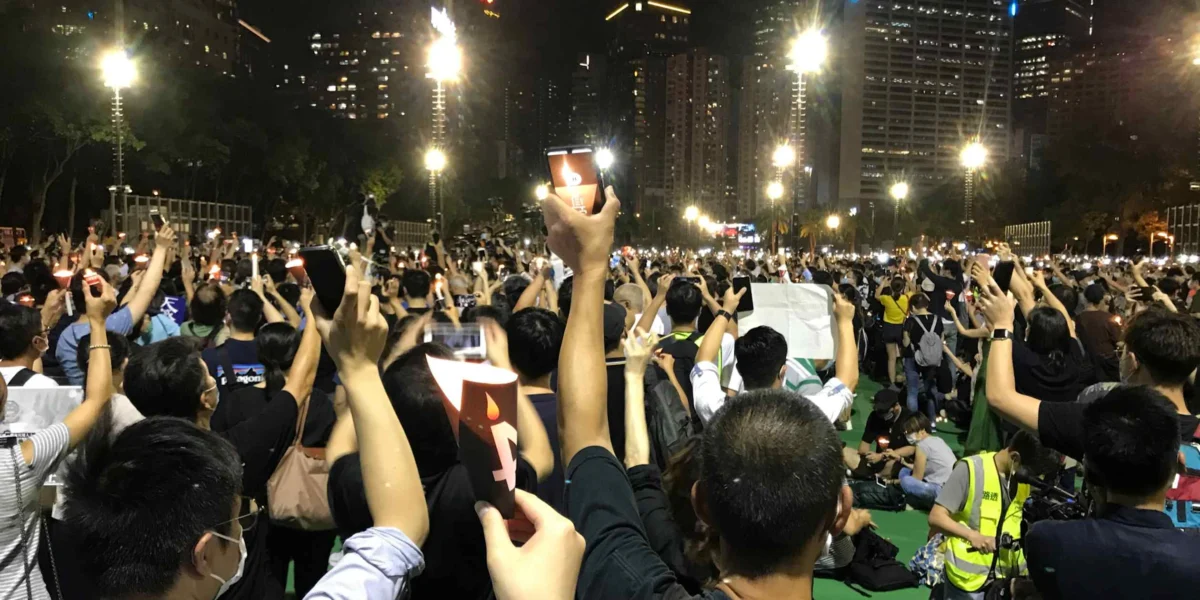
A Hong Kong court on Friday convicted former leaders of a civil group that held annual candlelight vigils in the city for victims of the June 4, 1989, Tiananmen Square crackdown in Beijing. The convictions, handed down under the Beijing-imposed national security law, signal a further erosion of freedoms in the semi-autonomous city and are seen internationally as a potent symbol of the escalating squeeze on dissent. The defendants, who have been at the forefront of commemorating the tragic events of 1989 for decades, now face potential prison sentences of up to 10 years, a stark reminder of the far-reaching implications of the security legislation enacted in June 2020.

The End of an Era: The Verdict and Its Immediate Aftermath
The verdict marks a significant turning point for Hong Kong’s civil society and its ability to publicly commemorate sensitive historical events. For years, the Victoria Park candlelight vigil, organized by the now-disbanded Hong Kong Alliance in Support of Patriotic Democratic Movements in China, was the largest annual gathering of its kind in the world, a defiant act of remembrance in the shadow of mainland China’s censorship. The conviction of its former leaders, including prominent activists, underscores the authorities’ determination to silence any form of dissent or perceived challenge to the established political order.

The exact sentences for the convicted individuals are yet to be announced, but the severity of the potential penalties under the national security law has sent a clear message. This legislation, ostensibly aimed at quelling secession, subversion, terrorism, and collusion with foreign forces, has been widely criticized by human rights organizations and Western governments for its broad scope and its use to suppress political opposition. The case of the Tiananmen vigil organizers is viewed as a crucial test of the law’s application to acts of remembrance and expression.

Background: The Tiananmen Square Crackdown and Hong Kong’s Unique Role
The June 4, 1989, crackdown in Beijing saw the People’s Liberation Army use lethal force to suppress pro-democracy protests that had gripped Tiananmen Square for weeks. The exact death toll remains a closely guarded secret by the Chinese government, but estimates range from several hundred to thousands. The event sent shockwaves across the globe and led to widespread international condemnation.

In Hong Kong, a city with a distinct political and legal system under the "one country, two systems" principle, the Tiananmen Square massacre became a deeply ingrained symbol of resistance and a call for democratic reform in mainland China. For over three decades, Hong Kongers, through their resilience and commitment to freedom of expression, kept the memory of June 4 alive. The annual vigil in Victoria Park was a powerful testament to this commitment, drawing hundreds of thousands of participants in its heyday. It was a space where citizens could openly mourn, express solidarity, and demand accountability from the Chinese Communist Party, a freedom unthinkable on the mainland.

A Chronology of Suppression: From Vigil to Conviction
The path leading to Friday’s convictions has been a gradual but relentless process of curtailing freedoms in Hong Kong.

- June 4, 1989: The Tiananmen Square massacre occurs in Beijing.
- 1990 onwards: The Hong Kong Alliance begins organizing annual candlelight vigils in Victoria Park to commemorate the victims. These vigils become increasingly significant as a symbol of Hong Kong’s unique status.
- June 30, 2020: China enacts the national security law for Hong Kong, just before its official implementation on July 1. The law dramatically expands the powers of the authorities and introduces sweeping new offenses.
- June 4, 2020: The last large-scale candlelight vigil for Tiananmen victims is held in Victoria Park. Authorities later claim it was due to COVID-19 restrictions, though critics argue this was a pretext to dismantle public commemorations.
- June 2021: Hong Kong police arrest several former leaders and members of the Hong Kong Alliance on suspicion of inciting subversion under the national security law. The organization itself is subsequently forced to disband.
- August 21, 2026: A Hong Kong court delivers its verdict, convicting former leaders of the Alliance.
The disbandment of the Hong Kong Alliance was a significant blow to the city’s pro-democracy movement. Its assets were frozen, and its members faced intense scrutiny. The arrests and subsequent trials of its former leaders were seen as a direct assault on the memory of June 4 and the right to commemorate it.

Supporting Data: The Scale of Past Vigils and the Reach of the Security Law
The sheer scale of past Tiananmen vigils in Hong Kong provided a stark contrast to the current climate. In 2008, an estimated 150,000 people attended, according to organizers. By 2019, the number had swelled to an astonishing 1.8 million, according to some estimates, reflecting a peak of public engagement and defiance. These figures highlight the deep resonance the Tiananmen Square massacre held for Hong Kong society and the significant numbers who were willing to publicly express their dissent.

The national security law, by comparison, operates with a swift and often opaque judicial process. Since its inception, dozens of individuals have been arrested and charged under its provisions, with many facing lengthy pre-trial detention. The law’s broad interpretation has allowed authorities to prosecute a wide range of activities, from political speeches and protests to online posts and the operation of civil society groups. The convictions of the Tiananmen vigil organizers fit into this broader pattern of the law’s application to silence perceived opposition.

Official Responses and International Reactions
While specific official statements regarding this particular verdict were not immediately available in the provided snippet, it is highly probable that Hong Kong and Beijing authorities would frame the convictions as a necessary step to uphold national security and maintain social order. They would likely reiterate that the charges are based on evidence of illegal activities and not on the act of remembrance itself, a common defense employed when facing criticism over national security law prosecutions.

Internationally, the convictions are expected to draw strong condemnation from human rights organizations, Western governments, and diaspora groups. The United States, the United Kingdom, and the European Union have consistently voiced concerns about the erosion of freedoms in Hong Kong since the imposition of the national security law. Statements are likely to emphasize the importance of freedom of expression and assembly, and to criticize the perceived politicization of the judiciary. These reactions highlight the growing international isolation of Beijing’s approach to Hong Kong and the ongoing debate over the city’s future.

Broader Impact and Implications: A Chilling Effect on Freedoms
The conviction of former Tiananmen vigil organizers under the national security law carries profound implications for Hong Kong and beyond.

- Chilling Effect on Expression: The most immediate impact is the further chilling effect on freedom of expression and assembly in Hong Kong. Individuals and organizations will likely become more hesitant to engage in any form of public dissent or commemoration that could be construed as challenging Beijing’s narrative, fearing similar legal repercussions.
- Erosion of Historical Memory: The ability to publicly remember sensitive historical events like the Tiananmen Square massacre is a crucial aspect of a free society. By prosecuting those who organized these commemorations, authorities are effectively attempting to erase or sanitize this historical memory, aligning it with the official narrative of the Chinese Communist Party.
- Undermining "One Country, Two Systems": These convictions are seen by many as further evidence of the erosion of the "one country, two systems" principle. The autonomy and freedoms that were guaranteed to Hong Kong for 50 years after its handover to China are increasingly being subsumed under mainland Chinese law and political control.
- International Scrutiny: The case will undoubtedly keep Hong Kong in the international spotlight, with ongoing scrutiny of its human rights record and adherence to the rule of law. This could lead to further diplomatic pressure and potentially impact Hong Kong’s status as a global financial center.
- Symbolic Victory for Beijing: For Beijing, the convictions represent a symbolic victory in its campaign to assert its authority over Hong Kong and to suppress any lingering dissent. It demonstrates their willingness to use legal means to enforce their political agenda, even in areas previously considered sacrosanct.
The verdict against the former leaders of the Tiananmen vigil organizers is more than just a legal judgment; it is a potent symbol of a city grappling with the dramatic transformation of its political landscape. The echoes of Tiananmen Square, once amplified by the unique freedoms of Hong Kong, now face the silencing force of a national security law that reshapes the boundaries of acceptable discourse and remembrance. The international community will be watching closely as Hong Kong navigates this new reality, a reality where the memory of a tragic past is increasingly subject to the dictates of the present.
