

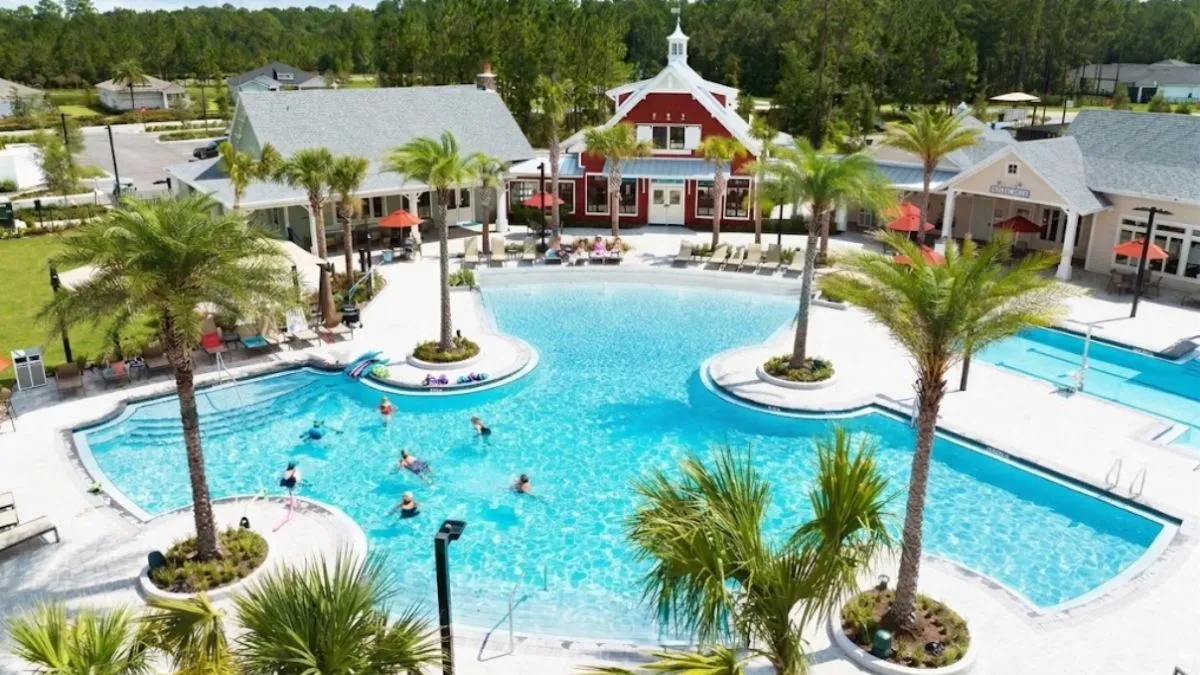
Dream Finders Homes has officially announced a strategic evolution of its "Reverie" active adult brand, signaling a pivot toward a broader demographic by introducing non-age-restricted resort-style communities. This move, designed to capture a burgeoning segment of "active empty nesters" and younger Gen X buyers, reflects a significant shift in the residential construction industry. By decoupling the resort-style lifestyle from the traditional 55-plus age mandate, Dream Finders aims to serve a population that desires high-end amenities and community connection without the legal constraints of age-restricted zoning.
David Smith, Vice President of Active Adult at Dream Finders Homes, confirmed that while the core 55-plus active adult offering will remain a cornerstone of the company’s portfolio, the new brand extension—dubbed Reverie Resort Lifestyle—is essential for capturing an underserved market. This segment primarily consists of individuals in their 50s and early 60s who may still be active in the workforce but have reached a stage in life where their housing needs have shifted away from traditional family-oriented suburban models toward luxury, low-maintenance, and social-centric living.
The Strategic Pivot to "Age-Targeted" Housing
The decision by Dream Finders Homes, currently ranked 12th in the nation and poised to enter the top 10 following its acquisition of Beazer Homes, aligns with a wider industry trend often referred to as "age-targeted" rather than "age-restricted" housing. This strategy allows builders to market to a specific lifestyle preference without excluding younger buyers or families, thereby widening the potential customer pool and mitigating the risks associated with narrow demographic targeting.
This move follows similar successful expansions by industry giants. PulteGroup recently introduced the "Del Webb Explore" brand, a non-age-restricted offshoot of its legendary Del Webb active adult line, specifically focusing on the 45-to-60-year-old cohort. Similarly, Taylor Morrison’s "Esplanade" brand and Lennar’s "Lifestyle" series have successfully blurred the lines between traditional family housing and senior living by focusing on "resort-at-home" experiences.
The logic behind the shift is rooted in demographic data. Gen X, the generation born between 1965 and 1980, is currently entering its peak earning years and accumulating record levels of home equity. According to data from LendingTree, Gen X homeowners held approximately $14.14 trillion in home equity as of late last year. This financial strength makes them a highly resilient buyer segment, capable of navigating a high-interest-rate environment that has sidelined many first-time millennial buyers.
Evolution of the Reverie Brand
The Reverie brand was established in 2018 when David Smith was brought on board to spearhead Dream Finders’ entry into the active adult sector. At the time, the company had little experience serving the 55-plus market. The name "Reverie," intended to evoke a state of being pleasantly lost in one’s thoughts or dreams, was chosen to contrast with the more utilitarian branding of traditional retirement communities.
Smith noted that through several years of market observation, the company identified a gap in the market. "The average age in our active adult communities is closer to 64 or 65," Smith explained. While that segment remains the fastest-growing in the U.S. due to the "Silver Tsunami" of aging Baby Boomers, it leaves out a younger, highly active group of empty nesters. These individuals often find themselves in a "transitional" phase—their children have left for college or started careers, but the parents are not yet ready to move into a community where the majority of residents are a decade or more older than they are.
By removing the age restriction, Dream Finders can offer the "Reverie experience"—which emphasizes social connectivity and wellness—to a 52-year-old executive or a 58-year-old consultant who still values a vibrant, amenity-rich environment but does not want to live in a "retirement home."
Amenity-Driven Development: The New Country Club
The Reverie Resort Lifestyle communities will mirror the physical infrastructure of their age-restricted counterparts but will be programmed to appeal to a more diverse, though still mature, resident base. The architectural philosophy focuses on "right-sizing" rather than just "down-sizing," offering high-end finishes, open floor plans conducive to entertaining, and low-maintenance exteriors.
The amenity package is designed to foster what Smith calls a "country-club feel" without the stuffiness of traditional private clubs. Key features include:
- Modern Social Hubs: Instead of formal dining rooms that often go underutilized, Reverie communities frequently feature food truck courts. These areas are designed with permanent seating, grassy lawns, and utility hookups, allowing for a rotating variety of local culinary options and live music events.
- Wellness and Fitness: Beyond standard gyms, the communities incorporate fitness studios for yoga and Pilates, golf simulators, and resort-style pools with cabanas.
- Outdoor Connectivity: Smith emphasized that walking and biking trails remain the number one requested amenity across all mature demographic segments. Consequently, Reverie developments are designed with high walkability scores and direct access to regional trail networks.
- Social Programming: Clubhouses are staffed to facilitate interest-based clubs, billiards tournaments, and educational classes, ensuring that the "lifestyle" aspect of the brand is active rather than passive.
The first Reverie Resort Lifestyle community is slated for Parker, Colorado. This location was chosen specifically for its proximity to Denver’s extensive trail systems and its appeal to active Gen X professionals who prioritize outdoor recreation. "Parker is an ideal proving ground," Smith said. "It’s a market with an underserved consumer who wants the resort lifestyle but doesn’t necessarily need or want the 55-plus label."
Financial Resilience and Market Implications
From a corporate perspective, the expansion into the lifestyle segment is a move toward higher-margin stability. Active adult and lifestyle buyers are traditionally more "recession-proof" than the general market. Because many of these buyers are selling long-held family homes with significant equity, they are less sensitive to mortgage rate fluctuations.
Industry analysts point out that while the broader housing market has struggled with affordability, the active adult segment has shown remarkable resilience. In recent earnings calls, Taylor Morrison CEO Sheryl Palmer noted that the company’s Esplanade brand generates "superior home prices and gross margins" compared to the rest of the business. Similarly, PulteGroup recently announced plans to increase the share of its housing starts dedicated to Del Webb communities from 20% to 25%, citing the segment’s strong performance.
For Dream Finders Homes, the move is also a play for land-use efficiency. By integrating Reverie communities within larger master-planned communities (MPCs), the builder can offer a "multi-generational" ecosystem. This allows empty nesters to live in an amenity-rich enclave just minutes away from their children and grandchildren who might live in a standard Dream Finders family subdivision within the same MPC.
Broader Economic Context and the Beazer Acquisition
The expansion of the Reverie brand comes at a pivotal time for Dream Finders Homes. The company’s recent move to acquire Beazer Homes is a transformative step that will significantly increase its national footprint and inventory. Integrating a specialized, high-margin lifestyle brand like Reverie into the broader Beazer-Dream Finders portfolio provides the combined entity with a powerful tool to compete with top-five builders like D.R. Horton and Lennar.
As homebuilder margins face pressure from rising labor costs and land prices, the ability to sell a "lifestyle" rather than just a "structure" becomes a key differentiator. The Reverie Resort Lifestyle brand allows Dream Finders to command a premium price point by offering a curated social environment—a product that is harder for smaller, local builders to replicate.
Furthermore, the focus on Gen X is a calculated long-term bet. As this generation moves into the "active adult" category over the next decade, Dream Finders will already have an established brand identity that resonates with their specific aesthetic and social preferences.
Conclusion: The Future of the Lifestyle Segment
The launch of Reverie Resort Lifestyle represents a maturation of the American housing market. It acknowledges that "active adult" is no longer a monolithic category defined solely by age, but rather a mindset defined by a desire for connection, wellness, and luxury.
As David Smith summarized, the goal is to remain flexible. "If the market tells us it should be 55-plus age-restricted, we’re going to do age-restricted because that’s where the buyer pool is deepest in certain areas. But sometimes, the market wants the resort lifestyle without the age gate. This brand extension gives us the agility to meet the consumer wherever they are."
With the first project in Parker, Colorado, serving as a bellwether, the industry will be watching closely to see how effectively the "lifestyle" label can attract the affluent Gen X buyer. If successful, it could signal a permanent shift in how master-planned communities are designed, moving away from rigid age-segregation toward a more fluid, amenity-based approach to community building.
