

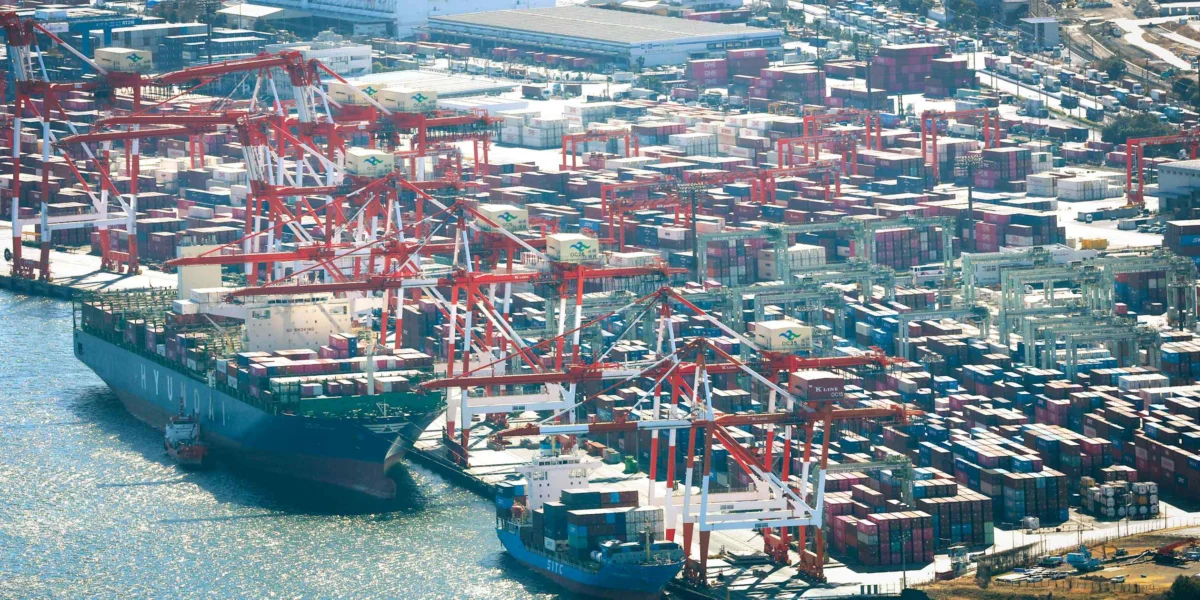
TOKYO – Japan’s trade deficit widened in July, marking the third consecutive month of negative trade balance, as a significant surge in imports outpaced the steady, albeit slower, growth in exports. Official data released on Thursday revealed that imports climbed by a substantial 28% year-on-year, a stark contrast to the export value increase, which extended for the eleventh consecutive month but at a more moderate pace. This divergence underscores a growing imbalance in Japan’s international trade, raising concerns about its impact on the domestic economy and the yen’s stability.

Import Boom Drives Trade Imbalance
The robust expansion of imports in July, reaching a significant percentage increase, signals a strong demand for foreign goods and materials within Japan. While the specific breakdown of import categories was not detailed in the initial release, economists point to several potential drivers. A key factor is likely the sustained recovery in domestic consumption and industrial production, which necessitates a greater inflow of raw materials, intermediate goods, and finished products. Additionally, a weaker yen in preceding periods could have made imports more expensive in yen terms, contributing to the higher value of imported goods even if the volume increase was less pronounced.
The surge in imports has directly contributed to the widening trade deficit, a situation that has persisted through June and July. This deficit represents the amount by which the value of goods and services imported into Japan exceeds the value of its exports. While a trade deficit is not inherently detrimental and can sometimes reflect strong domestic investment and consumption, a prolonged and widening deficit can exert downward pressure on the national currency, increase foreign debt, and potentially signal a loss of competitiveness in certain export sectors.

Exports Show Resilience, but Lag Behind Imports
Despite the growing deficit, Japan’s export sector continues to demonstrate a degree of resilience. The eleventh consecutive month of export growth indicates that Japanese industries are still finding markets for their products abroad. This sustained expansion is a positive sign, reflecting the underlying strength and global demand for Japanese manufactured goods, automobiles, and advanced technology. However, the rate of export growth, while positive, has been outpaced by the rapid ascent of imports, leading to the current trade imbalance.
Several factors are likely contributing to the export performance. Global economic recovery, particularly in key trading partners, provides a consistent demand for Japanese goods. Furthermore, ongoing innovation and high-quality manufacturing standards continue to give Japanese products a competitive edge in many international markets. Yet, the comparative lag in export growth compared to import growth suggests that either global demand for Japanese exports is not growing as rapidly as Japan’s domestic appetite for foreign goods, or that Japanese exporters are facing increasing challenges in terms of price competitiveness or market access.

Historical Context and Chronology of Trade Trends
The current trade deficit follows a period of more balanced trade and, at times, significant trade surpluses for Japan. Historically, Japan’s export-driven economic model has been a cornerstone of its post-war prosperity. The nation became a global powerhouse in manufacturing, particularly in sectors like electronics, automobiles, and heavy machinery. However, in recent years, several factors have influenced this dynamic.
The Fukushima Daiichi nuclear disaster in 2011 led to a temporary surge in energy imports as Japan temporarily shut down its nuclear power plants. This event, along with shifts in global supply chains and the rise of new manufacturing hubs, began to alter Japan’s trade patterns. The depreciation of the yen in the mid-2010s, while intended to boost exports, also contributed to higher import costs. More recently, the COVID-19 pandemic and its subsequent global supply chain disruptions have created volatility in both import and export flows.

The data for July represents a continuation of a trend that has seen trade deficits become more frequent in recent months. This shift from consistent surpluses to recurring deficits warrants careful monitoring by policymakers and economic analysts.
Supporting Data and Economic Indicators
To provide a more comprehensive understanding, it is crucial to examine related economic indicators that might shed light on the underlying causes of this trade imbalance. For instance, data on commodity prices, particularly for energy and raw materials, would reveal the extent to which global price fluctuations are impacting the import bill. Information on the volume of trade, not just its value, would help distinguish between genuine increases in demand and price-driven inflation of imports.

Furthermore, analysis of Japan’s current account balance, which includes not only trade in goods but also services, income, and current transfers, would offer a broader perspective on the country’s overall international financial position. A widening trade deficit could be partially offset by surpluses in other components of the current account, but a persistent deficit across the board would be a more significant concern.
Official Responses and Expert Analysis
While specific official statements regarding the July trade figures were not immediately available in the initial report, it is reasonable to infer that the Ministry of Economy, Trade and Industry (METI) and the Bank of Japan (BOJ) will be closely scrutinizing these numbers. Policymakers typically react to sustained trade imbalances with a range of tools. If the deficit is driven by a strong domestic economy, this might be viewed as a sign of healthy demand. However, if it is perceived to be a symptom of declining export competitiveness or an unsustainable reliance on imports, measures to support exporters or manage currency fluctuations might be considered.

Economists and financial analysts have already begun to weigh in on the implications of the widening deficit. Some have expressed concerns about the potential for further depreciation of the yen, which could increase the cost of living for Japanese consumers and businesses relying on imported goods. Others suggest that the surge in imports might reflect a positive economic outlook, with businesses investing in inventory and production capacity in anticipation of future demand. The prevailing sentiment often hinges on the sustainability of the import surge and the underlying drivers of export performance.
Broader Impact and Implications for the Japanese Economy
The persistent trade deficit has several potential ramifications for the Japanese economy.

Currency Stability: A sustained deficit can put downward pressure on the yen. A weaker yen makes imports more expensive, potentially fueling inflation and reducing the purchasing power of consumers. Conversely, it can make Japanese exports cheaper, which might eventually help to rebalance trade, but this effect can be slow and is dependent on global demand and price elasticity.
Inflationary Pressures: As mentioned, a weaker yen and higher import costs can contribute to imported inflation. This could complicate the Bank of Japan’s efforts to achieve its inflation targets and potentially necessitate a review of its monetary policy stance.

Competitiveness and Industrial Policy: The widening gap between import growth and export growth could signal challenges for Japanese industries in maintaining their global market share. This may prompt discussions about industrial policy, focusing on supporting innovation, enhancing productivity, and addressing any structural impediments to export growth.
Fiscal Implications: While the trade balance is distinct from the government’s fiscal balance, persistent current account deficits can, over the long term, affect a nation’s net international investment position.

Consumer Spending and Investment: The strong import figures, if driven by robust domestic demand, can be seen as a positive indicator of consumer confidence and business investment. However, the overall impact will depend on whether this demand can be met sustainably and at a reasonable cost.
In conclusion, Japan’s July trade data paints a complex picture of an economy grappling with a significant import surge that is currently overshadowing export growth, leading to a widening trade deficit. While the resilience of exports is a positive sign, the persistent imbalance necessitates careful monitoring and strategic responses from policymakers to ensure long-term economic stability and competitiveness. The interplay of global economic conditions, currency dynamics, and domestic demand will continue to shape Japan’s trade trajectory in the coming months.
