

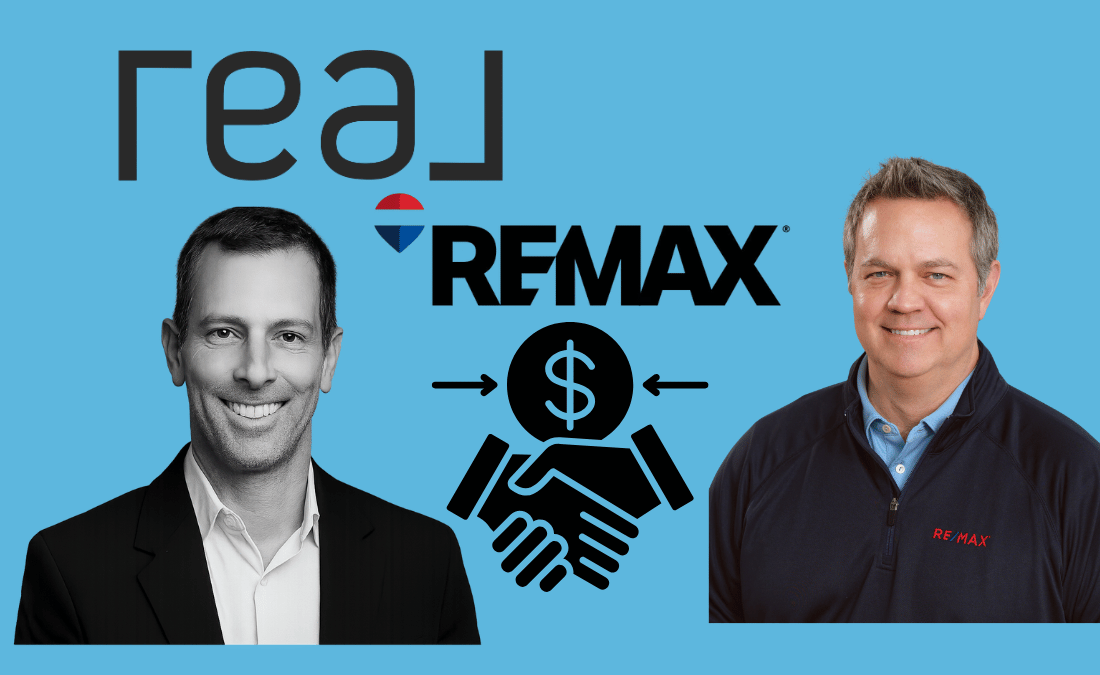
Shareholders of The Real Brokerage Inc. and REMAX Holdings Inc. have officially greenlit a transformative merger, voting overwhelmingly in favor of a deal that will see the two organizations unite under the banner of the Real REMAX Group. The approvals, granted during special meetings held on Friday, represent a pivotal moment in the evolution of the North American real estate industry, signaling a shift toward massive consolidation and the integration of high-tech brokerage models with legacy global franchise networks. This move brings the two entities to the final stages of a transaction first announced in April 2026, valued at approximately $880 million, which aims to create a dominant force in the international property market.
The voting results reflected strong investor confidence in the strategic direction of the combined entity. At The Real Brokerage, the special resolution was met with near-unanimous support, with approximately 99% of the votes cast by shareholders in favor of the arrangement. When considering a broader class of security holders—including optionholders and restricted share unit holders—the approval rate remained high at 98.9%. On the REMAX side, the acquisition was approved by holders of approximately 78.8% of the voting power of the company’s common stock. With these mandates secured, the companies are now moving toward the final regulatory and judicial steps required to finalize the union.
The Strategic Vision Behind Real REMAX Group
The formation of the Real REMAX Group is designed to capitalize on the complementary strengths of two distinct business models. The Real Brokerage has gained significant market share in recent years through its technology-focused, cloud-based platform. By eliminating the overhead associated with traditional brick-and-mortar offices and utilizing artificial intelligence to streamline administrative tasks, Real has positioned itself as a "proptech" leader. Its agent community has grown rapidly, attracted by a low-fee structure and a culture of digital innovation.
Conversely, REMAX Holdings Inc. stands as one of the most recognized brands in the global real estate sector. With a history spanning more than 50 years, REMAX operates an extensive franchise network that provides local leadership and brand prestige across more than 120 countries and territories. The merger seeks to infuse REMAX’s massive global footprint with Real’s cutting-edge technological infrastructure.
Upon the closing of the deal, the combined entity is expected to support a workforce of more than 180,000 real estate professionals. Leadership has emphasized that the goal is not merely to increase headcount, but to create a "more connected, innovative real estate ecosystem." By leveraging Real’s proprietary software and REMAX’s brand equity, the group aims to offer agents a superior suite of tools for lead generation, transaction management, and client retention.
Timeline of the Merger and Regulatory Milestones
The path to the shareholder vote has been marked by several critical milestones since the merger was initially proposed in the spring of 2026. The announcement in April sent ripples through the industry, as analysts debated the feasibility of merging a traditional franchise giant with a modern, cloud-based disruptor.
A significant hurdle was cleared in mid-July 2026, when the United States Department of Justice (DOJ) granted the companies an early termination of the waiting period required under the Hart-Scott-Rodino (HSR) Antitrust Improvements Act. The HSR Act is a federal mandate designed to allow the DOJ and the Federal Trade Commission (FTC) to review large-scale mergers for potential competitive harm before they are finalized. The early termination was a clear signal that federal regulators did not find the merger to be an immediate threat to market competition, clearing the way for the shareholder meetings.
Following the successful votes on Friday, the companies are now seeking a final order from the Supreme Court of British Columbia. This judicial approval is a standard requirement for arrangements of this nature involving Canadian-domiciled entities like The Real Brokerage. Both companies have indicated that they expect the remaining closing conditions to be met within the next two weeks, targeting a final closing date before the end of the current quarter.
Financial Performance and Pro Forma Projections
The merger comes at a time of diverging financial trajectories for the two companies, highlighting the necessity of the deal for future growth. In its Q2 2026 earnings report, The Real Brokerage showcased its rapid expansion, reporting revenue of $700.6 million. This represented a 30% increase year-over-year. However, the company also reported a net loss of $8 million for the quarter. Leadership attributed this loss primarily to $11.6 million in acquisition-related expenses tied directly to the REMAX deal. Without these one-time costs, the company’s bottom line would have reflected a profitable quarter, highlighting the underlying strength of its growth-oriented model.
REMAX Holdings, meanwhile, has faced a more challenging market environment. Its Q2 2026 revenue stood at $68.5 million, a 5.8% decline compared to the previous year. The company reported a net loss of $4.3 million for the quarter. These figures underscore the headwinds facing traditional franchise models in an era of high interest rates and shifting consumer behaviors.
Despite these recent losses, the outlook for the combined Real REMAX Group is robust. The companies project a pro forma 2025 revenue of approximately $2.3 billion. Furthermore, the combined entity is expected to generate $157 million in adjusted EBITDA (Earnings Before Interest, Taxes, Depreciation, and Amortization) before accounting for potential synergies. Analysts expect that once the integration is complete, the group will be able to realize significant cost savings by consolidating back-office operations and migrating REMAX’s internal systems to Real’s more efficient cloud platform.
Leadership Perspectives and Industry Impact
Tamir Poleg, the Chairman and CEO of Real, who will lead the new group, expressed his gratitude for the shareholder support, framing the merger as a leap forward for the industry. "Together, through Real REMAX Group, we’ll have the scale, talent, and resources to invest more, build faster, and create even greater value for the more than 180,000 real estate professionals who choose our brands," Poleg stated. His vision focuses on "listing fragmentation risk" and the role of AI in replacing manual labor rather than the agent themselves, ensuring that the human element of the transaction remains central while technology handles the logistics.
Erik Carlson, CEO of REMAX Holdings, emphasized the preservation of the legacy brand. He noted that the combination provides an opportunity to strengthen the value proposition for broker-owners and agents while maintaining the "entrepreneurial culture" that has defined REMAX for half a century. The "Broker/Owner" model, which has been the bedrock of REMAX’s success, will reportedly remain a key component of the new group’s strategy, though it will be augmented by Real’s virtual support systems.
The broader implications for the real estate market are substantial. As the industry grapples with the aftermath of the National Association of Realtors (NAR) settlement and changing commission structures, the Real REMAX Group represents a "Super Brokerage" model. This scale allows the company to weather market volatility better than smaller, independent firms. Furthermore, the merger sets a precedent for other legacy brands that may look to acquire or merge with proptech firms to modernize their offerings.
Future Outlook for Real REMAX Group
As the closing date approaches, the focus shifts to integration. The primary challenge for the Real REMAX Group will be harmonizing the cultures of a fast-moving tech startup and a 50-year-old franchise institution. Success will depend on how effectively the group can transition REMAX agents onto Real’s technology stack without disrupting the local relationships that REMAX brokers have spent decades building.
If successful, the Real REMAX Group will not only be a leader in terms of agent count and revenue but also a pioneer in how global real estate brands operate in a digital-first economy. With a presence in 120 countries, the group is well-positioned to capitalize on international migration patterns and the globalization of real estate investment. For now, the industry watches closely as the final legal signatures are prepared, marking the end of one era and the beginning of a massive new chapter in global real estate.
