

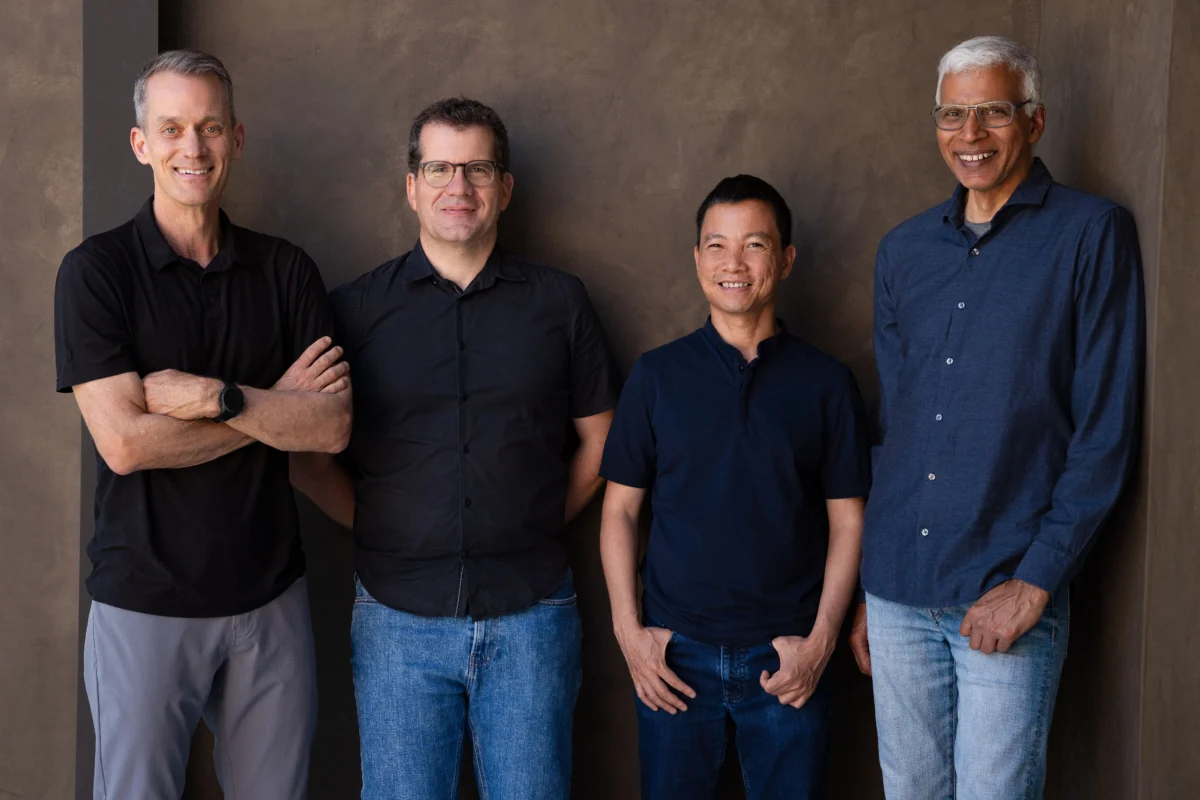
The artificial intelligence landscape was dramatically reshaped on July 25th when Jeff Dean, a titan of the tech industry and a foundational architect of Google’s AI prowess, announced his departure from the search giant. Dean, alongside a constellation of equally formidable AI researchers, is launching a new venture named Discovery Loop, poised to revolutionize scientific discovery through automated experimentation and machine learning. The announcement, made at Y Combinator’s Startup School in San Francisco to an audience of approximately 6,000 aspiring entrepreneurs, sent ripples of both excitement and concern throughout the tech world, particularly within Google itself.
A Legendary Mind’s New Frontier
Jeff Dean’s reputation precedes him. For nearly three decades, he has been instrumental in shaping the very infrastructure of modern computing and search. As co-founder of Google Brain, chief scientist of Google DeepMind and Google Research, and a key technical lead for Google’s flagship AI model, Gemini, Dean has been at the forefront of countless technological advancements. His collaborative work with Sanjay Ghemawat, another departing Google luminary, has resulted in significant contributions to Google’s core computing and search systems, forming the backbone of services used by billions worldwide. The enduring "Jeff Dean Facts," a collection of hyperbolic, yet illustrative, anecdotes about his unparalleled technical capabilities, underscore his legendary status in the engineering community. These "facts" often humorously suggest his resume is so extensive that listing what he hasn’t done is a more concise approach.
During his address at the Y Combinator event, Dean was asked about the most impactful areas for startup founders to explore. He emphasized the importance of pursuing endeavors that ignite personal passion and offer tangible benefits to the world. He then articulated his own profound interest: the automation of the scientific method. "You propose an experiment, you implement what you need to run the experiment, you evaluate the experiment, and then you get results from that," Dean explained, envisioning a future where thousands of such automated loops could accelerate breakthroughs across diverse fields, from fundamental science and biology to chip design and the development of more sophisticated AI models. Unbeknownst to the vast audience, this philosophical musing was a preview of his imminent career pivot.
The Genesis of Discovery Loop
The formation of Discovery Loop was a remarkably swift and collaborative process. Dean revealed in an exclusive interview that the core idea coalesced only weeks prior to the public announcement. He was joined by his long-time colleagues and friends, Sanjay Ghemawat, Oriol Vinyals, and Quoc Le. Vinyals, previously the VP of research at DeepMind and a technical lead for Gemini, and Le, a co-founder of Google Brain and the visionary behind AutoML-Zero – a project that leverages machine learning to autonomously build AI systems – represent an unprecedented concentration of AI talent. This quartet, bound by years of shared work and personal camaraderie, recognized a nascent opportunity to harness AI’s potential for automating complex research cycles.
"We were working on different things, but we were all starting to see the possibility of AI being able to automate scientific and engineering loops," Dean stated. This shared vision quickly translated into a concrete roadmap for Discovery Loop. The company’s immediate strategy involves utilizing its own advanced machine learning algorithms as its initial customer base. By creating automated experiment loops designed to enhance these algorithms, Discovery Loop aims to build a foundational AI system capable of tackling complex problems across various domains.
"I’m very excited about automating machine learning," commented Quoc Le. "It might be that we will discover a different transformer architecture." This focus on fundamental advancements in AI itself sets the stage for the company’s broader ambitions.
A Mission to Accelerate Innovation
Discovery Loop’s overarching mission is to drive "superhuman advances" in fields such as chip design, biology, drug discovery, and material science. The company believes that by developing core intelligence and mastering the fundamentals of the discovery loop, they can rapidly generalize these capabilities to new domains.
"One of the things that we’ll be obviously very focused on is how these models come up with new ideas to try. That’s not something that currently they’re super strong at," explained Oriol Vinyals. Initially, the team envisions a collaborative model where humans and AI co-develop new research directions. However, the ultimate goal is the deep automation of this process, potentially enabling small, agile teams to out-innovate the world’s largest research organizations. The company also plans to leverage its own automated loops to identify and monetize scientific breakthroughs.
A Stellar Team and Enthusiastic Backing
The formation of Discovery Loop was met with immediate and significant interest from the venture capital community. The founders presented a concise pitch deck, highlighting their formidable backgrounds and outlining their innovative approach. The sheer caliber of the team—often referred to as "GOATs" (Greatest Of All Time) in the tech vernacular—was sufficient to garner substantial investment, even without extensive product demonstrations.
Vinod Khosla, founder of Khosla Ventures, who met with the team on a Saturday to ensure discretion, expressed his unwavering confidence. "With this team, I wouldn’t need to know what they were doing before I backed them," Khosla remarked. "It’s the ultimate superstar team." He particularly lauded the core concept: "Humans have been using AI to do research, not using AI to be a researcher. The fundamental thing [in Discovery Loop] is that AI is the researcher."
Radical Ventures, an AI-focused venture capital firm, also participated in the funding round. Jordan Jacobs, managing partner at Radical Ventures, who will join Discovery Loop’s board, stated, "Building something to solve all those problems is a powerful idea. These people have been doing this kind of work in the past so they know what they’re doing." While the exact funding amounts and valuations remain undisclosed, industry analysts note that with individual AI specialists commanding hundreds of millions of dollars, the collective talent of Dean, Ghemawat, Vinyals, and Le represents an astronomical investment.
The company has been structured as a public benefit corporation, signaling a commitment to societal impact alongside profit.
Navigating the Google Exit
The transition from Google was a complex and reportedly emotional process. Jeff Dean shared that Alphabet CEO Sundar Pichai engaged in multiple meetings to persuade the departing team to stay. However, the allure of autonomy and the freedom to pursue their groundbreaking vision proved irresistible.
"In a large organization, there is always a lot of inertia you have to overcome to make any radical changes," Vinyals observed. "We want to build something different." Ultimately, Google granted its blessing to the departing engineers, offering an investment in Discovery Loop and a commitment to provide essential compute power for the company’s first year of operation.
Sundar Pichai issued a statement acknowledging the profound impact of Dean and Ghemawat’s tenure: "Over 27 years, Jeff and Sanjay helped to drive some of the most significant technology transitions, from our early search infrastructure to the neural networks that helped create the modern AI era. We’ll continue to work with Discovery Loop as a founding investor and Cloud partner, and collaborate on a research framework for ML systems and related infrastructure advances." This statement underscores Google’s strategic decision to maintain a relationship with the formidable team it nurtured.
Implications for Google and the AI Industry
The departure of these four AI luminaries represents a significant, albeit strategically managed, blow to Google. As the company navigates an intensely competitive AI landscape, losing such pivotal figures—especially those who helped build its AI foundations—creates a talent gap and potentially fuels its rivals. The fact that Google is investing in Discovery Loop suggests a recognition of the team’s enduring value and a desire to maintain some level of access to their future innovations.
The founding team has meticulously maintained stealth, delaying team hiring and office space acquisition until after the public announcement. When asked about the CEO role, Dean sheepishly admitted, "I think I’m the CEO. Everyone pointed at me." This humble acknowledgment belies the immense responsibility and vision he brings to the helm of Discovery Loop.
A New Era of AI-Driven Discovery
Discovery Loop enters a field where the concept of AI as an engine for scientific discovery has been widely discussed by leading figures in the AI community, including Dario Amodei, Sam Altman, and Jensen Huang. However, this team’s unique combination of deep technical expertise, extensive experience in building foundational AI systems, and a shared vision for automated experimentation positions them to potentially realize this vision in a way that others have not.
The ultimate measure of Discovery Loop’s success will be its ability to translate its extraordinary talent and ambitious mission into tangible scientific breakthroughs and technological advancements. The question remains: Will the groundbreaking work they achieve as a startup be as significant as the formidable talent gap they have created within Google? The world of AI and scientific research will be watching with keen interest.
