

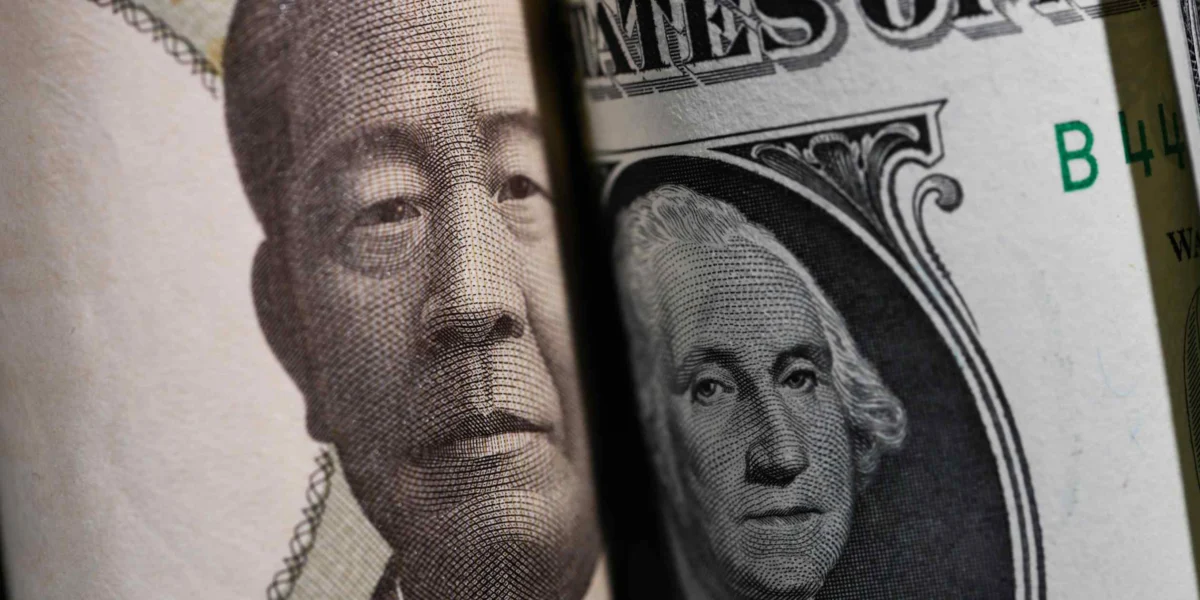
The U.S. Treasury Department has alerted participants in the currency markets to prepare for the possibility of additional intervention efforts aimed at bolstering the Japanese yen, following a significant move by Japanese authorities to support the national currency on Thursday. This proactive communication from Washington underscores the growing international concern over the yen’s sustained weakness and the potential repercussions for global economic stability.
Yen’s Precipitous Decline and Intervention
The Japanese yen has experienced a dramatic depreciation against major global currencies, particularly the U.S. dollar, throughout much of the preceding year. This slide has been attributed to a confluence of factors, including the widening interest rate differential between Japan and other major economies, particularly the United States, where the Federal Reserve has aggressively hiked rates to combat inflation. Japan’s continued commitment to an ultra-loose monetary policy, aimed at stimulating its long-stagnant economy and achieving sustainable inflation, has exacerbated this divergence.

On Thursday, the Japanese Ministry of Finance, in coordination with the Bank of Japan, executed a substantial intervention in foreign exchange markets. This involved the direct purchase of yen and the sale of U.S. dollars, a move designed to inject demand for the beleaguered currency and signal a strong commitment to arresting its decline. Such direct interventions, while not unprecedented, are typically reserved for periods of extreme currency volatility. The sheer scale of the yen’s recent fall, however, appears to have pushed Japanese policymakers to a critical juncture, prompting this decisive action.
U.S. Treasury’s Proactive Stance
The U.S. Treasury Department’s notification to market participants is a significant development, signaling a coordinated approach to currency stability. While the exact nature of any potential U.S. involvement remains unspecified, the message is clear: Washington is prepared to work with Tokyo to stabilize the yen. This could manifest in several ways, including synchronized currency interventions, where both countries simultaneously buy yen and sell dollars, or through diplomatic channels, where the U.S. publicly signals its support for Japanese efforts, thereby influencing market sentiment.
Historically, the U.S. has often expressed concerns about excessive currency volatility and has played a role in coordinating international efforts to manage exchange rates, particularly during periods of economic stress. The Treasury’s current posture suggests an acknowledgment of the systemic risks posed by a rapidly weakening yen, which could potentially disrupt global trade flows, impact corporate earnings of multinational companies, and even contribute to inflationary pressures in other economies.

Chronology of Events and Market Reaction
The recent period has seen a relentless downward trend for the yen. For much of 2024, the yen traded at multi-decade lows against the dollar, often hovering around the ¥150-¥160 per dollar mark. This sustained weakness has been a persistent headache for Japanese businesses, increasing import costs and eroding purchasing power for consumers.
Key Milestones:
- Early 2024: The yen continues its downward trajectory, driven by widening interest rate differentials.
- Mid-2024: Speculation mounts regarding potential Japanese intervention as the yen approaches critical historical lows.
- Late July 2024: The yen experiences a particularly sharp decline, prompting increased urgency among Japanese policymakers.
- Thursday (July 31, 2024): Japanese authorities execute a significant currency intervention, buying yen and selling dollars. The immediate impact on the yen’s value is typically a sharp, albeit often temporary, rebound.
- Friday (August 1, 2024): The U.S. Treasury Department communicates its readiness for potential further intervention to market participants.
The market’s reaction to the U.S. Treasury’s statement is likely to be closely watched. A clear signal of U.S. support can amplify the impact of Japanese intervention by reinforcing the message to speculative traders that further depreciation may be met with concerted resistance. This could lead to increased volatility in currency markets as traders adjust their positions.

Underlying Economic Factors and Data
The yen’s weakness is deeply rooted in Japan’s unique economic landscape. For decades, Japan has grappled with deflationary pressures and an aging population, leading the Bank of Japan to maintain exceptionally low interest rates, a policy that has diverged sharply from the monetary tightening cycles seen in the U.S. and Europe.
Supporting Data and Context:
- Interest Rate Differentials: As of mid-2024, the U.S. Federal Funds Rate has been significantly higher than Japan’s ultra-low policy rate (often near zero or even negative for a period). This disparity makes dollar-denominated assets more attractive to investors seeking higher yields, leading to capital outflows from Japan and increased demand for dollars.
- Inflation Trends: While inflation has been a major concern globally, Japan has struggled to achieve its long-term inflation target of 2%. The Bank of Japan’s accommodative stance is partly aimed at nurturing domestic demand and achieving sustainable price growth. However, the weak yen has also contributed to imported inflation, pushing up the cost of goods and services for Japanese consumers.
- Trade Balance: A weaker yen can theoretically boost Japan’s export competitiveness. However, the country’s reliance on imported energy and raw materials means a depreciating yen also significantly increases import costs, potentially widening the trade deficit, as seen in recent years.
- Capital Flows: Global investors’ appetite for risk and their assessment of relative economic growth prospects heavily influence currency movements. When global growth is strong and risk sentiment is high, investors tend to favor currencies of economies with higher growth potential and interest rates.
Potential Implications and Analysis
The intervention and the U.S. Treasury’s supportive stance carry significant implications for both Japan and the broader global economy.

Economic Analysis:
- Stabilizing the Yen: The primary goal of intervention is to halt or reverse the yen’s decline. A stronger yen can help curb imported inflation, making goods and services more affordable for Japanese consumers and businesses. It can also improve the purchasing power of Japanese tourists and make outward investments more attractive.
- Impact on Japanese Exports: While a weaker yen can make Japanese exports cheaper for foreign buyers, the effect might be less pronounced than in the past due to the increasing trend of Japanese companies shifting production overseas to be closer to their markets. Nevertheless, a significantly stronger yen could dampen export competitiveness.
- Global Financial Stability: A disorderly or uncontrolled collapse of the yen could trigger broader market turbulence. It could lead to significant losses for investors holding yen-denominated assets and could prompt other countries to reconsider their own currency policies, potentially leading to competitive devaluations.
- Coordinated Policy Efforts: The U.S. Treasury’s involvement signals a growing recognition among major economies that currency stability is a shared concern. This could pave the way for more coordinated efforts to manage global financial flows and prevent future crises.
- Limited Long-Term Efficacy: While intervention can be effective in the short to medium term to curb excessive volatility, it is often less effective in fundamentally altering a currency’s long-term trajectory, which is primarily driven by economic fundamentals and interest rate differentials. Without a significant shift in monetary policy by the Bank of Japan or a change in the global interest rate environment, the yen’s underlying pressures may persist.
- Market Speculation: Speculative traders, who had bet heavily on the yen’s continued decline, will be closely watching the actions of both Japanese and U.S. authorities. A sustained commitment to intervention could force these traders to unwind their positions, further supporting the yen.
Official Statements and Reactions (Inferred)
While specific official statements directly following the U.S. Treasury’s communication are not yet widely reported, the actions themselves speak volumes. The Ministry of Finance and the Bank of Japan have consistently expressed concern over the rapid and one-sided depreciation of the yen, citing its negative impact on the economy. Their intervention on Thursday was a clear manifestation of these concerns.
The U.S. Treasury Department’s move to signal preparedness for further action suggests a dialogue between Washington and Tokyo. It is highly probable that Japanese officials have been in close consultation with their U.S. counterparts regarding the timing and scale of their intervention. The U.S. stance, therefore, can be interpreted as a form of diplomatic support, reinforcing the message to the market that the yen’s weakness is a matter of international concern and that concerted efforts are being made to address it.

Broader Economic Landscape and Future Outlook
The intervention to support the yen occurs against a backdrop of a global economy still navigating the aftermath of pandemic-related disruptions, geopolitical tensions, and persistent inflationary pressures. The actions taken by Japan and potentially supported by the U.S. highlight the intricate interconnectedness of global financial markets and the importance of currency stability for overall economic health.
Looking ahead, the effectiveness of these interventions will depend on several factors, including the duration and magnitude of future actions, the evolution of global interest rate policies, and the underlying economic performance of Japan relative to other major economies. Investors and policymakers will be keenly observing any further signs of coordinated action and any shifts in the Bank of Japan’s monetary policy stance, which could signal a more fundamental rebalancing of the forces driving the yen’s value. The commitment from both Tokyo and Washington to address the yen’s weakness suggests a period of heightened attention on currency markets and a potential shift in the dynamics that have characterized the yen’s recent performance.
