

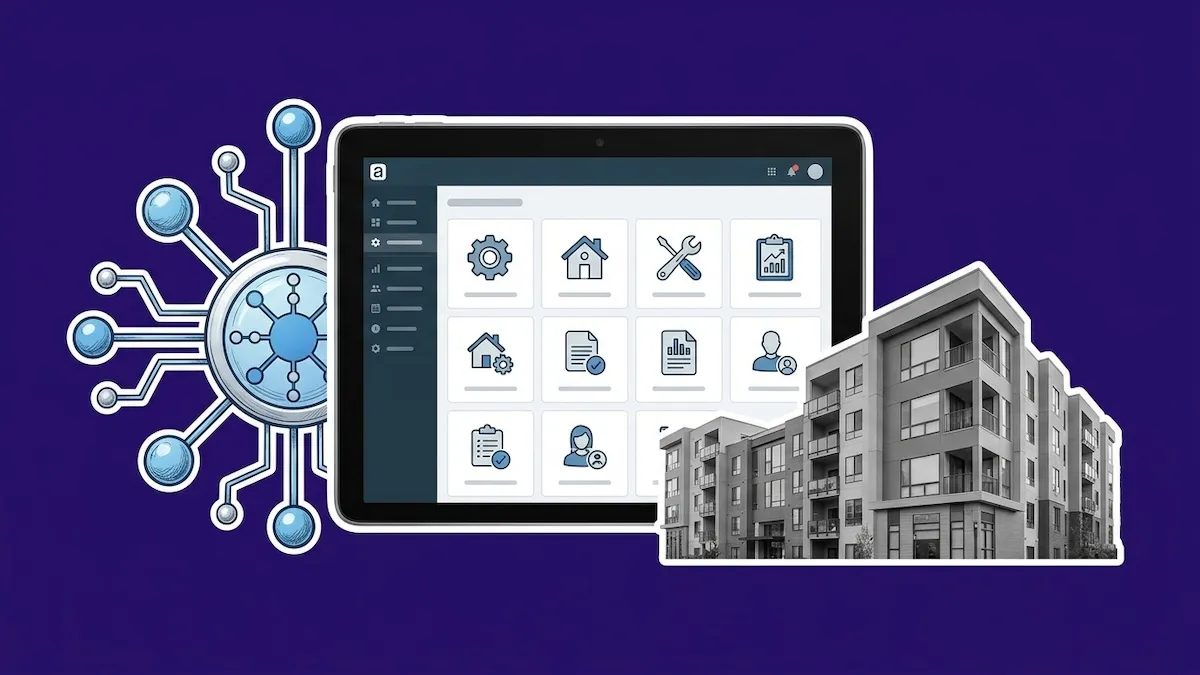
In a significant move for the real estate technology sector, AppFolio, a leading provider of cloud-based business management software for the real estate industry, has announced a landmark integration between its Realm-X artificial intelligence platform and Anthropic’s Claude. This collaboration marks the debut of an advanced agent-to-agent system designed to allow property management professionals to execute complex operational tasks directly through the Claude interface. By bridging these two sophisticated AI environments, the integration aims to transition AI from a tool of mere inquiry to a proactive "system of action" that operates within the strict regulatory and accounting frameworks required by the professional real estate industry.
The integration is structured to ensure that while Claude provides high-level reasoning and natural language processing, the execution of tasks remains governed by AppFolio’s established compliance, accounting, and workflow safeguards. This ensures that every action triggered—whether it involves sensitive financial data or resident communications—adheres to the specific business rules and permissions already configured within a firm’s AppFolio environment.
The Shift Toward Autonomous Systems of Action
The collaboration between AppFolio and Anthropic represents a pivotal shift in the evolution of Property Technology (PropTech). For years, property management software has functioned primarily as a "system of record"—a digital repository for leases, maintenance requests, and financial ledgers. While these systems improved efficiency over paper-based methods, they still required significant manual labor to input data, generate reports, and move processes forward.
The introduction of Realm-X was AppFolio’s first step toward creating a "system of intelligence." By integrating with Claude, this intelligence is now being channeled into a "system of action." This means the AI does not just tell a property manager that occupancy is low; it can, upon instruction, draft a marketing plan, update listing prices across various platforms, and initiate outreach to prospective leads, all while remaining within the authorized bounds of the user’s software permissions.
Kyle Triplett, Chief Product Officer at AppFolio, emphasized that this move is about empowering the "builders" of the industry. He noted that the mission has always been to build the platform where real estate business happens. By bringing Realm-X to Claude, AppFolio is providing customers with the ability to work through a unified system of action, whether they are at a desk or using a mobile device, without sacrificing the trust and security inherent in the AppFolio Performance Platform.
Technical Architecture and Agent-to-Agent Synergy
The technical foundation of this integration relies on an "agent-to-agent" connection. In this model, Anthropic’s Claude acts as the primary interface for the user, leveraging its advanced reasoning capabilities to understand complex, multi-step instructions. These instructions are then passed to Realm-X, AppFolio’s specialized AI agent, which possesses deep domain knowledge of property management operations, including specific workflows, accounting practices, and compliance requirements.
Unlike standard API integrations that might simply fetch data or push a single update, this connector is designed for "reasoned execution." For example, if a property manager asks the AI to "prepare a report on why maintenance costs exceeded the budget in the third quarter and suggest a plan to reduce them," the AI does not just pull a spreadsheet. It analyzes the specific work orders, identifies patterns—such as a recurring issue with HVAC units in a specific building—and generates a comprehensive narrative report.
This process is underpinned by Anthropic’s commitment to safety and high-reasoning output. Travis Bryant, Head of Americas Mid-Market at Anthropic, stated that the next frontier of AI involves moving beyond simple chat interfaces to sophisticated agents capable of executing meaningful work within complex industries. He highlighted that by leveraging Claude’s reasoning alongside AppFolio’s industry expertise, the connector demonstrates how AI can safely navigate professional workflows that involve high stakes and rigorous compliance.
Operational Use Cases and Efficiency Gains
The practical applications of this integration cover nearly every facet of property management, from the back office to the front door. The companies have identified several key areas where the integration will provide immediate value:
1. Portfolio Reporting and Market Analysis
Property managers often spend hours aggregating data from internal systems and external market reports to prepare for investor meetings. Through the Claude integration, users can combine AppFolio’s internal portfolio data with external market research. This allows for the creation of investor-ready reports that analyze occupancy trends against local market benchmarks, providing a level of insight that previously required a dedicated data analyst.
2. Leasing and Marketing Optimization
In a fluctuating rental market, timing is critical. The AI agent can monitor occupancy levels in real-time and, when a vacancy is anticipated, automatically suggest updates to marketing content. It can analyze which property descriptions are performing best and adjust listings to improve conversion rates, all while ensuring that the language used complies with Fair Housing regulations.
3. Maintenance and Occupancy Monitoring
Maintenance is often one of the largest variable expenses for property owners. The integrated system can track maintenance trends across a portfolio, identifying if certain appliances or vendors are costing more than average. It can then trigger a "system of action" by drafting a new vendor agreement or scheduling preventative maintenance to mitigate future costs.
4. Accounting Reconciliation and Financial Oversight
Real estate accounting is notoriously complex, involving escrow accounts, security deposits, and multi-entity reporting. The Realm-X and Claude integration allows for the review of financial exceptions. If a line item does not align with historical data or budgeted expectations, the AI can flag the discrepancy and ask the user for permission to initiate a reconciliation process, significantly reducing the risk of human error in financial reporting.
A Chronology of AI Innovation at AppFolio
The integration with Anthropic is the latest milestone in a multi-year journey for AppFolio. To understand the significance of this move, it is helpful to look at the timeline of the company’s technological evolution:
- 2023: AppFolio officially launches Realm-X, the first generative AI specifically tailored for the property management industry. The initial rollout focused on natural language search and basic task automation within the AppFolio platform.
- Early 2024: AppFolio expands Realm-X capabilities to include "GenAI for Accounting," helping firms automate the processing of invoices and the categorization of expenses.
- Mid-2024: The company announces the "AppFolio Performance Platform," a tiered offering designed to provide larger, more complex real estate firms with advanced tools for scaling operations.
- Late 2024: The partnership with Anthropic is finalized, moving Realm-X beyond the AppFolio "walled garden" and into the broader ecosystem of high-reasoning AI agents via Claude.
This timeline demonstrates a clear trajectory from experimental AI features to a robust, integrated ecosystem where AI is a core component of the business operating system.
Industry Implications and Market Context
The broader real estate industry is currently facing a "perfect storm" of challenges: a shortage of skilled labor, rising interest rates, and increasing regulatory scrutiny. In this environment, operational efficiency is no longer a luxury; it is a necessity for survival.
According to industry data, property management firms that adopt AI-driven automation see a significant reduction in administrative overhead. Some estimates suggest that AI can automate up to 40% of the routine tasks performed by property managers, such as answering basic tenant inquiries or processing work orders. By integrating Claude, AppFolio is positioning itself to capture a larger share of this efficiency-seeking market.
Furthermore, this integration sets a new standard for how PropTech companies interact with general-purpose AI. Rather than building every AI model from scratch, AppFolio is leveraging the specialized "high-reasoning" strengths of Anthropic’s Claude while maintaining control over the domain-specific data and execution. This "best-of-breed" approach is likely to become a blueprint for other vertical SaaS (Software as a Service) providers.
Security, Governance, and the Future Outlook
One of the primary concerns regarding AI in real estate is the security of sensitive tenant and financial data. AppFolio has addressed this by ensuring that the Claude integration does not grant the AI unrestricted access to the database. Instead, the agent-to-agent connection acts as a secure conduit. Every action requested through Claude is vetted by Realm-X against the user’s existing permissions. If a user does not have the authority to sign a check in the physical world, the AI will not be able to trigger that action in the digital one.
Looking ahead, the potential for this technology is vast. As these AI agents become more autonomous and more deeply integrated into the "built environment," we may see a future where buildings essentially "manage themselves" for routine tasks. From autonomous energy management based on occupancy patterns to AI-negotiated service contracts, the foundation laid by the AppFolio and Anthropic integration is a step toward a more responsive, efficient, and data-driven real estate industry.
The partnership reinforces the idea that the future of work in real estate is not about replacing human managers, but about providing them with a "digital co-pilot" capable of handling the heavy lifting of data processing and routine execution. This allows human professionals to focus on higher-value activities, such as building resident relationships and making strategic investment decisions, ultimately leading to more thriving communities and more resilient real estate businesses.
