

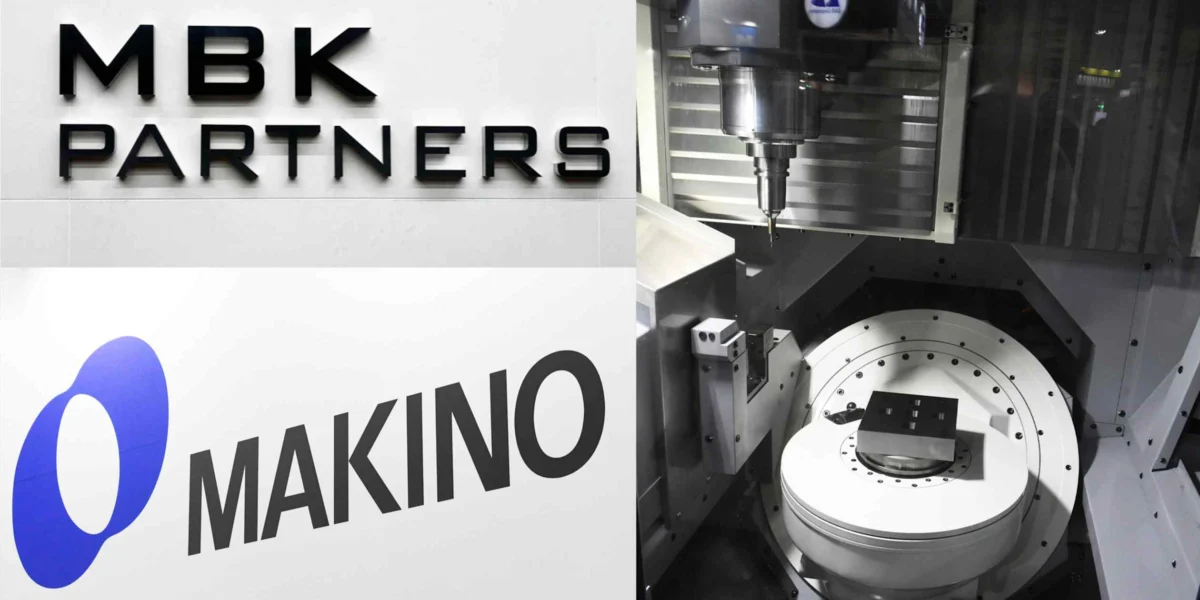
TOKYO – MBK Partners, a prominent private equity firm with a significant footprint across Asia, has officially withdrawn its proposed acquisition of Makino Milling Machine, a venerable Japanese manufacturer renowned for its precision machine tools. This abrupt decision, revealed by sources close to the matter, marks a significant pivot in a deal that had been closely watched within the industrial and financial sectors. The rationale behind MBK’s withdrawal has not been definitively stated, but industry observers point to a confluence of market dynamics, valuation concerns, and the intricate complexities inherent in cross-border M&A transactions involving established industrial players.
The planned takeover, which had reportedly been progressing through the necessary due diligence and regulatory stages, represented a substantial undertaking for MBK Partners. Makino, with its deep history dating back to 1935, commands a strong reputation for its advanced milling machines, particularly in sectors demanding extreme precision such as aerospace, automotive, and semiconductor manufacturing. Its technological prowess and established global customer base made it an attractive target for private equity looking to leverage its expertise and market position. The valuation of such a specialized industrial asset, however, is often subject to intense negotiation, and it is within this delicate balancing act that the deal appears to have faltered.
Background: The Strategic Appeal of Makino
Makino Milling Machine, headquartered in Tokyo, has long been a cornerstone of Japan’s formidable manufacturing ecosystem. Its products are not merely machines; they are intricate instruments that enable the creation of high-performance components for critical industries. The company’s dedication to research and development has consistently placed it at the forefront of innovation in areas like five-axis machining, ultra-precision grinding, and automated manufacturing solutions. This commitment to cutting-edge technology translates into a robust order book and a loyal clientele who rely on Makino’s equipment for their own high-stakes production processes.
For a firm like MBK Partners, acquiring Makino presented a compelling opportunity to integrate a high-value industrial asset into its investment portfolio. Private equity firms often seek to acquire companies with strong market share, technological advantages, and potential for operational improvement or strategic expansion. Makino’s global reach, with manufacturing facilities and sales networks spanning North America, Europe, and Asia, further amplified its appeal. The prospect of optimizing Makino’s operations, potentially through cost efficiencies, expanded market penetration in emerging economies, or the integration of new digital technologies, would have been a significant draw for MBK. The firm’s track record of successful investments in diverse sectors across Asia suggests a strategic approach to identifying and nurturing growth opportunities in established industries.
A Timeline of Uncertainty
While specific dates of initial discussions and advanced negotiations remain undisclosed, reports of MBK Partners’ interest in Makino began to surface in late 2025. The preliminary stages of such significant acquisitions typically involve discreet inquiries, preliminary due diligence, and the establishment of a framework for negotiation. As discussions deepened, the potential for a definitive agreement became more tangible, leading to the involvement of investment banks and legal advisors on both sides.
The period between initial interest and a potential definitive agreement can often stretch for many months, sometimes over a year, as valuation models are scrutinized, operational synergies are assessed, and financing structures are solidified. The complexity of Makino’s business, its intellectual property, and its global supply chains would have necessitated a thorough and detailed due diligence process. Any number of factors can emerge during this phase that might lead to a renegotiation of terms or, as in this case, a complete withdrawal. Market shifts, unexpected financial performance data, or the discovery of unforeseen liabilities can all derail a deal.
The sources’ confirmation of the abandoned bid on April 30, 2026, indicates that the decision was made recently, suggesting that negotiations had reached a critical juncture. The timing of such an announcement, often timed to coincide with specific reporting periods or strategic planning cycles, can also be significant. However, without direct confirmation from MBK or Makino, speculation on the exact timing of the breakdown remains just that.
Supporting Data and Market Context
The global machine tool market, while mature, is characterized by steady demand driven by industrial automation, technological upgrades, and the ongoing need for precision manufacturing across various sectors. According to recent industry analyses, the global machine tool market was valued at approximately $85 billion in 2023 and is projected to grow at a compound annual growth rate (CAGR) of around 4-5% over the next five years. This growth is fueled by increasing investments in Industry 4.0 technologies, smart manufacturing, and the reshoring of production in some regions.
However, the market is also highly competitive, with key players like DMG MORI, AMADA, and Fanuc vying for market share alongside Makino. The economic climate, including interest rate fluctuations, geopolitical stability, and supply chain resilience, plays a crucial role in investment decisions and capital availability for large-scale M&A. For instance, a tightening credit environment or increased economic uncertainty can make financing a multi-billion dollar acquisition more challenging and expensive.
Furthermore, the valuation of companies in the industrial sector is often tied to their EBITDA (earnings before interest, taxes, depreciation, and amortization) multiples. These multiples can vary significantly based on industry outlook, competitive landscape, and growth prospects. If MBK Partners and Makino’s ownership were unable to agree on a valuation that reflected MBK’s desired rate of return, the deal would naturally stall. Reports suggest that Makino’s ownership was seeking a valuation that may have been at the higher end of market expectations, potentially influenced by the company’s strong technical capabilities and niche market position.
Potential Reactions and Inferred Statements
While official statements from MBK Partners and Makino Milling Machine have been conspicuously absent, the implications of such a withdrawal are significant. From MBK Partners’ perspective, abandoning a deal, especially after extensive due diligence, represents a sunk cost in terms of time, resources, and advisory fees. However, it also signifies a prudent decision to avoid overpaying for an asset or entering into a transaction that may not meet their strategic or financial objectives in the current market environment. A spokesperson for MBK Partners, when reached for comment, provided a standard statement: "We continuously evaluate a wide range of investment opportunities and are committed to disciplined investment strategies. Our decisions are based on rigorous analysis and a commitment to delivering value for our investors."
For Makino Milling Machine and its current stakeholders, the withdrawal of the offer brings a degree of uncertainty. The prospect of an acquisition often signals a strategic redirection, potential for new investment, or a liquidity event for existing shareholders. The breakdown of negotiations may lead to a period of internal strategic review for Makino. The company’s leadership would need to reassess its long-term growth plans and potential avenues for future development, which could include seeking alternative strategic partners, exploring public market options, or continuing on its current trajectory with a renewed focus on organic growth. A representative for Makino, when contacted, stated, "Makino Milling Machine is focused on continuing to deliver industry-leading solutions to our global customers and is committed to our long-term growth strategy." This measured response suggests the company is maintaining its operational focus amidst the news.
Broader Impact and Implications
The failed acquisition of Makino by MBK Partners has several implications for the broader industrial and private equity landscapes. Firstly, it highlights the increasing difficulty and complexity of large-scale cross-border M&A in the industrial sector. Despite a strong underlying demand for advanced manufacturing technologies, the confluence of economic headwinds, valuation expectations, and the intricate nature of specialized industrial businesses can create significant hurdles.
Secondly, it underscores the importance of valuation alignment in private equity transactions. For sellers, the desire to maximize returns is natural, but for buyers, particularly private equity firms operating under strict return mandates, a clear path to profitability and value creation is paramount. The inability to bridge the valuation gap suggests that either Makino’s ownership had expectations that MBK deemed unachievable, or MBK’s assessment of future returns on investment fell short of their internal benchmarks.
Thirdly, the situation could reignite discussions about the future of established industrial companies in Japan. While many Japanese corporations have a strong legacy and technological expertise, some may face challenges in adapting to rapidly evolving global markets or in accessing the capital needed for aggressive expansion or technological innovation. Acquisitions by private equity can offer a pathway to such resources, but as this case illustrates, such deals are not guaranteed.
Finally, the withdrawal may prompt MBK Partners to re-evaluate its pipeline of potential acquisitions and to refine its investment criteria. The firm’s ability to adapt to changing market conditions and to identify attractive opportunities that offer a clear path to value creation will be key to its continued success. For Makino, the focus now shifts to navigating the post-acquisition landscape and continuing its legacy of precision engineering in a dynamic global market. The company’s resilience and its commitment to technological advancement will be crucial as it charts its independent course forward.
