

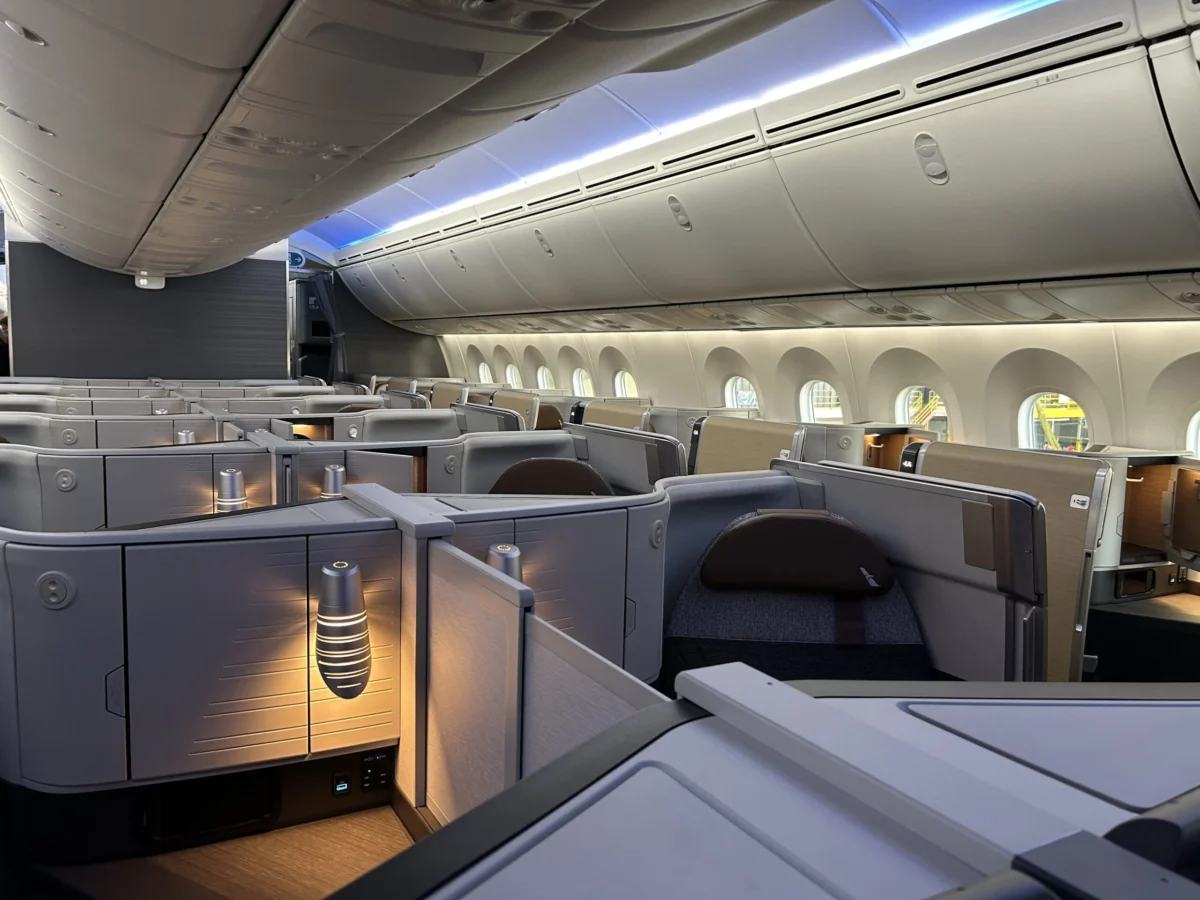
The landscape of ultra-premium air travel on U.S. airlines underwent a significant transformation this week as American Airlines operated its final long-haul international flight featuring a dedicated first-class cabin. This momentous event, with the last such journey concluding its Sydney-to-Los Angeles route, marks the definitive end of an opulent era that once defined the pinnacle of airborne luxury for American carriers. Following in the footsteps of Delta Air Lines and United Airlines, American has now fully committed to a strategy focused on an expanded, highly sophisticated business-class product, signaling a collective bet by U.S. majors on a concept dubbed "mass luxury" in the competitive global aviation market.
A Glimpse into the Golden Age: The Genesis of First Class
The concept of an elevated travel experience dates back to the very dawn of commercial aviation. In the 1930s, Pan American Airways’ "Clippers" offered luxurious transatlantic and transpacific journeys, albeit on propeller-driven aircraft, where passengers enjoyed spacious seating, gourmet meals, and attentive service. The true "golden age" of first-class travel, however, began to blossom with the advent of the commercial jet age in the late 1950s and 1960s. Aircraft like the Boeing 707 and Douglas DC-8 slashed travel times, making long-distance international travel more accessible, yet still exclusive.
It was during this period that first class truly became a symbol of extravagance. Airlines vied to outdo each other, offering amenities that today seem almost fantastical. Passengers in the early days of jet travel, exemplified by iconic images of Pan Am hostesses serving champagne in the first-class cabin of a Boeing 747 in 1970, experienced a level of service unparalleled. This included seat-side carving of chateaubriand, multi-course meals served on fine bone china and crystal, silver service, and dedicated, highly personalized attention from cabin crew. The experience was not merely about reaching a destination; it was a destination in itself, a social event, and a testament to status. These cabins were often intimate, with perhaps a dozen or fewer seats, ensuring exclusivity and unparalleled space.
The Evolution and Erosion of Distinction: The Rise of Business Class
The introduction of business class in the late 1970s and early 1980s by airlines like British Airways and Pan Am was initially conceived as a middle ground between economy and first class, catering to corporate travelers seeking comfort without the extreme cost of first class. Early business class cabins featured wider seats, slightly better meal service, and a quieter environment, but were far from the lie-flat suites we see today. They often consisted of two-by-two recliner seats, a significant step up from economy but a clear tier below the lavishness of first class.
Over the subsequent decades, the distinction between first and business class began to blur, particularly in the U.S. market. As airline economics shifted and competition intensified, carriers began investing heavily in their business-class products to capture the lucrative corporate travel market. This investment accelerated in the 2000s and 2010s, leading to the introduction of lie-flat seats, direct aisle access for every passenger, and increasingly sophisticated in-flight entertainment systems. The gap narrowed further as American carriers, driven by market demand and cost efficiencies, began to redefine their premium offerings.
By the time American Airlines made its final international first-class departure, the differences between its Flagship First and Flagship Business were, for many discerning travelers, becoming negligible. The article highlights these subtle distinctions: first-class passengers received olives with their warm nuts, a small bowl of soup, a warm dessert served à la mode, and a memory foam lumbar pillow – amenities that, while appreciated, hardly justified a significant price differential for many. For instance, a one-way ticket between Los Angeles and London on American’s Boeing 777-300ER recently saw business class priced at $12,994, while first class was $15,669. For an extra $2,675, the marginal enhancements simply did not offer the transformative experience that "first class" once promised.
The Economic Imperative: Why U.S. Carriers Are Ditching First Class
The decision by American, Delta, and United to eliminate international first class is not merely a cosmetic change but a strategic pivot driven by compelling economic realities and evolving passenger preferences.
- Yield Optimization and Cabin Efficiency: As American Airlines’ Chief Commercial Officer, Nat Pieper, explained, the move is a "yield play." A first-class cabin, typically comprising a very small number of suites (American had eight on its 777-300ERs), occupies significant real estate within the aircraft. While each first-class seat commanded a higher individual price, the limited number of seats meant that the overall revenue generated from that section could be outstripped by a larger, densely packed, yet still premium, business-class cabin. By replacing eight first-class suites and 52 business-class pods with a massive 70-suite business-class cabin, American significantly increases its capacity for high-yield passengers on each flight. This allows the airline to maximize revenue per square foot of cabin space.
- Corporate Travel Policies: A crucial factor in this shift is the prevailing corporate travel policy. A vast majority of companies globally approve business-class travel for their employees on long-haul international routes, recognizing the need for comfort and productivity. However, very few corporate policies extend to first-class travel. This means that the addressable market for a top-tier business-class product is substantially larger than for first class. By concentrating resources on an enhanced business class, U.S. airlines can tap into this broader, highly profitable segment.
- Rising Operational Costs: The airline industry operates on tight margins, constantly battling rising costs. Fuel, which can constitute 20-30% of an airline’s operating expenses, has seen significant volatility. Labor costs, airport landing fees, maintenance, and fleet modernization all contribute to an upward pressure on expenses. To offset these costs and maintain profitability, airlines must optimize every revenue stream. The "mass luxury" approach, where a larger volume of premium seats generates higher overall revenue, is a direct response to these economic pressures.
- Consumer Willingness to Pay for Comfort: Post-pandemic, there has been a noticeable trend of consumers being more willing to spend on comfort and enhanced travel experiences, even if it’s not the absolute top tier. This broader segment of travelers, including leisure travelers, is seeking an elevated experience that business class now delivers, without necessarily needing the ultra-exclusivity and minor additional perks of traditional first class. This "mass luxury" appeal allows airlines to capture a wider demographic beyond just the ultra-rich or corporate elite.
American Airlines’ Transition: A Detailed Look
American Airlines’ move is a significant undertaking, involving a comprehensive overhaul of its long-haul fleet. The airline’s Boeing 777-300ERs, previously configured with eight first-class suites and 52 business-class pods, are being reconfigured to feature 70 business-class suites – the highest number among any U.S. airline. Similarly, its Boeing 787-9 Dreamliners, which currently offer 51 business-class suites, will see an increase in this configuration. The smaller Boeing 787-8 Dreamliners are also under consideration for an increase from 20 to potentially over 30 business-class suites.
The new "Flagship Suite" product, a cornerstone of this strategy, is designed to rival the best business-class offerings globally. It features suites with sliding doors, providing enhanced privacy, larger high-definition screens, advanced technology like device-charging pads, and improved bedding for a more restful sleep experience. These amenities are precisely what Harteveldt of Atmosphere Research Group points to when he states that "When you’ve got individual pods in biz class, and you’ve got a comfortable enough seat and bedding and decent wine, for a lot of people this is good enough."

While the focus is on international routes, American will also eventually phase out its domestic first-class product on the Airbus A321T subfleet used for transcontinental routes by early 2027, streamlining its premium offerings across its network.
The New Hierarchy: From Basic Economy to Segmented Business Class
The transformation of premium cabins is part of a broader trend of increased segmentation across all classes of service within the airline industry. Just as economy class has diversified into basic economy, standard economy, and extra-legroom seats, premium cabins are now being meticulously divided to cater to a wider range of price points and preferences.
- Premium Economy’s Ascent: Positioned between economy and business class, premium economy has become a popular choice for travelers seeking a significant upgrade without the business-class price tag. These cabins typically offer wider recliner seats with more legroom (often with footrests), elevated meal service on actual plates, larger seat-back screens, and priority boarding. It’s a comfortable middle ground that provides a noticeable step up from economy.
- Business Class Segmentation: U.S. airlines are now segmenting business class itself. United and Delta have introduced "basic" options for their Polaris and Delta One products, respectively. These basic fares, while offering the lie-flat seat, come with restrictions such as no advanced seat selection or no access to special airport lounges, allowing airlines to capture a more price-sensitive premium traveler. Conversely, airlines are also introducing "enhanced" or "preferred" business-class suites, such as American’s Flagship Suite Preferred or United’s Polaris Studio. These offer even more space, additional amenities, and sometimes unique features like companion ottomans with seatbelts, allowing two Polaris passengers to interact during the flight. United CFO Mike Leskinen’s comment, "I don’t think we found the limit on segmentation. We have a few things on the drawing board. We’re not done," strongly indicates that further refinements and new tiers within business class are likely on the horizon. This micro-segmentation allows airlines to extract maximum value from every seat, catering to precise customer needs and willingness to pay.
Global Contrast: Where First Class Still Reigns Supreme
While U.S. carriers have collectively decided to abandon international first class, the designation is far from extinct globally. Many leading international airlines continue to invest heavily in their first-class products, reinforcing their brand image and catering to an ultra-high-net-worth clientele.
Airlines such as Singapore Airlines, Lufthansa, British Airways, Air France, and Emirates are renowned for their exceptional first-class offerings. These carriers view first class not just as a revenue generator, but as a crucial differentiator and a statement of luxury. Their first-class suites often feature:
- Unparalleled Privacy: Fully enclosed suites with sliding doors, often with enough space for a separate seat and bed. Singapore Airlines’ A380 Suites even feature double beds.
- Gourmet Dining: Michelin-starred chefs curate menus, with à la carte dining on demand, exquisite wines, and a level of presentation that rivals top restaurants.
- Exclusive Amenities: Dedicated airport lounges with private check-in, limousine services, personal butlers, and bespoke amenity kits.
- Personalized Service: A very high crew-to-passenger ratio ensures highly personalized and proactive service.
For example, Air France recently unveiled its updated La Première first-class suite, emphasizing elegance and privacy. British Airways, while expanding its business class on A380s, is simultaneously upgrading its first class. These carriers operate in global markets where a segment of travelers, particularly in Asia, the Middle East, and parts of Europe, still demand and are willing to pay for the absolute pinnacle of luxury air travel. For these airlines, first class is an integral part of their brand identity and a key competitive advantage.
Adding another layer of complexity, smaller U.S. airlines like JetBlue, Frontier, and Allegiant Air are paradoxically introducing or expanding their domestic or short-haul "first-class" seats. This is a different definition of first class, typically referring to a larger recliner seat at the front of the cabin, akin to what was once domestic first class, but offered at a comparatively low price point to capture leisure travelers seeking a modest upgrade. This highlights the fluidity of the term "first class" and its varying interpretations across different markets and airline strategies.
Implications and The Future of Premium Travel
The retirement of international first class by U.S. carriers marks a significant inflection point in the history of commercial aviation.
For Passengers:
- Elevated Business Class: Travelers will benefit from a consistently high-quality business-class experience on U.S. airlines, often rivaling what was once considered first class.
- Reduced Ultra-Luxury Options: For those seeking the absolute pinnacle of airborne luxury (private suites, personalized chefs, etc.), U.S. airlines will no longer be an option for long-haul international flights. Such experiences will be exclusively found on select foreign carriers.
- More Choices in the Middle: The continued expansion of premium economy and segmented business-class products means more choice for travelers to tailor their comfort and budget.
For Airlines:
- Increased Profitability: The shift to a higher density of premium business-class seats is expected to boost revenue and profitability by optimizing cabin space and catering to a broader, lucrative market segment.
- Streamlined Operations: A more uniform premium cabin product simplifies service, catering, and crew training.
- Innovation Focus: U.S. airlines will continue to pour resources into innovating their business-class products, aiming to make them so compelling that the absence of a distinct first class is not felt.
The move by American Airlines, following Delta and United, solidifies a distinct U.S. approach to premium air travel – one that prioritizes a broad, high-quality "mass luxury" experience over niche, ultra-exclusive first-class cabins. While the romance of seat-side chateaubriand carving on fine bone china may be a relic of the past for American flyers, the future promises a highly comfortable, private, and technologically advanced journey for a much larger segment of premium travelers. The evolution of airline cabins is far from over, and the industry will undoubtedly continue to innovate and segment its offerings in response to economic forces and ever-changing passenger desires.
