

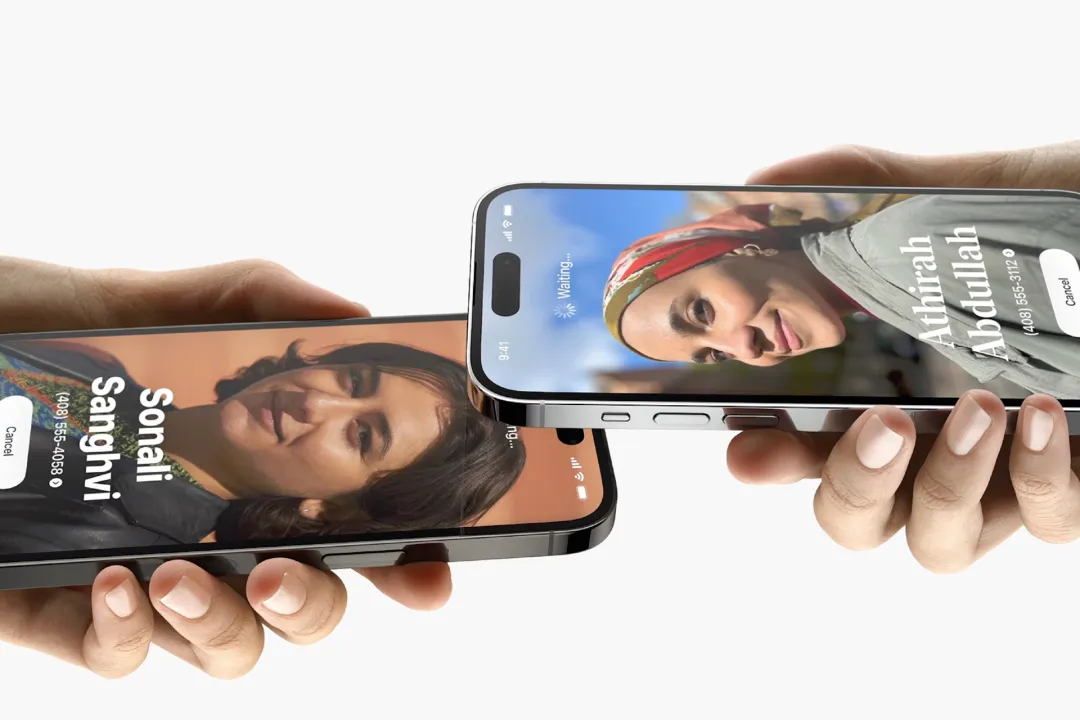
Apple, the Cupertino-based technology giant, is currently embroiled in a significant patent infringement lawsuit in India, filed by U.S.-based startup GG Technologies. The lawsuit alleges that Apple’s NameDrop feature, which facilitates the sharing of contact information between iPhones and Apple Watches by bringing devices into close proximity, infringes on GG Technologies’ patented technology. This legal challenge, seeking ₹15 billion (approximately $161.86 million) in damages and a prohibitive injunction against Apple’s sales and imports in India, marks a critical juncture for both companies, particularly given India’s escalating importance in Apple’s global strategy. Concurrently, GG Technologies has initiated similar legal proceedings against Apple in the United States, including an investigation by the International Trade Commission (ITC).
The Heart of the Dispute: NameDrop vs. StayTouch
At the core of the legal battle is the functionality of sharing digital contact information. Apple introduced NameDrop as part of its iOS 17 update in June 2023, subsequently rolling it out to iPhones later that year and to compatible Apple Watches via watchOS 10.1 in October 2023. The feature allows users to exchange contact cards simply by bringing two compatible devices close to each other, a seamless interaction designed for quick and intuitive information exchange.
GG Technologies, founded in 2018 by Gaurav Goel, an alumnus of the Indian Institute of Technology (IIT) Delhi and a former Goldman Sachs investment banker, developed the StayTouch app. Launched in 2019, StayTouch offers a similar core functionality: enabling users to exchange contact details by bringing their smartphones into close proximity, eliminating the need for traditional business cards or manual data entry. The startup asserts that its technology, which facilitates this proximity-based exchange without requiring explicit manual pairing, is protected by patents in both the U.S. and India. The 781-page court filing in the Bombay High Court by GG Technologies meticulously details how Apple’s NameDrop allegedly replicates the mechanism protected by their Indian patent.
A Detailed Chronology of Events and Legal Maneuvers
The legal dispute between GG Technologies and Apple has unfolded over several years, with patent applications, product launches, and legal actions creating a complex timeline:
- 2018: GG Technologies is founded by Gaurav Goel with a vision to revolutionize contact exchange.
- 2019: StayTouch app is officially launched, offering its innovative proximity-based contact sharing solution. In the same year, GG Technologies files for patent protection for its core technology in the United States.
- 2021: Building on its initial patent filings, GG Technologies submits its patent application in India, seeking intellectual property protection within this key market.
- April 2023: Recognizing the potential overlap with Apple’s upcoming features, GG Technologies initiates pre-institution mediation proceedings in India, a mandatory step before filing commercial lawsuits in the country. This indicates an early attempt by the startup to resolve the dispute amicably.
- June 2023: Apple officially unveils NameDrop as a marquee feature of iOS 17 during its annual Worldwide Developers Conference (WWDC), signaling its imminent deployment across its ecosystem.
- Later 2023: NameDrop becomes available to iPhone users as part of the public release of iOS 17.
- April 2024: With mediation efforts ongoing in India, GG Technologies expands its legal strategy by filing a patent infringement lawsuit against Apple in the United States, indicating the global scope of their intellectual property defense.
- July 2024: GG Technologies is granted its Indian patent, solidifying its intellectual property claims in the jurisdiction. This timing is crucial as it provides the startup with a powerful legal instrument for its ongoing and prospective litigation in India.
- August 2024: Following the U.S. lawsuit, the U.S. International Trade Commission (ITC) announces it has opened an investigation into Apple’s alleged patent infringement, a significant development given the ITC’s power to recommend import bans on infringing products.
- September 2024: The pre-institution mediation proceedings initiated in India in April fail to reach a resolution, paving the way for formal litigation.
- October 2024: GG Technologies formally files its lawsuit against Apple in the Bombay High Court, seeking substantial damages and an injunction.
- October 2023 (re-sequenced for chronological clarity with feature rollout): Apple extends NameDrop functionality to Apple Watch devices through the watchOS 10.1 update, further integrating the feature across its hardware ecosystem.
The Stakes: Billions in Damages and Market Access Restrictions
The demands put forth by GG Technologies are substantial and carry significant implications for Apple. In India, the startup is seeking ₹15 billion, a figure that underscores the perceived value of the infringed technology and the potential market impact. More critically, GG Technologies has urged the Bombay High Court to issue an injunction that would restrict Apple from selling or importing iPhones and Apple Watches preloaded with the NameDrop feature into India. Such an injunction, if granted, could severely disrupt Apple’s operations in one of its fastest-growing and strategically vital markets.
In the United States, the stakes are equally high. The ITC investigation, initiated after GG Technologies’ complaint, could lead to an order blocking the import of infringing Apple devices into the U.S., alongside restrictions on their domestic sale. The ITC, known for its swift and decisive actions in intellectual property disputes, has the power to inflict considerable damage on companies found to be infringing patents, potentially leading to a supply chain nightmare for Apple.
GG Technologies: An Innovator’s Stand
GG Technologies, with its flagship product StayTouch, represents the innovative spirit of startups aiming to solve everyday problems through technology. Gaurav Goel’s background as an IIT Delhi graduate and former Goldman Sachs investment banker suggests a founder with both technical acumen and strategic business insight. The company’s mission to offer an advanced, digital alternative to traditional business cards resonated with the increasing digitalization of professional networking. StayTouch’s availability on both iOS and Android platforms indicates a broad market approach, directly competing with and, in GG Technologies’ view, predating Apple’s similar offering. This lawsuit, therefore, is not merely about financial compensation but also about validating years of research, development, and intellectual property investment by a smaller entity against a global behemoth.
The Landscape of Patent Law and Apple’s Legal History
Patent infringement lawsuits are a common, albeit complex, feature of the modern technology industry. India’s legal system, while distinct from that of the U.S., provides robust frameworks for intellectual property protection. The requirement for pre-institution mediation before commercial lawsuits highlights a preference for out-of-court settlements, yet its failure in this case indicates a significant divergence between the parties’ positions. Proving patent infringement often involves demonstrating that a defendant’s product or feature incorporates all the elements of a patented claim, or an equivalent thereof, and that the patent itself is valid against "prior art" (existing inventions or public knowledge).
Apple is no stranger to high-stakes patent litigation. Over the years, the company has been involved in numerous intellectual property battles, some of the most prominent including its protracted disputes with Qualcomm over modem technology, and with Samsung over smartphone design and functionality. More recently, Apple faced an import ban on some of its Apple Watch models in the U.S. due to a patent dispute with medical technology company Masimo concerning blood oxygen sensor technology. These past experiences illustrate Apple’s aggressive defense strategies, which often involve challenging patent validity, arguing non-infringement, or seeking design-arounds. While Apple has not yet commented on the current lawsuit, its typical approach would involve a rigorous legal defense, potentially including counter-allegations or arguments regarding the novelty and validity of GG Technologies’ patent.
India’s Strategic Importance: Why This Lawsuit Matters
The timing and location of this lawsuit are particularly significant given India’s burgeoning importance to Apple’s global strategy. India has rapidly emerged as one of the world’s fastest-growing smartphone markets, offering immense potential for expansion as its middle class expands and digital adoption accelerates. For Apple, which has historically commanded a premium niche, India represents a critical frontier for market share growth. While iPhones currently account for less than 10% of total smartphone shipments in India, the premium segment (above $500) has seen remarkable growth, with Apple often dominating this category. In 2023, iPhone shipments in India reportedly surged by over 20%, marking Apple’s best year in the country to date.
Beyond its consumer market, India has become a pivotal manufacturing hub for Apple, serving as a crucial component of its strategy to diversify its supply chain away from China. Driven by government initiatives like "Make in India" and production-linked incentive (PLI) schemes, major Apple suppliers like Foxconn, Wistron, and Pegatron have significantly scaled up iPhone production in the country. Reports suggest that India now accounts for a substantial portion—potentially one in four—of all iPhones produced globally, a figure projected to increase further. This manufacturing presence, coupled with Apple’s recent expansion of its retail footprint with flagship stores in major Indian cities like Mumbai and Delhi, underscores its deep strategic commitment to the South Asian nation. An injunction affecting sales or imports in India, therefore, would not merely be a financial setback but a substantial disruption to Apple’s long-term growth ambitions and strategic supply chain diversification efforts.
Broader Implications and Industry Impact
The outcome of this dual-front legal battle holds significant implications for Apple, GG Technologies, and the broader technology industry:
- For Apple: A loss in either jurisdiction could result in substantial financial penalties and potentially force Apple to disable or redesign the NameDrop feature, or even face product bans. Such a development could tarnish its reputation for innovation and intellectual property integrity, especially if a court finds deliberate infringement. It would also set a precedent for how global tech giants engage with smaller innovators in emerging markets.
- For GG Technologies: A victory would validate its intellectual property, potentially providing a substantial financial windfall and significantly raising its profile in the global tech landscape. It would empower other startups to more aggressively defend their innovations against larger corporations. Even a favorable settlement could provide crucial funding for further development and market expansion for StayTouch.
- For the Tech Industry: This case highlights the perpetual tension between rapid technological advancement and intellectual property protection. It underscores the challenges faced by smaller companies in protecting their innovations from larger entities with vast resources. The increasing globalization of tech markets means that intellectual property disputes are becoming multi-jurisdictional, requiring complex legal strategies. The case could prompt greater scrutiny of "fast-follower" features and encourage companies to conduct more thorough patent clearance searches before launching new functionalities. Furthermore, it adds to the ongoing debate about the scope and validity of software patents, particularly those covering user interface interactions or common sharing mechanisms.
As the case in the Bombay High Court awaits its initial listing for a hearing, and the ITC investigation proceeds in the U.S., the technology world watches keenly. The resolution of this patent dispute will not only determine the fate of Apple’s NameDrop feature and GG Technologies’ claims but also cast a long shadow over intellectual property enforcement and competitive dynamics in the global technology arena.
