

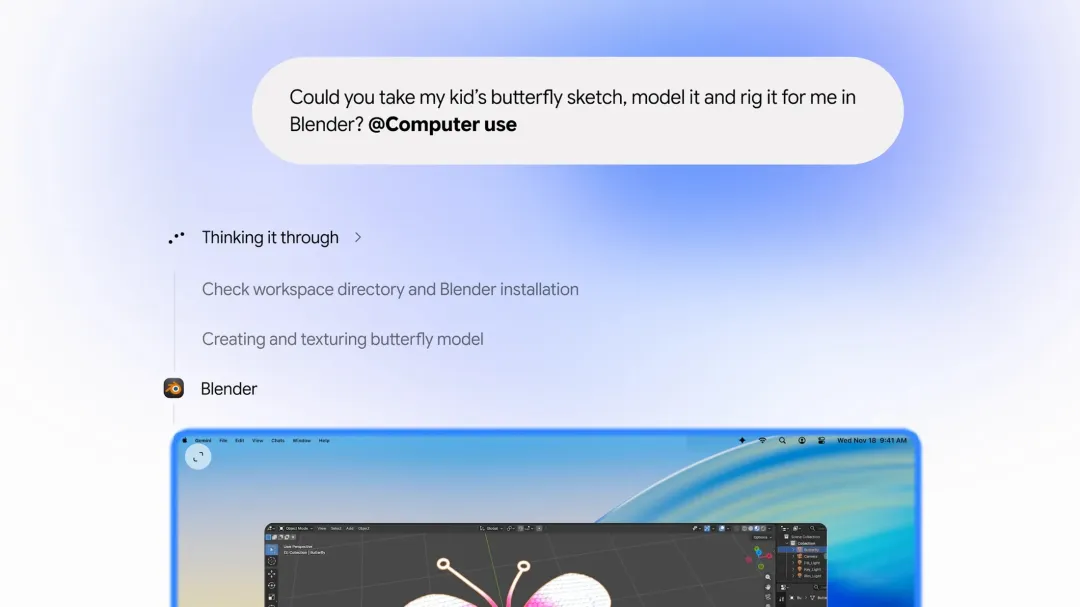
Google on Thursday announced a significant expansion of its artificial intelligence capabilities, bringing "computer use" functionality to its Gemini desktop application on macOS. This pivotal update empowers Google’s AI to autonomously complete tasks on users’ behalf, navigating native Mac applications, interacting with local files, and browsing websites seamlessly in the background. This move marks a critical step in the evolution of agentic AI, transforming Gemini from a conversational assistant into a proactive digital agent capable of executing complex, multi-step operations directly on a user’s personal computer.
The Dawn of Agentic AI on the Desktop
The introduction of "computer use" fundamentally redefines the interaction model between users and their AI. Unlike traditional chatbots that merely respond to queries, agentic AI agents are designed to understand intent, break down complex goals into actionable steps, and then execute those steps across various applications and digital environments. For Mac users, this means Gemini can now perform actions such as organizing files, filling out forms across multiple web pages, creating presentations from disparate data sources, or automating repetitive tasks that span both local applications and internet browsers. A key innovation highlighted by Google is the ability for the AI to operate in a "live preview" mode within the chat interface, allowing users to observe Gemini’s actions without relinquishing control of their screen or cursor, enabling them to continue working on other tasks concurrently. Crucially, users retain ultimate oversight, with the power to pause, stop, or approve Gemini’s proposed actions before they are executed, addressing vital concerns around control and security.
This advanced capability is initially available in English in the U.S. and requires the Gemini app for Mac, alongside a Google AI Premium, Pro, or Ultra subscription. While Google has not yet specified a timeline for expansion to other markets or platforms, the U.S. launch typically serves as a proving ground for such sophisticated features.
Google’s Strategic Entry into the Agentic AI Arena
Google’s foray into desktop agentic features, while significant, positions it as a later entrant in a rapidly evolving competitive landscape. Leading AI model developers such as OpenAI, Anthropic, and Meta have already been integrating agentic functionalities into their respective desktop applications and AI offerings for some time. OpenAI’s ChatGPT, for instance, has demonstrated capabilities ranging from web browsing to code interpretation and plugin integration, allowing it to interact with external services and perform complex data analysis. Anthropic’s Claude has similarly showcased advanced reasoning and tool-use capabilities, enabling it to act as a sophisticated assistant in various digital workflows. Meta, with its Llama models, has also been pushing the boundaries of AI agents, particularly in research and development, with a clear trajectory towards more integrated and proactive AI experiences.
This competitive context underscores the strategic importance of Google’s new macOS feature. Google has been steadily building its foundation for agentic AI, with several recent announcements signaling a concerted push in this direction. Only recently, Google announced the broader rollout of Gemini’s "Tasks" feature, an in-app capability designed to allow the AI to function more as a personal agent. "Tasks" empowers Gemini to assist users with actions such as signing into websites, facilitating online purchases, or booking appointments, effectively streamlining common digital chores. This feature, while distinct from the new "computer use" on macOS, shares the underlying philosophy of delegating digital actions to AI.
Further demonstrating its commitment, Google also recently began admitting early testers to its revamped "CC" AI agent, which was initially announced in September. This specialized agent is meticulously designed to assist families in maintaining organization across various digital touchpoints, including email, calendars, chats, and tasks. The "CC" agent represents Google’s exploration of AI’s role in personal and household management, offering a glimpse into a future where AI proactively helps manage daily life logistics. These prior initiatives, "Tasks" and "CC," serve as crucial stepping stones, collectively building Google’s expertise and infrastructure for the more expansive "computer use" functionality now available on macOS.
A Detailed Look at "Computer Use" Mechanics and Benefits
The core innovation of Gemini’s "computer use" lies in its ability to directly interface with the macOS operating system and its applications. When a user issues a command, for example, "Organize all downloaded PDFs into a new folder named ‘Research Papers 2024’ and summarize the key points of the top three documents," Gemini doesn’t just provide instructions or links. Instead, it observes the user’s desktop environment, identifies the relevant files, creates the specified folder, moves the files, and then—critically—opens and processes the content of the PDF documents to extract and synthesize information. All these actions are performed within the user’s actual desktop environment, leveraging native macOS functionalities.
The "live preview" feature is central to maintaining user trust and control. As Gemini executes each step, a visual representation of its actions appears in the chat interface. For instance, if Gemini is filling out an online form, the user might see a condensed, real-time animation or description of the fields being populated. This transparent execution model allows users to intervene if an action deviates from their intent or if they wish to modify the process. The ability to "pause, stop, and approve" actions before they happen is a critical safeguard, differentiating this advanced automation from a fully autonomous system and ensuring that the user remains the ultimate decision-maker.
Google has highlighted several practical applications for this new feature, underscoring its potential to significantly enhance productivity by automating mundane and time-consuming tasks:
- Form Filling Automation: Tedious online forms, often requiring repetitive data entry, can be completed by Gemini, drawing information from local files or pre-existing user profiles. This could range from job applications to online registrations or expense reports.
- Batch Processing and Repetitive Workflows: Users often face tasks that involve repeating the same action across a large batch of files, such as resizing images, converting document formats, or renaming files based on specific criteria. Gemini can automate these workflows, saving hours of manual effort.
- Intelligent File Organization: Beyond simple drag-and-drop, Gemini can intelligently organize files into folders based on content, metadata, creation date, or user-defined criteria. For example, it could sort all photos from a specific event into a new folder, or categorize financial documents by month and type.
- Dynamic Content Creation: The feature enables the creation of complex documents like slideshows or reports by pulling information from various sources—local files, online dashboards, specific web pages—and integrating them into a cohesive presentation. This capability could be invaluable for business professionals preparing weekly reports or students compiling research projects.
- Enhanced Research and Information Synthesis: Gemini can be tasked with gathering information from multiple websites, cross-referencing it with local documents, and then synthesizing the findings into a concise summary or report, dramatically accelerating research processes.
- Smart Email Management: While not explicitly stated, the logical extension of "computer use" could involve intelligent email management, such as drafting responses based on email content and calendar availability, summarizing lengthy threads, or organizing inbox items into project-specific folders.
Broader Implications for the Computing Landscape
The introduction of Gemini’s "computer use" on macOS carries significant implications for various stakeholders, from individual users to the broader tech industry.
Impact on User Productivity and Workflow: For individuals, this represents a fundamental shift in how they interact with their computers. The paradigm moves from direct manipulation to delegation, where the AI acts as an intelligent co-pilot, handling routine or complex tasks that previously demanded direct human intervention. This could free up considerable time, allowing users to focus on more creative, strategic, or high-value activities. It blurs the lines between human and machine agency in digital tasks, pushing the boundaries of what a personal computer can accomplish autonomously.
The Mac Ecosystem and Apple’s AI Strategy: Google’s decision to launch this feature first on macOS is strategic. Mac users often represent a premium demographic, known for their adoption of advanced software and integration into creative and professional workflows. This move puts direct competitive pressure on Apple, which has historically maintained tight control over its ecosystem and has only recently unveiled its own comprehensive "Apple Intelligence" initiative. While Apple Intelligence promises deep integration of AI across its native applications, Google’s Gemini offers an alternative, cross-platform AI layer that can interact with macOS applications in a similar, though perhaps less deeply integrated, manner. This could accelerate Apple’s own development of agentic features, potentially leading to a more competitive and innovative AI landscape on its platform.
Intensifying the AI Assistant Race: The agentic AI space is becoming increasingly crowded and competitive. Google’s entry with "computer use" capabilities further intensifies this race. It leverages Google’s strengths in search, information processing, and its vast ecosystem of productivity tools (Workspace) to create a powerful desktop AI. This competition is likely to drive further innovation, pushing all major players to develop more robust, reliable, and secure agentic AI systems. The ultimate beneficiaries will be users, who will have access to increasingly sophisticated tools that can truly act as intelligent assistants.
Challenges, Risks, and Ethical Considerations
While the promise of agentic AI is immense, its deployment also raises critical challenges and ethical considerations that Google and the wider industry must address.
Security and Data Privacy: Granting an AI agent direct access to a user’s local files, applications, and web browsing activities raises significant security and privacy concerns. Users will need assurances regarding how their data is handled, whether sensitive information remains on-device or is transmitted to Google’s servers, and how potential vulnerabilities to malicious attacks are mitigated. Google’s emphasis on user approval for each action is a crucial safeguard, but comprehensive security architectures and transparent data policies will be paramount.
Reliability and Error Management: AI agents, while advanced, are not infallible. They can misinterpret instructions, make errors in execution, or encounter unforeseen issues. The "pause, stop, and approve" mechanisms are vital for error correction, but the robustness of the AI’s understanding and execution will determine user satisfaction and trust. Google will need to ensure that Gemini’s "computer use" is highly reliable, especially for critical or sensitive tasks.
User Over-reliance and Skill Erosion: As AI agents become more capable, there is a potential for users to become overly reliant on them, potentially leading to a decline in certain digital literacy skills or critical thinking. Striking a balance between automation and empowering users to remain proficient in their own digital tasks will be an ongoing challenge.
Ethical Deployment and Accountability: The deployment of AI agents that can act autonomously on a user’s behalf necessitates careful consideration of ethical guidelines. Who is accountable if an AI agent makes a mistake that leads to negative consequences? How are biases in AI models prevented from influencing actions taken on the user’s behalf? These are complex questions that require ongoing dialogue and robust ethical frameworks.
Market Strategy and Future Outlook
Google’s decision to gate "computer use" behind its premium Gemini subscriptions (AI Premium, Pro, or Ultra) reflects a clear monetization strategy for its most advanced AI capabilities. This positions Gemini as a premium service offering distinct advantages over free or basic AI tools, catering to power users and professionals who are willing to invest in enhanced productivity. This model is consistent with how many tech companies are monetizing advanced AI features, driving recurring revenue from their AI investments.
Looking ahead, the expansion of "computer use" to other platforms, particularly Windows, seems a logical next step, given Windows’ dominant market share. Similarly, broadening availability beyond the U.S. and English language markets will be essential for Gemini to achieve global impact. Google’s strategy appears to be building a versatile, multimodal AI agent that can seamlessly integrate across various devices and operating systems, moving towards a vision of ambient computing where AI proactively assists users in every aspect of their digital lives. This latest launch on macOS is not just an incremental update; it is a foundational piece in Google’s grander vision for the future of human-computer interaction, where AI acts as an intelligent extension of the user’s will, automating and simplifying the complexities of the digital world. The journey of transforming AI from a mere assistant to a true digital agent is well underway, and Google’s Gemini on macOS is a powerful testament to this evolving paradigm.
