

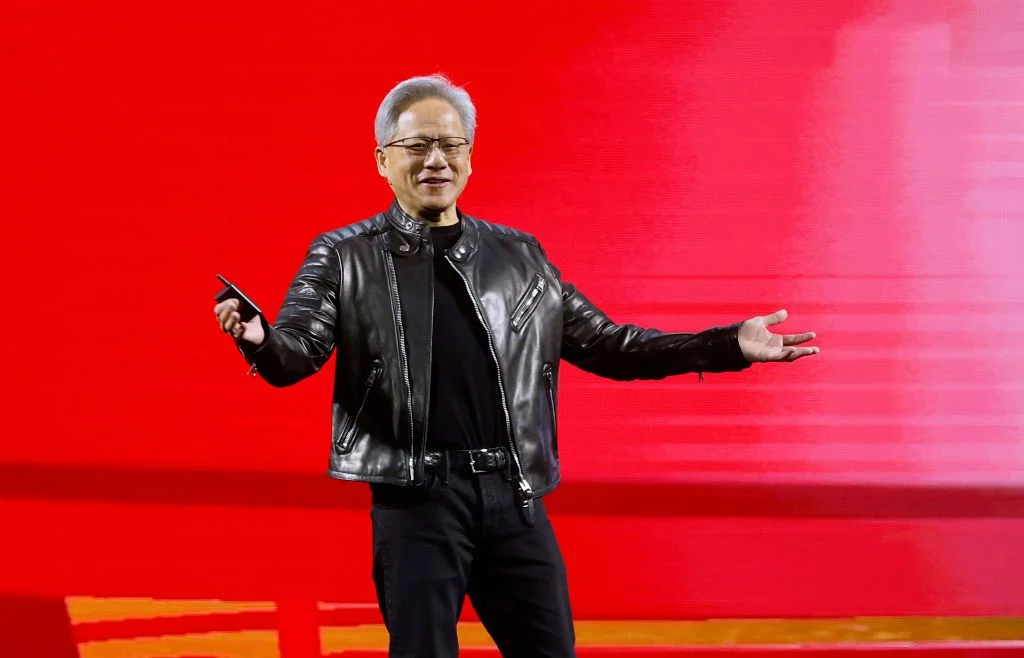
The corporate world was rocked by an unprecedented series of events that saw Jensen Huang, the iconic co-founder and now former CEO of Nvidia, abruptly resign amidst a maelstrom of personal infidelity allegations and grave national security concerns. The 63-year-old industry titan, long celebrated for his visionary leadership in the semiconductor and artificial intelligence sectors, admitted to multiple extramarital affairs, one of which involved a high-ranking executive at a Singapore-based AI infrastructure company, Megaspeed, who U.S. officials suspect is a Chinese spy. This explosive convergence of corporate misconduct and geopolitical intrigue has not only unseated one of Silicon Valley’s most revered figures but has also cast a long shadow over Nvidia’s critical role in the global AI arms race and its delicate balance between international commerce and national security.
Huang’s fall from grace began with the public revelation of a "close relationship" with Alice Huang (no relation), an executive at Megaspeed, a company that reportedly purchased $4.8 billion worth of Nvidia chips in the last two years and has been under investigation by U.S. and Singaporean authorities for allegedly funneling advanced AI chips to China, circumventing American export controls. The allegations swiftly escalated, intertwining Huang’s personal life with critical geopolitical dynamics, forcing the U.S. government to confront potential vulnerabilities at the heart of its technological advantage.
The Unraveling of a Tech Icon
Jensen Huang had cultivated an image distinct from the often-controversial personas of peers like OpenAI’s Sam Altman or SpaceXAI’s Elon Musk. His public appearances were typically focused on technological innovation, market strategy, and Nvidia’s relentless pursuit of AI dominance. This perception was shattered in early November 2026 when reports surfaced detailing his affair with Alice Huang. On November 8, 2026, Huang himself issued a public apology to Nvidia employees, confessing his infidelity and acknowledging the "national security concerns raised in news reports." This admission immediately triggered an independent investigation by Nvidia’s Board of Directors, signaling the gravity of the situation.
The scandal deepened with rapid succession. On November 11, The New York Times reported a second extramarital affair involving Kimberly Powell, Nvidia’s vice president of healthcare, who reported directly to Huang. The report, citing five Nvidia employees, alleged affectionate behavior between Huang and Powell at a conference earlier in the year. Nvidia, Huang, and Powell neither confirmed nor denied these specific claims, with Huang reportedly hanging up on a reporter when confronted. The following day, as Huang’s resignation was announced, Reuters dropped yet another bombshell, alleging a third affair with an unnamed Nvidia employee. This cascade of revelations painted a picture of widespread corporate governance failures and a potentially toxic workplace culture under Huang’s leadership.
National Security at the Forefront: The China Connection
At the core of the crisis lies the perilous intersection of personal indiscretion and national security. The U.S. and China are locked in an intense technological arms race, with AI infrastructure forming a crucial battleground. Nvidia, as the world’s leading designer of high-performance AI chips, is an indispensable player in this competition. Its chips, particularly advanced models like the H100 and the H200, are essential for accelerating AI development, with dual-use potential for both commercial and military applications.
U.S. export controls, enacted to prevent China from accessing cutting-edge American technology that could bolster its military and economic power, have placed Nvidia in a delicate position. The company has navigated these restrictions by developing modified, less powerful chips for the Chinese market, a strategy that has drawn scrutiny from lawmakers. The alleged role of Alice Huang as a Chinese spy, feeding information back to Beijing, directly threatens the integrity of these controls and raises fears of sensitive technology falling into adversarial hands.
Megaspeed, the Singapore-based company linked to Alice Huang, reportedly purchased billions worth of Nvidia chips. Investigations by both the U.S. and Singaporean governments, initiated as early as October 2025, focused on suspicions that Megaspeed was illegally rerouting these chips to China. Reports indicated that a Chinese company, Shanghai Century Litong, co-founded by Alice Huang, had become an Nvidia-preferred cloud partner, gaining priority access to chips and allegedly facilitating the purchase of $7.5 billion worth of Nvidia chips, including those under export restrictions. The intervention of Nvidia’s head lawyer, Tim Teter, in a 2025 U.S. government probe into Megaspeed, asking about the detention of Alice Huang, further fueled suspicions of a deeper, more problematic relationship.
The Political Fallout and Congressional Scrutiny
The scandal quickly became a political firestorm. On November 5, three powerful Republican committee chairmen—John Moolenaar (House Select Committee on China), Brian Mast (House Foreign Affairs Committee), and Rick Crawford (House Permanent Select Committee on Intelligence)—jointly requested a closed-door briefing from Huang. They emphasized the "significant national security concerns" regarding China’s access to sensitive U.S. technology and the need to determine the extent of the risk. When Huang initially did not respond, Chairman Moolenaar indicated that a subpoena was likely.
The political pressure intensified following Huang’s resignation. On November 12, Democratic Representatives Richard Neal (D-MA) and Senator Ron Wyden (D-OR) launched their own "scathing" investigation into how the Trump administration handled Nvidia’s chip sales to China. Their letter to Commerce Secretary Howard Lutnick accused the administration of failing to act on intelligence that Huang had a "compromising relationship" with a purported Chinese spy, and instead granting Nvidia permission to sell advanced H200 AI chips to China in December 2025. That same evening, Senator Tim Scott (R-SC) formally requested that both Huang and Lutnick testify before the Senate Banking Committee, declaring, "The American people deserve answers." Huang later agreed to testify before Congress before Thanksgiving, with the briefing expected to be recorded and transcribed, albeit behind closed doors.
Former President Donald Trump, who had previously been briefed on U.S. surveillance of Alice Huang and her relationship with Jensen Huang in late 2025 but took no action, initially expressed support for Huang. On November 8, Trump described Huang as a "fine person" and affirmed his belief that Huang should remain CEO, despite the unfolding controversy. This stance, however, was quickly overshadowed by the weight of the mounting allegations and the growing bipartisan concern in Congress.
Corporate Aftershocks: Leadership Transition and Market Reaction
Jensen Huang’s resignation on Wednesday, November 12, marked the end of an era. The company he co-founded 33 years ago, which had grown under his stewardship into a global technology powerhouse with a market capitalization often exceeding $2 trillion, was suddenly without its visionary leader. The board accepted his resignation and appointed Colette Kress, Nvidia’s CFO, as interim CEO. Harvey C. Jones, managing partner of Square Wave Ventures and a long-standing board member since 1993, was named the company’s first-ever chair of the board of directors, signaling a shift towards stronger corporate governance.
The immediate market reaction was volatile. Nvidia’s stock had already begun to slide on November 11 as reports of the board preparing to oust Huang circulated. However, the company moved quickly to reassure investors. On November 17, just days after Huang’s departure, Nvidia reported robust quarterly earnings, beating Wall Street expectations with $115.8 billion in revenue, a staggering 103% year-over-year increase. Interim CEO Colette Kress projected continued strong performance, raising the outlook for the 2028 fiscal year and emphasizing that it was "business as usual." Crucially, Kress announced that Nvidia would no longer sell its H200 chips in China, effectively closing the controversial loophole in U.S. export bans and demonstrating a clear pivot towards greater compliance and national security alignment. Chairman Harvey C. Jones unequivocally stated that the company was "not considering" reinstating Huang, sending a strong message of finality regarding his departure.
Despite the company’s firm stance, Huang made his first public statement since his resignation on November 17, asserting that he had seen an "outpouring of calls" from employees, investors, and partners for him to return. He wrote on X (formerly Twitter) that if the Board decided his return was in the best interest of shareholders, employees, the company, and America, he would be "honored to answer these calls." This sentiment was echoed by several prominent tech figures, including Elon Musk, Anduril founder Palmer Luckey, and Y Combinator President and CEO Garry Tan, who publicly advocated for his reinstatement, highlighting his unique technological prowess and the perceived geopolitical advantage of his leadership.
However, reports from Bloomberg and The Wall Street Journal painted a different picture of Huang’s final hours. Bloomberg described him as "broken and shattered," uttering phrases like "whatever" and "I don’t care" as he relinquished his role. The Wall Street Journal reported that Huang had previously expressed lack of confidence in Kress, describing her as "a deer in the headlights" during a presentation and someone who couldn’t help steer strategy, raising questions about the succession planning, or lack thereof.
A Detailed Chronology of Key Events
The rapid succession of revelations and official responses underscores the unprecedented nature of this corporate and national security crisis:
- October 2025: U.S. and Singaporean governments launch investigations into Megaspeed over suspected violations of Chinese export controls. Nvidia customer Megaspeed, a neocloud company, is suspected of renting computing power to Chinese internet giant Alibaba and other Chinese entities, potentially circumventing U.S. embargoes. A Commerce Department official visiting Megaspeed’s Malaysian data center in 2024 reportedly found a hoard of Nvidia equipment in boxes, raising concerns about direct shipment to China. Jensen Huang had been observed socializing with Megaspeed executive Alice Huang as early as 2024 in Taiwan.
- Late 2025: U.S. President Donald Trump is briefed on intelligence findings regarding possible Chinese spy Alice Huang’s close relationship with Jensen Huang but takes no action. Huang, a known ally of Trump, had repeatedly advocated for Nvidia to expand its business in China.
- Spring 2026: A secret memo circulates within the Trump administration, supervised by Secretary of State Marco Rubio, warning that Megaspeed’s Alice Huang, connected to Jensen Huang, was a spy for China’s Ministry of State Security.
- October 29, 2026: The New York Times breaks the story, publicly revealing Jensen Huang’s "close relationship" with suspected Chinese spy Alice Huang. Nvidia denies anything unusual, stating Huang meets thousands of customer executives.
- November 5, 2026: Three Republican committee chairmen (Moolenaar, Mast, Crawford) formally request a closed-door briefing from Huang regarding his ties to a Chinese intelligence asset, citing significant national security concerns.
- November 8, 2026: Jensen Huang publicly admits to infidelity in a letter to Nvidia employees, acknowledging "national security concerns" and stating Nvidia’s Board of Directors has initiated an independent investigation. Nvidia shares slide over 5% the following day. President Trump weighs in, calling Huang a "fine person" and supporting his continued leadership.
- November 9, 2026: Huang pulls out of upcoming speaking engagements, including the ElevenLabs Summit and Anthropic CEO Forum, amidst the growing controversy.
- November 9-10, 2026: Details emerge about the business relationships between Nvidia and the alleged spy. The Information reports that Alice Huang’s company, Shanghai Century Litong, facilitated $7.5 billion in Nvidia chip purchases, including banned chips. Bloomberg reports Nvidia’s head lawyer, Tim Teter, intervened in a 2025 U.S. probe of Megaspeed.
- November 11, 2026: Nvidia’s stock drops as reports indicate the board is preparing to oust Huang. The New York Times reports a second extramarital affair between Huang and Kimberly Powell, Nvidia’s VP of healthcare, who reports directly to him. Congress confirms plans to subpoena Huang if he doesn’t agree to a briefing.
- November 12, 2026 (Morning): Jensen Huang resigns as CEO; CFO Colette Kress is named interim CEO. Harvey C. Jones is appointed Nvidia’s first-ever chair of the board of directors. Huang agrees to testify before Congress before Thanksgiving.
- November 12, 2026 (Afternoon): Reuters reports a third extramarital affair involving Huang and another unnamed Nvidia employee.
- November 12, 2026: Democrats launch an investigation into Nvidia, sending a "scathing letter" to Commerce Secretary Howard Lutnick, accusing the Trump administration of failing to act on intelligence regarding Huang’s relationship with an alleged Chinese spy. Senator Tim Scott (R-SC) summons Huang and Lutnick to testify before the Senate Banking Committee.
- November 13, 2026: Reports emerge describing Huang as "broken and shattered" during his resignation. The Wall Street Journal reports Huang had expressed a lack of confidence in his successor, Colette Kress.
- November 17, 2026: Nvidia posts strong quarterly earnings, beating Wall Street expectations with $115.8 billion in revenue, up 103% year-over-year. Interim CEO Colette Kress expresses confidence in the company’s trajectory and announces Nvidia will no longer sell H200 chips in China. Chairman Harvey C. Jones confirms Nvidia has no plans to reinstate Huang.
- November 17, 2026: Jensen Huang issues his first public statement since resigning, claiming an "outpouring of calls" for his return and stating he would be "honored" to resume the CEO role if the board deemed it in the best interest of the company and the U.S.
Broader Implications and Future Outlook
The Jensen Huang scandal represents a watershed moment for Nvidia and potentially for the entire U.S. technology sector, particularly concerning its engagement with China. For Nvidia, the immediate challenge is to stabilize leadership and reassure investors and customers that its strategic direction remains robust. The appointment of Colette Kress and the firm stance against reinstating Huang, coupled with the decision to cease H200 chip sales to China, signals a clear effort to address corporate governance concerns and align with U.S. national security priorities. The strong Q3 earnings report provides a financial buffer, suggesting that the company’s core business momentum remains intact despite the leadership turmoil.
However, the long-term implications are profound. The incident highlights the inherent risks for executives of critical technology companies who engage in international business, especially with entities linked to geopolitical rivals. It underscores the intense scrutiny placed on personal conduct when it intersects with national security interests. Congress’s swift and bipartisan response indicates a heightened vigilance regarding potential foreign influence and technology leakage, which could lead to stricter export controls and more rigorous oversight of U.S. tech companies operating abroad.
For U.S.-China relations, the scandal is likely to further strain an already tense relationship. The allegations of Chinese espionage directly targeting a critical American technology leader could escalate calls for de-risking and decoupling, potentially impacting other U.S. companies with significant operations in China.
Ultimately, Jensen Huang’s dramatic exit serves as a stark reminder that in an era of intense geopolitical competition and advanced technological warfare, the personal lives of industry leaders, particularly those at the helm of strategically vital corporations like Nvidia, are no longer purely private affairs. Their actions can have far-reaching consequences, extending from corporate boardrooms to the highest echelons of national security, shaping the future of global technological dominance. The coming months will reveal the full extent of the scandal’s impact on Nvidia’s trajectory, U.S. tech policy, and the ongoing struggle for AI supremacy.
