

The landscaping and lawn care industry has emerged as a resilient and high-growth sector within the broader service-based economy, currently valued at approximately $115 billion globally with the United States market accounting for a significant $78 billion portion of that revenue. As homeowners and commercial property managers increasingly outsource outdoor maintenance to professional entities, the franchise model has become the preferred vehicle for entrepreneurs seeking to capitalize on this demand. By offering established brand recognition, proven operational systems, and collective purchasing power, landscaping franchises mitigate many of the risks associated with independent startups. This sector’s growth is driven by a combination of aging demographics, the rise of "outdoor living" as a lifestyle priority, and a professionalization of property maintenance standards across North America.
The Evolution of the Green Industry: From Local Labor to Franchise Powerhouses
The history of the professional landscaping industry in the United States has transitioned from a fragmented market of independent owner-operators to a sophisticated landscape dominated by multi-unit franchise systems. Historically, the "mow and go" model relied on low entry barriers and local word-of-mouth. However, the early 1970s and 80s saw the birth of brands like Lawn Doctor and U.S. Lawns, which introduced standardized chemical treatments and commercial-grade scheduling to the masses.

In the current economic climate, the landscaping franchise sector is categorized by its "Amazon-proof" nature. Unlike retail or certain professional services, physical labor and site-specific maintenance cannot be digitized or outsourced overseas. This inherent stability has attracted a new wave of investors who view landscaping not merely as a seasonal trade, but as a recurring revenue business model capable of yielding high margins through scalability and technological integration.
Comparative Analysis of Leading Franchise Opportunities
Prospective franchisees must navigate a diverse array of brands, each catering to specific market niches ranging from organic residential care to heavy-duty commercial maintenance.
The Grounds Guys: The Neighborly Advantage
As a subsidiary of Neighborly, the world’s largest home services franchisor, The Grounds Guys benefits from a massive cross-referral ecosystem. The franchise offers a comprehensive suite of services including lawn maintenance, landscape design, and snow removal. This "full-service" approach is designed to solve the seasonal revenue fluctuations that plague independent contractors.

Data suggests that businesses operating under The Grounds Guys brand for over three years have seen average gross sales growth in the range of 35%. The investment for this franchise typically starts with a significant emphasis on operational training and marketing support, positioning it as a premium option for those looking to manage large teams rather than performing the labor themselves.
Augusta Lawn Care: Modernizing the Entry-Level Segment
Founded by entrepreneur Mike Andes, Augusta Lawn Care has disrupted the traditional franchise model by lowering the barrier to entry while maintaining high-tech support. With an investment range between $21,000 and $82,500, it targets younger entrepreneurs and those transitioning from solo operations to structured businesses.
Augusta’s unique value proposition includes the "Founder’s Guarantee" and a heavy emphasis on "Mastermind" sessions, which provide daily coaching. This model focuses on high-efficiency routing and proprietary software to maximize profit per man-hour, a critical metric in an industry where labor is the primary expense.

Lawn Doctor: Technological Precision in Turf Care
With more than 600 locations, Lawn Doctor specializes in the science of turf grass. Unlike general landscaping firms, Lawn Doctor focuses on fertilization, weed control, and pest management. Their proprietary "PowerSeeder" equipment provides a competitive advantage that independent operators cannot easily replicate.
The investment for a Lawn Doctor franchise ranges from $102,015 to $127,065. Analysts note that Lawn Doctor’s high customer retention rate—often exceeding 80%—is a result of their data-driven approach to lawn health, which creates a "sticky" service that customers rarely cancel once results are visible.
U.S. Lawns: The Commercial Powerhouse
U.S. Lawns has occupied a specific niche since 1986: 100% commercial focus. By targeting apartment complexes, retail centers, and corporate campuses, U.S. Lawns franchisees secure long-term, multi-year contracts that provide more stability than residential "pay-per-cut" models. The initial investment ranges from $40,800 to $141,300, with a royalty structure that rewards high-volume commercial billing.

Financial Dynamics and Investment Requirements
Investing in a landscaping franchise requires a nuanced understanding of both initial capital and ongoing operational costs. Most franchises in this sector require a liquid capital minimum of $30,000 to $50,000, with total investment costs spanning $21,000 to over $200,000 depending on the equipment package and territory size.
Revenue Streams and Seasonality
A major challenge in the landscaping sector is the "winter gap." Top-tier franchises address this through diversification:
- Lawn Maintenance: Regular mowing and edging (Spring/Summer).
- Fertilization and Weed Control: Recurring chemical or organic applications (Year-round).
- Landscape Installation: High-ticket projects involving hardscaping and planting.
- Snow and Ice Management: Essential winter services that utilize existing trucks and labor.
- Holiday Lighting: A growing niche that utilizes ladders and trucks during the slowest months of the year.
The Royalty Structure
Typical royalty fees in the landscaping sector range from 4% to 6% of gross sales. While some independent contractors view this as a burden, franchise advocates point to the "vendor discount" programs as a neutralizing factor. Large franchises negotiate national contracts for fuel, equipment (John Deere, Toro, etc.), and chemicals, often saving franchisees 10% to 15% on COGS (Cost of Goods Sold), effectively paying for the royalty through operational savings.

Market Drivers and the Shift Toward Sustainability
The landscaping industry is currently undergoing a significant shift toward environmental responsibility, driven by both consumer demand and municipal regulations.
The Rise of Eco-Friendly Services
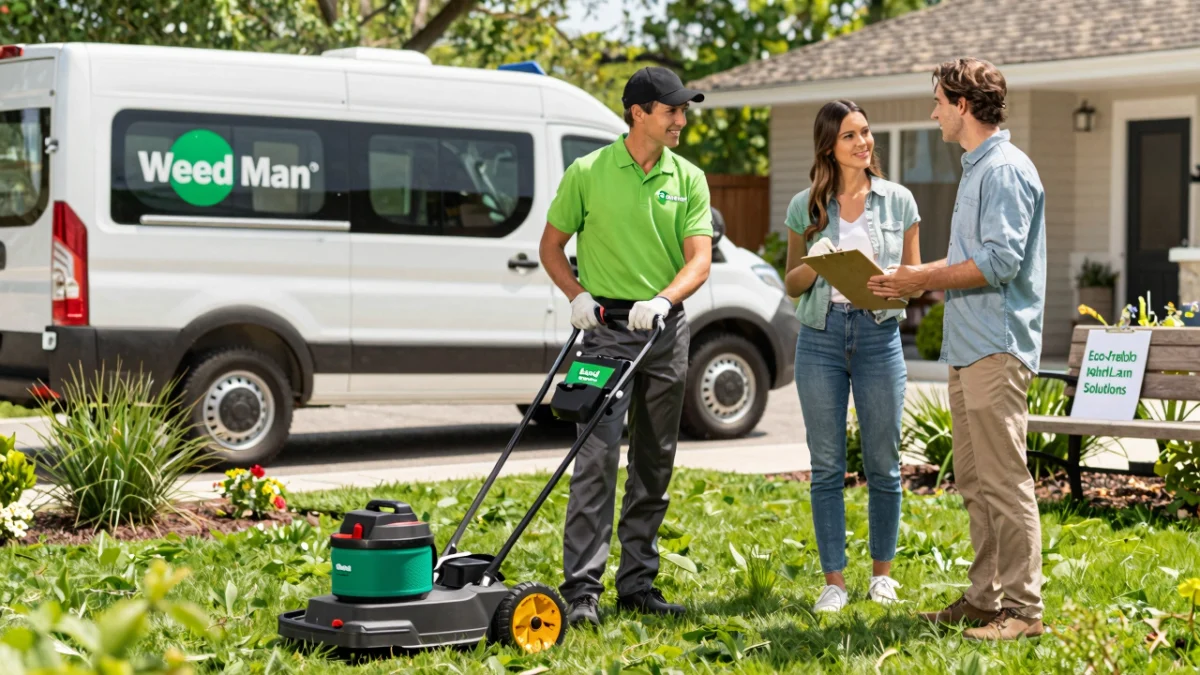
Brands like Weed Man and Spring-Green have capitalized on the demand for eco-friendly lawn solutions. As municipalities across the U.S. and Canada implement bans on certain synthetic pesticides, franchises that offer organic alternatives or integrated pest management (IPM) are gaining market share. Weed Man, in particular, has seen significant growth by positioning itself as an environmentally conscious expert, with an investment range of $69,490 to $86,550.
Technological Integration
The integration of GPS tracking, automated routing, and autonomous mowers is redefining the industry’s labor requirements. Professional franchises are at the forefront of this adoption. Automated billing and customer portals have become standard, moving the industry away from cash-based, informal transactions toward a transparent, professional service model that appeals to modern, tech-savvy homeowners.

Challenges: Labor, Regulation, and Climate
Despite the robust growth, the landscaping franchise sector faces headwinds that require sophisticated management.
- Labor Shortages: Finding and retaining reliable manual labor remains the industry’s greatest hurdle. Franchises often counter this by offering better training, branded uniforms, and career paths that independent "mow-and-go" operations cannot provide.
- Regulatory Pressures: Changes in H-2B visa programs affect many large-scale landscaping operations that rely on seasonal guest workers. Franchises with strong national advocacy and legal support are better equipped to navigate these shifts.
- Climate Volatility: Extreme weather events—droughts in the West or excessive rainfall in the East—can disrupt schedules. Diversified service offerings, such as irrigation repair during droughts, allow franchises to remain profitable regardless of the weather.
Broader Impact and Economic Implications
The proliferation of landscaping franchises has a multi-fold impact on the economy. At the local level, these businesses are significant employers and contributors to the tax base. At the consumer level, the standardization of services leads to higher property values; well-maintained landscapes can increase a home’s resale value by up to 15%.
Furthermore, the franchise model provides a pathway to business ownership for veterans and first-time entrepreneurs. Many landscaping franchises offer specific "VetFran" discounts, acknowledging that the disciplined, process-oriented nature of military service aligns perfectly with the execution of a franchise system.

Conclusion and Future Outlook
As the landscaping industry moves toward a projected $130 billion valuation by the late 2020s, the role of the franchise will only become more central. The transition toward electric equipment and autonomous technology will require capital investments that are often out of reach for independent small businesses, further tipping the scales in favor of large franchise networks.
For the prospective investor, the choice of franchise depends on a balance of investment capacity, desired involvement (owner-operator vs. executive owner), and market demand. Whether focusing on the eco-friendly residential treatments of Weed Man or the massive commercial contracts of U.S. Lawns, the data indicates that the "green industry" remains one of the most stable and scalable sectors in the modern franchise landscape. Success in this field requires more than a love for the outdoors; it requires the disciplined application of the systems and supports that these top-tier franchises provide.
