

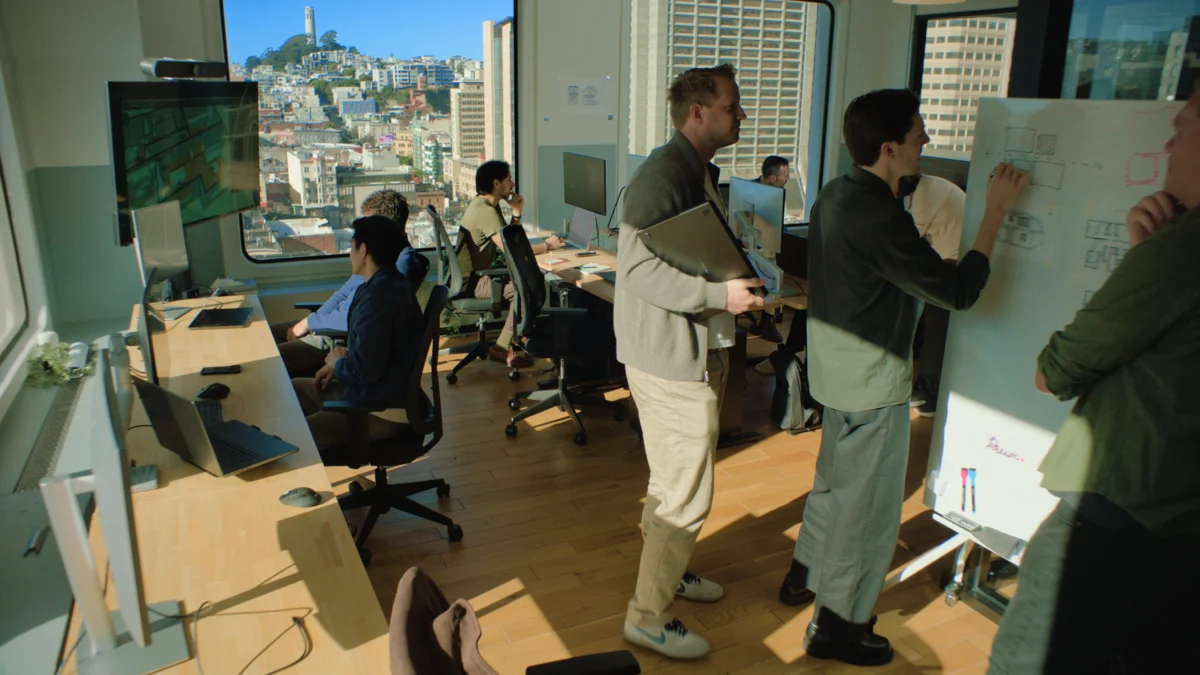
In a significant development poised to reshape the antiquated architecture, engineering, and construction (AEC) industry, Dream, a startup co-founded by former Stanford roommates and Palantir veterans Andy Alder and Arjun Mather, has emerged from stealth with $17 million in seed funding. The substantial investment, led by Andreessen Horowitz with participation from SV Angel, XYZ, and Zigg Capital, underscores a growing conviction in the potential of artificial intelligence to tackle some of the most persistent challenges in global infrastructure development. Dream’s ambitious mission is to automate building design and engineering through advanced "world models," directly addressing the alarming decline in U.S. construction productivity and escalating development costs that have plagued the sector for decades.
The Genesis of an AI Vision: From Palantir to Pioneering Construction Tech
The journey of Dream’s co-founders, Andy Alder and Arjun Mather, provides a compelling narrative of transitioning high-level tech expertise to a deeply traditional industry. Both alumni of Stanford University’s computer science program, Alder and Mather spent a decade honing their skills at Palantir Technologies, a company renowned for its complex data analytics software deployed across defense, intelligence, and commercial sectors. Alder distinguished himself as a leader in product design, overseeing a team of 800 individuals dedicated to crafting sophisticated software solutions for critical U.S. government agencies. Concurrently, Mather served as a senior vice president within Palantir’s commercial practice, gaining invaluable experience in translating advanced technological capabilities into market-ready products. Their extensive background in developing robust, large-scale software systems for high-stakes environments positioned them uniquely to identify and address systemic inefficiencies in other sectors.
It was early last year when the long-time friends, sharing a profound understanding of software’s transformative power, decided to embark on a new venture together. Despite lacking direct professional backgrounds in architecture or construction, they were deeply troubled by a macro-economic trend: the United States is constructing fewer buildings today than it did just a few decades ago, even as demand for housing and infrastructure continues to surge. This stagnation is largely attributed to rapidly escalating development costs, a problem that seems to defy the broader technological advancements witnessed in other industries. As Mather articulated to TechCrunch, "We’ve gone from dial-up internet to super intelligent AI, but our ability to build the physical world around us has actually decreased." This stark contrast between rapid digital evolution and stagnant physical development became the catalyst for Dream.
The AEC Productivity Paradox: A Deep-Rooted Challenge
The observation made by Alder and Mather is supported by extensive economic data. A report from the Richmond Federal Reserve, among others, highlights a significant decline in construction productivity over the past half-century. While manufacturing, agriculture, and services have seen substantial gains through automation and digital transformation, the AEC sector has largely lagged. This "productivity paradox" in construction is multifaceted, stemming from a confluence of factors:
- Labor Shortages: An aging workforce, a dwindling pool of skilled tradespeople, and a lack of appeal for younger generations entering the construction industry have led to critical labor deficits.
- Fragmented Workflows: The AEC industry is notorious for its fragmented ecosystem, involving numerous stakeholders—architects, engineers, contractors, subcontractors, suppliers—often operating with disparate systems and poor communication.
- Outdated Technology Adoption: While Building Information Modeling (BIM) has gained traction, the widespread adoption of truly transformative digital tools, especially AI, has been slow. Many firms still rely on manual processes and legacy software that demand significant human input for every design iteration.
- Regulatory Burdens: Complex zoning laws, lengthy permitting processes, and ever-evolving building codes add layers of time and cost to every project, further stifling development.
- Material Volatility: Fluctuating material costs and supply chain disruptions, exacerbated by recent global events, introduce unpredictability and increase project expenses.
These challenges collectively contribute to higher project costs, extended timelines, and a reduced capacity to meet national building needs, including affordable housing and critical infrastructure. The average cost of construction in the U.S. has seen a consistent upward trend, making new developments less feasible and exacerbating existing housing crises in many urban centers.
Dream’s Core Innovation: Structural Cognition and World Models
Believing firmly that AI holds the key to unlocking unprecedented productivity across the AEC industry, Alder and Mather set out to build Dream. The company’s core innovation lies in its development of "world models" specifically designed to automate building design and engineering. This approach represents a radical departure from conventional AEC software, which often functions as digital drafting boards rather than intelligent design partners.
The critical distinction of Dream’s technology lies in its foundation of "structural cognition." Unlike general-purpose large language models (LLMs) such as ChatGPT, which can generate aesthetically pleasing images of buildings, these outputs lack any understanding of real-world physics, structural integrity, or construction standards. A ChatGPT-generated building image, for instance, would almost certainly be structurally unsound and unbuildable. Dream, by contrast, is engineered from the ground up to operate within the constraints of real physics, engineering principles, and established construction methodologies.
Dream’s world model is not merely a fancy image generator; it is a sophisticated AI trained on an colossal dataset exceeding 100 million square feet of building data. This data is meticulously gathered from permit archives across the United States, providing the AI with a deep, practical understanding of how buildings are actually constructed. As Alder explained, "Our model actually understands what’s within those walls. What materials are used, what the beams are made of, and how much weight they can support." This granular understanding allows Dream’s AI to generate designs that are not only aesthetically viable but also structurally precise and compliant with engineering requirements. The model accounts for a myriad of internal building elements, from load-bearing walls and beam specifications to the intricate networks of plumbing, electrical systems, and HVAC ducts. This holistic approach ensures that the generated designs are truly buildable and functional.
Mather further elaborated on the limitations of existing tools, pointing out the laborious nature of current design processes: "If you sit next to an architect or a structural engineer, you’ll notice that they are still ‘drawing’ every piece of their designs part-by-part on legacy software. AI really plays no role in that equation." Traditional software like Autodesk’s AutoCAD and Revit, while industry standards, require immense manual input, demanding that designers painstakingly draw every component and manually adjust for structural implications. Dream aims to replace these cumbersome, outdated tools by enabling instant generation of complete, structurally sound building designs, dramatically accelerating the conceptualization and engineering phases of a project.
Funding and Investor Confidence: Andreessen Horowitz Leads the Charge
The successful securing of $17 million in seed funding is a strong testament to investor confidence in Dream’s vision and technological prowess. Andreessen Horowitz (a16z), a venture capital powerhouse known for its early investments in transformative technologies, led the round. Kimberly Tan, a partner at Andreessen Horowitz, expressed her profound impression of Dream’s progress. "I have not seen anybody take the technical approach," she stated, highlighting the startup’s unique methodology. Tan revealed that a16z first invested in Dream over a year ago, when the startup’s model was still largely conceptual. Her continued enthusiasm underscores the significant advancements made by Alder and Mather. "They’re doing everything based on their own models," she added, emphasizing the proprietary and foundational nature of Dream’s AI.
The participation of other prominent backers, including SV Angel, XYZ, and Zigg Capital, further validates Dream’s potential. This significant capital injection will enable Dream to scale its engineering and product teams, refine its world models, and expand its market reach. The investment also reflects a broader trend among venture capitalists recognizing the immense untapped potential for AI to revolutionize sectors traditionally slow to adopt advanced technology. The AEC industry, with its multi-trillion-dollar global market size and persistent inefficiencies, represents a ripe opportunity for disruption.
Market Penetration and Early Traction: From Concept to Construction Sites
Even in its early stages, Dream has already begun demonstrating tangible impact. The startup has commenced selling its product to AEC professionals and developers, who are leveraging the AI model for crucial early-stage project activities. These include rapidly conceptualizing diverse building designs and accurately estimating overall construction costs. The ability to quickly generate multiple design iterations and receive immediate cost feedback empowers developers and architects to explore a wider range of options and make more informed decisions much earlier in the project lifecycle, potentially saving months of traditional design work.
Crucially, Dream’s platform is not merely theoretical; it is already deployed across 10 active projects in key development markets: Texas and California. These real-world applications provide invaluable feedback for further model refinement and showcase the immediate practical utility of Dream’s technology. The successful integration into ongoing projects signals a positive reception from industry professionals who are keen to adopt tools that can genuinely enhance efficiency and reduce costs.
The Competitive Landscape: A New Frontier in AEC Software
Dream is not operating in a vacuum. The burgeoning field of AI in AEC has attracted other innovative startups also attempting to modernize design and construction software. Companies such as Motif, Snaptrude, and Arcol are likewise developing advanced tools aimed at improving various aspects of the design and engineering process. However, Alder and Mather assert a crucial differentiator for Dream: they claim to be the only company that has developed a comprehensive "world model" capable of instantly designing entire buildings from the ground up, with inherent structural integrity. This distinguishes their approach from tools that might assist with specific design elements or optimize parts of a workflow. Dream’s ambition is to offer an end-to-end generative design solution that fundamentally transforms the initial stages of building creation. This holistic capability, if proven at scale, could provide Dream with a significant competitive advantage in a market eager for comprehensive solutions.
Broader Implications and Future Outlook
The implications of Dream’s technology, if widely adopted, are profound and far-reaching, promising to impact multiple facets of the AEC industry and beyond:
- Accelerated Design and Engineering: The ability to instantly generate structurally sound designs could drastically reduce the time spent in the design phase, allowing projects to move to construction much faster. This would free up architects and engineers from tedious manual drafting, allowing them to focus on higher-level creative problem-solving, client engagement, and quality control.
- Cost Reduction and Efficiency: By optimizing designs for material use and constructability from the outset, Dream’s AI could lead to significant cost savings. Reduced design errors, fewer change orders during construction, and more efficient material procurement could contribute to overall project budget adherence.
- Increased Building Output and Affordability: A more efficient and cost-effective construction process could help address critical housing shortages and infrastructure deficits. By making development more viable, Dream could contribute to an increase in the supply of new buildings, potentially alleviating pressures on housing affordability.
- Enhanced Sustainability: AI-driven design can optimize buildings for energy efficiency, passive heating and cooling, and responsible material selection, contributing to more sustainable construction practices. The model can analyze vast amounts of data to identify the most environmentally friendly and resource-efficient design choices.
- Shift in Professional Roles: While some might fear job displacement, the more likely scenario is a transformation of roles. Architects and engineers would transition from manual drawing to overseeing AI-generated designs, ensuring compliance, adding bespoke creative elements, and managing complex stakeholder relationships. Their expertise would shift towards validation, refinement, and strategic planning.
- Data-Driven Decision Making: Dream’s world model, trained on extensive real-world data, offers an unprecedented level of data-driven insight into construction feasibility and cost. This empowers developers and clients with more accurate projections and reduces financial risks associated with complex projects.
Despite its promising outlook, Dream will face challenges common to any disruptive technology entering a traditional industry. Overcoming inertia, ensuring seamless integration with existing workflows, and building trust among a cautious professional base will be critical. Regulatory bodies will also need to adapt to AI-generated designs, establishing standards for verification and accountability. However, with robust funding, a team experienced in deploying complex software, and a clear vision for tackling a pressing global problem, Dream is poised to play a pivotal role in ushering the architecture, engineering, and construction industries into a new era of AI-powered innovation, aiming to make building the physical world around us as dynamic as the digital one.
