

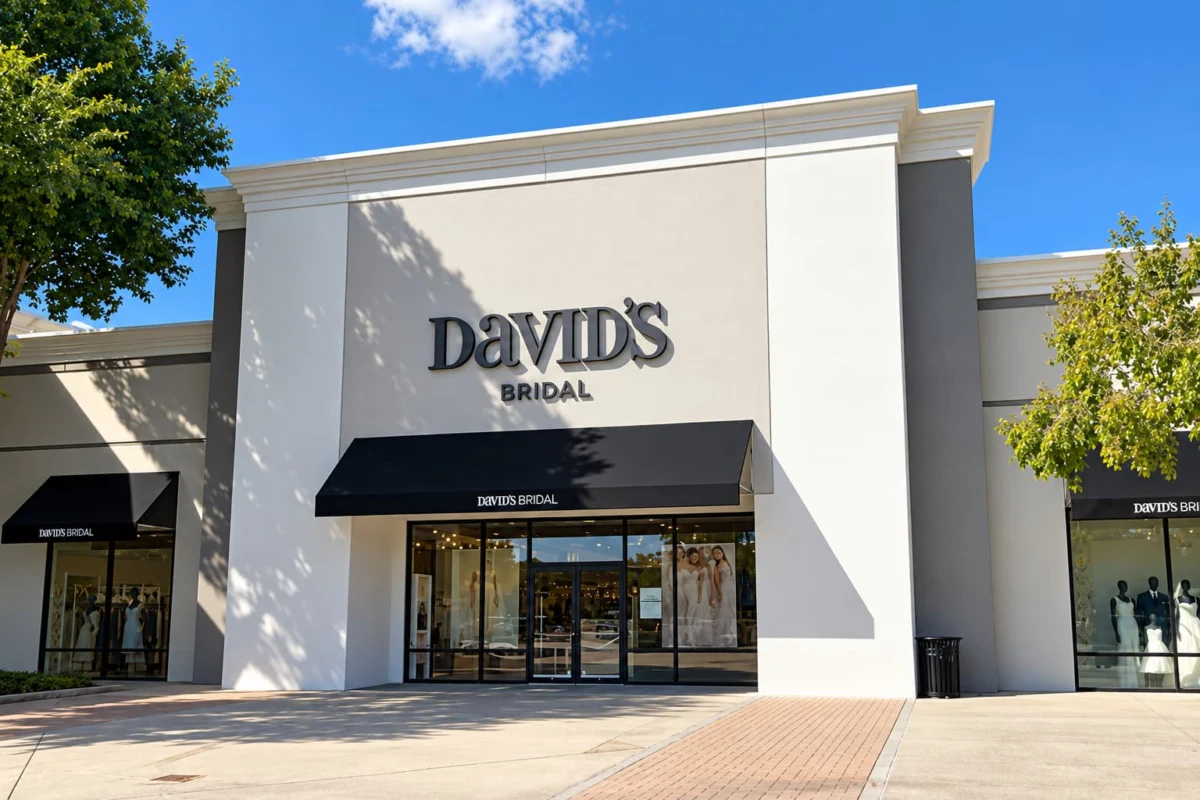
David’s Bridal, the venerable institution in bridal retail, is embarking on a significant strategic maneuver, planning to spin off its burgeoning artificial intelligence platform, Pearl, into a stand-alone publicly traded company. This ambitious move aims to unlock new value, with Pearl targeting a valuation of approximately $350 million. The company has formally filed a nonbinding letter of intent to initiate the separation, anticipating the deal to be finalized and Pearl to commence public trading in the first half of 2027. This strategic unbundling seeks to empower the AI-centered business to fully leverage its proprietary intellectual property and expand its growing AI model, while simultaneously allowing the original David’s Bridal entity to redouble its focus on strengthening its physical retail operations and in-store customer experience.
A Bold Vision for Dual Growth
The decision to separate Pearl is rooted in a vision for "strategic growth" for both entities, according to Kelly Cook, the current CEO of David’s Bridal. Cook, who is slated to transition to CEO of Pearl after the spin-off is completed, emphasized the AI platform’s intrinsic value. "We have a fast-growing, high-margin business generating positive cash flow right now in Pearl, and going public now will help us attract the talent and give us more optionality to fuel the growth that we believe that we have," Cook told CNBC in an exclusive interview. She underscored that the two companies will maintain a close, symbiotic relationship, collaborating extensively to serve customers throughout the complex and often stressful wedding-planning journey. This reciprocal arrangement is designed to ensure a seamless experience for consumers, with both businesses pointing customers to the other for complementary services.
Pearl’s comprehensive suite of services represents a significant leap forward in modernizing the wedding industry. Its offerings include an agentic AI-powered wedding-planning platform, designed to guide users through every step of their preparations. This platform is complemented by a proprietary tool engineered to streamline appointment scheduling and communications between clients and vendors. Furthermore, Pearl hosts a digital content network, featuring original programming tailored to the bridal market. The core strength of Pearl lies in its advanced AI capabilities, which meticulously collect and analyze data from each client to personalize suggestions, ranging from dress styles and venue options to vendor recommendations and logistical advice. This data-driven personalization aims to deliver an unparalleled, hyper-relevant planning experience.
Financially, the projections for Pearl are robust. David’s Bridal anticipates Pearl to achieve an impressive EBITDA margin exceeding 30% this year. Looking ahead to 2027, the company forecasts Pearl’s revenue growth to surpass 100%, exceeding $85 million. Upon the successful completion of the spin-off, Pearl is expected to emerge as a debt-free entity, projecting positive free cash flow over its initial two years as a standalone public company. These financial indicators paint a picture of a healthy, rapidly expanding business poised for significant market impact. "Pearl has earned the right to stand on its own because it’s created more value than we’ve expected," Cook affirmed, highlighting the platform’s unexpected success within the parent company. A critical aspect of the post-transaction structure will see Pearl owning David’s Bridal’s intellectual property and subsequently licensing it back to the retail chain, a model Cook described as "a very healthy business model."
Background and Chronology: Navigating Turbulent Waters
The decision to spin off Pearl is not merely an opportunistic play but a strategic pivot born out of David’s Bridal’s recent tumultuous financial history. The company, a long-standing fixture in the wedding industry, has weathered significant storms, filing for bankruptcy protection twice in recent years. The first instance occurred in 2018, from which it emerged a few months later after a restructuring effort. However, the challenges resurfaced, leading to a second bankruptcy filing in 2023. This second filing was explicitly attributed to a severe business slowdown exacerbated by the COVID-19 pandemic, which drastically altered wedding plans and consumer behavior, coupled with the pressures of high inflation impacting operational costs and consumer spending. To avert a complete shutdown, David’s Bridal ultimately sold its business to asset manager Cion Investment Corp.
It was during these periods of intense financial introspection and operational overhaul that the seeds of Pearl were sown. Kelly Cook, who assumed the CEO role last year, was tasked with steering the company through this difficult transition, transforming it from a legacy brick-and-mortar retailer into a more cohesive online and in-store experience. Cook openly acknowledged the company’s past struggles, stating, "That’s no secret, we’ve talked about that openly." However, she framed these challenges as catalysts for innovation. "What’s extraordinary is what came out of that process is a leaner David’s, a more focused David’s… I think it’s a move from strength." The development of Pearl, therefore, represents a phoenix-like emergence, an innovative solution forged in the crucible of financial distress, designed to modernize an industry ripe for technological disruption.
The Wedding Market Opportunity and Synergies
The demand within the wedding services market remains robust, providing a fertile ground for both the refined David’s Bridal and the innovative Pearl. Grand View Research estimates that the U.S. wedding services market is projected to exceed $96 billion by 2026. This significant market size underscores the strategic importance of both entities vying for a leading position. The ongoing "relationship built on reciprocity" between Pearl and David’s Bridal is crucial for maximizing their combined market penetration. By sharing proprietary data and cross-referring customers, they aim to create a powerful ecosystem that captures and serves customers at various stages of their wedding planning journey. This split, Cook elaborated, will allow each company to sharpen its strategic focus, optimizing resource allocation and operational efficiencies for their respective business models.
For David’s Bridal, the focus will intensify on enhancing the in-store experience, leveraging its physical footprint and expert consultants. The brand equity built over decades remains a significant asset, and a streamlined, debt-free operation can dedicate more resources to inventory management, customer service, and store aesthetics. Meanwhile, Pearl can accelerate its technological development, attracting top-tier AI talent and exploring new features and partnerships without the traditional constraints of a legacy retail parent. The licensing agreement for David’s Bridal’s intellectual property further cements this symbiotic relationship, providing Pearl with foundational brand recognition and industry insights while offering David’s Bridal a revenue stream and access to cutting-edge digital tools.
Market Environment and Investor Scrutiny
The plan to go public, particularly targeting a 2027 debut, arrives at a complex juncture for the initial public offering (IPO) market and, more specifically, for AI-centric companies. The broader IPO market for consumer companies has been described as "lackluster," with an increasing number of companies postponing their public debuts amidst economic uncertainties and tighter capital markets. Investor sentiment towards the "AI boom" has also shown signs of cooling, with a growing demand for tangible profitability and clear business models rather than speculative potential alone. Analysts and investors are increasingly scrutinizing AI companies to demonstrate not just technological prowess but also sustainable revenue generation and clear paths to positive cash flow.
In this environment, Pearl’s projected financial health—its positive cash flow, high EBITDA margins, and rapid revenue growth—becomes a critical differentiator. Cook directly addressed these market concerns, stating that Pearl is "not AI for AI’s sake." She highlighted a fundamental advantage Pearl possesses over many nascent AI startups: an existing, well-defined customer base. "Most AI companies have to find a customer," Cook noted. "We already have her… we have her information, and it’s less about the AI side and more about modernizing this entire ecosystem for her that desperately needed modernization." This emphasis on solving a real, existing market need for a known customer segment positions Pearl uniquely, potentially mitigating some of the investor skepticism currently impacting other AI ventures. The focus is on practical application and value delivery within a specific, high-value industry, rather than purely on the underlying technology.
Implications and Future Outlook
The proposed spin-off carries significant implications for various stakeholders. For Cion Investment Corp., David’s Bridal’s current owner, their proposed investment of $25 million as an anchor investor in the separate Pearl company serves as a powerful vote of confidence. This commitment underscores their belief in Pearl’s future potential and validates the strategic decision to unbundle the businesses. For David’s Bridal, the transformation into a leaner, more focused physical retailer allows it to concentrate on optimizing its core strengths and potentially recapture market share in a segment still valuing the in-person experience. The licensing revenue from Pearl will also provide a stable, recurring income stream, bolstering its financial foundation.
For Pearl, the opportunity to operate as an independent public entity offers immense advantages. It gains direct access to public capital markets, which can fuel accelerated research and development, facilitate strategic acquisitions, and attract highly specialized AI talent. As a standalone tech company, Pearl’s valuation will likely be assessed on different metrics than a traditional retailer, potentially unlocking greater shareholder value. Furthermore, the experience gained in the wedding sector could serve as a blueprint for expansion into other event-planning verticals, such as corporate events, parties, or even broader lifestyle services, leveraging its agentic AI and personalization capabilities.
The broader wedding industry could also see a ripple effect. David’s Bridal and Pearl’s dual-pronged approach might encourage other traditional players to invest more heavily in digital transformation and AI-driven personalization. The competition to offer comprehensive, tech-enabled planning services is likely to intensify, ultimately benefiting consumers through more efficient, tailored, and less stressful planning experiences. As the market continues to evolve, the strategic gambit by David’s Bridal and Pearl represents a fascinating case study in how legacy businesses can reinvent themselves and leverage emerging technologies to not only survive but thrive in a dynamic global economy. The journey to 2027 will undoubtedly be closely watched by industry observers and investors alike, keen to see if this carefully orchestrated split delivers on its ambitious promises of dual prosperity.
